
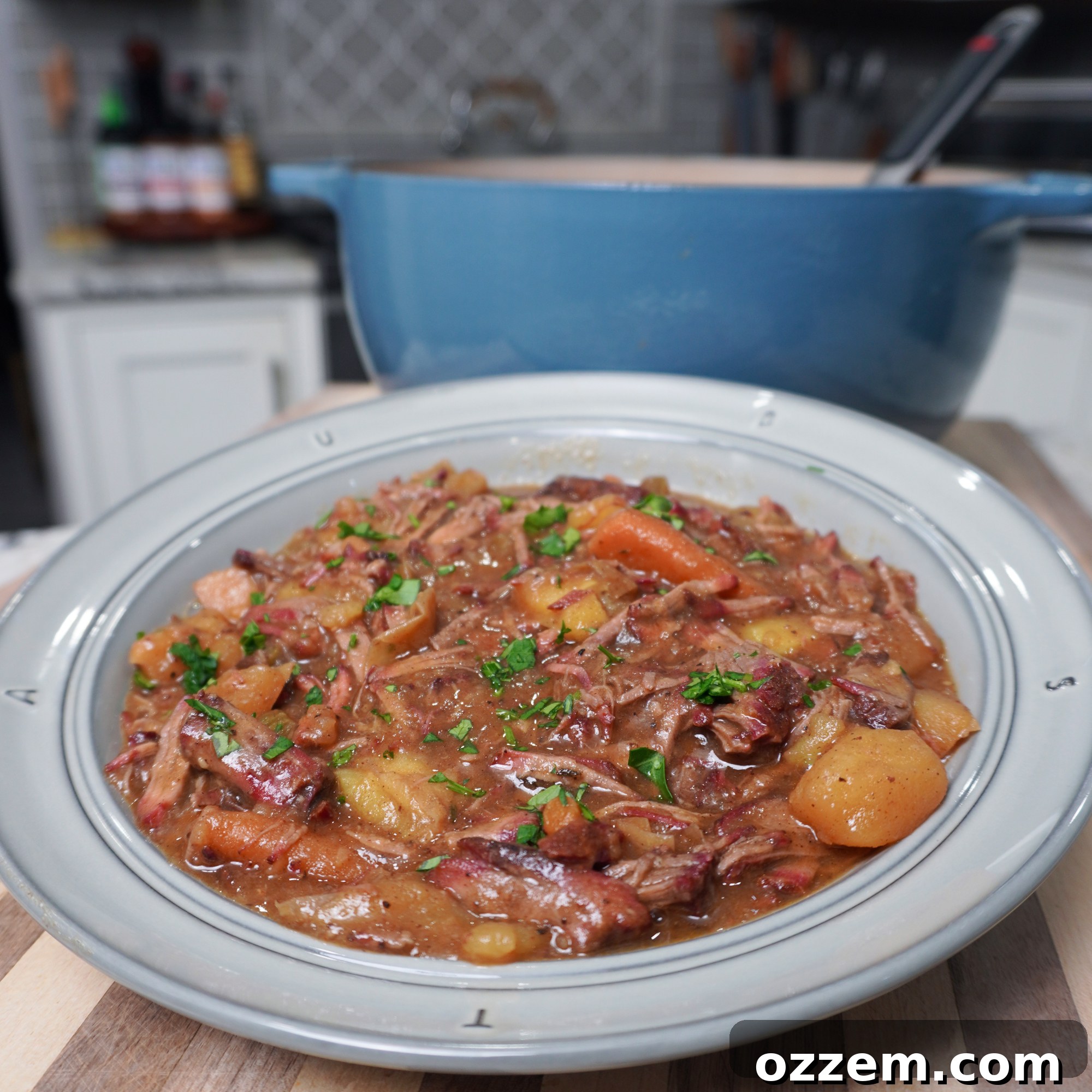
There’s an undeniable allure to a hearty meal, and few dishes capture that essence quite like a perfectly prepared pot roast. Its rich, savory, and deeply satisfying flavors make it a cornerstone of comfort food. While many grew up with the classic crock-pot version, our **Easy Smoked Pot Roast Dinner** elevates this beloved dish to an entirely new level. The introduction of smoky nuances transforms it into an unforgettable culinary experience, proving that some traditions are simply begging for a delicious upgrade.
If your palate gravitates towards robust and flavorful dishes, you’ll find plenty to love in our collection. For another exceptional smoked beef creation, explore our Smoked Cowboy Casserole, a delightful blend of textures and tastes. If you’re feeling adventurous, our Smoked Venison Red Curry offers a unique twist; don’t have venison? Simply substitute it with beef for an equally incredible flavor profile. And for a true taste of Southern culinary heritage, don’t miss our Collard Greens Cajun Gumbo – it’s a savory, spicy, and utterly comforting classic that will warm you from the inside out.
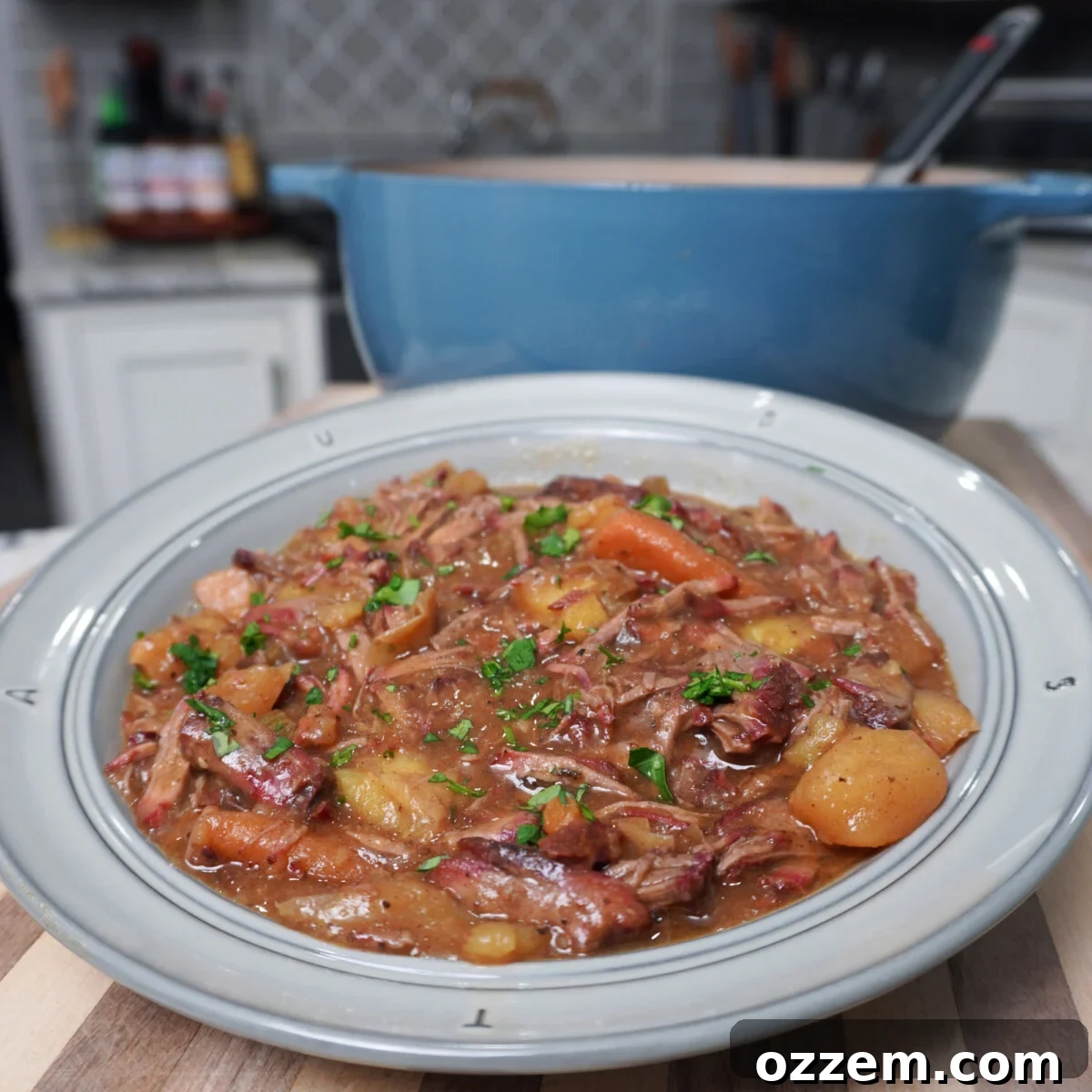
Table of Contents
- Unlocking the Secrets to a Superior Pot Roast
- Essential Ingredients for Your Easy Smoked Pot Roast Dinner
- Preparing Your Chuck Roast for the Smoker
- Expert Tip: Choosing Your Binder
- The Art of Smoking a Chuck Roast
- Perfecting Your Pot Roast Vegetables
- Chef’s Advice: Vegetable Sizing
- Braising for Ultimate Tenderness: The Smoked Pot Roast Method
- Wine Substitution Made Easy
- Shredding Your Tender Braised Chuck Roast
- Mastering Gravy: How to Thicken Braising Liquid
- Frequently Asked Questions About Smoked Pot Roast
- More Hearty Recipes to Explore
- Easy Smoked Pot Roast Dinner Recipe Card
Unlocking the Secrets to a Superior Pot Roast
Pot roast has been a staple in kitchens for generations, conjuring images of Sunday dinners and comforting aromas filling the home. Most of us can recall the familiar scene of a chuck roast and vegetables simmering all day in a slow cooker, yielding a delicious and tender meal. The enduring appeal of pot roast lies in its simplicity and the incredible transformation a tough cut of meat undergoes with the right cooking technique. The fundamental secret to a truly outstanding pot roast, whether smoked or traditional, is the principle of **low and slow cooking**.
At the heart of any great pot roast is the choice of meat: the humble yet magnificent *beef chuck roast*. This cut, sourced from the shoulder of the cow, is inherently tough, characterized by abundant connective tissue. Unlike more tender cuts that benefit from quick searing, chuck roast demands patience. Its high collagen content requires extended cooking times at lower temperatures to slowly break down and gelatinize, converting toughness into unparalleled tenderness. This scientific marvel is what makes the meat fall-apart tender and incredibly succulent.
Beyond its texture, the chuck roast offers robust, beefy flavors and a good amount of marbling, which contributes to the richness of the finished dish. By first smoking the chuck roast, we infuse it with a profound depth of flavor before the braising process truly begins. This two-step approach allows the connective tissues to gradually dissolve and the fat to render, resulting in extraordinarily tender, shreddable beef that bursts with flavor. When paired with an assortment of root vegetables and enveloped in a luscious, thick gravy, you create not just a meal, but a profoundly satisfying culinary experience – the quintessential **perfect hearty meal**.
Essential Ingredients for Your Easy Smoked Pot Roast Dinner
Crafting a memorable smoked pot roast doesn’t require an extensive list of exotic ingredients. In fact, the beauty of this dish lies in its reliance on simple, wholesome components that come together to create complex flavors. Our ingredient list is designed to be flexible, allowing you to customize it based on your preferences and what you have on hand. Feel free to make it your own!
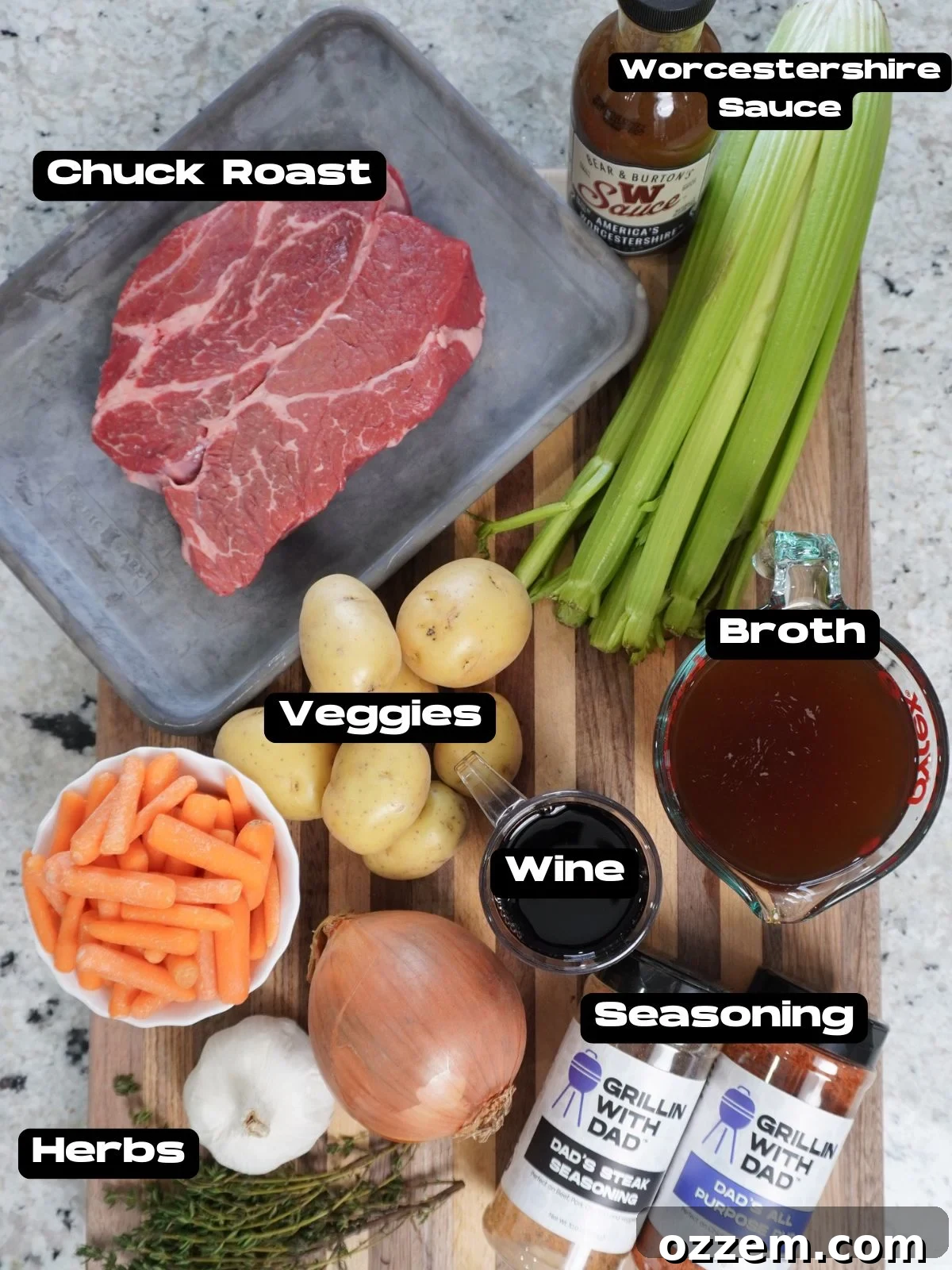
- Beef: The star of the show is, unequivocally, a **chuck roast**. Its inherent marbling and connective tissue are perfectly suited for the low-and-slow smoking and braising process, yielding the most tender and flavorful results. It’s truly the ideal cut for this recipe.
- Veggies: For a classic pot roast experience, we recommend a mix of sturdy root vegetables. Our go-to combination includes carrots, potatoes (yellow varieties work wonderfully), celery, and onion. These vegetables hold up well during extended cooking and absorb the rich flavors of the broth and meat. Don’t hesitate to experiment with parsnips, turnips, or sweet potatoes for a personalized touch.
- Herbs & Aromatics: Fresh garlic and thyme are non-negotiable for their nutty, earthy notes that contribute significantly to the dish’s hearty and aromatic profile. Bay leaves are also essential for adding a subtle depth. These fresh elements are crucial for layering complex flavors.
- Broth: A high-quality beef broth forms the foundation of our braising liquid. We opt for low-sodium beef broth to allow for better control over the final seasoning of the dish. This ensures the savory beef essence penetrates every component.
- Wine: A dry red wine, such as a Cabernet Sauvignon or Merlot, adds a crucial layer of acidity and tannic complexity. It helps to cut through the richness of the beef and enhances the overall depth of flavor, creating a more sophisticated gravy.
- Seasoning: Our preferred seasoning blend for this smoked pot roast is a harmonious mix of an all-purpose rub and a steak seasoning. The all-purpose rub typically provides foundational BBQ flavors—salt, pepper, paprika, and garlic—while the steak seasoning introduces herbaceous notes and a hint of butteriness, reminiscent of a perfectly basted steak. This combination creates a perfectly balanced crust and flavor foundation.
Preparing Your Chuck Roast for the Smoker
Since this **easy smoked pot roast dinner** begins with an essential smoking phase, proper preparation of the chuck roast is key. This initial step, while simple, is the longest and most critical for developing that signature smoky flavor and a beautiful bark.
When selecting your chuck roast, look for a piece with good marbling – those fine streaks of fat woven throughout the muscle. Marbling is crucial as it renders during cooking, contributing moisture, flavor, and tenderness. For a family of four with potential leftovers, a 3-pound roast is typically an ideal size, but adjust based on your guest count.
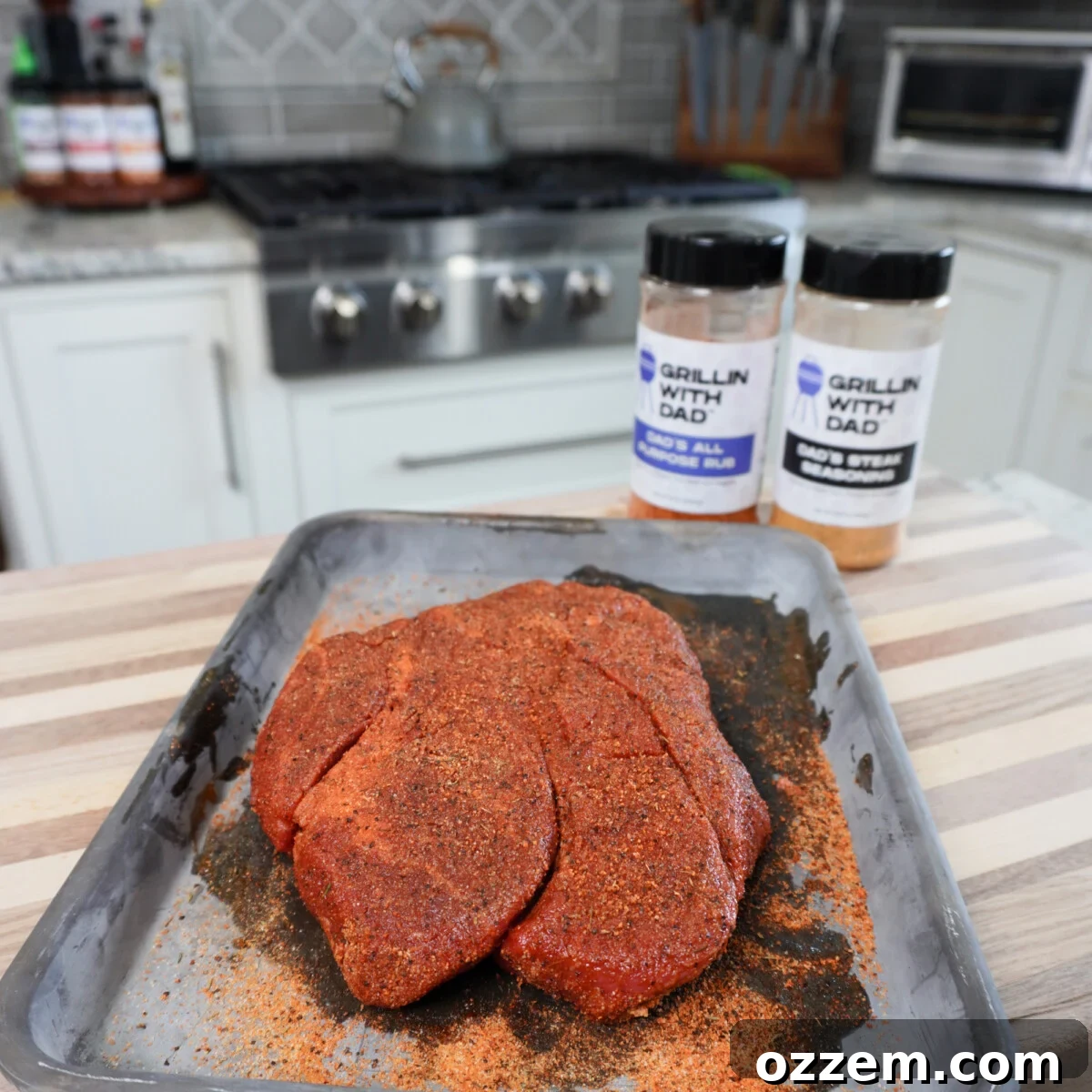
Before applying your dry rub, coat the meat with a thin layer of a binder. This sticky layer helps the seasoning adhere evenly to the surface of the roast, ensuring a flavorful crust. The binder itself typically doesn’t impart a significant flavor to the final dish, serving primarily as an adhesive. For this recipe, Worcestershire sauce works exceptionally well, adding a subtle umami note. If you prefer a little kick, a hot sauce can be a fun alternative.
Expert Tip: Choosing Your Binder
Beyond Worcestershire sauce, other excellent binder options include yellow mustard or a neutral oil like olive oil. Yellow mustard, despite its strong initial smell, cooks off beautifully, leaving no distinct mustard flavor but providing an excellent sticky surface for your rub. Choose the binder that you prefer or have readily available.
Next, apply your seasoning generously to all sides of the chuck roast. We recommend an equal mix of Dad’s All Purpose rub and Dad’s Steak Seasoning. The All-Purpose rub lays down a classic barbecue foundation of salt, pepper, and paprika, while the steak seasoning introduces delightful herbal notes and a hint of butteriness, mimicking the experience of a perfectly pan-basted steak. Be sure to cover every surface, as some seasoning may fall off or burn during the extended smoking period. A thick, flavorful crust, often called “bark,” is a hallmark of perfectly smoked meat.
For smoking, we utilized a Weber Searwood smoker, which provides consistent temperature control and excellent smoke penetration. If you don’t have a dedicated smoker, or if the weather isn’t cooperating for outdoor grilling, don’t despair! You can achieve a rich flavor by searing all sides of the chuck roast in a heavy-bottomed pan, such as a cast iron skillet, for 2-3 minutes per side until deeply browned. This searing step creates a foundational depth of flavor before you move directly to the braising phase of the recipe.
The Art of Smoking a Chuck Roast
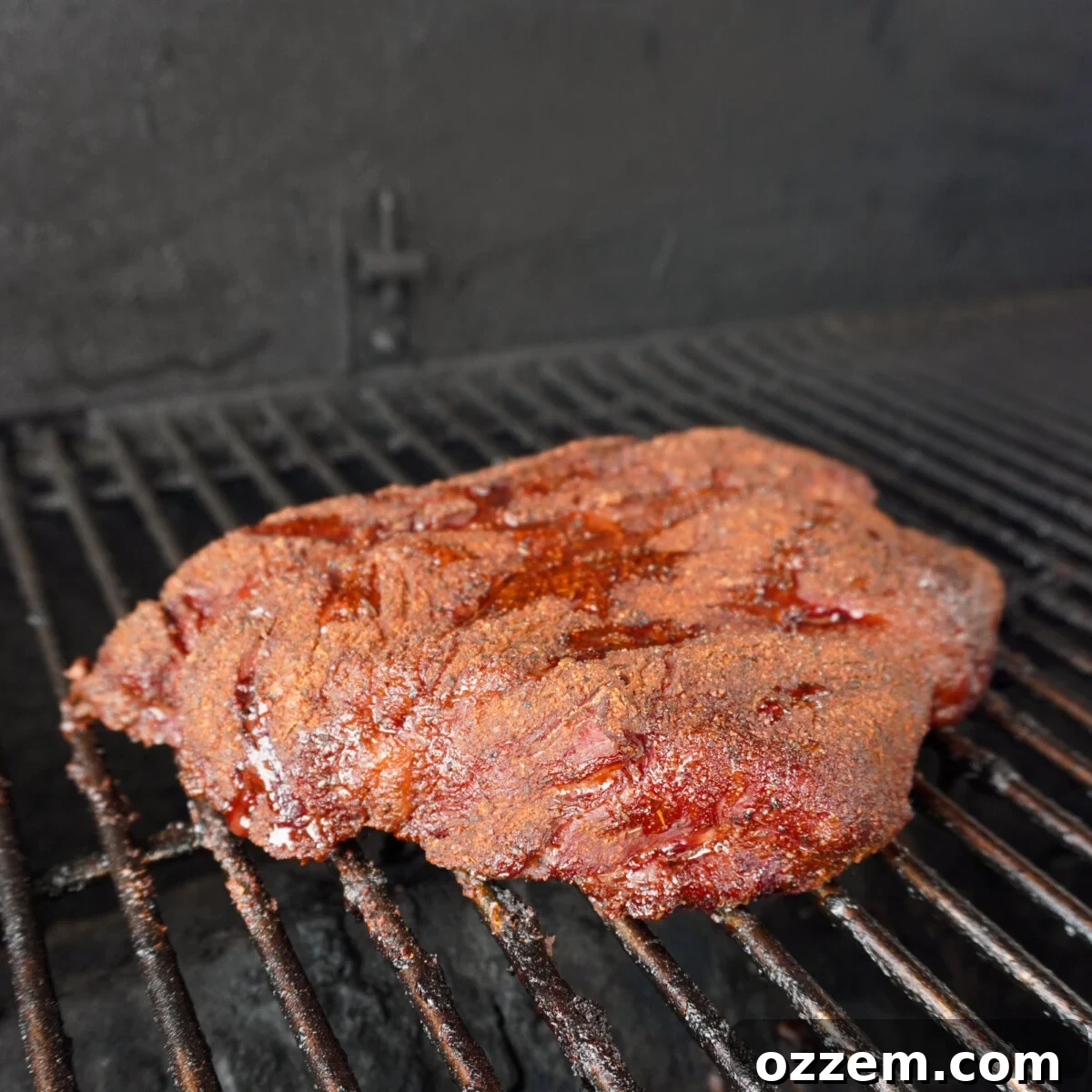
This **easy smoked pot roast dinner** is a true “set it and forget it” recipe in its initial stages, though it requires foresight due to its two lengthy cooking steps. Proper planning will ensure you have ample time to achieve perfection.
Begin by preheating your smoker to a steady 225 degrees Fahrenheit (approximately 107 degrees Celsius). If you’re using a charcoal or gas grill, it’s crucial to set it up for indirect heat. This means creating a zone where the heat source is not directly beneath the meat, allowing for gentle, even cooking and preventing scorching. Consider adding wood chunks (such as oak, hickory, or cherry) to your charcoal or gas grill to impart that desirable smoky flavor.
Once your smoker or grill is at temperature, carefully place the generously seasoned chuck roast directly onto the grates. Allow it to smoke for approximately 4 hours. During this initial phase, an exact internal temperature is not the primary goal. Instead, we are focused on two key developments: infusing the beef with deep, natural smoky flavor and building a beautiful, dark, and crusty “bark” around the exterior of the meat. This bark is a result of the seasoning, rendered fats, and smoke particulates creating a flavorful crust. The low temperature ensures that the meat cooks gently, allowing for maximum smoke penetration without overcooking. For a variation on smoked chuck roast, you might also enjoy our Smoked Chuck Roast Burnt Ends recipe, which offers a sweeter and more intensely caramelized alternative.
Perfecting Your Pot Roast Vegetables
While your chuck roast is happily absorbing all that wonderful smoky goodness, it’s the perfect opportunity to prepare your accompanying vegetables. We gravitate towards traditional, hearty, and starchy root vegetables because they stand up exceptionally well to the long braising process, absorbing the rich flavors without turning to mush. However, the beauty of this recipe is its adaptability, so feel free to choose the vegetables you enjoy most.
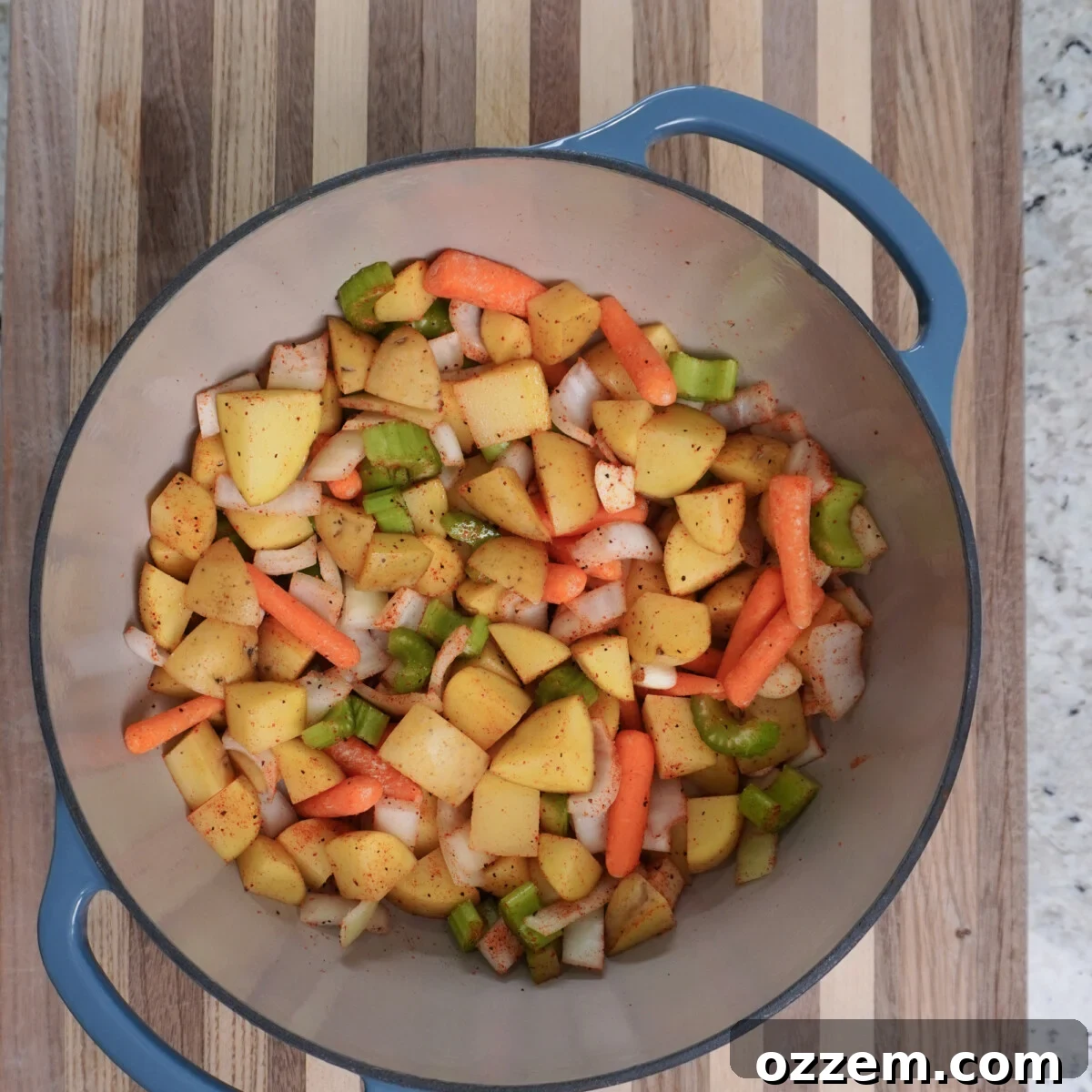
Start by cubing yellow potatoes and a large yellow onion into substantial pieces. For celery, thinly slice the stalks, and mince or thinly slice several cloves of fresh garlic. For carrots, we often use whole baby carrots, which retain their shape beautifully. If you opt for larger, regular carrots, ensure you chop them into pieces larger than typical bite-size chunks. This is a crucial detail for maintaining texture in your finished dish.
Chef’s Advice: Vegetable Sizing
It’s important to **avoid chopping your vegetables into small, bite-sized pieces.** During the extended braising period, smaller cuts will break down too much, losing their texture and potentially turning into a uniform mush. For a truly hearty and satisfying meal, you want the vegetables to retain some structure and provide substance. Larger cuts ensure they remain distinct and flavorful components of your pot roast.
Once your vegetables are prepped, transfer them to your Dutch oven or heavy oven-safe pot. Season them generously with an all-purpose rub, ensuring every piece is coated. This initial seasoning layer will build flavor into the vegetables themselves, preventing them from tasting bland against the rich beef and gravy. Give everything a good mix to distribute the seasoning evenly, setting the stage for the next phase of cooking.
Braising for Ultimate Tenderness: The Smoked Pot Roast Method
After a rewarding 4 hours on the smoker, your chuck roast will have developed an incredible smoky bark and deep flavor. Now, it’s time for the second, equally crucial phase: the braise. This process is where the magic truly happens, transforming the firm smoked meat into an incredibly tender, melt-in-your-mouth, shreddable masterpiece.
Carefully transfer the smoked chuck roast from the grates and place it directly on the seasoned bed of chopped vegetables in your Dutch oven. This arrangement allows the vegetables to cook in the rendered juices and braising liquid, absorbing immense flavor. Next, pour in the beef broth and red wine. The key here is to add just enough liquid so that it comes up to touch the bottom of the roast, but **do not completely submerge the beef**. The goal is a gentle simmer, not a boil, ensuring the meat continues to develop flavor and tenderness without becoming waterlogged.
Wine Substitution Made Easy
If you prefer to omit wine from your recipe, simply replace the specified amount with additional beef broth. To replicate the crucial touch of acidity that the wine provides, add one tablespoon of red wine vinegar to the braising liquid. This will help balance the richness of the dish beautifully.
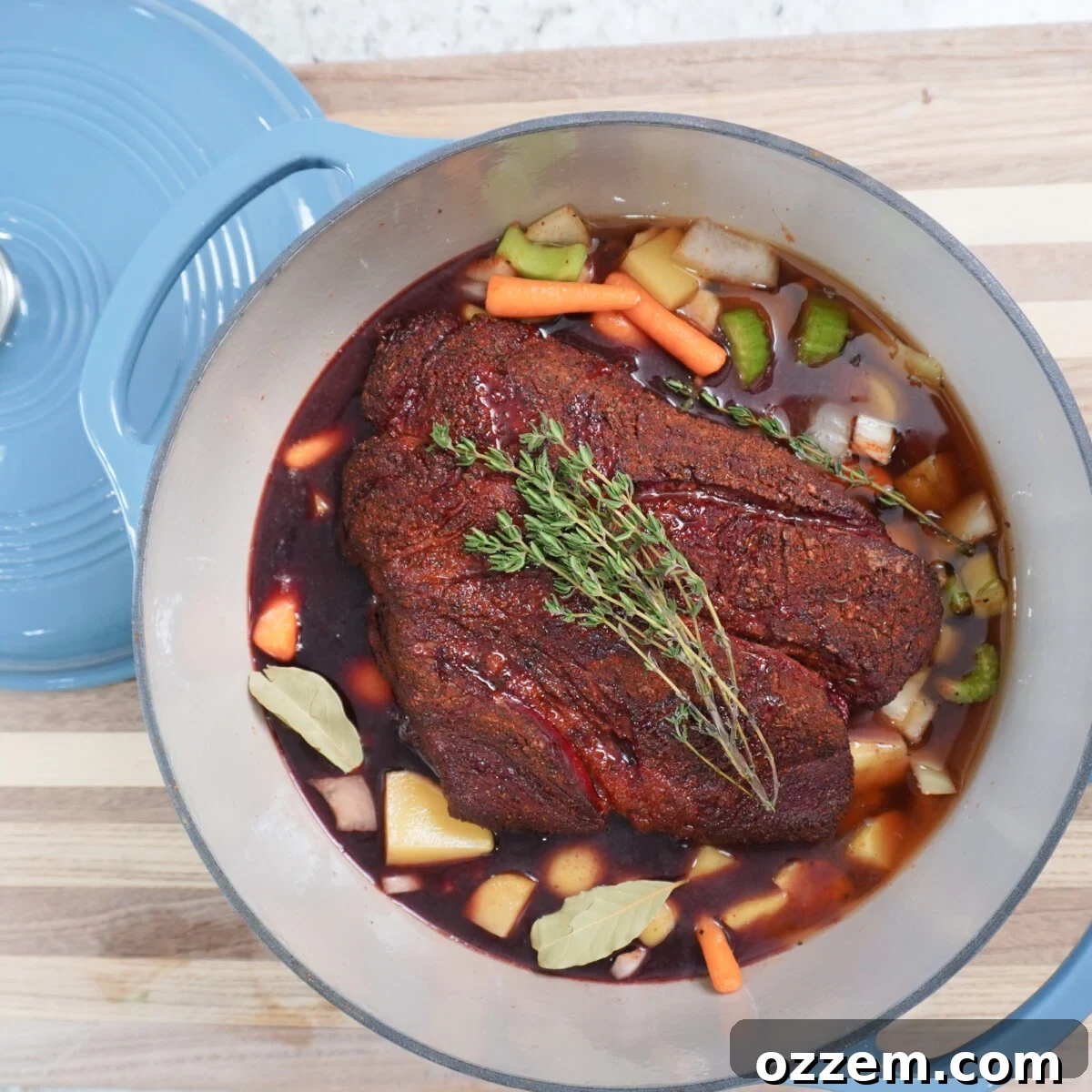
Tuck a few sprigs of fresh thyme and a couple of bay leaves into the liquid around the roast. These aromatics will slowly release their essential oils, perfuming the entire dish. Securely close the lid of the Dutch oven and place it back onto the grill. Increase the grill’s temperature to 300 degrees Fahrenheit (approximately 150 degrees Celsius). This higher temperature is suitable for braising. At this stage, the grill’s primary function is heat, not smoke. So, if convenience calls, you can absolutely transfer your Dutch oven to a conventional oven or even place it on the stovetop over low heat to finish the braising process indoors. No more smoke will penetrate the dish at this point, making it perfectly acceptable to cook inside.
The braising period will typically take between 2 to 4 hours. The precise time depends on the size and thickness of your chuck roast and the consistency of your heat. The ultimate indicator of readiness is when the meat is incredibly “fork tender” – meaning a fork can be inserted and twisted with minimal resistance, causing the meat to easily flake apart.
Shredding Your Tender Braised Chuck Roast
After 3-4 hours of patient braising, your **easy smoked pot roast dinner** should have reached that coveted state of fork-tenderness. This is the moment when all that low-and-slow cooking pays off. To confirm, gently insert a fork into several different parts of the meat; it should slide in effortlessly, **like a hot knife through butter**, indicating that the connective tissues have completely broken down, leaving behind succulent, tender beef.
Once tender, carefully remove the chuck roast from the Dutch oven. Also, retrieve and discard the sprigs of thyme and bay leaves from the braising liquid; their work is done. Transfer the roast to a large cutting board or a sturdy dish for shredding.
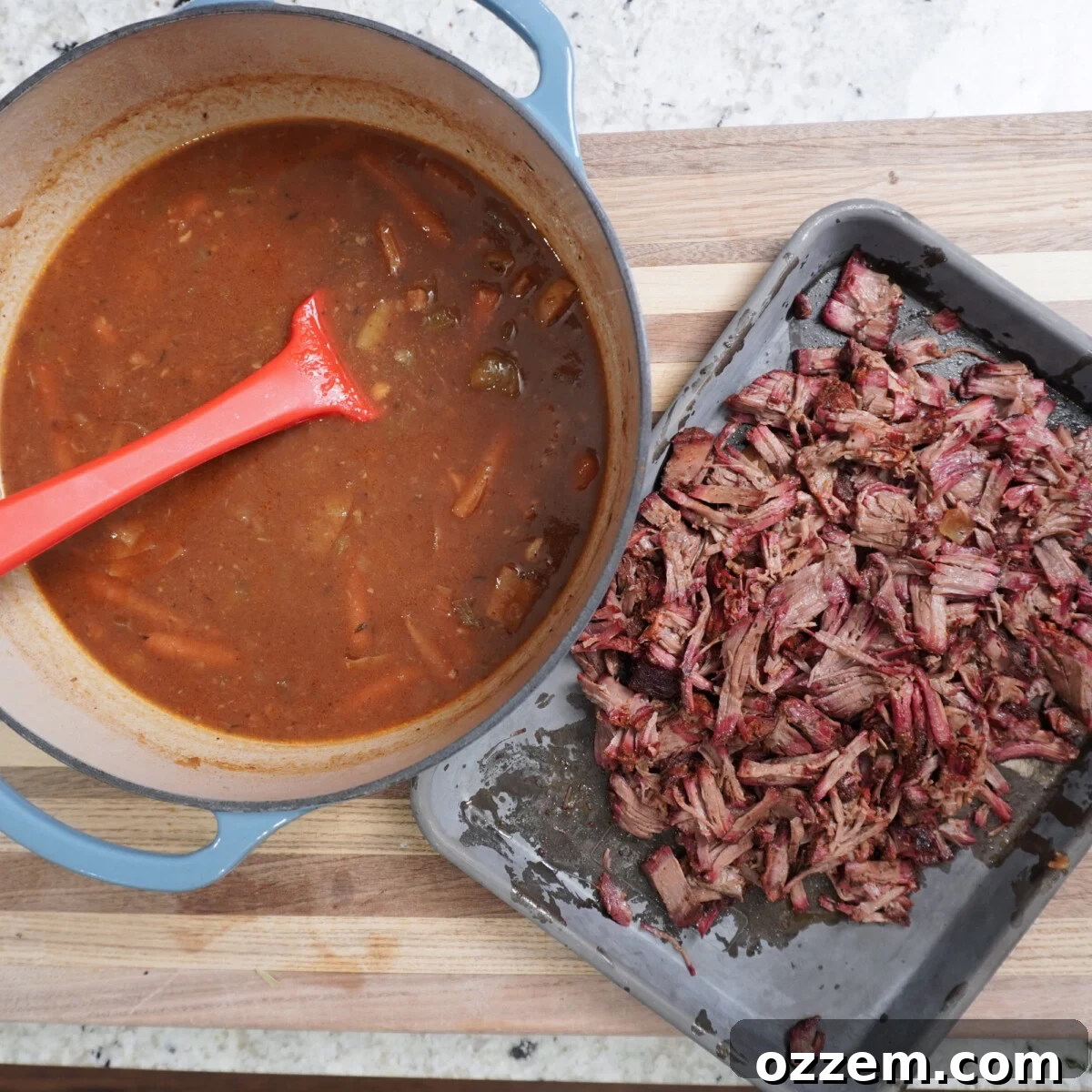
Be mindful that the braised chuck roast will be incredibly hot, so safety is paramount. We highly recommend using heat-resistant gloves or at least glove liners under nitrile gloves for protection. Alternatively, two sturdy forks can be used to pull the meat apart. Begin to carefully shred the chuck roast, separating the muscle fibers. As you shred, keep an eye out for any larger pieces of unrendered fat or tougher connective tissue that you might prefer to discard, ensuring every bite is pure perfection. The meat should pull apart effortlessly into delicious strands.
Mastering Gravy: How to Thicken Braising Liquid
A truly exceptional pot roast isn’t complete without a rich, velvety gravy to coat every tender piece of beef and vegetable. After removing the shredded chuck roast, you’re left with a flavorful braising liquid, often referred to as “jus.” There are several tried-and-true methods to thicken this liquid into a luscious gravy, allowing you to choose the technique that best suits your preference and culinary comfort.
The most common and straightforward method involves making a **slurry**. This entails mixing equal parts cold water and cornstarch until a smooth, lump-free paste forms. Gradually whisk this slurry into the simmering braising liquid in your Dutch oven. Continue to whisk gently as the liquid heats, and you’ll notice it begin to thicken within a minute or two. The cornstarch provides a clear, glossy finish to your gravy.
Another classic and highly effective method, which we used for our **easy smoked pot roast recipe**, is creating a ***beurre manié***. This French technique involves combining equal parts soft, room-temperature butter and all-purpose flour to form a smooth paste. Once your *beurre manié* is ready, drop small pieces of the paste into the simmering braising liquid, whisking continuously until they dissolve and the sauce begins to thicken. The butter in the *beurre manié* adds an extra layer of richness and a silky texture to the gravy, and the flour provides a slightly opaque, more traditional gravy appearance. Continue to cook for a few minutes after thickening to ensure the raw flour taste is cooked out.
Once your gravy has reached the desired consistency, return the shredded smoked and braised chuck roast to the pot, gently mixing it with the vegetables and gravy. This ensures every strand of beef is enveloped in that delicious sauce.
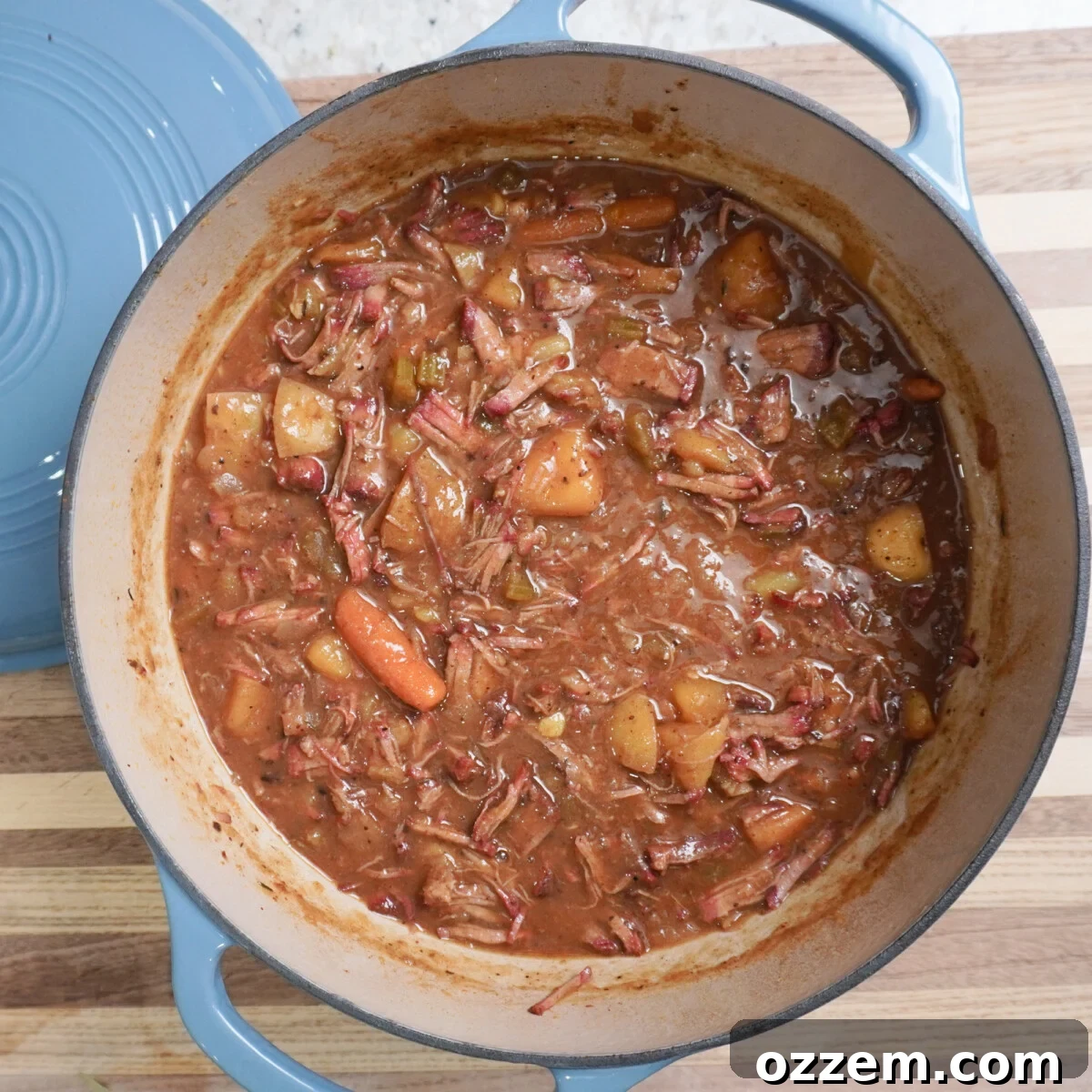
For a final quality check, taste the smoked pot roast. This is your opportunity to adjust the seasoning to perfection. Does it need more salt or pepper to truly sing? For an extra pop of flavor, a touch more seasoning can make a big difference. Is it rich but perhaps lacking a little brightness? A few additional splashes of red wine vinegar can introduce a balancing acidity that cuts through the richness and elevates the entire dish.
Serve this delicious and savory easy smoked pot roast dinner generously in deep bowls. A sprinkle of freshly chopped parsley as a garnish adds a vibrant touch of color and a hint of freshness. Now, gather your loved ones and savor every comforting bite!
Frequently Asked Questions About Smoked Pot Roast:
Absolutely! While the smoker adds an incredible depth of flavor, you can achieve a fantastic pot roast indoors. Instead of smoking, begin by searing the chuck roast vigorously in a large Dutch oven or heavy pot on the stovetop until deeply browned on all sides. This creates a rich crust and fond that will enhance the final flavor. Then, simply follow the remainder of the recipe as listed, placing the Dutch oven into your conventional oven to braise instead of using the smoker. The low and slow braising will still yield incredibly tender meat.
The undeniable secret to achieving a wonderfully tender beef stew or pot roast lies in the “low and slow” cooking method. Cuts like chuck roast, which are rich in connective tissue (collagen), need extended periods of gentle heat. This prolonged exposure at lower temperatures allows the collagen to slowly break down and convert into gelatin, which is what gives the meat its fall-apart texture and contributes to the richness of the sauce. Rushing the process will result in tough, chewy meat. Patience is key!
If you prefer not to use wine, you can easily replace it with an equal amount of beef broth. To compensate for the acidity that red wine typically contributes, which is important for balancing the richness of the dish, we recommend adding a tablespoon of red wine vinegar to the braising liquid. This simple adjustment will maintain a harmonious flavor profile without the alcohol.
Yes, pot roast is an excellent make-ahead meal! In fact, the flavors often deepen and meld even more beautifully after a day in the refrigerator. Prepare the entire dish as instructed, then allow it to cool completely before transferring it to an airtight container. Reheat gently on the stovetop or in the oven over low heat until warmed through, adding a splash of extra broth if needed to loosen the gravy.
Given that this pot roast is a complete meal with meat and vegetables, classic accompaniments enhance the experience. Creamy mashed potatoes are always a hit, perfect for soaking up every last drop of gravy. Crusty bread or dinner rolls are also excellent choices. For a lighter touch, a simple green salad with a vinaigrette dressing provides a lovely contrast to the richness of the pot roast.
More Hearty Recipes to Explore
Beef
Cornbread Cowboy Casserole: A Smoked Beef Delight
Chicken & Turkey
Over The Top White Chicken Chili: Creamy & Comforting
Beef
Hearty Smoked Meat Pie: A Savory Classic
Pork
Smoked Pit Beans: The Ultimate BBQ Side Dish
If you tried this Easy Smoked Pot Roast Dinner or any other recipe on my blog, please leave a 🌟 star rating and let me know how it went in the📝 comments. I love hearing from you!
Print Recipe
Easy Smoked Pot Roast Dinner
Ingredients
Smoked Chuck Roast Ingredients
- 3 lbs Chuck roast
- 1 tbsp Worcestershire sauce
- 2 tbsp All purpose rub
- 2 tbsp Steak seasoning
Pot Roast Ingredients
- 5 Yellow potatoes, cubed large
- 1/2 bag Baby carrots (or 2-3 large carrots, chopped into large pieces)
- 3 sticks Celery, thinly sliced
- 1/2 Yellow onion, cubed large
- 4 Garlic Cloves, thinly sliced
- 2 Bay leaves
- 3 sprigs Fresh Thyme
- 3 cups Low-sodium Beef broth
- 1 cup Dry Red wine (e.g., Cabernet Sauvignon, Merlot)
- 1 tbsp Red wine vinegar (optional, for acidity balance)
- 1 tbsp All purpose rub (for veggies)
- Handful of fresh chopped parsley (for garnish)
Gravy Thickener (Beurre Manié Method)
- 2 tbsp All purpose flour
- 2 tbsp Room temperature Butter
Instructions
-
Generously coat the chuck roast with Worcestershire sauce as a binder. Then, season all sides thoroughly with an equal mix of your all-purpose rub and steak seasoning. Ensure even coverage for a robust bark.
-
Preheat your smoker to a steady 225°F (107°C). If using a charcoal or gas grill, set it up for indirect heat, adding wood chunks for smoke.
-
Place the seasoned chuck roast directly on the smoker grates and smoke for 4 hours. This step infuses it with flavor and builds a savory bark.
-
While the roast smokes, prepare your vegetables. Cube yellow potatoes and onion into large pieces. Thinly slice celery and garlic cloves. Use whole baby carrots or chop regular carrots into substantial chunks. Place all prepped vegetables into a large Dutch oven.
-
Season the vegetables with an all-purpose rub and toss to combine thoroughly.
-
After 4 hours, the chuck roast should have developed a beautiful dark bark. Carefully transfer it from the smoker and place it on top of the seasoned vegetables in the Dutch oven.
-
Pour in the beef broth and red wine. Add enough liquid to just touch the bottom of the roast, avoiding full submersion.
-
Add the fresh thyme sprigs and bay leaves to the liquid. Cover the Dutch oven tightly with its lid and place it back on the grill (or transfer to an oven or stovetop). Increase the cooking temperature to 300°F (150°C). Braise for 2-3 hours, or until the chuck roast is fork-tender.
-
Once the chuck roast is undeniably fork-tender, carefully remove the Dutch oven from the heat source. Remove and discard the thyme sprigs and bay leaves.
-
Using heat-resistant gloves or two sturdy forks, carefully begin to shred the chuck roast. Discard any large fatty chunks that you don’t wish to include.
-
Taste the braising liquid (now your gravy) and adjust for salt, pepper, and acidity. Add more seasoning if needed, or a few splashes of red wine vinegar for brightness.
-
To thicken the gravy using the *beurre manié* method: In a small bowl, mix the room-temperature butter and all-purpose flour together to create a smooth paste. Drop small portions of this paste into the simmering braising liquid, whisking continuously until the sauce thickens and achieves a luxurious texture. Cook for a few minutes to ensure the flour taste is cooked out. Then, return the shredded meat back into the Dutch oven with the gravy and vegetables.
-
Plate the tender veggies with plenty of shredded meat and a generous ladle of the rich gravy. Garnish with fresh chopped parsley before serving. Enjoy your delicious, homemade Easy Smoked Pot Roast Dinner!
Notes
- **Binder Choice:** Feel free to use a binder that works best for you. Options include hot sauce, yellow mustard, or olive oil. None will leave any residual taste in the meat, except for hot sauce which may impart a subtle hint of heat.
- **Vegetable Size Matters:** Avoid chopping your vegetables into small, bite-sized chunks. During the extended braising period, smaller pieces tend to break down and become mushy. Larger cuts ensure the vegetables retain their texture and contribute to the hearty nature of the meal.
- **Wine Alternative:** If you prefer not to use wine, simply substitute the specified amount with additional beef broth. To maintain the dish’s flavor balance, add one tablespoon of red wine vinegar to the braising liquid for that touch of acidity.
Nutrition
Love this recipe? Share your thoughts below!Your feedback helps us create more delicious content.