
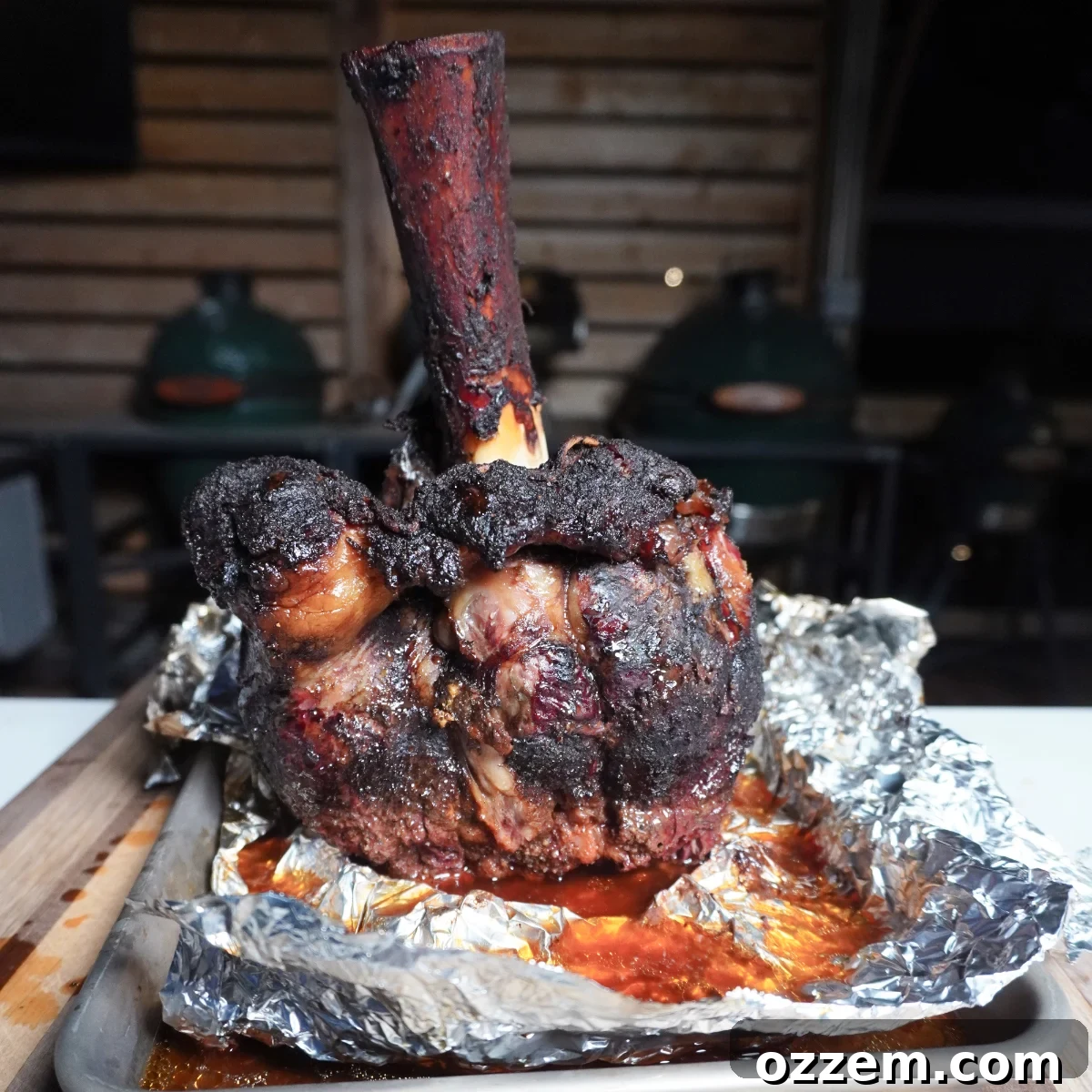
Prepare to impress with a culinary masterpiece that’s as stunning to behold as it is delicious to devour: the Smoked Beef Shank, affectionately known as “Thor’s Hammer.” This unique cut of beef has captivated grill masters and home cooks alike, thanks to its impressive presentation – a substantial bone protruding from a generous mass of perfectly cooked meat, reminiscent of a mythical weapon. Beyond its dramatic appearance, this dish promises an unparalleled depth of flavor and a supremely tender texture, making it a true showstopper for any gathering.
Beef shank, sourced from the leg of the cow, is traditionally considered a tough and lean cut. Its inherent toughness usually relegates it to slow-cooked stews and braises, such as a classic beef bourguignon, or it’s often ground for low-fat beef preparations. However, when treated with the patience and expertise of low-and-slow smoking, beef shank undergoes a remarkable transformation. The long cooking process breaks down its abundant connective tissues, yielding a piece of meat that is incredibly tender, bursting with flavor, and wonderfully juicy. Forget everything you thought you knew about this humble cut – a properly smoked beef shank elevates it to gourmet status. For another mouth-watering beef recipe, be sure to check out my Smoked Italian Beef Style Sandwich recipe!
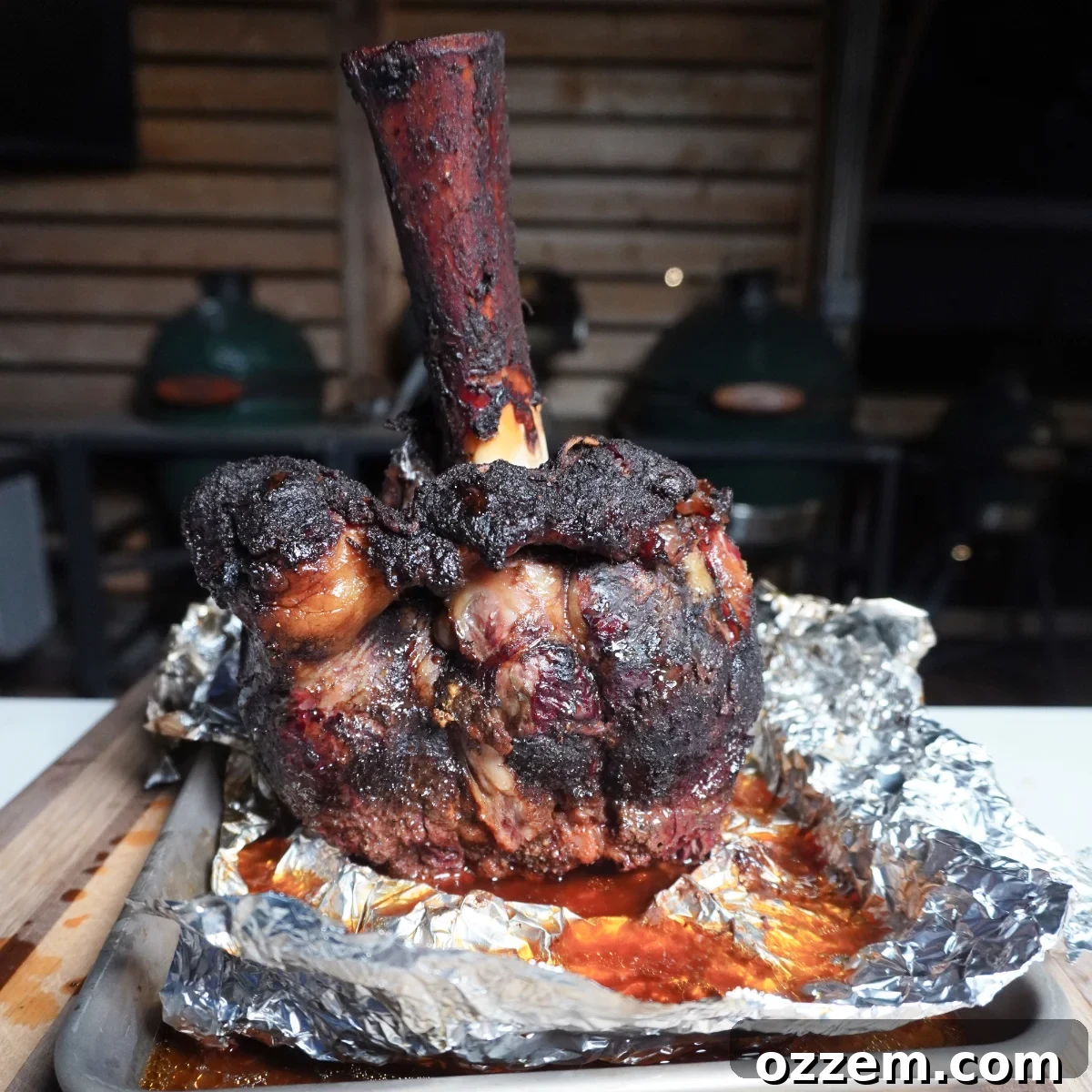
Table of Contents
- Understanding Beef Shank: The Cut That Becomes Thor’s Hammer
- Step 1: Prep the Beef Shank for Smoking
- Step 2: Infuse Flavor: The Smoking Process
- Step 3: Tenderize and Finish: The Beer Wrap Method
- Frequently Asked Questions:
- Similar Recipe Ideas:
- Smoked Beef Shank Recipe
Understanding Beef Shank: The Cut That Becomes Thor’s Hammer
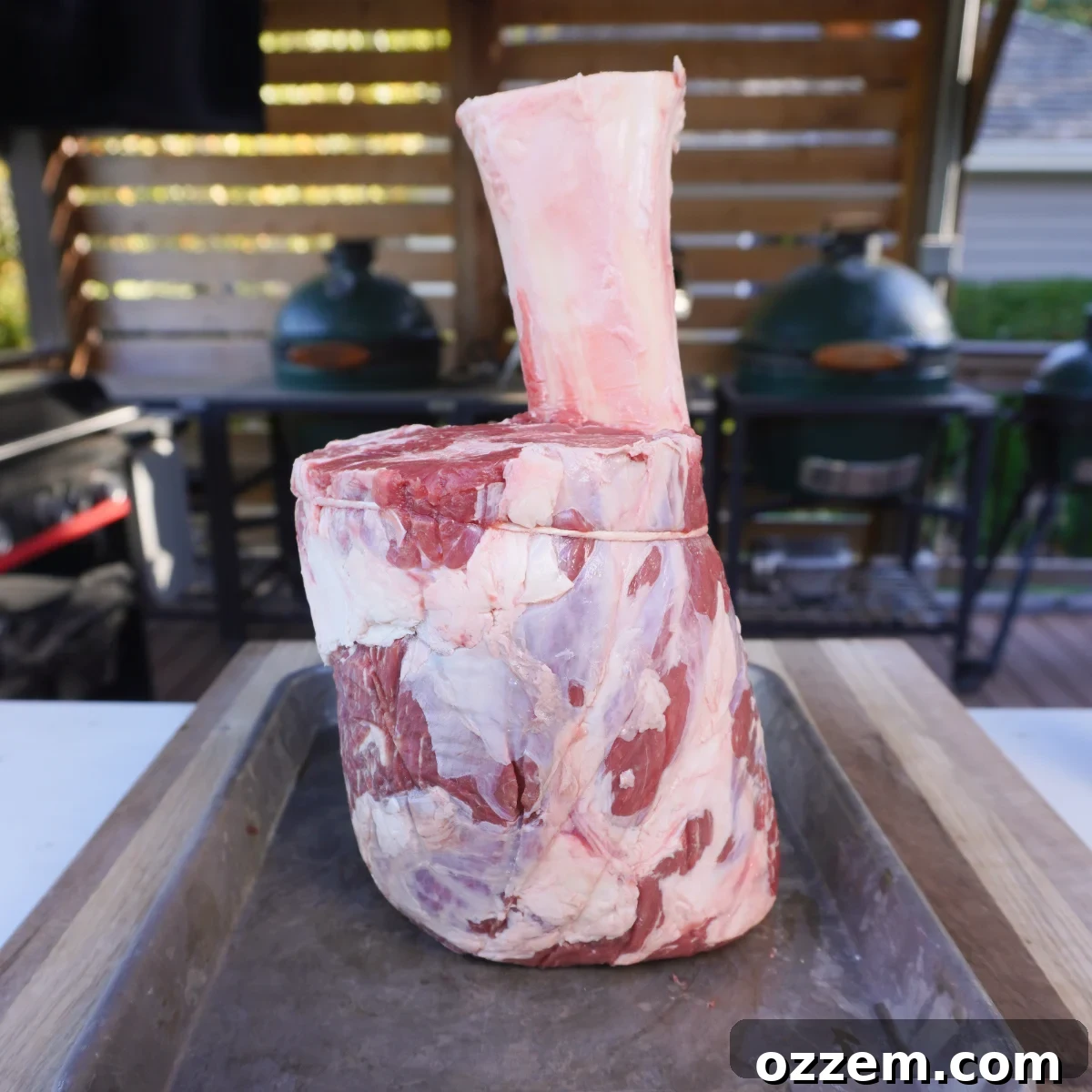
The beef shank is essentially the lower shin portion of a cow’s leg. It’s a hardworking muscle, which is why the meat is incredibly tough and lean. This toughness means it demands a significantly longer cooking time compared to more tender cuts like a ribeye or a New York strip steak. However, this toughness is also its secret strength. The shank is rich in collagen and connective tissue, which, with the right cooking method, slowly breaks down into gelatin, infusing the meat with moisture and a melt-in-your-mouth tenderness. The “Thor’s Hammer” presentation, where the meat is frenched (meat scraped clean from the end of the bone), is purely for visual appeal, making this hearty cut even more impressive on the plate. When prepared correctly, this beef hammer is not just a meal; it’s a triumph of flavor and texture!
Step 1: Prep the Beef Shank for Smoking
The journey to a perfectly tender and flavorful smoked beef shank begins with proper preparation. Because this is a substantial cut, generous seasoning is key to ensuring flavor penetrates deep into the meat.
Applying the Binder and Rub
To ensure your seasoning adheres beautifully and creates that irresistible “bark,” start by applying a binder. I opted for yellow mustard, which is a fantastic choice. Don’t worry, the mustard flavor cooks off, leaving behind a subtle tang that complements the beef and helps the rub stick effectively. Other popular binders include olive oil, hot sauce, or even water. Whichever you choose, ensure an even, thin coat across the entire surface of the meat.
Following the binder, it’s time for the seasoning. I recommend applying a very generous amount of your favorite all-purpose rub – in my case, Dad’s All Purpose rub – paired with freshly ground black pepper. The all-purpose seasoning provides a savory foundation with notes of salt, paprika, and other spices, while the black pepper adds a sharp, aromatic kick without introducing excessive heat. Remember, this is a large cut of meat, so don’t be shy with the seasoning. Ensure every crevice and surface is thoroughly coated, as this will build layers of flavor throughout the long smoking process.
Resting at Room Temperature
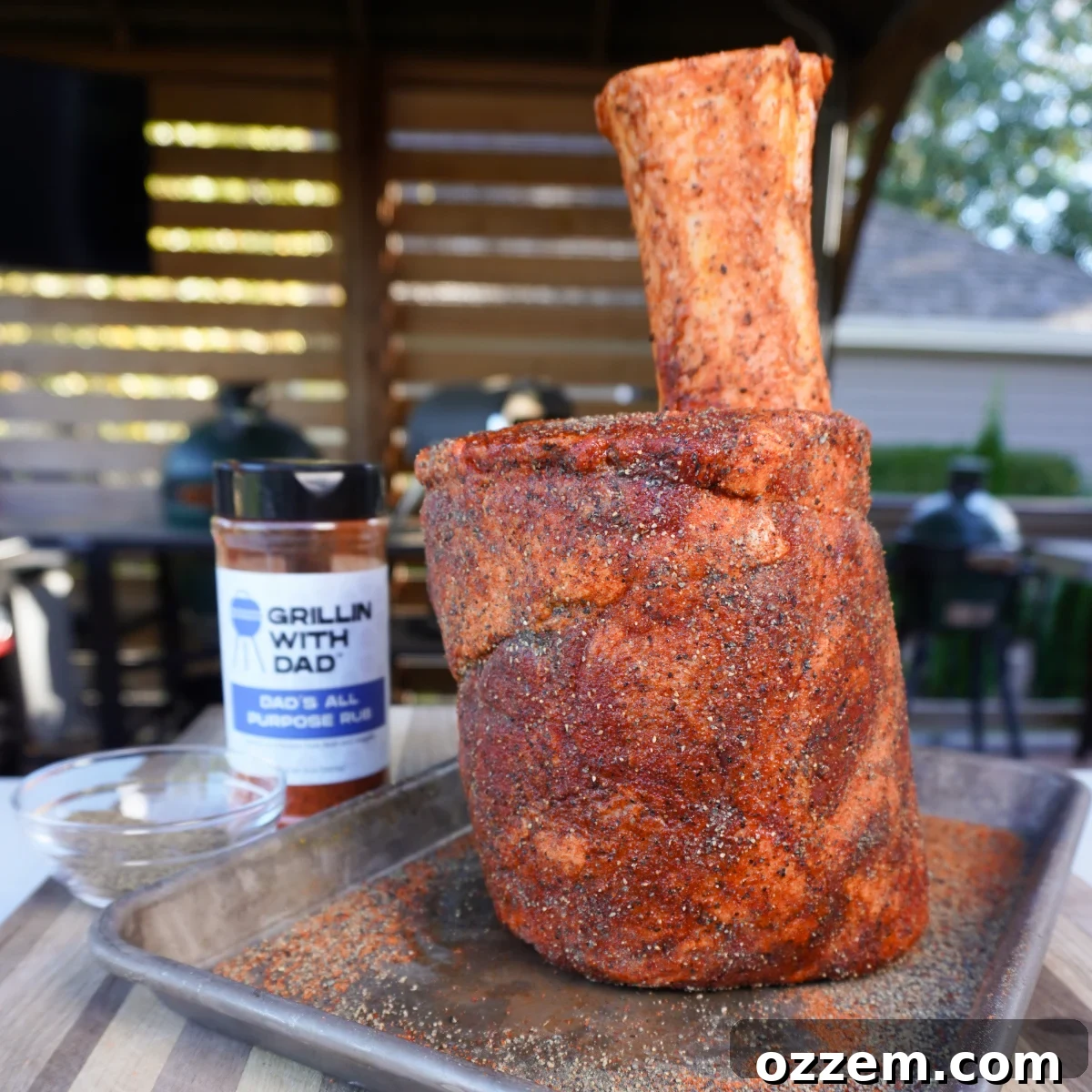
Once seasoned, let the beef shank rest at room temperature for approximately an hour. This step serves two crucial purposes: first, it allows the rub to “set” and begin to draw moisture from the surface of the meat, forming a sticky layer that will eventually become a flavorful bark. Second, it brings the meat’s internal temperature up slightly, allowing for a more even cook once it hits the smoker. This reduces the time it takes for the center to reach the desired temperature, preventing the outer layers from overcooking while the inside struggles to catch up.
Step 2: Infuse Flavor: The Smoking Process
The magic of Thor’s Hammer truly comes alive during the smoking phase, where patience is a virtue and the “low and slow” mantra reigns supreme. This extended exposure to smoke will not only cook the beef but also impart a rich, smoky flavor that transforms the entire dish.
Setting Up Your Smoker
Begin by preheating your grill or smoker to a consistent 250 degrees Fahrenheit. The key here is indirect heat, which ensures the meat cooks gently without charring and allows the smoke to penetrate deeply. For this recipe, I used my dedicated smoker, which provided ample space to accommodate the entire beef shank. If using a grill, set it up for two-zone cooking, placing the meat on the cooler side away from the direct heat source. Choose your preferred smoking wood – hickory, oak, or mesquite will provide a robust smoky flavor that pairs wonderfully with beef. Cherry or apple wood can offer a milder, fruitier smoke if you prefer.
The Initial Smoke
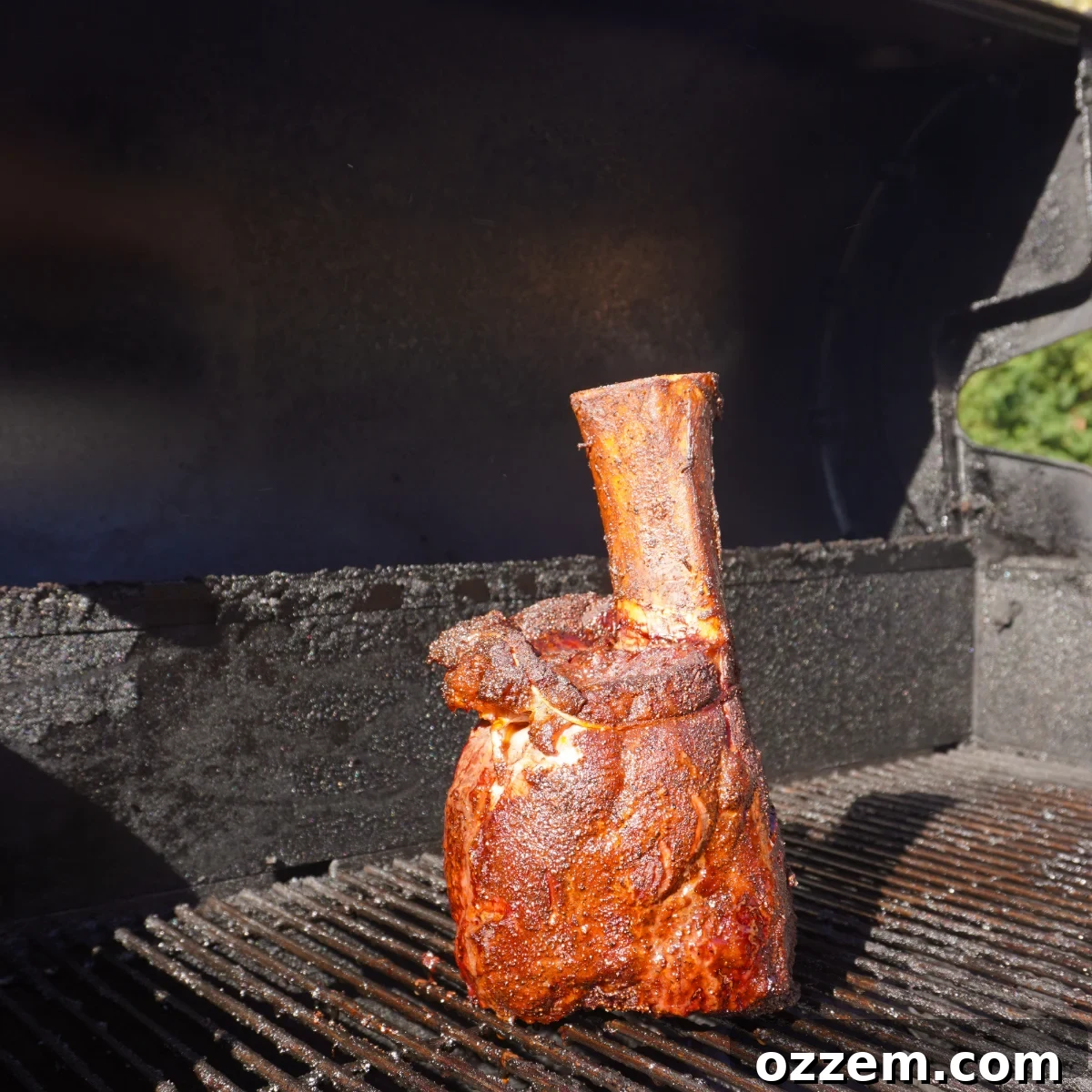
Carefully place the seasoned beef shank upright on the grill grates, ensuring good airflow around all sides. Allow it to smoke for approximately 6 hours during this initial phase. This slow cooking will gradually tenderize the beef and, more importantly, infuse it with that distinctive, rich smoky essence. Monitor your smoker’s temperature regularly to maintain consistency. During this stage, the internal temperature of the beef shank should slowly climb to between 160-170 degrees Fahrenheit. This is often referred to as “the stall,” where moisture evaporating from the surface of the meat causes the temperature to plateau. Don’t be alarmed; this is a natural part of the smoking process and indicates that the muscle fibers are beginning to break down.
Step 3: Tenderize and Finish: The Beer Wrap Method
Once the beef shank has absorbed ample smoke and reached its initial temperature target, it’s time for the final, critical phase of tenderization. This involves wrapping the meat to braise it in its own juices and added liquid, ensuring it becomes fall-off-the-bone tender.
The Beer Wrap (Texas Crutch)
After approximately 6 hours of smoking and reaching an internal temperature of 160-170 degrees, carefully remove the beef shank from the smoker. Prepare a large sheet of heavy-duty aluminum foil (or butcher paper if you prefer, though foil provides more moisture retention). Tightly wrap the smoked beef shank, adding about 1/2 can of beer to the foil before sealing it. The beer serves multiple purposes: it adds a subtle layer of complex flavor, and its moisture helps to steam the meat, further breaking down tough connective tissues. You can use any beer you enjoy, but a darker ale or lager often complements the rich beef flavor well. If you prefer not to use beer, beef broth, apple cider vinegar, or even plain water can be used to add moisture.
Seal the foil tightly, creating a snug packet around the beef shank. Return the wrapped shank to the smoker and increase the temperature to 275 degrees Fahrenheit. This slight increase in temperature will help push the meat through the remainder of the cooking process, focusing on tenderization.
Achieving Fork Tenderness
Continue cooking the wrapped beef shank until it is “fork tender.” This means that when you insert a probe or fork into the thickest part of the meat (away from the bone), it should slide in with very little resistance, much like pushing into a stick of warm butter. I typically start checking for tenderness around the 200-degree internal temperature mark. However, remember that tenderness, not just temperature, is the ultimate indicator of doneness for tough cuts like shank. If the meat still feels firm, rewrap it tightly, continue cooking, and check again in 30-minute intervals. This final stage can take anywhere from 2 to 4 hours, depending on the specific cut and your smoker’s consistency. Do not rush this step; patience here will be rewarded with incredibly succulent meat.
Resting and Serving
Once the beef shank reaches optimal tenderness, remove it from the smoker. Crucially, keep it wrapped in the foil and let it rest for a minimum of 30-45 minutes. This resting period is just as important as the cooking itself. Similar to resting a brisket, it allows the muscle fibers to relax and reabsorb the flavorful juices that have been pushed to the center during cooking. Skipping this step can result in dry meat, as all those delicious juices will simply run out when you cut into it. The resting process also allows the internal temperature to equalize, leading to a more consistently tender product.
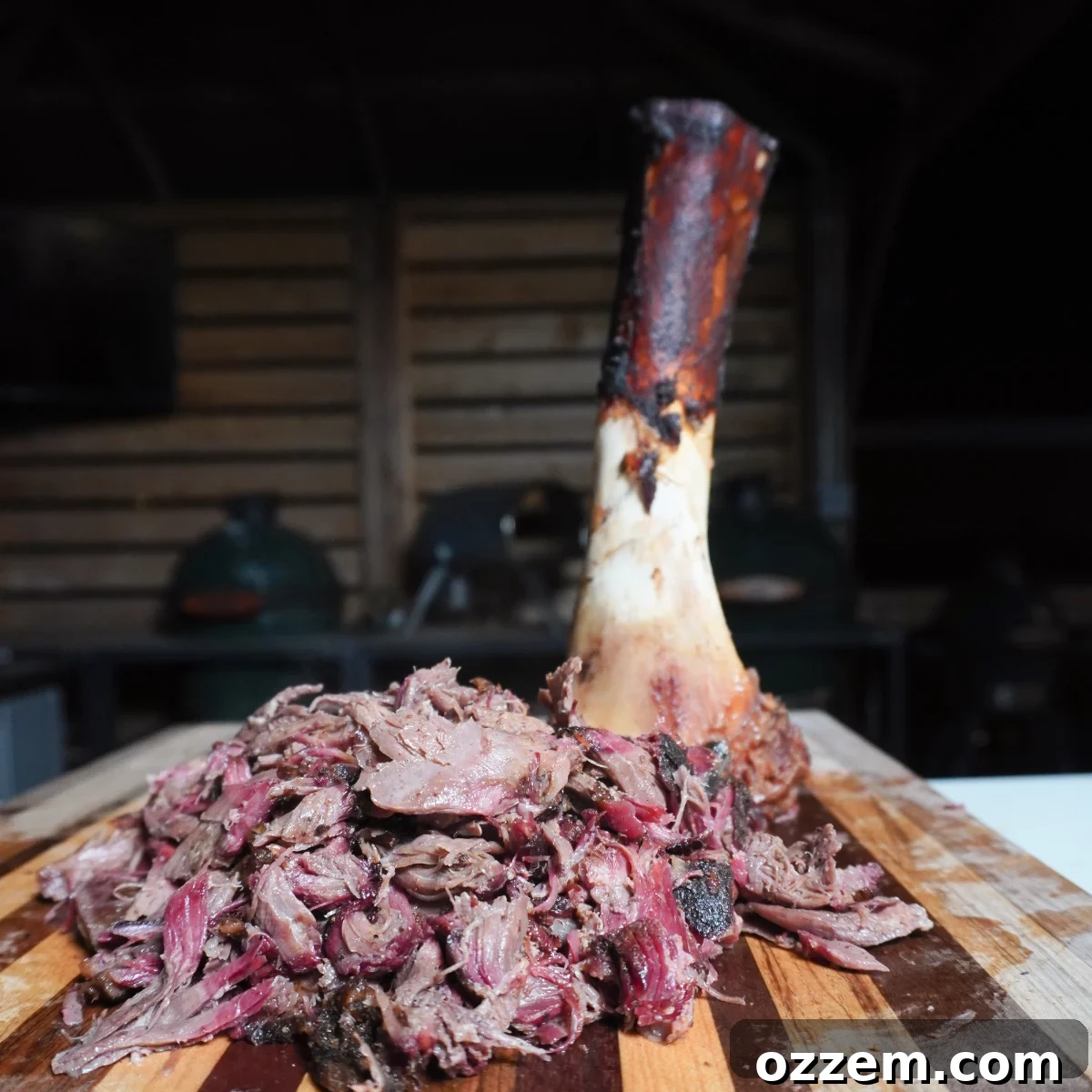
Finally, unwrap the glorious Thor’s Hammer! The meat should be incredibly tender, easily shredding off the bone. The possibilities for serving are endless: enjoy it as is, piled high on a plate with your favorite sides, or get creative. It makes fantastic tacos, incredible sandwiches (like a French dip or classic pulled beef), or a rich topping for pasta or nachos. The meat will boast a profound beefy flavor, a wonderful smoky essence, and an undeniable deliciousness that will have everyone reaching for more.
Want to save this recipe?
Just enter your email and get it sent to your inbox! Plus you’ll get new recipes from us every week!
Frequently Asked Questions:
Absolutely! While you won’t achieve the distinctive smoky flavor that comes from a grill or dedicated smoker, you can certainly cook a beef shank in your oven or even on the stovetop using a Dutch oven. Follow the same time and temperature guidelines for the wrapped phase. For the initial ‘smoking’ phase, you can sear the shank for a good crust, then braise it in a low oven (around 250-275°F) with some liquid for an extended period until tender. It will still be incredibly delicious and tender.
For beef, robust woods like hickory, oak, or mesquite are excellent choices, imparting a strong, classic smoky flavor that stands up well to the richness of the meat. If you prefer a milder smoke, cherry or apple wood can also be used, offering a slightly sweeter, fruitier undertone.
Don’t panic! Tough cuts like beef shank can be unpredictable. The key is to cook to tenderness, not just a specific time or temperature. If it’s not tender, rewrap it tightly, add a splash more liquid (beer or broth), and return it to the smoker or oven. Continue cooking, checking for tenderness every 30-60 minutes, until a probe slides in with minimal resistance. This could add an hour or two to the total cook time, but it’s essential for achieving the desired texture.
Shredded smoked beef shank can be stored in an airtight container in the refrigerator for up to 3-4 days. It also freezes exceptionally well! Portion the shredded meat into freezer-safe bags or containers with a little bit of the cooking liquid, and it can be stored for up to 3 months. Thaw in the refrigerator overnight and reheat gently on the stovetop or in the microwave.
Similar Recipe Ideas:
Beef
Smoked Chili Hot Dog
Beef
Cornbread Cowboy Casserole
Beef
Chuck Roast Burnt Ends
Beef
Smoked Short Ribs
If you tried this Smoked Beef Shank or any other recipe on my blog, please leave a 🌟 star rating and let me know how it went in the📝 comments. I love hearing from you!
Smoked Beef Shank
Ingredients
- 1 Frenched beef shank
- 4 tbsp Dad’s all purpose rub
- 2 tbsp Black pepper
- 2 tbsp Yellow mustard
- 1/2 can Beer
Instructions
-
Coat the beef shank with yellow mustard as a binder, then generously season with Dad’s All Purpose rub and black pepper. Allow it to rest at room temperature for about an hour.
-
Preheat your smoker to a consistent 250°F, set for indirect heat. Place the seasoned beef shank vertically on the grill grates. Smoke for approximately 6 hours, or until the internal temperature of the meat reaches between 160-170°F.
-
Carefully remove the smoked beef shank from the smoker. Wrap it tightly with a large sheet of aluminum foil, adding 1/2 can of beer (or beef broth) inside the wrap to provide moisture.
-
Increase the smoker temperature to 275°F. Return the wrapped beef shank to the smoker and continue cooking until the meat is “probe tender,” meaning a skewer or fork slides in with very little resistance. This typically takes an additional 2-4 hours, with tenderness usually achieved around 200-205°F internal temperature.
-
Once tender, remove the beef shank from the smoker. Keep it tightly wrapped in the foil and let it rest on a counter or in a cooler for 30-45 minutes. This allows the juices to redistribute, ensuring a moist and tender final product.
-
Finally, unwrap, shred the incredibly tender meat off the bone, and enjoy your impressive Smoked Beef Shank!
Nutrition
Like this recipe? Rate and comment below!