
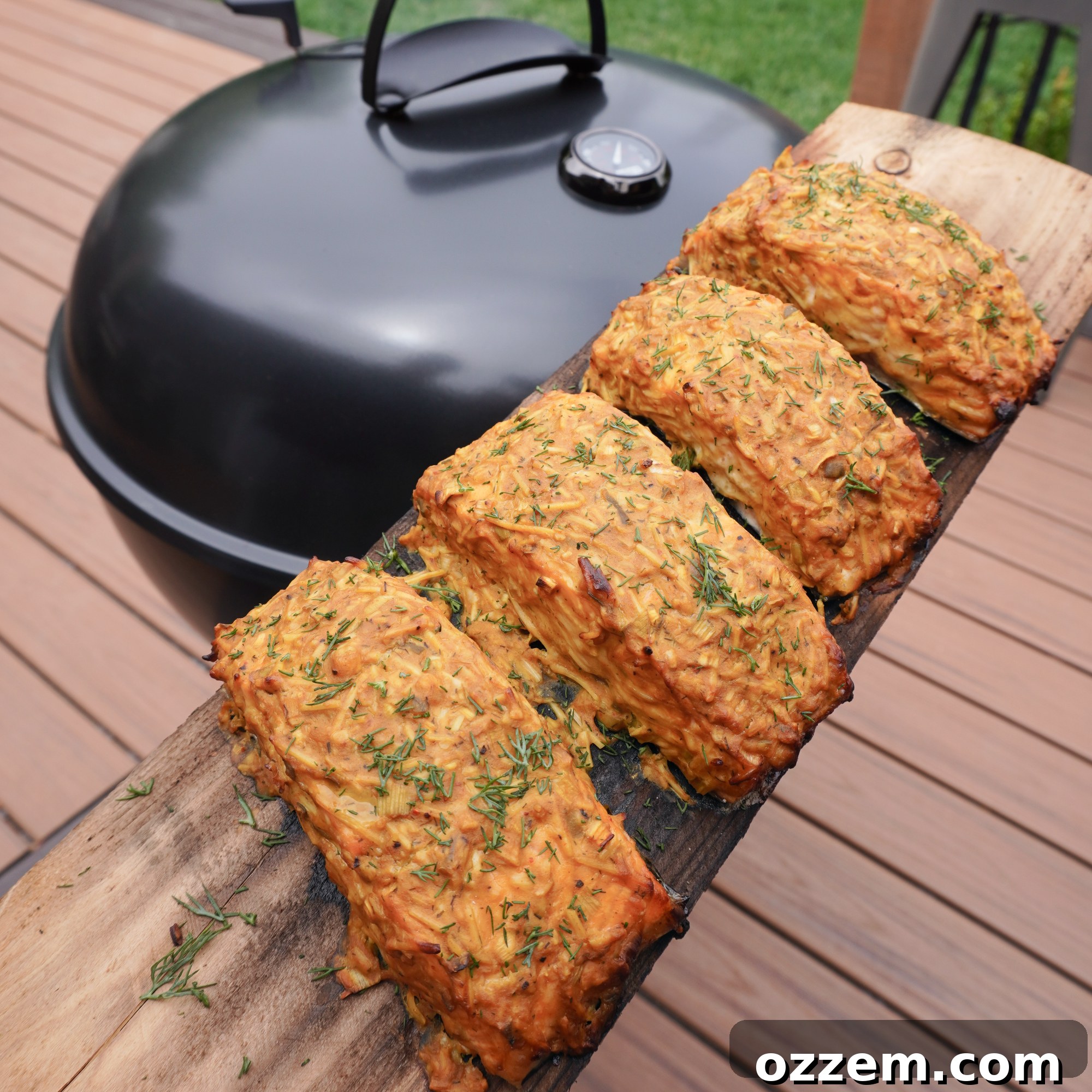
Prepare your taste buds for an extraordinary culinary experience with this incredible Grilled Salmon with Dill Mustard Sauce. This recipe is more than just a meal; it’s a celebration of summer flavors, offering a perfect harmony of tangy, savory, and herby notes that will undoubtedly become a staple in your warm-weather grilling repertoire. Featuring simple, fresh ingredients, straightforward preparation, and a cooking method that guarantees succulent results, you simply cannot go wrong. Get ready to discover your new favorite way to enjoy grilled fish.
If you’re a seafood enthusiast, be sure to explore more of our fantastic grilling recipes. Our easy grilled whole red snapper offers a different yet equally rewarding experience, while our grilled salmon in a lemon chimichurri sauce provides a vibrant, zesty alternative. Both are impeccably suited for those glorious summer grilling days.
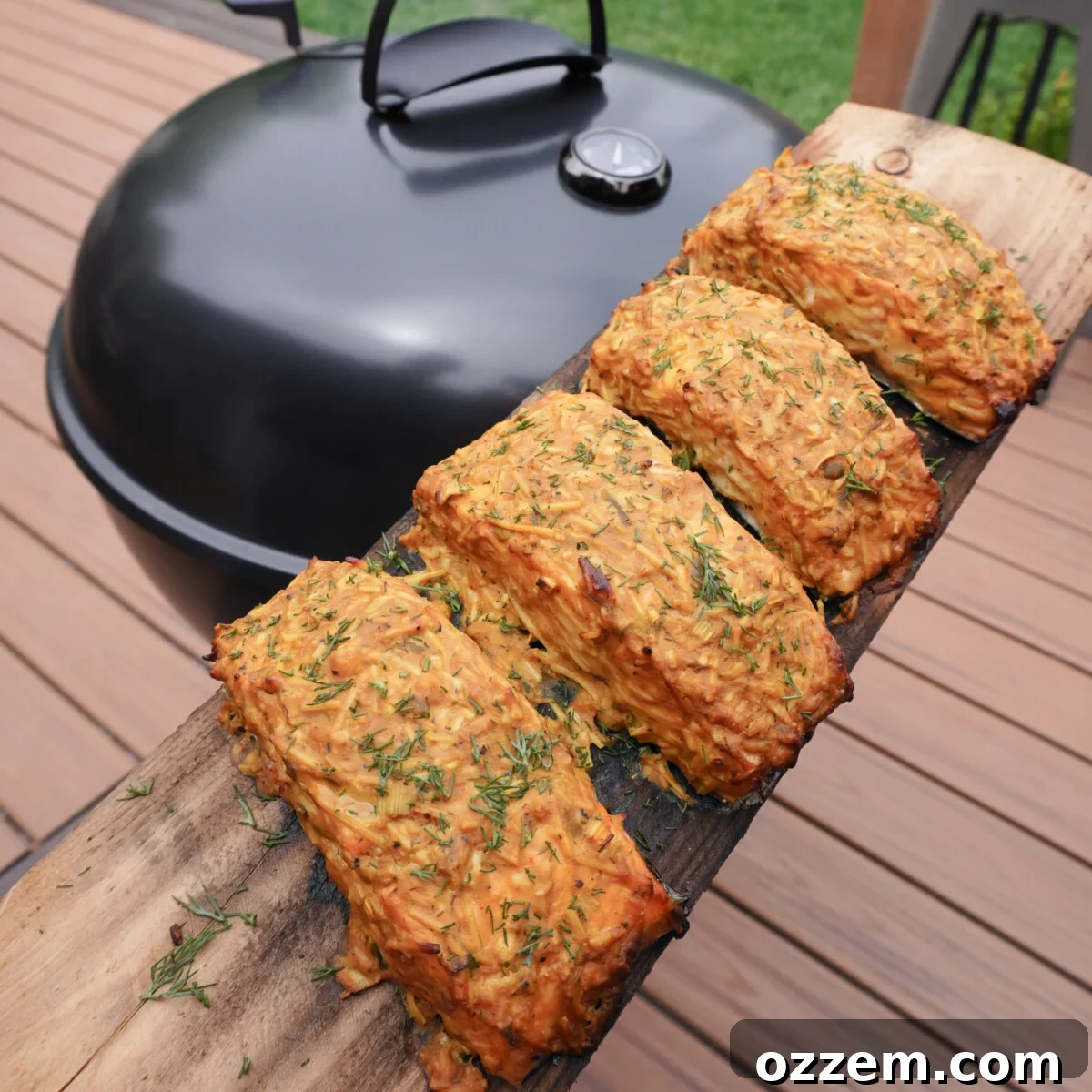
Table of Contents
- The Ultimate Grilled Salmon with Dill Mustard Sauce
- Essential Ingredients for this Flavorful Salmon
- Crafting the Perfect Dill Mustard Sauce
- Recipe Tip: DIY Dill Mustard
- Preparing Your Salmon for Grilling
- Mastering the Cedar Plank Preparation
- Grilling Salmon to Perfection on a Cedar Plank
- Frequently Asked Questions About Grilled Salmon
- More Mouthwatering Grilled Seafood Recipes
- Salmon with Dill Mustard Sauce Full Recipe
The Ultimate Grilled Salmon with Dill Mustard Sauce
There’s an undeniable joy that comes with grilling fish during the summer months. It’s a simple pleasure that delivers immense flavor without the heaviness often associated with richer meats. Fresh fish cooks quickly, making it an ideal choice for those long, hot, and often humid summer evenings when you want something light yet satisfying. Among the myriad of grilled fish recipes, salmon stands out for its robust texture, rich Omega-3 content, and incredible versatility.
Over the years, I’ve experimented with countless grilled salmon variations, from a luxurious crab-stuffed salmon that’s perfect for special occasions to a sweet and savory maple bourbon glazed salmon that offers a delightful caramelized crust. However, this particular recipe for salmon with dill mustard sauce has quickly risen through the ranks to claim a spot as my all-time favorite. It’s truly a game-changer.
The magic lies in the exquisite balance of flavors. The bright, tangy notes of the mustard cut through the richness of the salmon, while the aromatic dill infuses every bite with a fresh, earthy essence. This combination is a perfect complement to salmon’s naturally meaty and savory profile, creating a symphony of tastes that dance on your palate. The final flourish of freshly chopped dill, sprinkled just before serving, not only adds a burst of vibrant color but also enhances the fresh aromatics, elevating the dish to gourmet status.
This summer, I wholeheartedly encourage you to try this sensational grilled salmon with dill mustard sauce. It’s an easy, impressive, and healthy meal that promises to delight everyone at your table. Don’t forget to share your experience and let me know what you think!
Essential Ingredients for this Flavorful Salmon
Crafting a truly memorable dish begins with selecting quality ingredients. For this grilled salmon recipe, each component plays a crucial role in building the distinctive and delicious flavor profile. Here’s what you’ll need, along with some insights and tips for each:
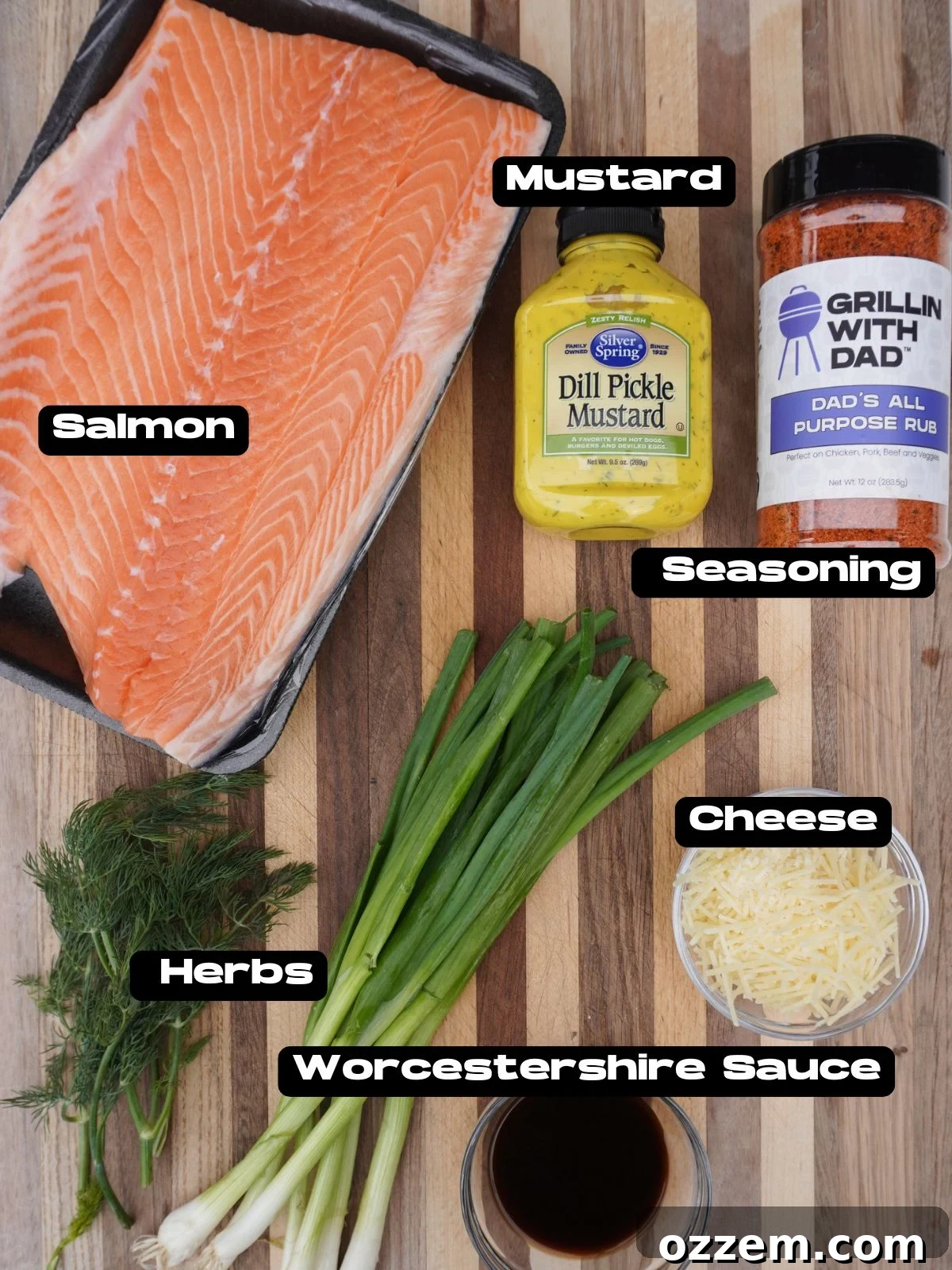
- Salmon: We recommend a fresh, high-quality salmon fillet. For this recipe, I used a beautiful 2-pound fillet, which I then divided into four even portions. When selecting salmon, look for vibrant, moist flesh with no browning or dry spots. Wild-caught salmon often has a richer flavor, while farmed salmon is typically more affordable and widely available. Aim for fillets that are roughly 1 to 1.5 inches thick for even cooking.
- Dill Pickle Mustard: This is the star ingredient of our sauce and truly what sets this recipe apart. Its unique blend of tangy mustard, savory dill, and subtle pickle notes provides an unparalleled depth of flavor. We highly recommend seeking out the dill pickle mustard from Silver Spring Foods for its exceptional quality and balanced taste. It’s a game-changer that adds a punch of flavor you won’t find in regular mustard.
- Shredded Parmesan: Adding a nutty, salty, and slightly savory dimension, shredded parmesan cheese perfectly balances the tanginess of the dill pickle mustard. It also contributes to the sauce’s thick, coating consistency, helping it adhere beautifully to the salmon during grilling. For the best flavor, opt for freshly shredded parmesan.
- Fresh Dill: While dill is already present in the mustard, a generous sprinkle of fresh dill after cooking is absolutely essential. It provides a bright, herbaceous finish, adding a fresh aromatic lift and a vibrant pop of color that truly completes the dish. Fresh herbs make a significant difference in taste and presentation.
- All-Purpose Seasoning: A dash of your favorite all-purpose seasoning (like Dad’s All Purpose seasoning) is included to provide foundational savory notes, as well as the perfect amount of salt and pepper. This helps to unify all the flavors in the sauce, ensuring a well-rounded and delicious result.
- Worcestershire Sauce: Just a touch of Worcestershire sauce adds a deep, savory, and umami richness to the dill mustard sauce. Its complex flavor profile enhances the overall depth, making the sauce even more compelling. Don’t skip this ingredient, as it adds a subtle yet significant layer of taste.
- Green Onion (white bulbs only): The inclusion of the white parts of green onions adds a mild, fresh onion flavor that complements the dill and mustard beautifully without overpowering the delicate salmon. Save the green tops for a garnish if desired.
Crafting the Perfect Dill Mustard Sauce
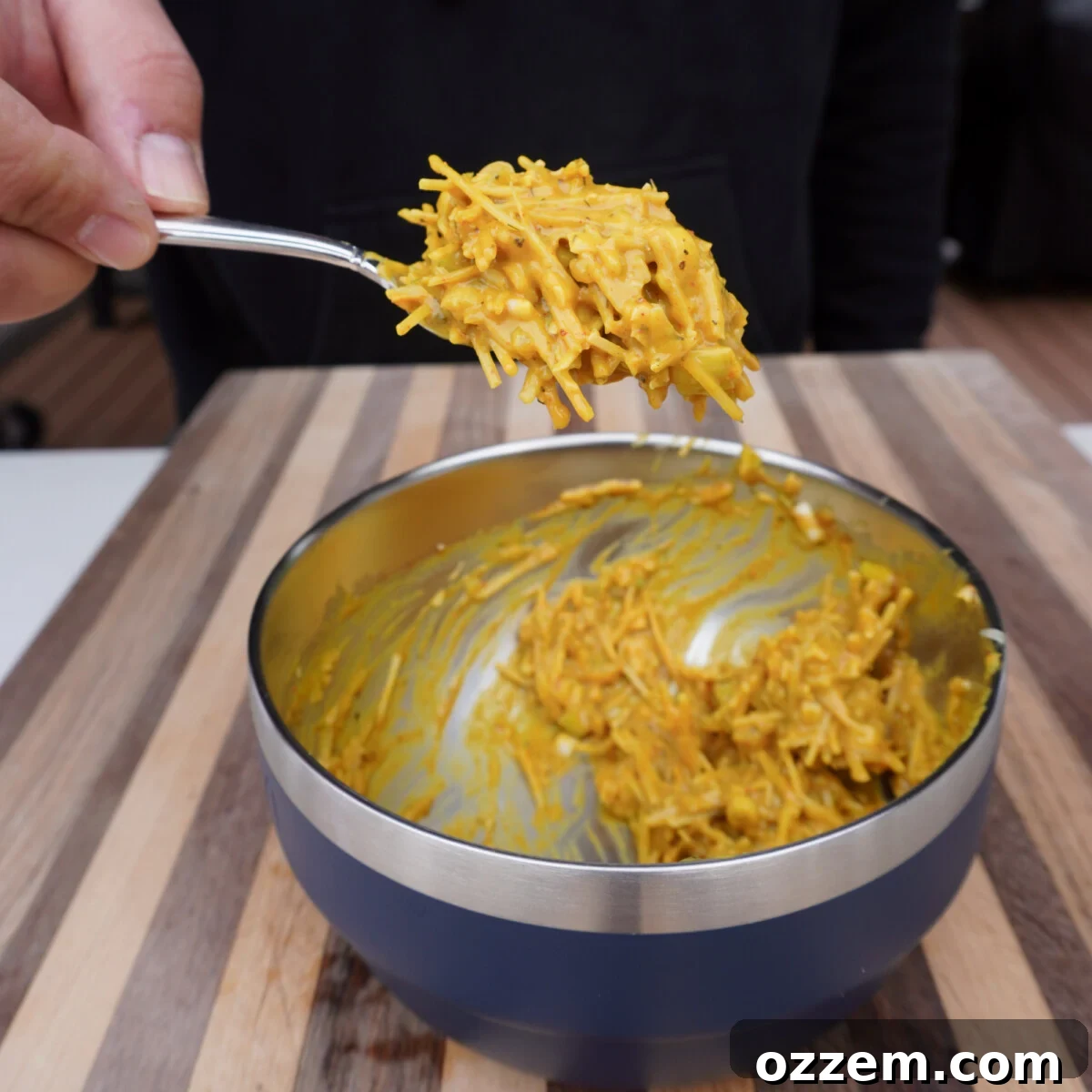
The dill mustard sauce is truly the heart and soul of this grilled salmon recipe. Unlike many traditional dill mustard sauces that are thin and typically drizzled over cooked fish, this rendition is designed to be a thick, robust coating. This unique consistency allows it to form a flavorful “shell” around the salmon during grilling, locking in moisture and infusing the fish with incredible taste as it cooks. It’s a method that ensures every bite is packed with the sauce’s delightful tang and herbiness.
The preparation couldn’t be simpler, making it accessible for even novice cooks. You’ll begin by gathering your ingredients in a medium-sized mixing bowl. The star of the show, of course, is the dill pickle mustard. As mentioned, I highly recommend the one by Silver Spring Foods. It truly offers the ideal balance of zesty mustard, aromatic dill, and a delightful pickled tang that forms the perfect base for our coating.
Recipe Tip: DIY Dill Mustard
Don’t fret if you can’t locate dill pickle mustard in your local grocery store! You can easily replicate its distinct flavor profile with a simple homemade substitute. Just combine good quality regular yellow mustard with finely chopped fresh dill and a splash of pickle juice. Experiment with the ratios until you achieve a flavor that’s both tangy and herbaceous, perfectly suiting your taste. This DIY approach ensures you can enjoy this recipe no matter where you shop.
Once your dill pickle mustard (or homemade substitute) is in the bowl, you’ll incorporate the remaining ingredients. Add the finely shredded parmesan cheese, which provides a lovely nutty counterpoint and helps thicken the sauce. Next comes the Worcestershire sauce, contributing its signature umami depth, followed by the chopped white bulbs of green onion for a subtle, fresh allium kick. Finally, sprinkle in your chosen all-purpose seasoning (like Dad’s All Purpose seasoning) to ensure a well-balanced flavor with just the right amount of salt and pepper.
With all ingredients in the bowl, simply mix everything together thoroughly until you have a smooth, uniform sauce. It should be thick enough to coat the back of a spoon without dripping excessively. Once mixed, set your flavorful dill mustard sauce aside, ready to be slathered onto your prepared salmon fillets. This sauce can even be made an hour or two in advance and refrigerated, allowing the flavors to meld beautifully before grilling.
Dad’s Seasonings
Elevate your grilling game with our must-have seasonings!
Preparing Your Salmon for Grilling
While the dill mustard sauce is undeniably the star flavor component of this dish, proper salmon preparation is key to ensuring an evenly cooked, moist, and delicious result. The beauty of this recipe is that the prep work for the salmon itself is quite straightforward, as most of the flavor infusion comes from our incredible sauce.
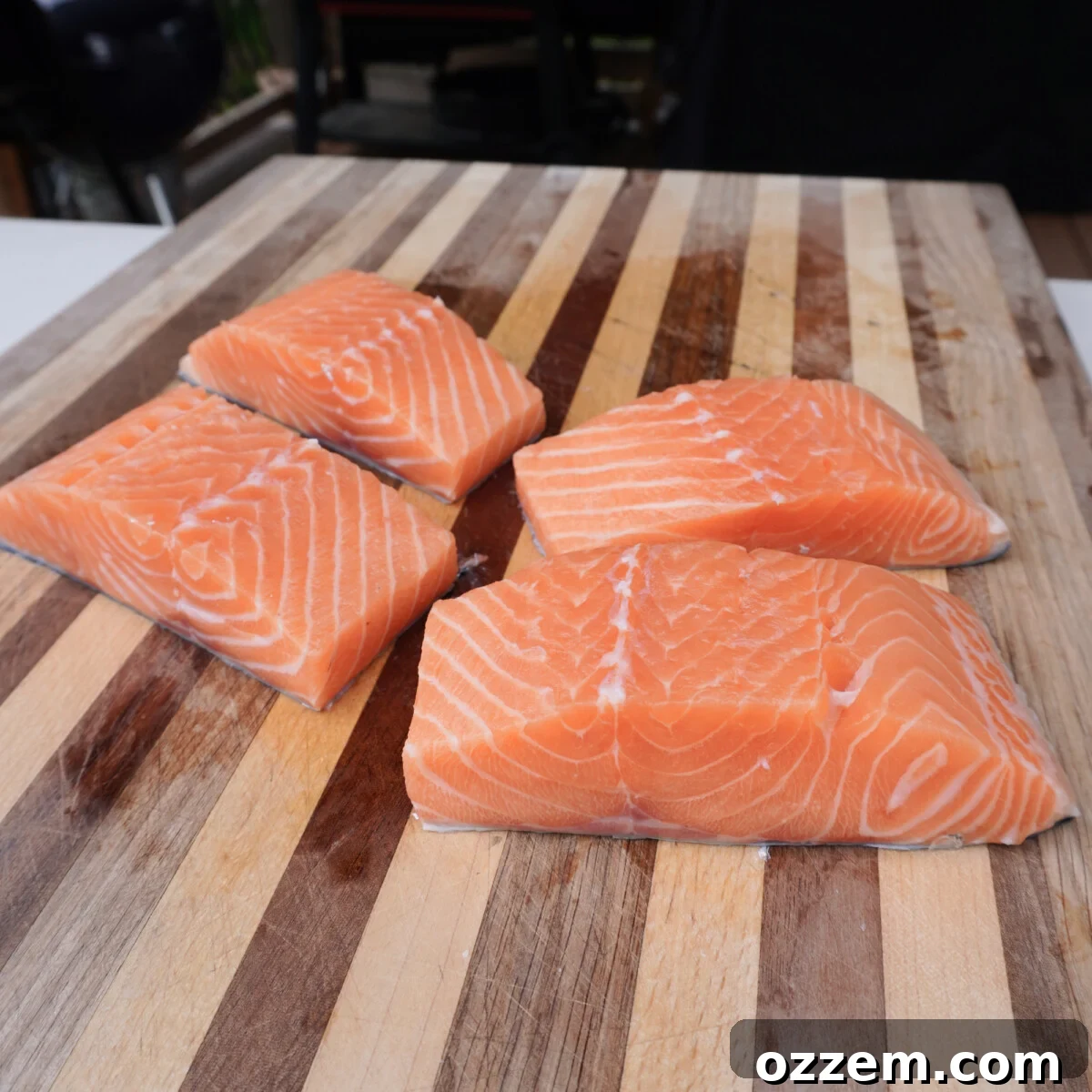
I often find whole salmon fillets on sale at my local market, which is a fantastic way to save money and get a high-quality piece of fish. However, many stores also offer pre-portioned salmon fillets, which can simplify your prep even further. If you opt for a larger whole fillet, there are a few steps to ensure uniform cooking:
- Even Thickness is Key: Salmon fillets often taper at the ends, meaning some parts are much thinner than others. For even cooking, it’s crucial to “even out” your fish. Carefully slice off the thinner, tapering sides and ends of the fillet. These smaller pieces tend to cook much faster and can dry out if left attached to the main portion.
- Don’t Waste the Trim: Absolutely do not discard those thinner pieces! They are still packed with flavor. You can freeze them for future use in fish stock, a delicious salmon soup, or even grill them separately as a quick chef’s snack. Alternatively, they can be pan-seared or baked alongside the main fillets, just be sure to remove them earlier as they’ll cook faster.
- Portioning: Once your fillet has a more uniform thickness, slice it into individual, even-shaped portions. Aim for pieces that are roughly 6-8 ounces each, which is a standard serving size and allows for consistent cooking times across all pieces.
- Check for Pin Bones: Even “boneless” salmon fillets can sometimes have small pin bones embedded along the centerline. Run your fingers along the flesh to feel for any lingering bones. If you find any, use a pair of clean needle-nose pliers or specialized fish tweezers to gently pull them out. This step ensures a more enjoyable eating experience.
- Applying the Dill Mustard Sauce: With your salmon perfectly prepped and portioned, it’s time for the best part – coating it generously with the dill mustard sauce. Ensure all sides of each salmon piece are thoroughly covered. Don’t be shy; the thick texture of the sauce is designed to cling to the fish, forming that delicious crust we talked about. This not only imbues the salmon with flavor but also helps to protect it from drying out on the grill.
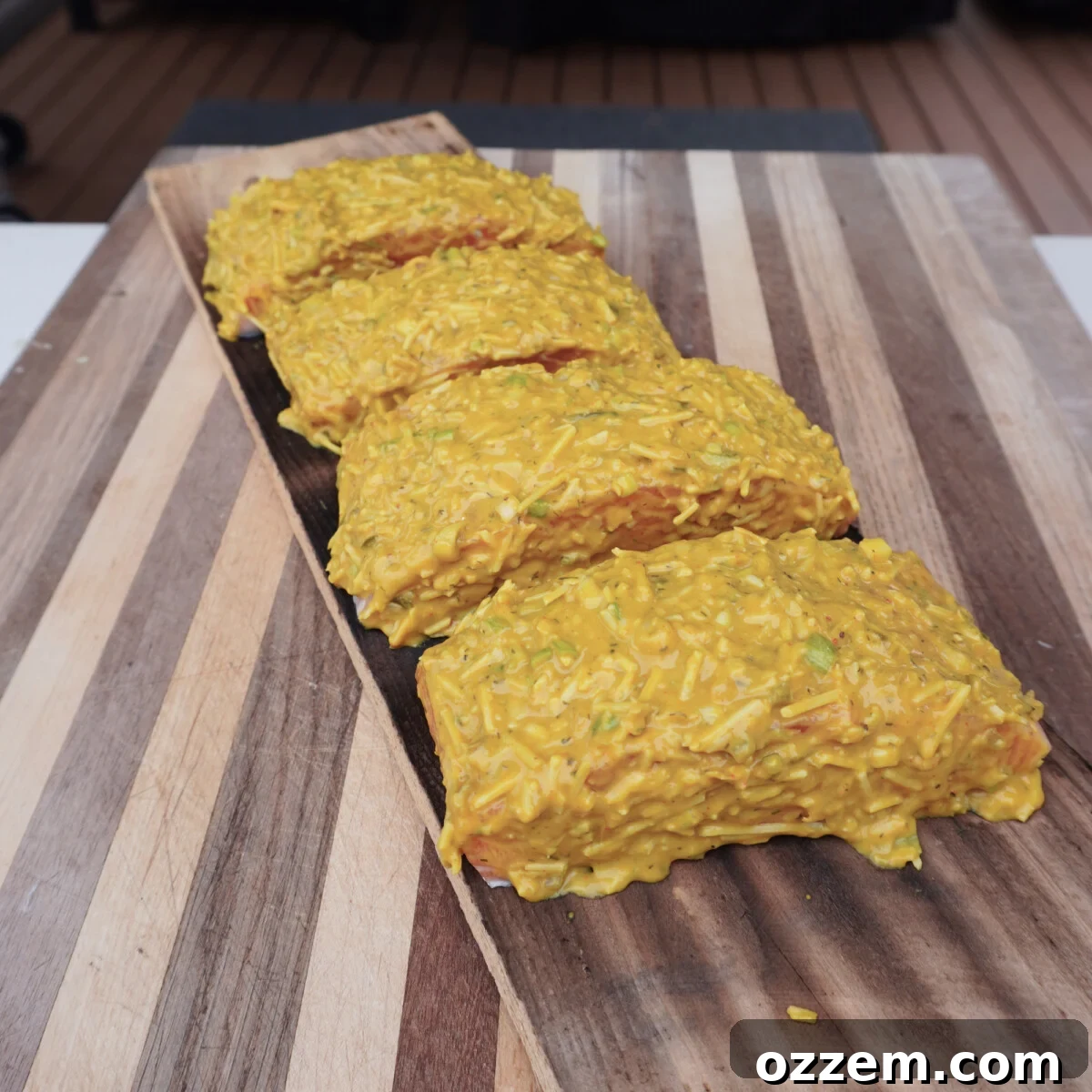
Now your salmon is seasoned, sauced, and ready for the grill, promising a truly flavorful and perfectly cooked meal.
Mastering the Cedar Plank Preparation
Grilling salmon on a cedar plank is a time-honored technique that imparts an exquisite, subtle smoky and woodsy flavor to the fish, while also helping it remain incredibly moist. It’s a method that elevates simple grilled salmon into something truly special. For this recipe, cooking our salmon with dill mustard sauce on a cedar plank is highly recommended to achieve that extra layer of complexity and tenderness.
While pre-packed cedar planks are readily available in many grocery stores and kitchenware shops, they can often be quite expensive, especially if you plan on grilling with planks regularly. A smart and economical alternative is to source your cedar plank from a local hardware store.
- Sourcing Your Plank: Look for untreated cedar planks, ideally those labeled as “food-safe” or intended for outdoor use like fence pickets, but confirm they are indeed untreated. You can purchase a long cedar plank for a fraction of the cost of smaller, pre-packaged grilling planks. Make sure it’s thick enough (at least 1/2 inch) to withstand grilling temperatures.
- Cutting to Size: Once you have your long plank, you’ll need to cut it down to a manageable size that fits comfortably on your grill. A good rule of thumb is to ensure the plank is slightly larger than your salmon fillets, allowing a little room around the edges. If you don’t have the tools at home, most hardware stores are happy to cut the wood to your specified dimensions for free or a small fee. Having several smaller planks (e.g., 12-14 inches long) can be more versatile than one very large one.
- Curing the Plank: Since you’re using a fresh, untreated cedar plank, it’s essential to cure it before placing your food on it. This curing process helps to stabilize the wood and prevent it from warping excessively or catching fire prematurely during cooking.
- Soaking the Plank (Optional but Recommended): While the original text doesn’t explicitly mention soaking, for cedar plank grilling, it’s highly recommended to soak your plank in water for at least 30 minutes, or ideally 1-2 hours, before curing and grilling. Soaking prevents the plank from catching fire and helps it produce more smoke, infusing the salmon with that desirable cedar flavor. You can even soak it in wine, beer, or apple juice for added flavor.
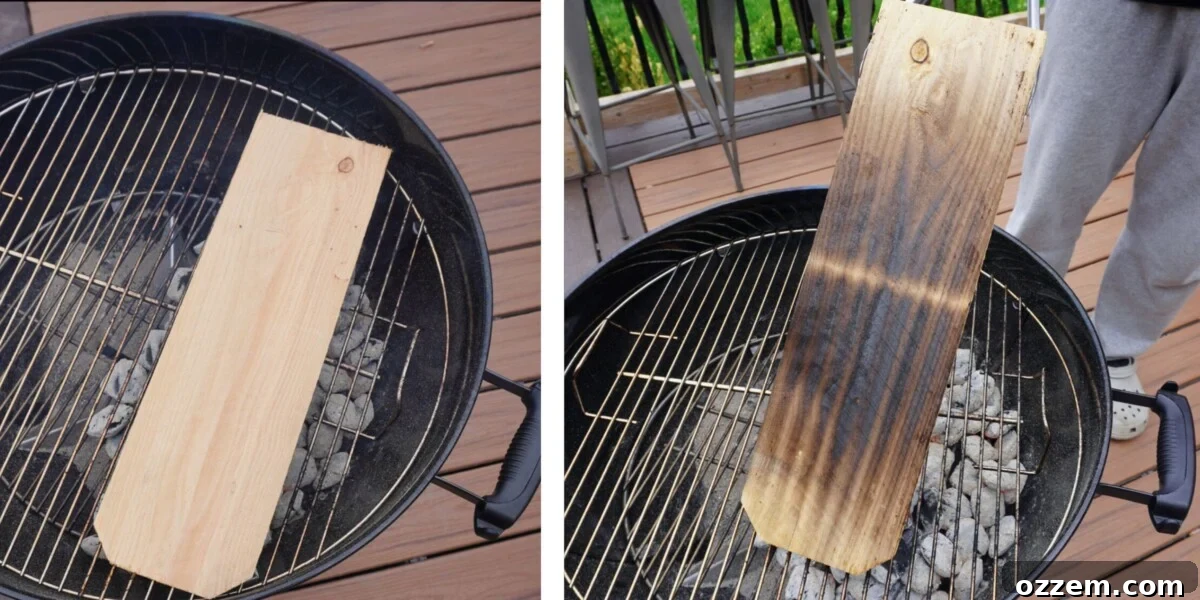
Now, let’s proceed with the curing. Preheat your grill for dual-zone cooking. This means one side of the grill will be set to direct heat (hotter), and the other to indirect heat (cooler). Place the soaked plank directly over the hotter, direct heat side of the grill. Allow the plank to heat up for a few minutes on each side. You’ll notice it starting to char slightly and release a wonderful aroma. This brief exposure to direct heat helps to “wake up” the wood, prevent warping, and prepare it for its role in flavoring your salmon.
Once the plank is cured and lightly charred, carefully move it to the indirect heat side of the grill. Now you’re ready to place your generously coated dill mustard salmon pieces directly onto the plank. The stage is set for a perfectly cooked, aromatic, and incredibly delicious meal!
Grilling Salmon to Perfection on a Cedar Plank
Achieving perfectly grilled salmon on a cedar plank is a rewarding experience that yields incredibly moist and flavorful results. The key lies in understanding and utilizing dual-zone grilling, especially when working with a cedar plank. For this particular cook, I employed my trusty Weber Kettle grill, expertly set up for dual-zone cooking, a method that is crucial for properly curing the cedar plank before introducing the delicate salmon.
Begin by preheating your grill to a consistent medium heat, aiming for an ambient temperature of around 350-375°F (175-190°C). As explained in the previous section, the direct heat zone is essential for curing the cedar plank, allowing it to gently char and release its aromatic oils. Once the plank has been cured on both sides and is lightly smoking, carefully transfer it to the indirect side of your grill.
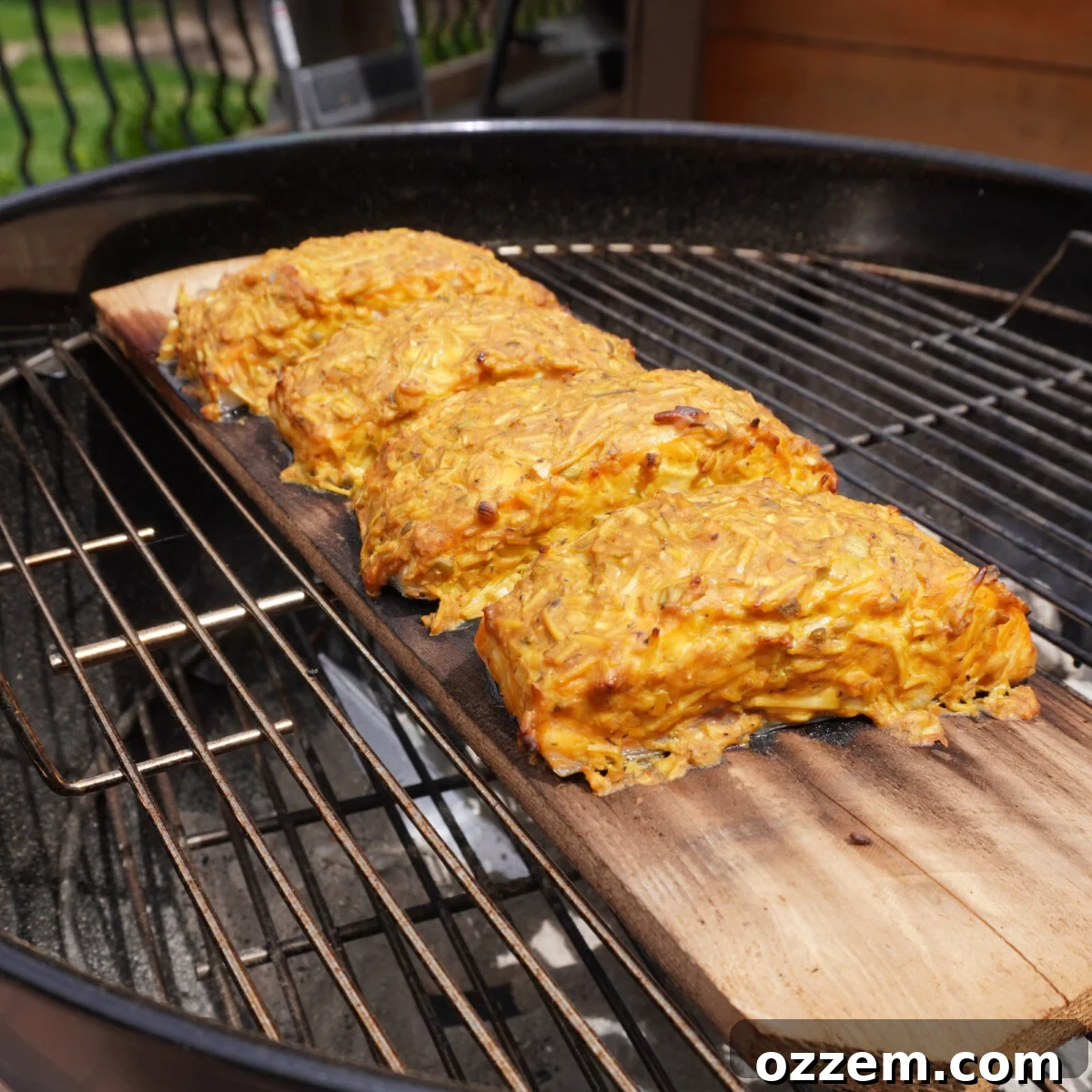
Place your dill mustard-coated salmon fillets directly onto the prepared cedar plank, ensuring they are positioned over the indirect heat. This placement is vital: cooking over indirect heat on the plank prevents the salmon from burning or drying out, allowing it to gently bake and absorb the wonderful smoky essence of the cedar. Close the grill lid to allow the heat to circulate evenly, transforming your salmon into a culinary masterpiece.
One of the many benefits of cedar plank grilling is that there’s absolutely no flipping required! The circulating heat within the covered grill will cook the fish beautifully and evenly from all sides, all while infusing it with that subtle, delightful smokiness from the cedar. This hands-off approach makes grilling salmon much less intimidating.
While the process is straightforward, it’s important not to stray too far from your grill. This mouthwatering grilled salmon with dill mustard sauce cooks relatively quickly, typically reaching perfection within 10-15 minutes. The most accurate way to determine doneness is by using an instant-read meat thermometer. Insert it into the thickest part of the salmon fillet; once the internal temperature reaches 135 degrees Fahrenheit (57 degrees Celsius), it’s time to remove the plank and salmon from the grill. Don’t worry, the salmon will continue to cook slightly as it rests, reaching the ideal final temperature of 140-145°F (60-63°C).
Once removed, let the salmon rest on the plank for about 5 minutes. This resting period allows the juices to redistribute throughout the fillet, ensuring a supremely moist and tender result. Just before serving, finely chop some fresh dill and generously sprinkle it over the salmon. This final touch adds a burst of freshness and visual appeal, making an already delicious meal even more irresistible. Serve immediately with your favorite summer sides and savor every bite!
Frequently Asked Questions About Grilled Salmon:
The cooking time for salmon on the grill varies primarily based on the thickness of your fillet and the grill’s temperature. Generally, a salmon fillet about 1 to 1.5 inches thick will take approximately 10-15 minutes to cook over medium indirect heat on a cedar plank. However, relying on internal temperature is far more accurate than time. Aim to pull the salmon off the grill when it reaches an internal temperature of 135°F (57°C). It will continue to cook a few more degrees as it rests, reaching a perfect medium-rare to medium doneness (140-145°F or 60-63°C).
You have several excellent options for grilling salmon, each offering a slightly different outcome. You can definitely grill salmon directly on well-oiled grates for a beautiful sear, though this requires careful handling to prevent sticking. Alternatively, steaming salmon in a foil packet is a fantastic way to keep it incredibly moist and infused with herbs and liquids. Our preferred method for this recipe, cedar plank grilling, imparts a wonderful smoky flavor and helps maintain moisture. Other great alternatives include grilling in a foil boat, placing it on butcher paper if using a smoker or oven, or even on citrus rings (like lemon or orange slices) directly on the grates, which also adds flavor and prevents sticking.
For grilling, heartier salmon varieties such as Atlantic, King (Chinook), or Sockeye salmon are excellent choices. Atlantic salmon is widely available and has a rich, buttery flavor and moderate fat content, making it very forgiving on the grill. King salmon is prized for its high fat content and luxurious texture. Sockeye salmon is leaner with a more robust, distinct “salmon” flavor and beautiful deep red color. Choose what’s fresh and available, aiming for fillets with a good thickness for even cooking.
Absolutely! While grilling adds a unique smoky flavor, this dill mustard salmon can be baked beautifully in the oven. Preheat your oven to 400°F (200°C). Place the sauce-coated salmon fillets on a baking sheet lined with parchment paper or a cedar plank (pre-soaked if desired). Bake for 12-18 minutes, or until the internal temperature reaches 135°F (57°C). Baking is a great alternative, especially if grilling isn’t an option or if the weather isn’t cooperating.
This flavorful salmon pairs wonderfully with a variety of light and fresh summer sides. Consider serving it with grilled asparagus, roasted broccoli, a crisp green salad with a lemon vinaigrette, quinoa, or wild rice. For a heartier meal, grilled corn on the cob or a light potato salad would also complement the flavors beautifully. The tangy sauce makes it versatile enough to go with almost any fresh vegetable side.
More Mouthwatering Grilled Seafood Recipes:
Fish & Seafood
Smoked Stuffed Shrimp
Beef
Steak and Shrimp Dinner
Fish & Seafood
Grilled Whole Shrimp
Fish & Seafood
Spicy Shrimp Tacos
If you tried this Salmon with Dill Pickle Mustard Sauce or any other recipe on my blog, please leave a 🌟 star rating and let me know how it went in the 📝 comments section below. I love hearing from you and seeing your culinary creations!
Pin
Salmon with Dill Mustard Sauce
Ingredients
1x
2x
3x
2x
3x
- 2 lbs Salmon fillet
- 1/2 cup Dill pickle mustard
- 1/2 cup Shredded parmesan cheese
- 4 tbsp Chopped green onion – white part only
- 1 tbsp Worcestershire sauce
- 1 tsp All purpose seasoning
Instructions
-
In a mixing bowl, combine dill pickle mustard, shredded parmesan, Worcestershire sauce, chopped green onion (white parts), and Dad’s All Purpose seasoning. Mix thoroughly until all ingredients are well incorporated and form a thick sauce. Set aside.
-
To prepare the salmon, trim off any thinner, tapering sides and ends of the fillet to ensure a more even thickness. This promotes uniform cooking. Then, slice the main fillet into individual, even-sized portions.
-
Generously cover all sides of each salmon portion with the prepared dill mustard sauce. Ensure an even and thick coating.
-
Preheat your grill to a medium heat, setting it up for dual-zone cooking (one side for direct heat, the other for indirect heat).
-
If using a large cedar plank, cut it to fit your grill. Before cooking, pre-soak the cedar plank in water for at least 30 minutes. Then, cure it by placing it over the direct heat side of the grill for a few minutes per side, allowing it to char slightly and prevent warping.
-
Carefully transfer the cured cedar plank to the indirect heat side of the grill. Place the dill mustard-covered salmon pieces directly onto the plank.
-
Close the grill lid and cook for approximately 10-15 minutes, or until the internal temperature of the salmon reaches 135 degrees Fahrenheit (57°C) when measured at its thickest point.
-
Once cooked, remove the salmon (still on the plank) from the grill and let it rest for 5 minutes. This allows the juices to redistribute, ensuring a moist and tender result.
-
Finely chop some fresh dill and sprinkle it generously over the rested salmon just before serving. Enjoy your perfectly grilled, flavorful salmon!
Notes
- Dill Mustard Substitute: If you cannot find pre-made dill pickle mustard, you can easily create a similar flavor profile. Mix regular yellow mustard with finely chopped fresh dill and a splash of pickle juice to your desired taste.
- Cedar Plank Savings: To save money, consider purchasing a long, untreated cedar plank from a hardware store and cutting it to size. Remember to soak it before use. Any leftover pieces can be used for future grilling sessions.
Nutrition
Carbohydrates: 5g |
Protein: 49g |
Fat: 17g |
Saturated Fat: 3g |
Polyunsaturated Fat: 6g |
Monounsaturated Fat: 7g |
Trans Fat: 0.01g |
Cholesterol: 126mg |
Sodium: 881mg |
Potassium: 1258mg |
Fiber: 3g |
Sugar: 1g |
Vitamin A: 220IU |
Vitamin C: 2mg |
Calcium: 115mg |
Iron: 4mg
Like this recipe? Rate and comment below!