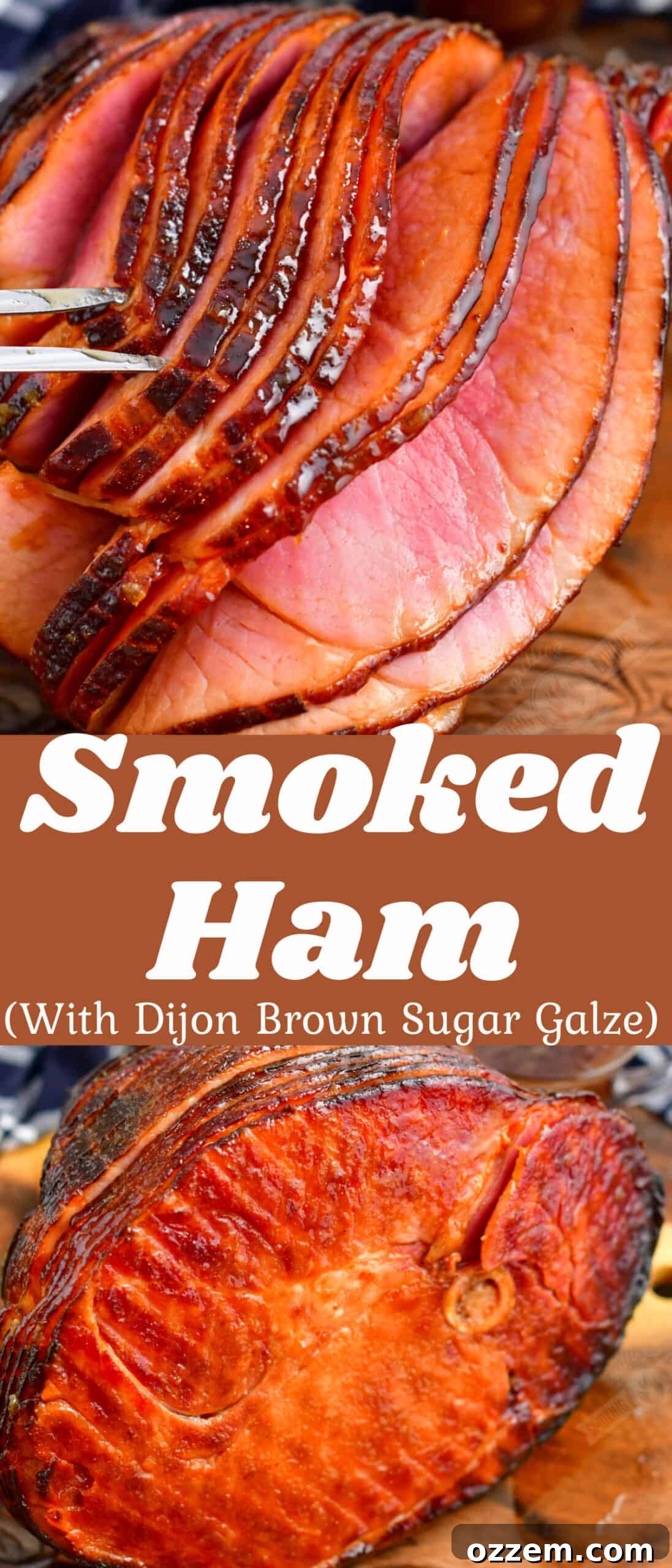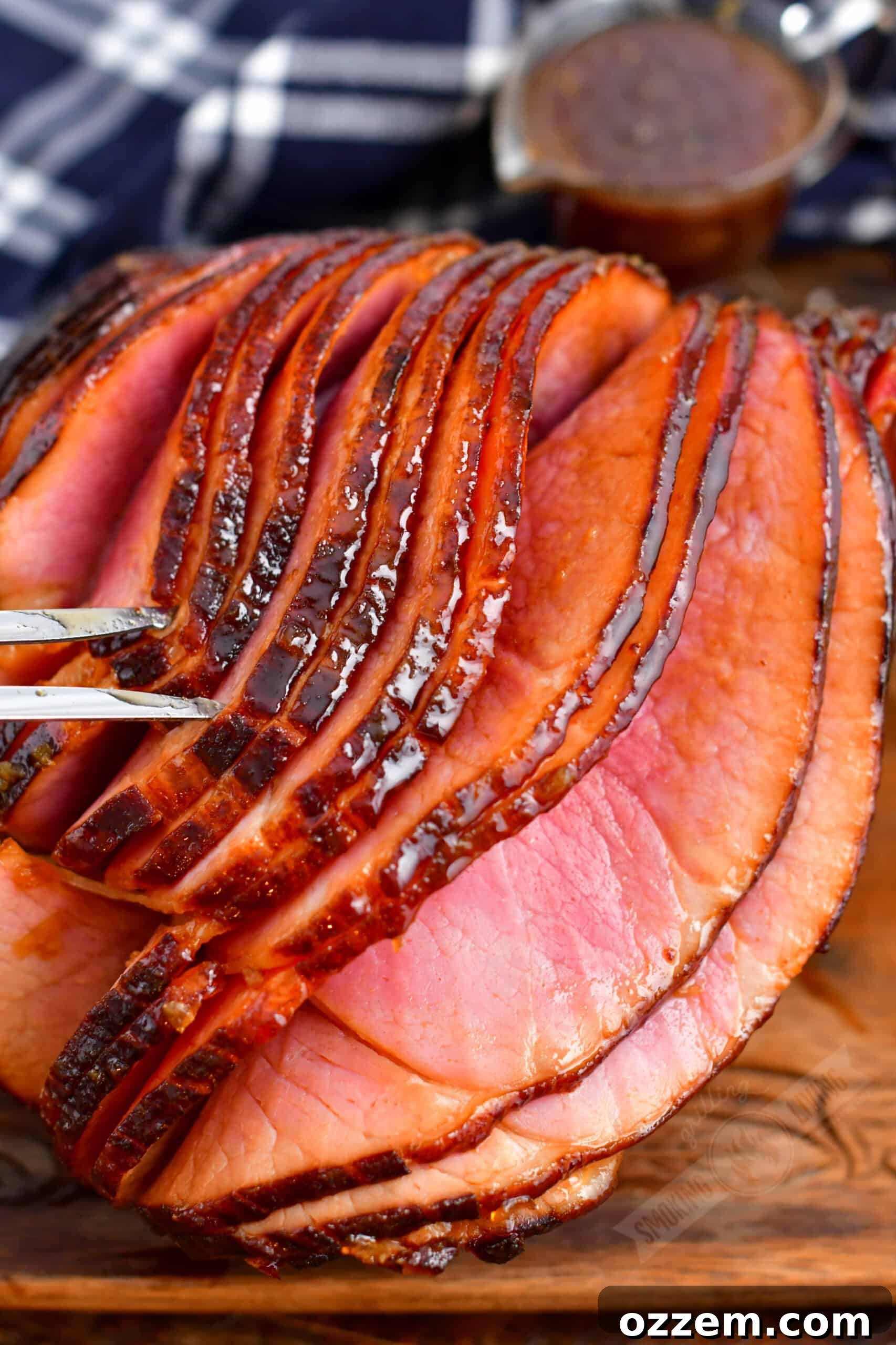
Discover the ultimate centerpiece for your next special occasion: a spectacularly flavorful smoked ham. This recipe takes a pre-smoked ham and elevates it with a simple yet exquisite maple Dijon rub, then infuses it with hours of gentle smoke. The grand finale is a sweet and tangy brown sugar glaze, applied multiple times to create a caramelized, irresistible crust that will leave everyone in awe. Get ready to impress your guests with a truly unforgettable dish.
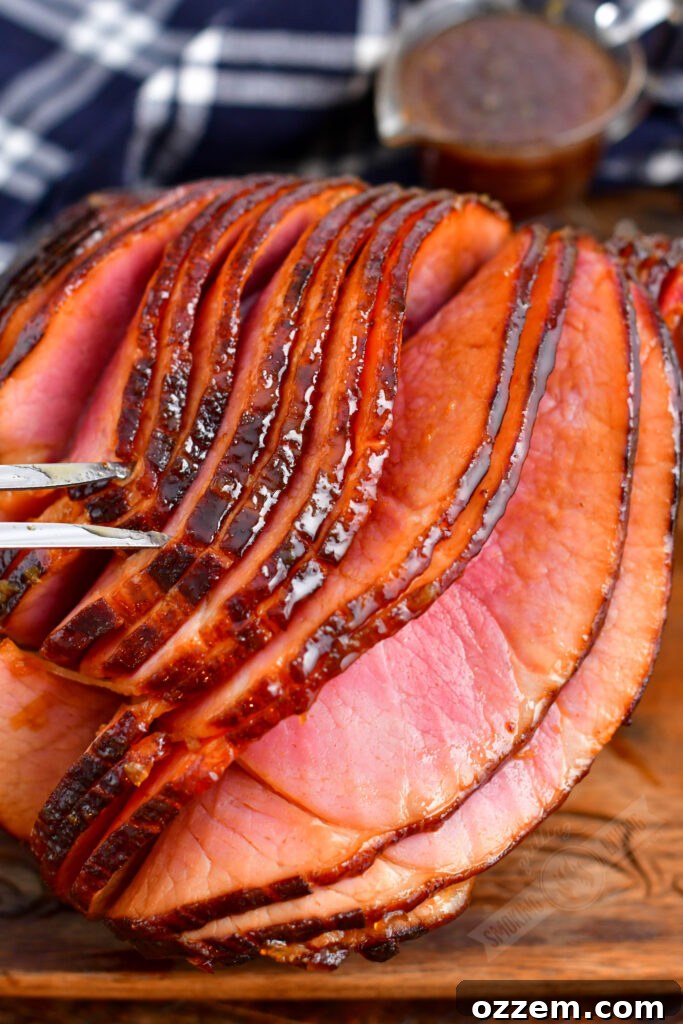
The Art of Double-Smoked Ham: A Flavor Revolution
When perusing the ham section at your local grocery store, you’ll often notice labels proudly declaring “smoked,” sometimes even specifying the type of wood used, such as “hickory” or “applewood.” This is because most hams, whether whole or half, are already pre-smoked during their curing process. While this initial smoking provides a base layer of flavor, we’re taking it a step further to achieve an unparalleled depth of taste and tenderness.
Our recipe transforms an already delicious ham into a culinary masterpiece, often referred to as “twice-smoked” or “double-smoked ham.” This technique involves re-smoking a pre-smoked ham at home, intensifying its smoky essence and succulence. The beauty of this method lies in its simplicity; it’s much like baking ham in an oven, but with the added magic of a smoker. The smoker infuses the meat with an incredible aroma and flavor that an oven simply cannot replicate. Don’t worry about overwhelming the ham with smoke; by selecting the right type of wood, you’ll achieve a perfectly balanced, complementary flavor profile that enhances, rather than dominates, the ham’s natural goodness.
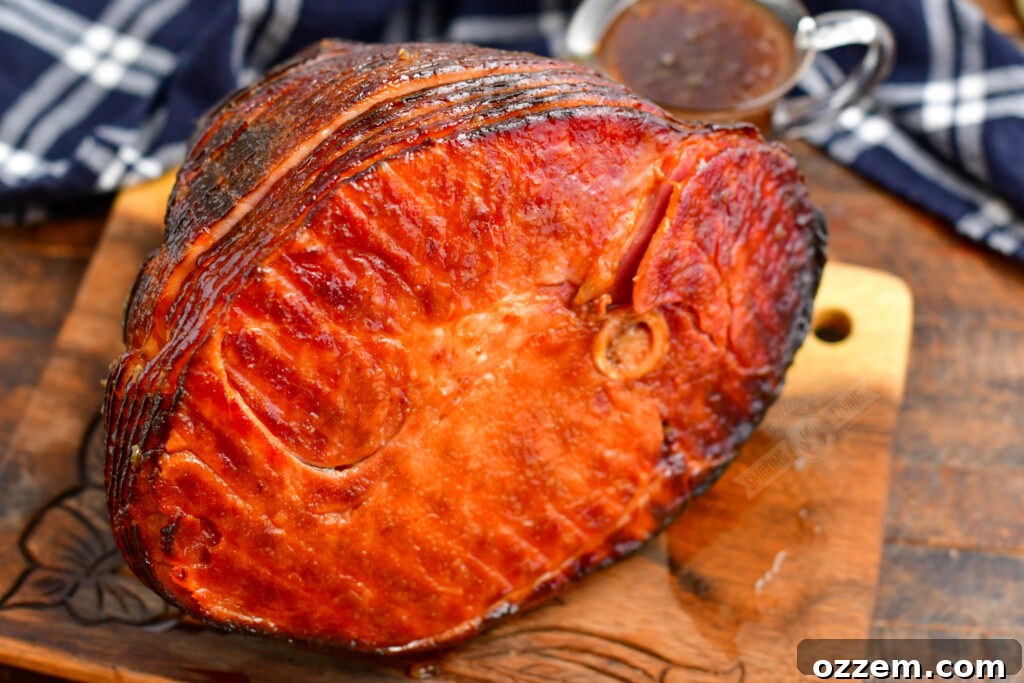
Prepare yourself for an extraordinary culinary experience: succulent, fall-apart tender ham, deeply infused with delicious smoke, and finished with a shimmering, sweet-and-tangy glaze. This combination creates a complex flavor palette that will delight even the most discerning palates.
Selecting the Perfect Ham for Smoking
Choosing the right ham is the foundation of this exceptional recipe. The term “ham” itself can be a bit confusing, as it technically refers to the cured leg of pork. A “fresh ham,” by contrast, is an uncured leg of pork and is **not** suitable for this particular recipe. For our double-smoked ham, you need a specific type of product to ensure both safety and delicious results.
Understanding Ham Labels: What to Look For
You’ll want to purchase a ham that is explicitly labeled “fully cooked,” “ready to eat,” “smoked,” or “ready to serve.” These labels indicate that the ham has undergone a curing process, resulting in its characteristic pinkish color and making it safe to eat straight from the package. However, we’re aiming for something far superior to simply eating it cold!
The most common and recommended choice for this recipe is a “city ham.” City hams are typically wet-cured, meaning they are brined, and are the fully cooked hams you’ll most often find in grocery stores. They are generally milder in flavor compared to their saltier country ham counterparts, making them perfect for absorbing additional smoke and glaze flavors.
Bone-In vs. Boneless Ham: The Great Debate
- Bone-In Ham: Many culinary enthusiasts attest that bone-in ham offers a richer, more profound flavor. The bone itself contributes to the meat’s juiciness and depth during cooking. While carving around the bone can be a slight challenge, the enhanced flavor and often superior texture are well worth the effort for many.
- Boneless Ham: For sheer convenience, boneless ham is a fantastic choice. It carves effortlessly, making serving a breeze, especially for large gatherings. While some argue it sacrifices a tiny bit of flavor compared to bone-in, a quality boneless ham, especially when double-smoked and glazed, will still be incredibly delicious and tender.
Shank vs. Butt Cut: Navigating the Ham Anatomy
Another decision you’ll encounter is choosing between the shank or butt portion of the ham. Both come from different parts of the leg:
- Butt Cut (Sirloin Half): This cut comes from the upper part of the pig’s leg. It is generally known for being more tender and flavorful, often containing more marbled fat. However, the butt cut can have a more complex bone structure (including part of the hip bone), which can make carving a bit more intricate.
- Shank Cut (Leg Half): Originating from the lower part of the leg, the shank cut typically has a single, straight bone, making it considerably easier to carve. While it might be slightly less tender than the butt cut, its flavor is still excellent, and its ease of preparation makes it a popular choice for many home cooks.
Spiral-Sliced vs. Uncut Ham: A Matter of Glaze and Convenience
When it comes to preparation, you might opt for a spiral-sliced ham or an uncut one:
- Spiral-Sliced Ham: This is my personal preference for this recipe. The pre-cut slices allow the savory maple Dijon rub and the sweet-and-tangy glaze to penetrate deep between the layers, ensuring every bite is bursting with flavor. It also reduces cooking time slightly and makes serving incredibly easy.
- Uncut Ham: If you choose an uncut ham, you’ll need to score the outer skin yourself before applying the rub. This involves making shallow, diamond-patterned cuts across the surface. Scoring helps the rub and glaze adhere better and allows the smoky flavor to permeate the meat more effectively. Some prefer uncut hams as they believe it helps retain moisture better during the cooking process.
Essential Smoking Notes for a Perfect Ham
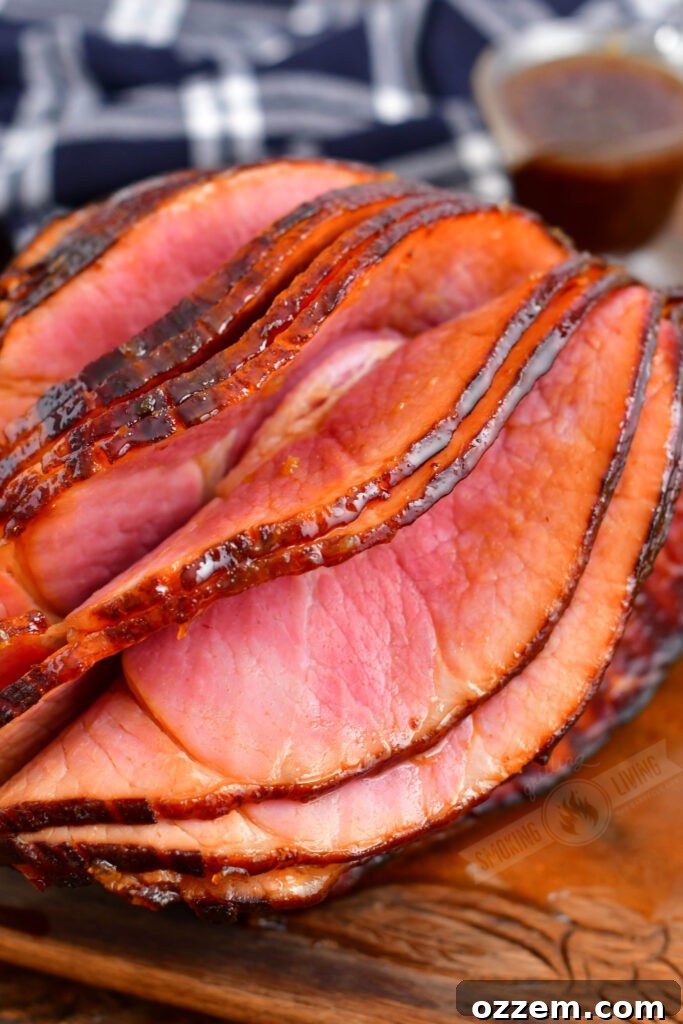
Mastering the art of smoking ham is surprisingly straightforward once you understand a few key principles. These notes will guide you to a perfectly cooked, incredibly flavorful ham every time.
Optimal Smoker Temperature for Ham
For most smoking applications, especially for ham, a steady temperature of 225°F (107°C) is ideal. This low-and-slow approach ensures the ham cooks evenly, remains incredibly moist, and allows ample time for the smoky flavors to truly meld with the meat without drying it out or making it tough. Consistency is key, so aim to keep your smoker’s temperature as stable as possible throughout the cooking process.
Choosing the Best Wood for Smoking Ham
The type of wood you choose for smoking will profoundly impact the final flavor of your ham. Since most hams are pre-smoked, the goal is to complement, not overpower, that existing flavor. Consider these options:
- Applewood: A classic choice for ham, applewood imparts a mild, sweet, and fruity smoke flavor. It’s incredibly versatile and rarely overwhelms the meat. If your ham is pre-smoked with applewood, this is a perfect match.
- Maple: Similar to apple, maple wood offers a gentle, sweet smoke that pairs beautifully with the natural sweetness of ham and our maple-based glaze.
- Cherry: Cherry wood provides a slightly stronger fruity smoke than apple, with a subtle tartness. It also gives the ham a beautiful reddish hue.
- Hickory: For those who prefer a more robust, bacon-like smoky flavor, hickory is an excellent option. If your ham is already hickory-smoked, using more hickory will intensify that classic taste. Use sparingly if you’re new to smoking or prefer a milder profile.
- Pecan: A milder cousin to hickory, pecan offers a rich, nutty, and slightly sweet smoke. It’s a great choice for a balanced flavor.
A safe bet is to choose a pre-smoked ham (e.g., applewood smoked) and then use a complementary, lighter fruit wood like apple, maple, or cherry for your home smoking session. If you desire a strong, pronounced smoke flavor, opt for a hickory-smoked ham and use hickory wood in your smoker. The key is balance; you want the smoke to enhance the ham, not become the only flavor you taste.
How Long Does It Take to Smoke Ham?
Estimating smoking time for ham is generally based on approximately 20 minutes per pound. However, this is merely a guideline. The most accurate way to determine doneness is by tracking the ham’s internal temperature with a reliable meat thermometer. Factors such as the ham’s initial temperature, its density, your smoker’s efficiency, and even ambient weather conditions can influence cooking time.
The Perfect Internal Temperature for Smoked Ham
Since you are starting with a “ready to eat” or “fully cooked” ham, the goal of smoking is primarily to reheat it thoroughly and infuse it with additional smoke flavor and glaze. The final internal temperature you’re aiming for is 140°F (60°C). You will apply the first generous layer of glaze when the ham reaches 130°F (54°C), allowing the glaze to caramelize beautifully during the final stage of smoking.
Accurate Thermometer Insertion
Proper thermometer placement is crucial for accurate readings. Insert the probe of your digital meat thermometer into the very center of the thickest part of the ham. Ensure the probe does not touch the bone, as this can give you an artificially high reading. Aim to position the thermometer about ½ inch away from the bone, keeping it parallel to the bone itself.
Determining Ham Size and Servings
Planning for your guests and potential leftovers is essential when selecting ham size. Here’s a general guide:
- For bone-in ham, estimate about ¾ pound per person.
- For boneless ham, estimate about ½ pound per person.
It’s always a good idea to aim for a couple of extra pounds, as leftover smoked ham is incredibly versatile and delicious in sandwiches, soups, casseroles, and more!
- An 8 lb. ham will comfortably feed 10 people or slightly fewer.
- An 11-12 lb. ham is perfect for approximately 15 people.
- For larger gatherings of 20+ people, consider a 15 lb. whole ham.
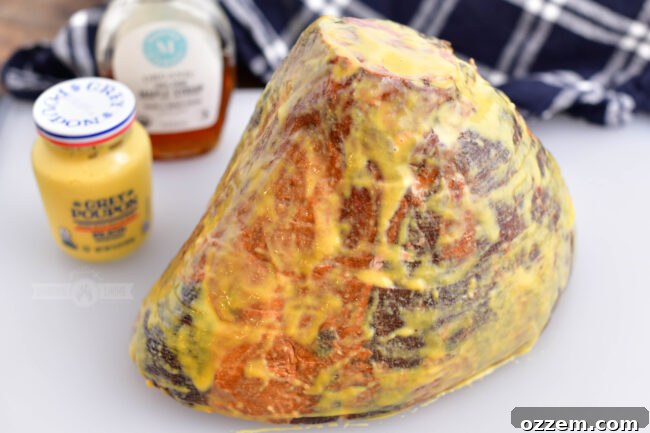
Crafting Your Smoked Ham: A Step-by-Step Guide
Follow these detailed steps to prepare and smoke your ham to perfection, ensuring a tender, juicy, and incredibly flavorful result.
Step 1: Prepare the Ham
- Carefully remove the ham from its packaging. Discard any pre-packaged glaze or seasoning packets that came with it, as we’ll be making our own superior glaze.
- Give the ham a quick rinse under cool running water to remove any surface residue, then pat it thoroughly dry with paper towels. A dry surface helps the rub adhere better and promotes a better bark during smoking.
- For spiral-cut ham: There is no need to score the top, as the cuts are already made.
- For uncut ham: Before applying any mixture, you’ll need to score the outside skin. Using a sharp knife, make shallow cuts about ¼ to ½ inch deep across the skin, forming an attractive diamond pattern. These cuts allow the rub and smoke to penetrate the meat more effectively and help the glaze create a beautiful crust.
- In a small bowl, whisk together the maple syrup and Dijon mustard until well combined. This simple yet effective mixture will form the foundational flavor layer.
- Generously rub this maple Dijon mixture all over the ham, ensuring it’s coated evenly. For spiral-cut hams, gently work some of the mixture between the slices for enhanced flavor.
Step 2: Prepare Your Smoker
- Set up your smoker according to the manufacturer’s instructions and preheat it to a steady 225°F (107°C). Maintaining a consistent temperature is crucial for even cooking and smoke infusion.
- Place a water pan inside your smoker. Depending on your smoker’s design, this can be on the grate directly below where the ham will sit or next to it. The water pan helps maintain a moist environment within the smoker, preventing the ham from drying out and promoting better smoke adhesion.
- Insert the probe of your digital meat thermometer into the thickest part of the ham, ensuring it doesn’t touch any bone.
- Carefully place the ham, cut-side down (if applicable, especially for half hams), directly onto the smoker grate. This allows the cut surface to absorb more smoke.
- Place an ambient temperature thermometer on the grate near the meat (but not touching it) to monitor the smoker’s internal temperature accurately.
- Promptly close the smoker lid to prevent heat loss and maintain a consistent smoking temperature.
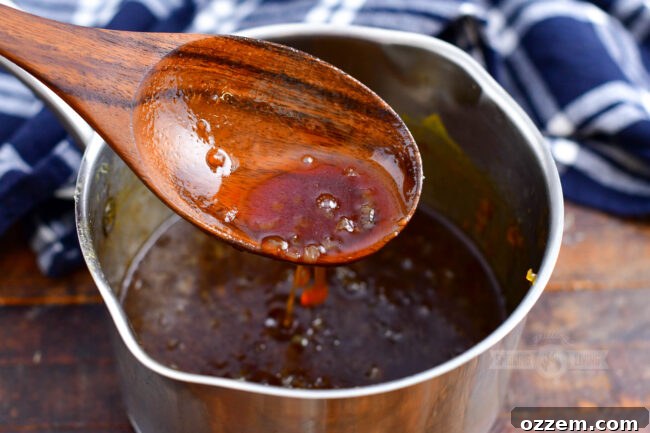
Step 3: Prepare the Sweet and Tangy Ham Glaze
You can prepare this delectable glaze while your ham is slowly smoking and approaching its initial glazing temperature (around 130°F). This timing ensures the glaze is warm and ready to apply when needed.
- Preheat a medium sauce pot over medium heat. Add the unsalted butter and allow it to melt completely.
- Add the diced Vidalia onion to the melted butter and sauté, stirring occasionally, until the onion has softened and turned translucent, about 5-7 minutes.
- Stir in the minced garlic and cook for an additional 30 seconds to 1 minute, just until it becomes fragrant. Be careful not to burn the garlic.
- Whisk in the remaining glaze ingredients: dark brown sugar, sherry vinegar (or apple cider or white wine vinegar), maple syrup, Dijon mustard, salt, ground cinnamon, and a pinch of cayenne pepper. The cayenne adds a subtle kick that balances the sweetness beautifully.
- Bring the mixture to a gentle simmer, then reduce the heat slightly and let it simmer for about 15 minutes, stirring occasionally. This allows the flavors to meld and the glaze to thicken slightly.
- Note: The glaze will appear relatively thin while hot. Don’t worry; it will thicken considerably as it cools, achieving that perfect sticky consistency for coating the ham.
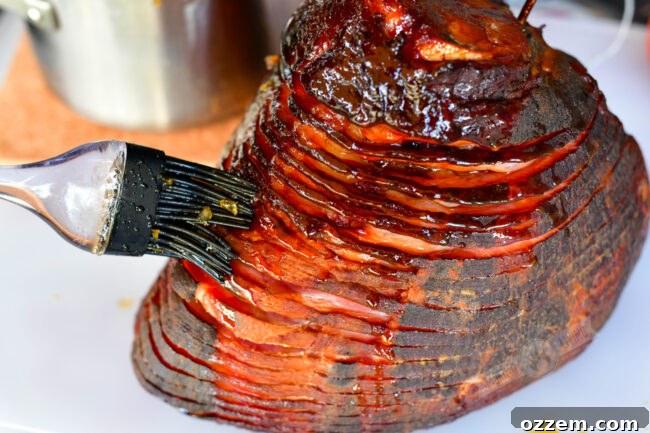
Step 4: Smoke, Glaze, and Rest the Ham
- Continue to smoke the ham until its internal temperature reaches 130°F (54°C). Monitor your digital thermometer closely.
- Once 130°F is achieved, carefully remove the ham from the smoker. Close the smoker lid immediately to help maintain its temperature.
- Generously brush about half of your prepared glaze all over the ham. For spiral-cut hams, take extra care to work the glaze in between the slices to maximize flavor penetration.
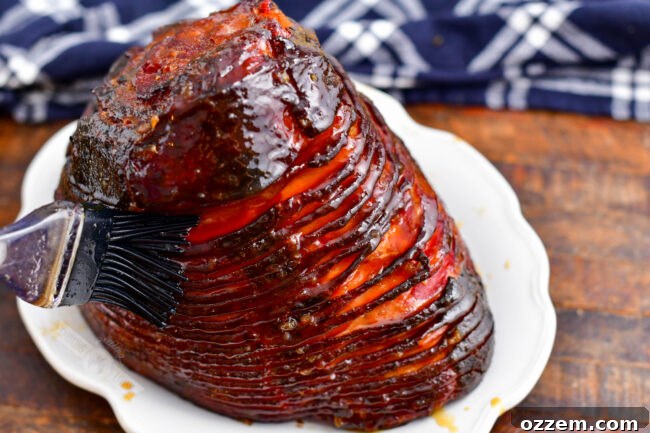
- Return the glazed ham to the smoker and continue cooking until the internal temperature reaches 140°F (60°C). This final stage allows the glaze to set and caramelize, creating a delectable crust.
- Once the ham reaches 140°F, remove it from the smoker. Loosely tent the ham with a sheet of aluminum foil.
- Allow the ham to rest for approximately 20-30 minutes, depending on its size. This crucial resting period allows the juices to redistribute throughout the meat, ensuring every slice is incredibly tender and moist. Skipping this step can result in a dry ham.
- After resting, carve and serve your magnificent double-smoked ham with the remaining warm glaze on the side for an extra flourish.
Beyond Ham: Other Holiday Meats to Smoke
Your smoker isn’t just for ham! It’s an incredible tool for preparing a variety of succulent holiday meats that are sure to impress. Expand your culinary repertoire with these delicious smoked dishes:
Smoked Turkey
Smoked Pork Shoulder
Whole Smoked Chicken
If you make any of our recipes and share them on Instagram, make sure to tag me @grillingsmokingliving and use the hashtag #grillingsmokingliving so I can see all the delicious creations you’ve tried!
Connect with Grilling Smoking Living!
Be sure to click below and follow me on my social media channels, so you never miss a mouthwatering recipe or smoking tip.
PIN THIS RECIPE
Smoked Ham with Mustard Brown Sugar Ham Glaze
Print Recipe
Pin Recipe
Ingredients
Ham:
- 8-9 lb “ready to eat” bone-in ham
- 2-3 tbsp maple syrup
- 2-3 tbsp Dijon mustard
Ham Glaze:
- 4 tbsp unsalted butter
- 1/2 cup diced Vidalia onion
- 2 garlic cloves minced
- 1 1/2 cups dark brown sugar
- 1/2 cup sherry vinegar (or apple cider, or white wine vinegar)
- 1/4 cup maple syrup
- 3 tbsp Dijon mustard
- 1/2 tsp salt
- 1/2 tsp ground cinnamon
- pinch cayenne pepper
Instructions
Prepare the ham:
-
Remove the ham from the packaging and discard whatever glaze it came with. Quickly rise it with cool running water and pat it dry.
-
TIP: For spiral cut ham, there is no need to score the top.
For the ham that is not cut, make sure to score the outside skin first, before adding the mustard mixture. Make cuts across the skin that are about 1/4-1/2 inch deep, forming diamond shapes.
-
Combine maple syrup and Dijon mustard in a small bowl and rub the ham all over with the mixture.
Prepare the smoker:
-
Set up your smoker and get it to a steady 225°. Place a water pan either on the grate below the meat or next to it, depending on your smoker and your smoker set-up.
-
Insert digital meat thermometer probe into the ham and place it cut-side down directly on the grate. Make sure to place the ambient temperature thermometer on the grate, near the meat but not touching the meat. Close the lid right away so the temperature doesn’t get too low.
Prepare Ham Glaze:
-
TIP: You can prepare the glaze when the ham is getting close to glazing temperature.
-
Preheat a sauce pot over medium heat and add butter. Once butter is melted, add diced onion and sauté until softened.
-
Add minced garlic and let it cook for a few seconds, until fragrant.
-
Whisk in remaining glaze ingredients and bring the mixture to simmer. Lower the heat slightly and let it simmer for about 15 minutes.
NOTE: the glaze will look thin while it’s hot but it thickens as it cools.
Smoke the ham:
-
Smoke the ham until it reaches 130°. Take it off the smoker (and close the lid so the temperature doesn’t go down) and glaze it generously with about half of the glaze.
TIP: For spiral-cut ham, you can get in between the layers to add more flavor inside.
-
Place the ham back into the smoker and let it cook until reaches 140°.
-
Take the ham off the smoker and tent it with a sheet of aluminum foil. Let it rest for about 20-30 minutes (depending of the size.)
Nutrition