
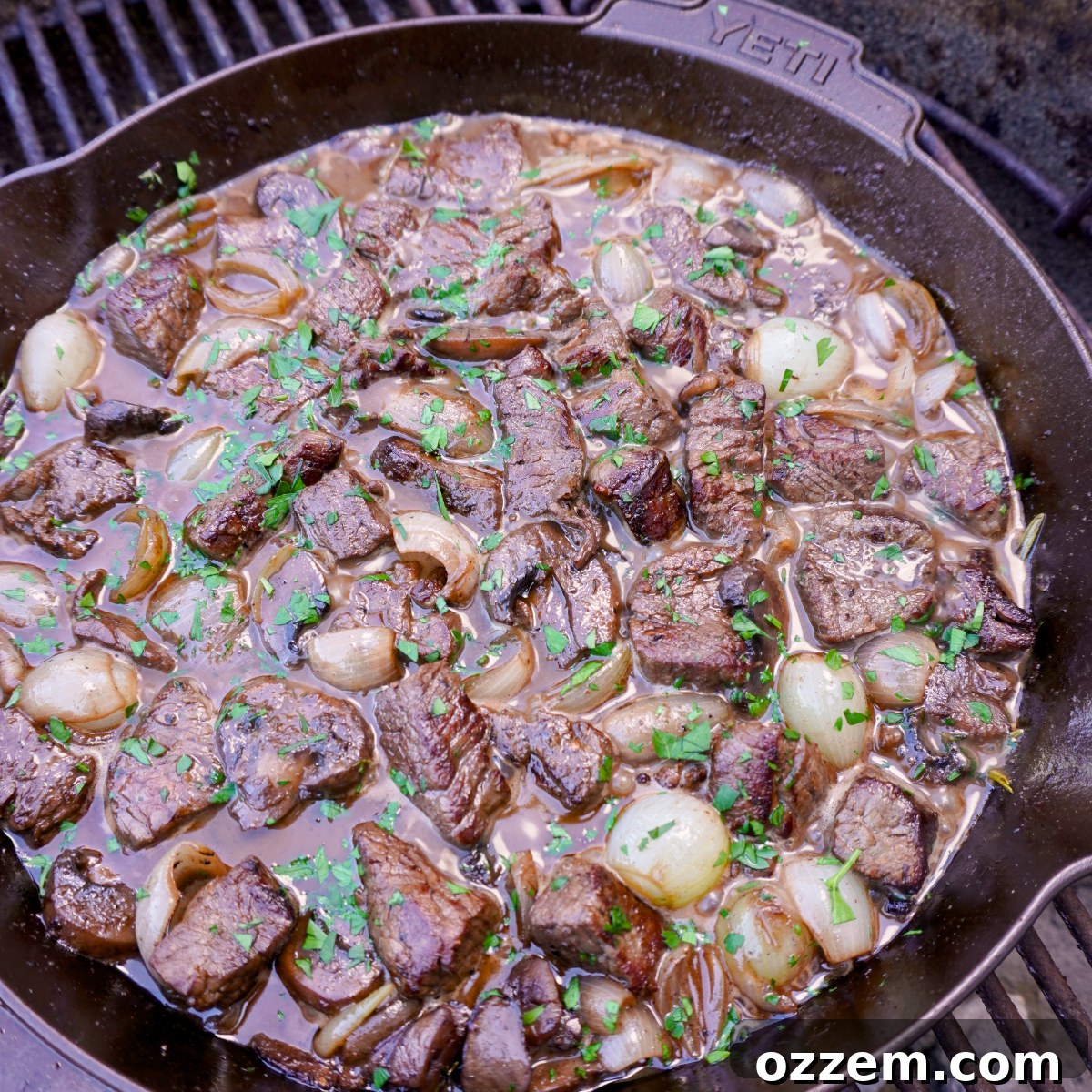
Gourmet Beef Tenderloin Tips in Rich Red Wine Sauce: An Elegant Meal Made Simple
Elevate your home cooking with this truly exceptional recipe for Beef Tenderloin Tips in a Red Wine Sauce. This dish, perfect for everything from lavish holiday entertaining and sophisticated dinner parties to a cozy, romantic date night, transforms simple ingredients into a culinary masterpiece. The inspiration for this recipe comes from my very talented friend, Darryl Postelnick, widely known as Cooking with Darryl. His recently released cookbook is a treasure trove of incredible recipes, and this particular dish stood out.
In true Grillin’ with Dad (GWD) fashion, I’ve refined Darryl’s fantastic concept with a few personal touches and enhancements. The result is a dish where the beef is incredibly tender, and the sauce is unbelievably rich, complex, and bursting with flavor. I’m excited to share this refined version with you, promising an unforgettable culinary experience that’s easier to achieve than you might imagine. If you love this recipe, I highly recommend exploring the other culinary delights in Darryl’s amazing cookbook!
Looking for more beef-inspired meal ideas to impress your family and friends? Don’t miss my popular braised beef short ribs, which offer fall-off-the-bone tenderness, or this delightfully simple and quick easy steak and veggie dinner. Both are designed to deliver maximum flavor with minimal fuss.
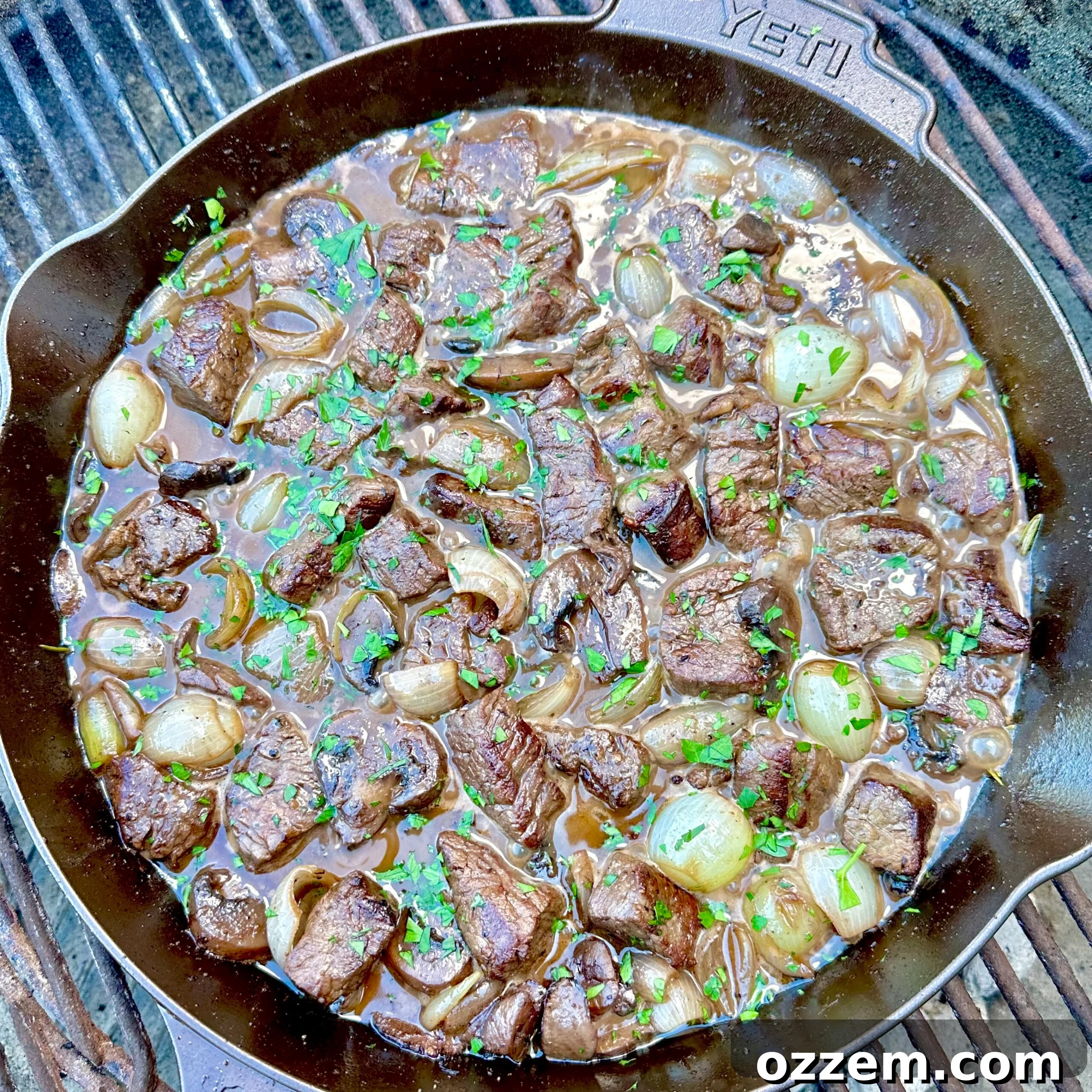
Table of Contents
- Understanding Beef Tenderloin: Is it the Same as Filet Mignon?
- Essential Ingredients for Tenderloin Tips in Red Wine Sauce
- Preparing and Searing Your Beef Tenderloin Tips to Perfection
- Crafting the Ultimate Rich Red Wine Sauce
- Expert Tips & Frequently Asked Questions
- More Mouthwatering Grilled Tenderloin Recipes to Explore
- Beef Tenderloin Tips in a Red Wine Sauce: The Full Recipe
Understanding Beef Tenderloin: Is it the Same as Filet Mignon?
When discussing premium beef cuts, the terms beef tenderloin and filet mignon often come up interchangeably, but there’s a nuanced distinction worth noting. The beef tenderloin is, in fact, a larger, oblong cut of incredibly tender and lean beef. It’s harvested from the loin area of the cow, specifically near the backbone, a muscle that sees very little activity. This lack of use is precisely what contributes to its renowned tenderness, making it one of the most sought-after and expensive cuts of beef available. Its delicate texture and mild flavor make it incredibly versatile, though it benefits greatly from rich sauces or robust seasonings to enhance its profile.
A filet mignon is a specific steak cut derived from the smaller, tapering end of the beef tenderloin. While all filet mignon comes from the tenderloin, not all tenderloin is filet mignon. The tenderloin itself is often used for grander presentations, such as a show-stopping Beef Wellington or a succulent beef roast, where the entire muscle is cooked before being sliced into individual portions. This allows for a uniform cook and impressive presentation, especially when paired with elegant sauces.
For those interested in mastering a full tenderloin roast, I highly recommend checking out my Perfectly Grilled Beef Tenderloin recipe. It guides you through grilling an entire oblong beef tenderloin to a flawless medium-rare, complete with its own delightful red wine sauce accompaniment, perfect for a grand celebration.
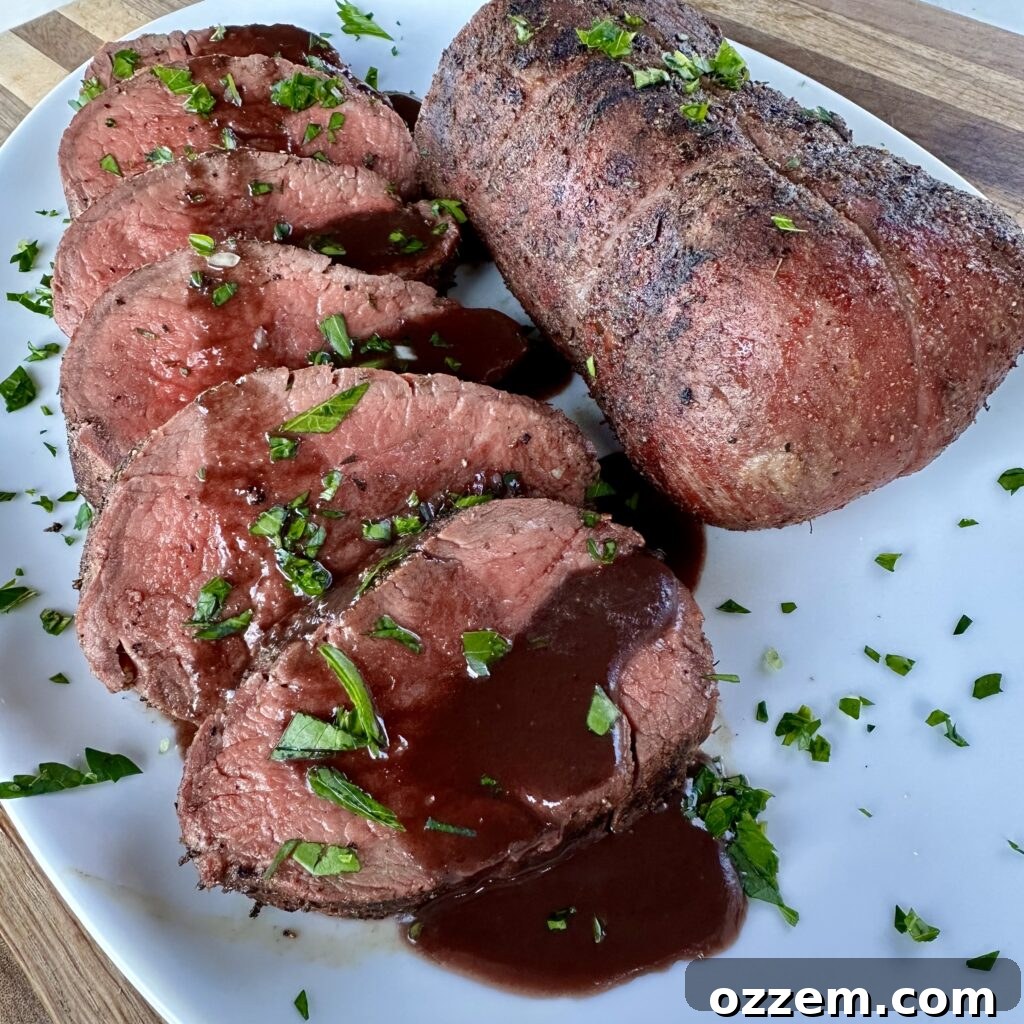
For our specific recipe today, we’ll be focusing on beef tenderloin tips. These delectable pieces typically come from the “tail” end of the tenderloin, which is thinner and less uniform in shape than the central part used for traditional filet mignon steaks. This often makes them a more economical choice, as they are ideal for cubing and sautéing, absorbing flavors beautifully. You can often find these already pre-sliced or labeled as “tenderloin tips” at your local grocery store. Alternatively, simply ask your butcher to trim and cube the tail end of a tenderloin for you, ensuring you get that signature melt-in-your-mouth tenderloin texture in every bite-sized piece. They are perfect for dishes like this where they can be quickly seared and then simmered in a flavorful sauce.
Essential Ingredients for Tenderloin Tips in Red Wine Sauce
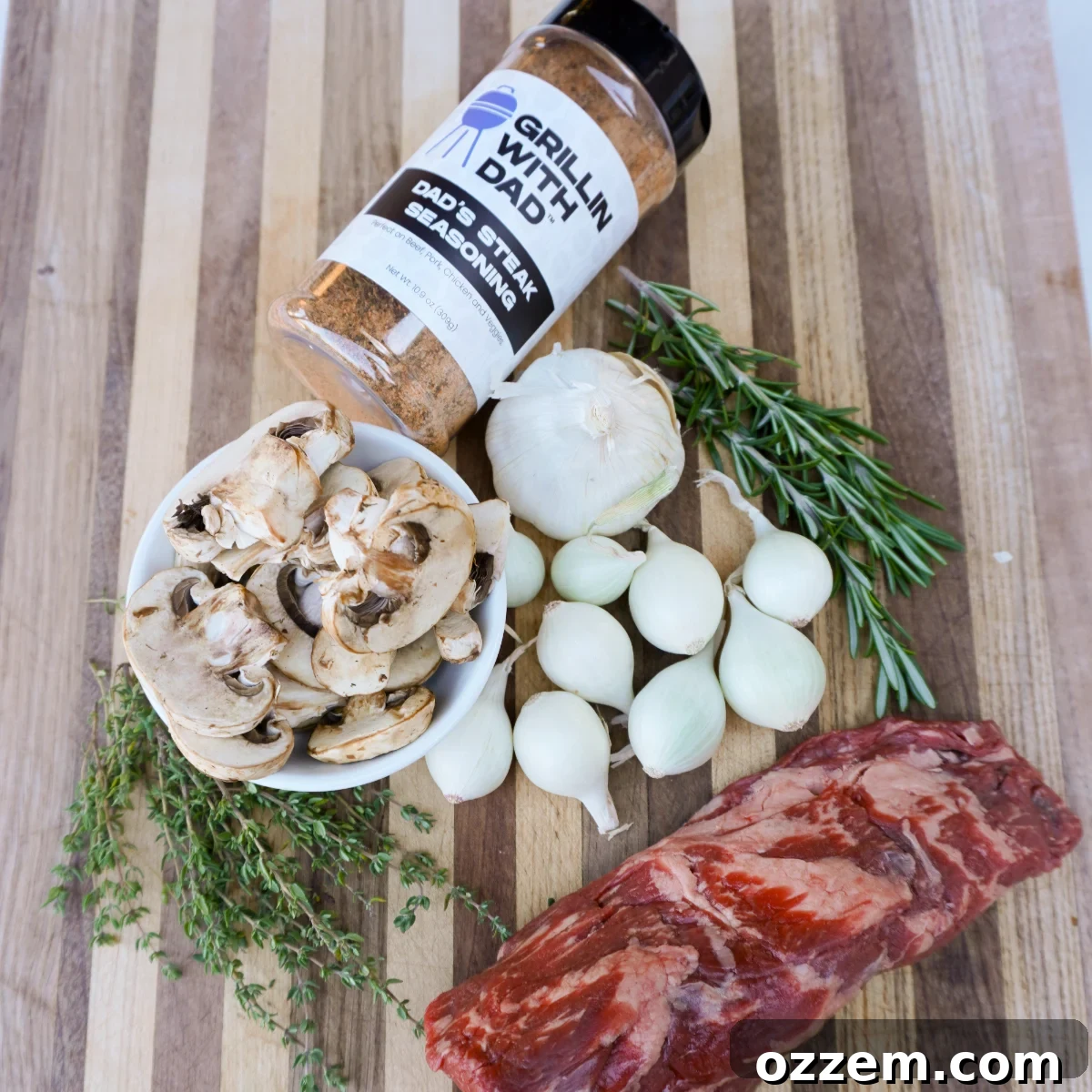
Despite its luxurious taste and elegant presentation, this beef tenderloin tips recipe calls for a surprisingly short and accessible list of ingredients. The magic truly lies in how these components come together to create a symphony of flavors and textures. Here’s a closer look at what you’ll need to gather for this exquisite dish, along with some tips for selecting the best quality:
The Stars of the Dish:
- Beef Tenderloin Tips: As previously discussed, these provide the tender, premium beef experience without the cost of whole filets. Opt for fresh, bright red cuts with minimal silver skin.
- Beef Broth: A high-quality beef broth forms the foundational liquid for our rich sauce. Choose a low-sodium option to better control the overall seasoning and saltiness of your dish.
- Dry Red Wine: This is crucial for the sauce’s depth, acidity, and complex flavor profile. Select a dry red wine you genuinely enjoy drinking, but there’s no need for an expensive vintage. A robust Cabernet Sauvignon, a smooth Merlot, or an earthy Pinot Noir would work wonderfully. Avoid “cooking wines” as they often contain added salt and preservatives that can negatively impact the final flavor.
- Sliced Mushrooms: Fresh mushrooms add an earthy depth and delightful texture that complements the beef perfectly. Cremini (baby bella) or white button mushrooms are excellent choices. Ensure they are clean; gently wipe them with a damp cloth instead of rinsing if possible to prevent waterlogging, which can make them rubbery.
- Pearl Onions: These small, sweet onions become tender and beautifully infuse the sauce with a delicate, mild onion flavor. If fresh pearl onions are hard to find or the thought of peeling them seems daunting, frozen pearl onions work perfectly and require no peeling, saving you significant prep time.
- Garlic: Fresh garlic cloves, finely minced or crushed, are essential for an aromatic backbone that elevates the savory notes of the beef and sauce.
- Unsalted Butter: Butter lends richness, body, and helps to emulsify the sauce, giving it a glossy, luxurious finish. Using unsalted butter allows you to precisely control the overall saltiness of the dish, seasoning to your taste.
- Olive Oil: A good quality olive oil is needed for searing the beef tips and sautéing the vegetables, providing a healthy fat base for cooking.
- Dad’s Steak Seasoning: This special blend is key to enhancing the beef’s natural flavor and adding layers of savory, herbaceous, and subtly buttery notes that are ideal for tender cuts. If you don’t have this specific seasoning, a robust steak rub with garlic powder, onion powder, paprika, black pepper, and a touch of herbs like rosemary and thyme would be a suitable alternative.
- Fresh Herbs (Rosemary and Thyme): Sprigs of fresh rosemary and thyme, simmered directly in the sauce, release their aromatic oils, adding a sophisticated, fragrant dimension that beautifully complements the red wine and beef.
- Fresh Parsley: A handful of freshly chopped parsley, sprinkled at the very end, adds a vibrant burst of color and a fresh, peppery note that beautifully contrasts the richness of the sauce, offering a bright finish.
Before you begin cooking, it’s always best to ensure all your ingredients are prepped and measured (mise en place). This means peeling the pearl onions (a quick blanch in boiling water then an ice bath makes peeling them a breeze), peeling and finely mincing the garlic cloves, and if using whole mushrooms, giving them a gentle clean and slicing them uniformly. Having everything ready in advance ensures a smooth, stress-free, and enjoyable cooking process, allowing you to focus on developing those incredible flavors.
Preparing and Searing Your Beef Tenderloin Tips to Perfection
The key to exceptionally tender and flavorful beef tenderloin tips lies in proper preparation and a high-heat sear. This initial step is crucial for developing a delicious crust, locking in the natural juices, and building foundational flavor that will permeate the entire dish. Don’t underestimate the power of a good sear!
Step-by-Step Beef Preparation:
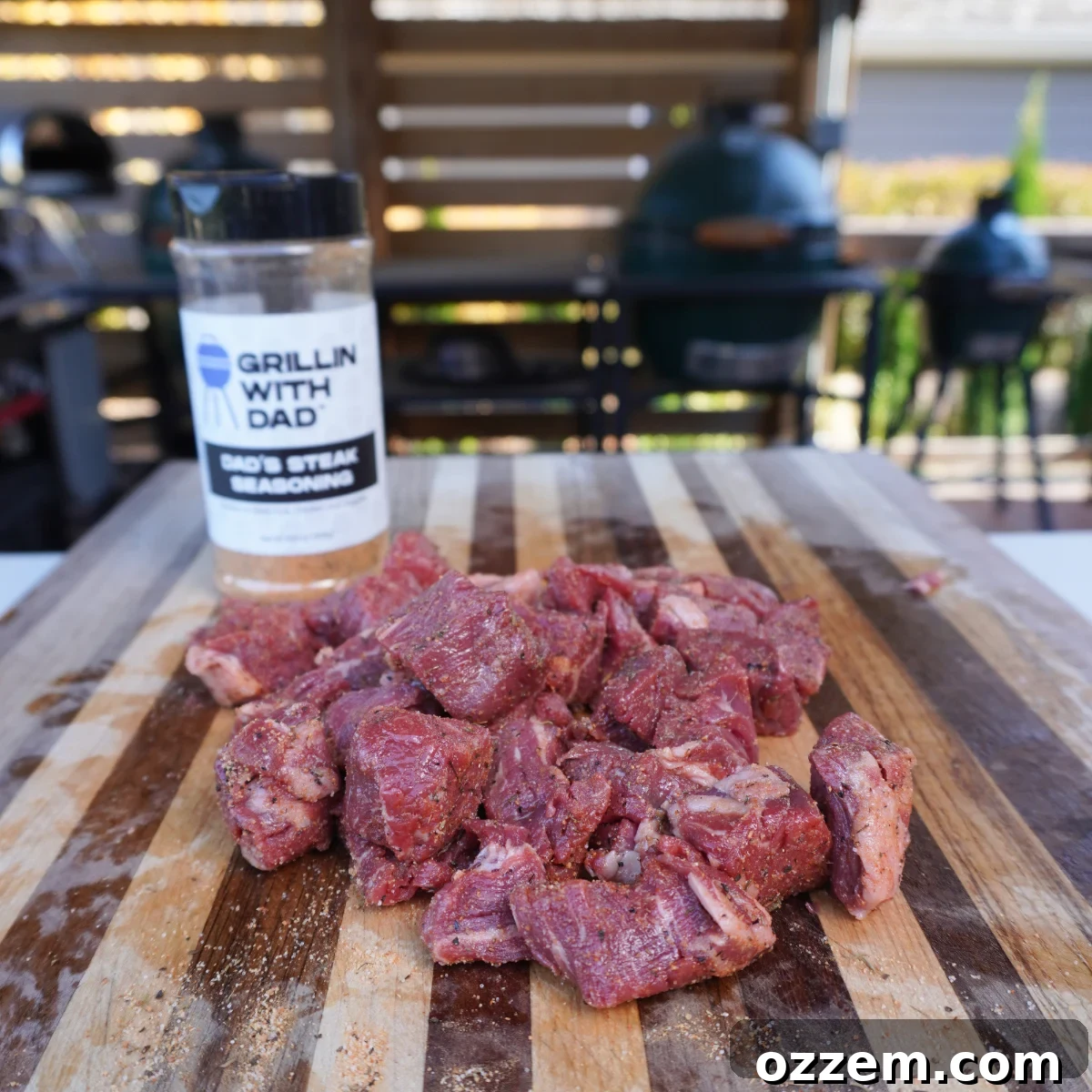
- Cubing the Beef: If your beef tenderloin tips aren’t already pre-sliced into uniform pieces, begin by cubing the beef tenderloin into small, bite-sized pieces, roughly 1 to 1.5 inches in size. Uniformity is absolutely important here, as it ensures all pieces cook evenly and reach the perfect tenderness simultaneously. Once cubed, pat the beef thoroughly dry with paper towels; removing excess moisture is critical for achieving a crisp, beautiful sear rather than simply steaming the meat.
- Seasoning: Drizzle the cubed beef lightly with a tablespoon of olive oil. Then, generously season the beef on all sides with Dad’s steak seasoning. This proprietary blend is expertly crafted to impart a rich layer of herby, savory, and subtly buttery flavors that perfectly complement the delicate nature of beef tenderloin. Take your time to ensure each piece is well coated for maximum flavor penetration and an even crust during searing.
The Searing Process (Grill or Stovetop):
While this recipe lends itself beautifully to grilling, infusing a subtle smoky depth, you can absolutely achieve fantastic results on a stovetop if a grill isn’t available. The fundamental goal remains the same: a quick, high-heat sear to create that desirable crust.
- Preheat Your Cooking Surface: If using a grill, preheat it to high direct heat. For a stovetop, place a heavy-bottomed pan, ideally a cast iron skillet, over medium-high to high heat. Allow the skillet to heat up thoroughly for several minutes until it’s smoking lightly. This intense heat is essential for an immediate, effective sear.
- Add Olive Oil: Once the skillet is smoking hot, add a tablespoon of olive oil, ensuring it coats the bottom surface evenly. Be quick, as the oil will heat rapidly.
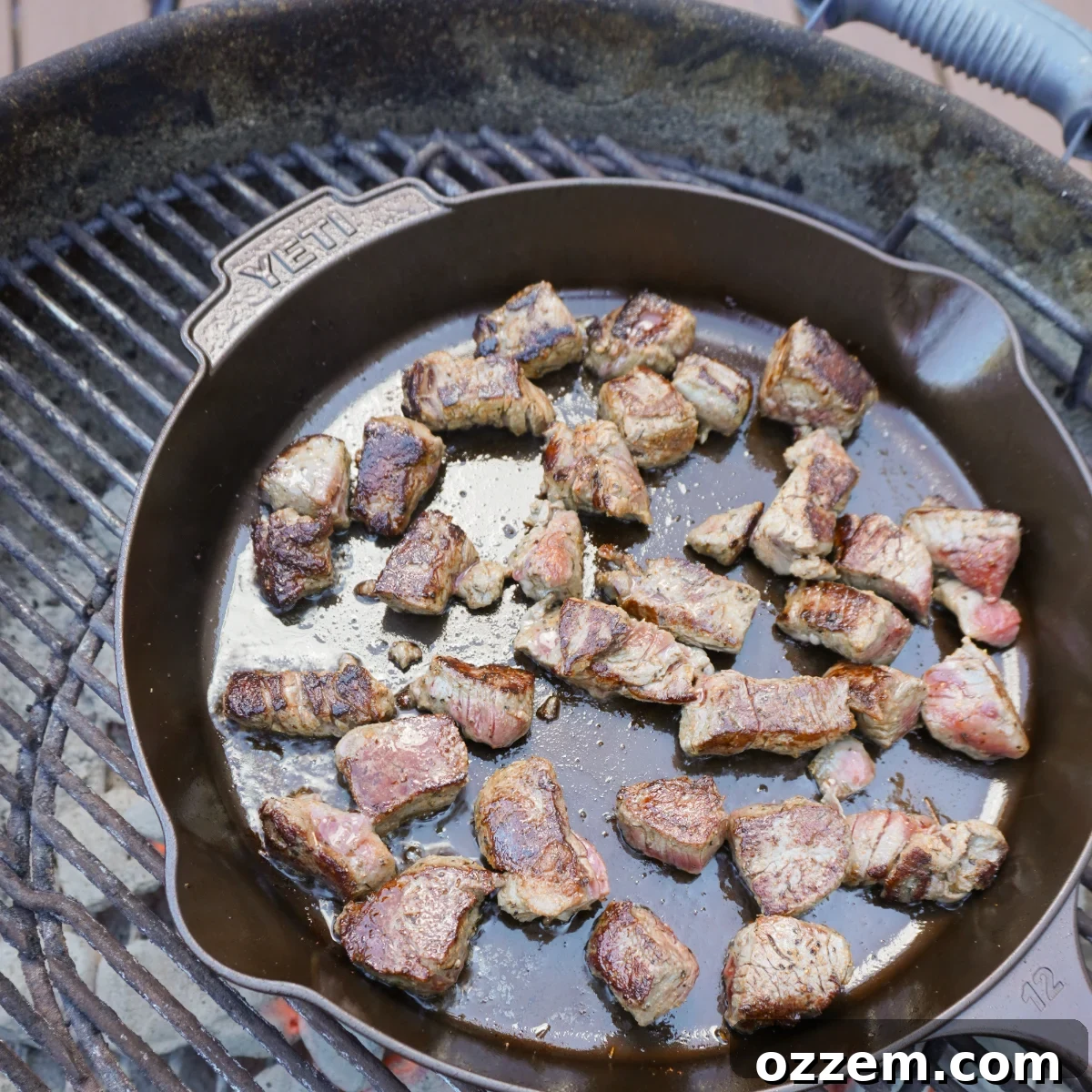
- Sear the Beef: Carefully drop the seasoned beef tips into the hot skillet in a single layer, ensuring not to overcrowd the pan. Overcrowding will lower the pan’s temperature and lead to steaming rather than searing. If necessary, work in batches to maintain consistent high heat. Sear each side for approximately 1 minute, using tongs to turn and ensure all sides develop a beautiful, deep brown crust. This rapid searing prevents the tenderloin from overcooking and helps to seal in its incredible juiciness.
- Remove and Rest: Once all sides are perfectly seared, remove the beef tips from the skillet and set them aside on a clean plate. They will finish cooking later in the rich red wine sauce, absorbing all those incredible flavors. Crucially, do not clean the skillet! The leftover fond (the browned bits and caramelized drippings) at the bottom of the pan is a concentrated source of flavor and will be the foundational element for our exquisite sauce.
Crafting the Ultimate Rich Red Wine Sauce
The soul of this dish truly lies in its luxurious red wine sauce. It’s what transforms simple beef tips into an elegant, restaurant-quality meal. Building this sauce in the same skillet used for searing the beef is critical, as it allows us to capture all those delicious browned bits, or “fond,” left behind – these are packed with caramelized flavors that form the backbone of a truly great sauce.
Building Layers of Flavor for Your Sauce:
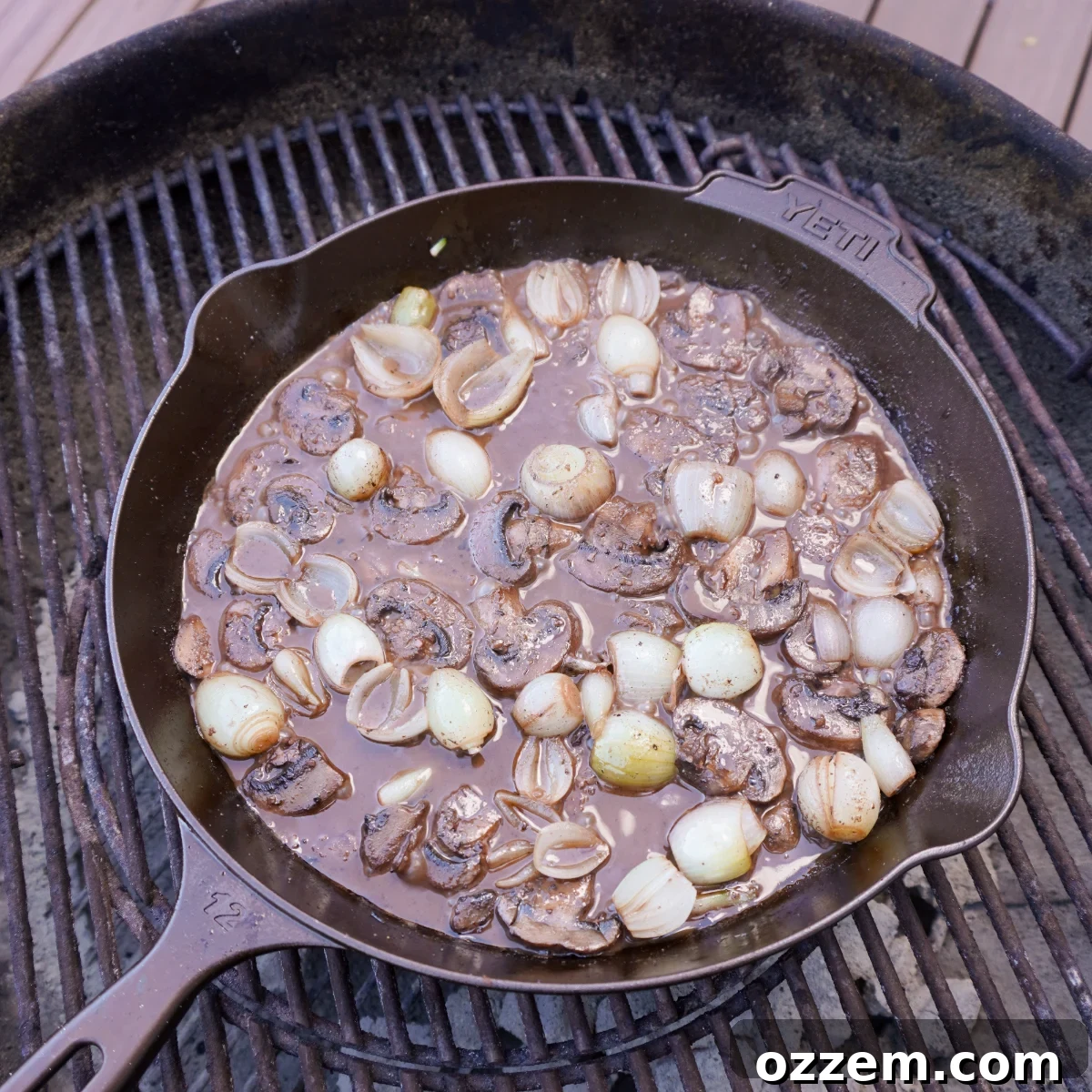
- Deglazing the Skillet: With the same cast iron skillet still on medium-high heat (or moved to your stovetop), carefully add the beef broth, dry red wine, and half a stick of unsalted butter. Immediately begin stirring, using a sturdy wooden spoon or spatula to vigorously scrape up all the flavorful browned bits from the bottom of the pan. This process, known as deglazing, is essential for dissolving those concentrated flavors into the liquid, forming a deep, complex flavor base for your sauce. Allow the mixture to come to a gentle simmer and the butter to melt completely, marrying the liquids into a fragrant foundation.
- Adding Aromatics and Vegetables: Next, incorporate your prepped sliced mushrooms, peeled pearl onions, and minced garlic cloves (or garlic). Add about two teaspoons of Dad’s steak seasoning at this stage for an extra punch of well-rounded flavor that ties everything together and enhances the umami notes. Stir occasionally, allowing the vegetables to soften and release their moisture, which further enriches the sauce and adds delightful texture.
- Simmering and Infusion: Once the sauce comes to a boil and the mushrooms and pearl onions have softened (they should be tender but still have a slight bite), it’s time to reintroduce the seared beef tenderloin tips back into the skillet. Gently nestle them into the simmering sauce, ensuring they are partially submerged. This allows the beef to start absorbing the incredible flavors of the sauce.
- Finishing Touches and Herb Infusion: To achieve that final layer of richness and aromatic complexity, add the remaining half-stick of unsalted butter. This “finishing butter” (also known as *monte au beurre*) adds a beautiful gloss, creaminess, and depth to the sauce. Immediately follow with fresh sprigs of rosemary and thyme. These robust herbs will slowly infuse the sauce with their fragrant oils as the dish simmers, contributing a sophisticated, earthy aroma.
- Final Simmer: Reduce the heat to low, cover the skillet (if you have a lid), and allow everything to gently simmer for another 5 minutes. This crucial step allows the beef tips to fully absorb the rich, complex flavors of the red wine sauce, making them even more tender and delicious. The sauce will also naturally thicken slightly as it simmers, achieving that perfect consistency.
Just before serving, remember to remove the woody rosemary and thyme sprigs. A final sprinkle of freshly chopped parsley over the beef tenderloin tips in red wine sauce adds a vibrant burst of freshness and a beautiful pop of color, making the dish visually appealing as well as incredibly tasty. This dish pairs exquisitely with a variety of sides, from creamy roasted potatoes or fluffy mashed potatoes to smooth polenta or even a simple crusty bread to soak up every last drop of that incredible sauce. Prepare to impress your guests and delight your taste buds with this truly gourmet experience!
Expert Tips & Frequently Asked Questions
To help you master this delicious beef tenderloin tips recipe and confidently tackle other culinary adventures, here are some common questions and expert tips:
What cut of steak should I use for different cooking methods?
The ideal cut of steak largely depends on your desired cooking method and the outcome you’re aiming for. For hot and fast grilling or searing, such as with this tenderloin tips recipe, you’ll want cuts that cook quickly and benefit from high heat. Examples include a well-marbled Ribeye, a New York Strip, or a perfectly tender Filet Mignon. These cuts are known for their rich flavor and inherent tenderness when cooked to medium-rare or medium. If you are preparing a roast, stew, or braise that requires longer, slower cooking to break down connective tissues, opt for more economical and meatier cuts. Excellent choices include a Chuck Roast, Beef Short Ribs, or dedicated Beef Stew Meat. These cuts transform beautifully with slow cooking, resulting in incredibly tender and flavorful dishes.
At what internal temperature should I remove the steak from the heat?
Achieving your preferred doneness is crucial for enjoying steak, and an instant-read meat thermometer is your best friend here. Remember that steak will continue to cook slightly after removal from the heat (this is called carryover cooking), so it’s best to remove it a few degrees *before* reaching your target temperature. Always allow your beef to rest for 5-10 minutes after cooking; this allows the juices to redistribute throughout the meat, resulting in a more tender and flavorful bite.
- Rare: Remove at 120-125°F (49-52°C)
- Medium-Rare: Remove at 125-130°F (52-54°C) – this is often considered ideal for tenderloin for maximum juiciness.
- Medium: Remove at 135-140°F (57-60°C)
- Medium-Well: Remove at 145-150°F (63-66°C)
- Well-Done: Remove at 155°F (68°C) or higher (though for delicate tenderloin, this is generally not recommended as it can dry out significantly).
Can I make this Beef Tenderloin Tips recipe in the oven or on a stovetop without a grill?
Absolutely! While grilling adds a lovely smoky depth, this recipe is incredibly versatile and can be replicated with excellent results using either an oven or a stovetop. The key is to achieve a good sear on the beef tips. For **stovetop preparation**, simply follow the searing instructions using a heavy cast iron skillet on your burner. For an **oven method**, you could sear the beef tips on the stovetop first, then transfer the entire skillet to a preheated oven (around 375-400°F or 190-200°C) to finish cooking or simmer the sauce. My philosophy is that you don’t need a fancy Big Green Egg or high-end Weber grill to create amazing dishes; a standard gas grill, a conventional oven, or even just a good quality stovetop will do the trick for any of my recipes.
Can I prepare parts of this dish ahead of time?
Yes, you can certainly do some prep work in advance to make cooking day easier and reduce stress. You can cube and season the beef tenderloin tips a few hours ahead of time (up to 4-6 hours) and keep them refrigerated until ready to sear. You can also peel and slice the mushrooms, pearl onions, and mince the garlic a day in advance. Store these prepped vegetables in separate airtight containers in the refrigerator. The sauce, however, is best made fresh and simmered with the beef just before serving to ensure optimal flavor, consistency, and texture.
What kind of red wine should I use for the sauce?
As mentioned in the ingredients section, choose a dry red wine that you enjoy drinking. Good, accessible options include Cabernet Sauvignon, Merlot, Pinot Noir, or even a Chianti. The key is “dry” – avoid sweet or semi-sweet wines, as they will alter the sauce’s flavor profile significantly. Crucially, don’t use an expensive bottle; the alcohol cooks off, and many of the subtle nuances of a high-priced wine can be lost in the cooking process. A moderately priced, drinkable dry red wine is perfect. Also, always steer clear of “cooking wines” found in grocery stores, as they often contain added salt and preservatives that can negatively impact the flavor of your sauce and give it an off-taste.
What are some good side dishes to serve with this elegant beef dish?
This rich and savory dish pairs beautifully with a variety of sides that can complement its robust flavors. Here are some suggestions to round out your meal:
- Potatoes: Creamy mashed potatoes, garlic mashed potatoes, roasted baby potatoes, crispy smashed potatoes, or even a decadent potato gratin would be excellent choices, as they are perfect for soaking up the wonderful red wine sauce.
- Grains: Creamy polenta or a simple, savory risotto would be excellent choices, adding a comforting and luxurious touch to the plate.
- Vegetables: Blanched green beans with toasted almonds, roasted asparagus spears, sautéed spinach with garlic, or a crisp mixed green salad with a light vinaigrette would provide a refreshing contrast and add essential nutrients.
- Bread: Don’t forget a crusty baguette or a hearty sourdough bread! This is essential to ensure no drop of that delicious red wine sauce goes to waste and to help cleanse the palate between bites.
More Mouthwatering Grilled Tenderloin Recipes to Explore
If you’ve enjoyed mastering this Beef Tenderloin Tips recipe, you’ll be thrilled to discover other fantastic recipes from the Grillin’ with Dad kitchen. Whether you’re a fan of beef or pork, these tenderloin-focused dishes are designed to bring gourmet flavor to your table with approachable grilling techniques. Expand your culinary repertoire and impress your guests with these mouthwatering ideas:
Pork
Cajun Honey Pork Bites
Beef
Beef Tenderloin Tips (This Recipe)
Pork
Roasted Pork Tenderloin Dinner
Beef
Whole Grilled Beef Tenderloin
Beef Tenderloin Tips in a Red Wine Sauce: The Full Recipe
Average Rating: 4.67 out of 5 stars (based on 3 votes)
Beef Tenderloin Tips in a Red Wine Sauce
By: Maciek Zurawski
This beef tenderloin tips in a red wine sauce is perfect for holiday entertaining, dinner parties, or a perfect date night meal, offering gourmet flavor with straightforward preparation.
Prep Time: 10 minutes
Cook Time: 20 minutes
Servings: 4 People
Pin Recipe
Ingredients
- For the Beef Tips:
- 1 lb Beef tenderloin tips
- 1 tbsp Olive oil
- 1 tbsp Dad’s steak seasoning
- For the Red Wine Sauce:
- 8 oz Sliced mushrooms
- 8 oz Pearl onions
- 4 Garlic cloves (minced) or 1 tbsp minced garlic
- 2 sprigs Fresh rosemary
- 2 sprigs Fresh thyme
- 1 stick Unsalted butter (divided into two 1/2-stick portions)
- 2 tsp Dad’s steak seasoning
- 3/4 cup Beef broth
- 3/4 cup Dry red wine (e.g., Cabernet Sauvignon, Merlot, Pinot Noir)
- Fresh parsley, chopped (for garnish)
Instructions
- Prepare Ingredients: Begin by prepping your vegetables: peel the pearl onions, peel and mince the garlic cloves, and slice the mushrooms (if using whole). Set aside.
- Season Beef: Cube the beef tenderloin into small, uniform bite-sized pieces (1-1.5 inches). Drizzle lightly with 1 tablespoon of olive oil and generously season all sides with 1 tablespoon of Dad’s steak seasoning.
- Preheat & Sear: Preheat your grill to high direct heat. Place a heavy cast iron skillet over the grate and let it heat up until hot. Add a splash of olive oil to the skillet. Carefully add the seasoned beef tips to the hot skillet in a single layer (work in batches if necessary to avoid overcrowding). Sear for approximately 1 minute per side, ensuring all sides develop a beautiful brown crust. Remove the seared beef from the skillet and set aside on a plate. Do not clean the skillet; the fond will add flavor to the sauce.
- Start the Sauce: In the same cast iron skillet (still on medium-high heat), add the beef broth, red wine, and half a stick of unsalted butter. Stir continuously, scraping up all the browned bits (fond) from the bottom of the pan with a wooden spoon. Allow the mixture to come to a gentle simmer and the butter to melt completely.
- Add Vegetables & Seasoning: Next, add the prepped sliced mushrooms, pearl onions, and minced garlic to the simmering liquid. Stir in an additional 2 teaspoons of Dad’s steak seasoning for an extra layer of flavor. Continue to simmer, stirring occasionally, until the vegetables are softened (about 5-7 minutes).
- Combine with Beef: Once the vegetables are tender, return the seared beef tenderloin tips to the skillet, nestling them into the sauce.
- Finish the Sauce: Add the remaining half stick of unsalted butter, along with the fresh rosemary and thyme sprigs. Reduce the heat to low, cover the skillet (if possible), and gently simmer for another 5 minutes. This allows the beef to absorb the rich flavors and the sauce to thicken slightly.
- Serve: Remove the rosemary and thyme sprigs from the skillet. Sprinkle with freshly chopped parsley for a vibrant finish. Serve immediately with your favorite side dishes and enjoy your gourmet meal!
Recipe Notes
- For an even more economical meal, while not a direct substitute for tenderloin tips, a chuck roast can be used for a stew or braise, but the cooking method and time will be significantly different.
- When selecting red wine for the sauce, don’t use an expensive bottle. A moderately priced, drinkable dry red wine is perfect, as the alcohol will cook off and many subtle nuances can be lost during simmering. Avoid “cooking wines” which often contain added salt and preservatives.
Nutrition Information (per serving)
(Approximate values based on 4 servings)
- Calories: 314 kcal
- Carbohydrates: 9g
- Protein: 3g
- Fat: 27g
- Saturated Fat: 15g
- Polyunsaturated Fat: 1g
- Monounsaturated Fat: 9g
- Trans Fat: 1g
- Cholesterol: 61mg
- Sodium: 176mg
- Potassium: 310mg
- Fiber: 2g
- Sugar: 4g
- Vitamin A: 733 IU
- Vitamin C: 7mg
- Calcium: 32mg
- Iron: 1mg
Loved this recipe and want to share your experience? We’d be thrilled if you would leave a comment or rating below! Your feedback helps us and other home cooks. Happy cooking!