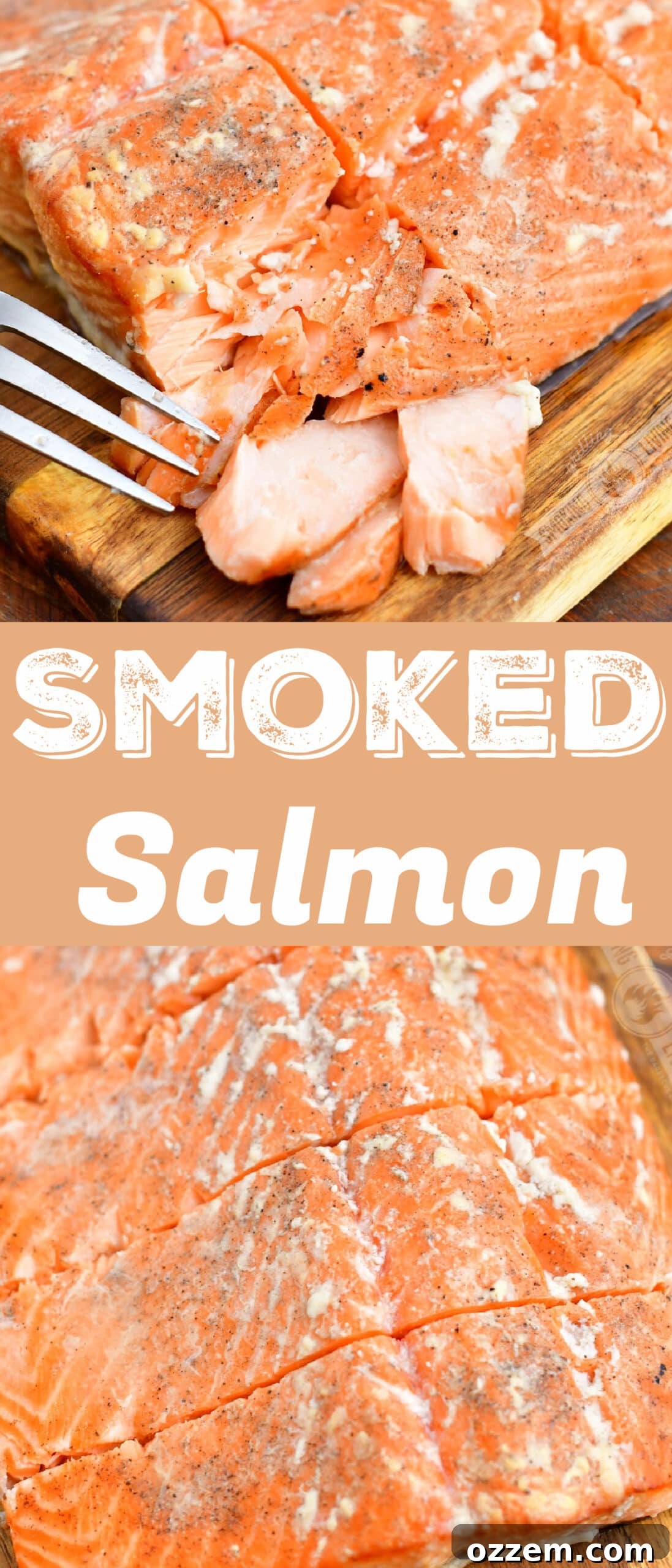
The Ultimate Guide to Perfect Hot Smoked Salmon: Juicy, Tender, and Flavorful Every Time
Uncover the secrets to making the best hot smoked salmon right in your backyard. This comprehensive guide provides all the tips, tricks, and detailed steps you need to achieve incredibly juicy, tender, and intensely flavorful results. All you need is a fresh salmon fillet with the skin on, a few common kitchen staples like salt, sugar, and pepper, and your trusty smoker. Get ready to impress with this gourmet yet surprisingly simple dish!

Salmon is a truly remarkable fish, beloved by home cooks and chefs alike for its versatility, health benefits, and delightful taste. Whether baked, pan-seared, grilled, or smoked, it consistently delivers a satisfying culinary experience. Unlike many other fish, salmon boasts a mild, pleasant flavor without being overtly “fishy,” making it appealing to a wide palate. Its firm, meaty texture, combined with easy flakiness and minimal bones, makes it a joy to prepare and eat. While cooking salmon always feels a bit special, there’s an undeniable allure and sophistication that comes with hot smoking it.
Hot smoked salmon, despite its seemingly fancy nature, is surprisingly simple to master. The magic happens when high-quality fish meets the gentle embrace of wood smoke, enhanced by just the right touch of seasoning. The result is nothing short of extraordinary – a culinary masterpiece that elevates any meal. The cornerstone of this exceptional dish, much like any great recipe, lies in starting with the best ingredients. Therefore, always prioritize getting the highest quality salmon available, and crucially, ensure it has the skin intact. The skin plays a vital role in maintaining moisture and preventing the fish from sticking during the smoking process.
Hot Smoked Salmon vs. Cold Smoked Salmon (Lox): What’s the Difference?
It’s common to confuse hot smoked salmon with its equally delicious cousin, cold smoked salmon, often known as lox. However, these two preparations are distinct, involving entirely different processes and yielding vastly different textures and flavor profiles.
Cold Smoked Salmon (Lox): This method involves curing the salmon with salt, which draws out moisture and tenderizes the flesh. The “cold” aspect refers to the smoking temperature, which is maintained below 90°F (32°C) for an extended period, sometimes for several days. This low-temperature smoking doesn’t cook the fish but imparts a delicate, nuanced smoke flavor. The texture of lox remains silky, almost raw-like, making it perfect for bagels and cream cheese, or delicate appetizers.
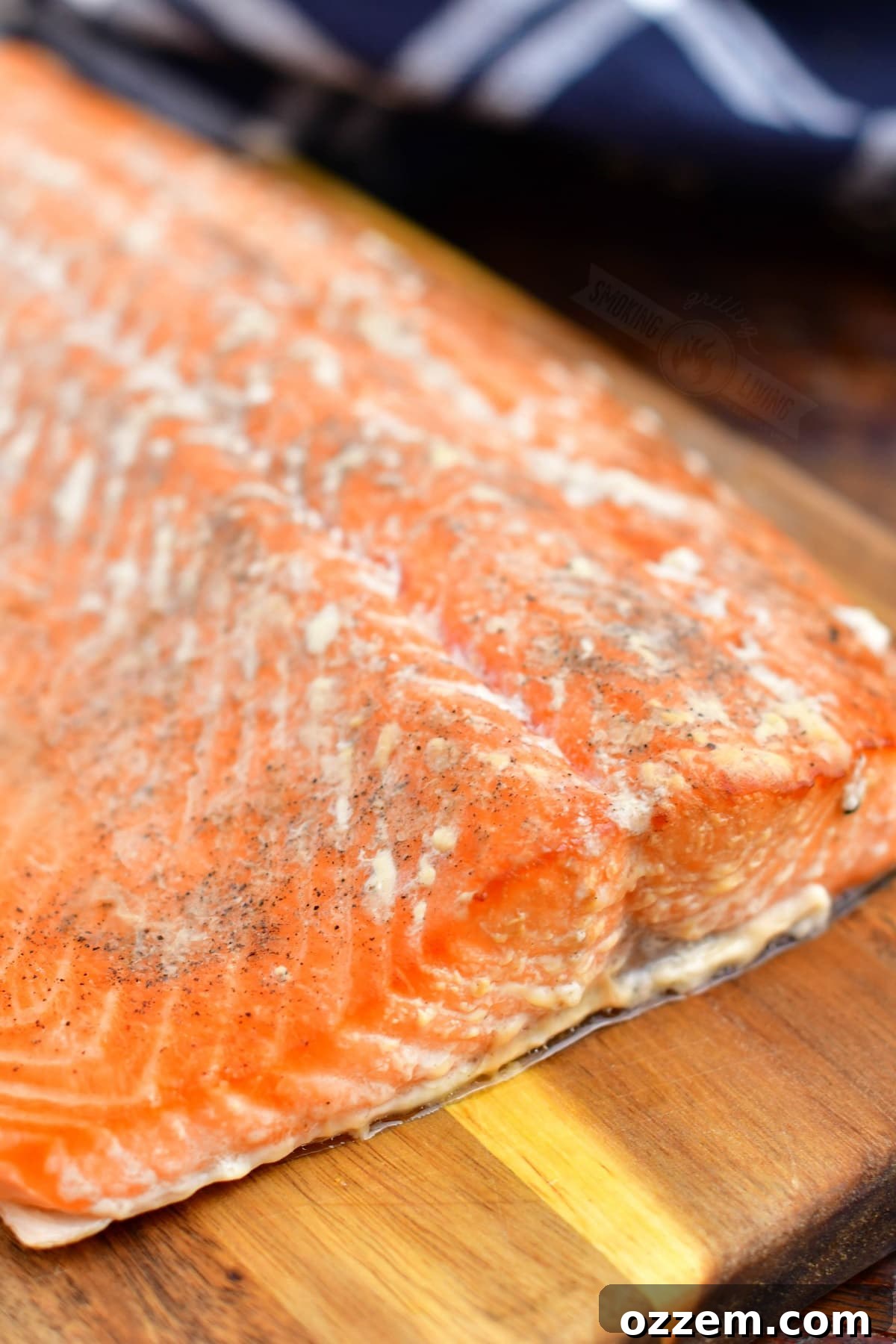
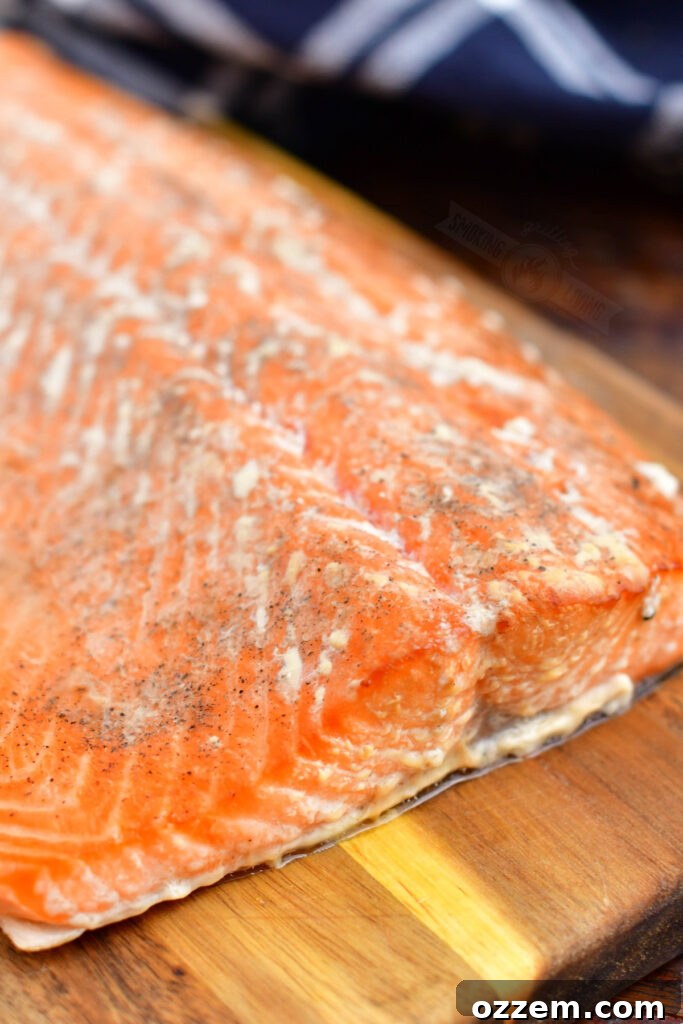
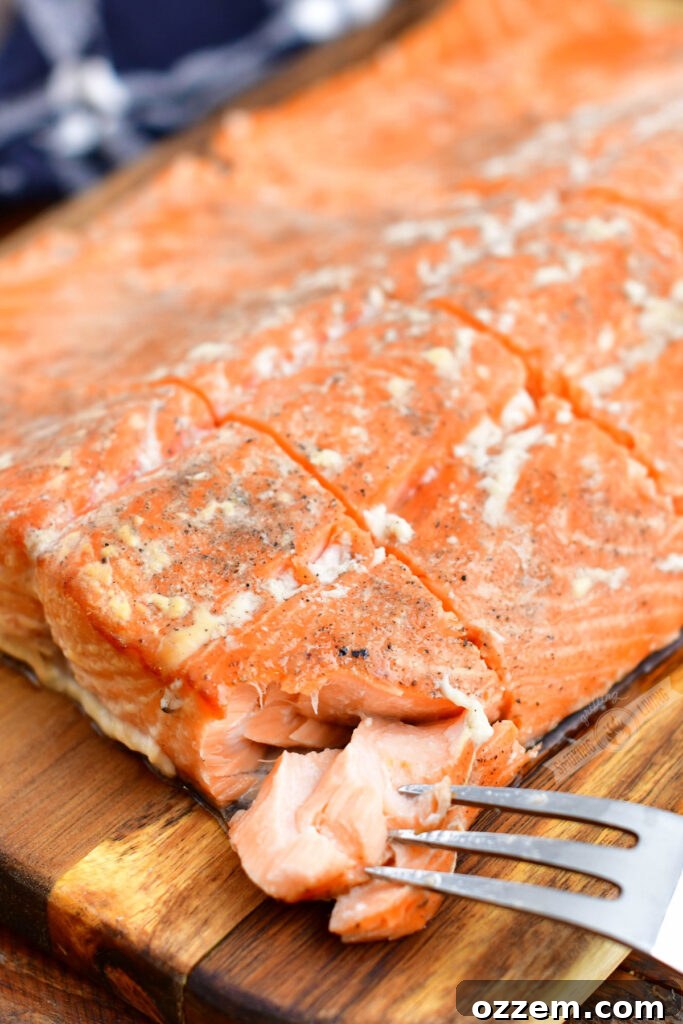
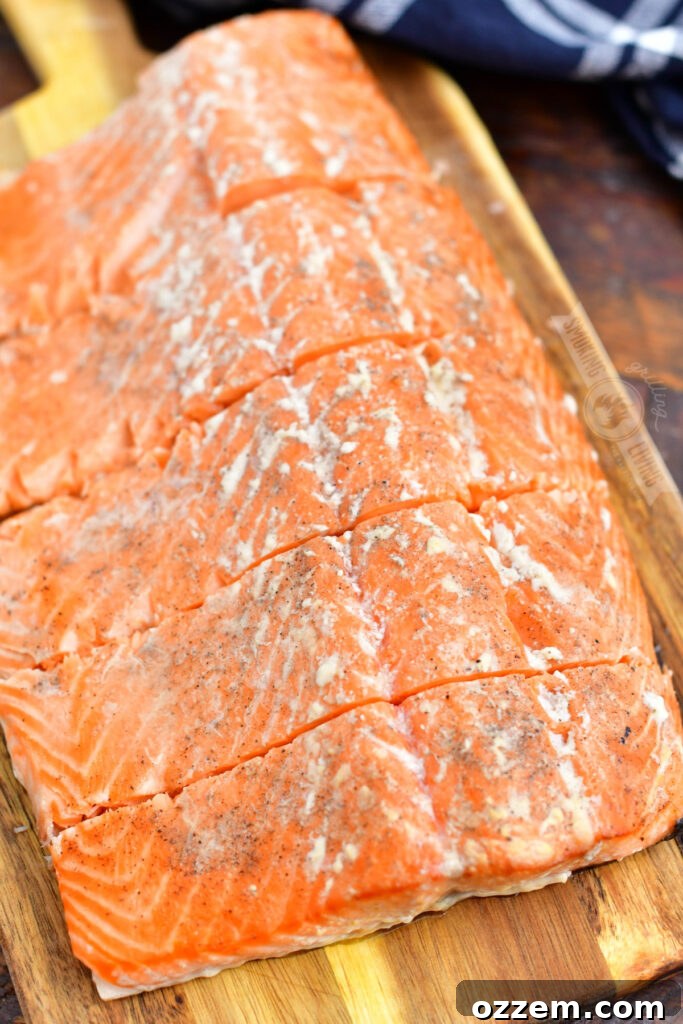
Hot Smoked Salmon: As the name suggests, hot smoked salmon is smoked at a significantly higher temperature, typically around 225°F (107°C). This process fully cooks the fish, resulting in a distinctly flaky, firm, and incredibly tender texture. The higher temperature also allows for a more pronounced and robust smoke flavor to permeate the salmon. It’s ideal for a main course, flaked into salads, or enjoyed on its own as a hearty, flavorful protein.
Achieving Perfection: Key Considerations for Smoking Salmon
The Foundation of Flavor: Why Brine Your Salmon?
Many first-time smokers ask, “Is brining really necessary for salmon?” The answer is an emphatic yes! Taking a few extra minutes to immerse your salmon in a simple salty-sweet solution makes a profound difference in the final product. Here’s why brining is a non-negotiable step for exceptional hot smoked salmon:
- Moisture Retention & Juiciness: Brining works by altering the protein structure of the fish. The salt helps denature proteins, allowing the muscle fibers to absorb and hold onto more moisture. This results in incredibly juicy salmon and provides a crucial buffer against overcooking, making the fish more forgiving. When salmon is overcooked, it quickly becomes dry and unpleasant, but brining significantly minimizes this risk.
- Enhanced Flavor Infusion: The brine acts as a conduit, infusing a uniform blend of salt and sugar deep into the fish’s flesh. This doesn’t just season the surface but enhances the salmon’s natural flavor from within, providing a balanced and delightful taste throughout.
- Albumin Reduction: Brining significantly reduces the amount of albumin, the milky white protein that often leaches out and congeals on the surface of salmon during cooking. While harmless, albumin can be visually unappealing. Brining helps keep your smoked salmon looking as good as it tastes.
An effective brine for fish typically contains 5-8% salt and sugar dissolved in water. For this recipe, that translates to a simple yet powerful blend of 3 tablespoons of kosher salt, 3 tablespoons of dark brown sugar, and 4 cups of lukewarm water.
Smoking Temperature: The Golden Rule for Hot Smoked Salmon
For hot smoked salmon, maintaining a consistent temperature of 225°F (107°C) is paramount. This temperature is hot enough to cook the fish thoroughly and impart a beautiful smoky flavor without drying it out too quickly. Strive to keep your smoker’s temperature as steady as possible, avoiding spikes above 225°F. Higher temperatures can lead to tough, dry salmon and excessive albumin formation.
Brining Duration: Finding the Sweet Spot
The ideal brining time for a typical salmon fillet (around 2 lbs) is between 2 to 4 hours. While you might be tempted to brine longer or even overnight, extensive testing shows that for hot smoked salmon, a longer brine doesn’t necessarily yield superior results and can sometimes make the fish too salty or alter its texture negatively. With good quality salmon, a shorter brine is often all that’s needed to achieve the desired juiciness and flavor.
Smoking Duration and Doneness: Relying on Internal Temperature
Predicting the exact smoking time for salmon can be challenging, as it depends on several factors: the thickness of the fillet, its fat content, and the consistency of your smoker’s temperature. While an estimated time is usually around 1 hour, it is absolutely crucial to rely on an accurate meat thermometer to determine doneness. Salmon is fully cooked and safe to eat when its internal temperature reaches 145°F (63°C). However, to ensure the juiciest results and account for carry-over cooking, aim to remove your salmon from the smoker when it reaches an internal temperature of 140°F (60°C). The fish will continue to cook slightly as it rests, bringing it to the perfect final temperature.
Wood Selection: Complementing Salmon’s Delicate Flavor
The type of wood you choose for smoking significantly impacts the final flavor of your salmon. For fish as delicate and flavorful as salmon, it’s best to opt for mild, subtle smoking woods that enhance rather than overpower its natural taste.
- Alder: This is considered the classic choice for smoking salmon, especially in the Pacific Northwest. It produces a very mild, slightly sweet, and earthy smoke that perfectly complements salmon.
- Fruit Woods: Apple and cherry are excellent alternatives, imparting a gentle, sweet, and fruity smoke flavor. They add a lovely depth without being too assertive.
- Avoid Strong Woods: For hot smoked salmon, it’s generally best to avoid strong, pungent woods like mesquite or hickory, especially in large quantities. These woods can easily overwhelm the salmon’s delicate flavor, resulting in a bitter or excessively smoky taste. If you prefer a stronger smoke, use them sparingly or blend them with milder woods.
The Vital Pellicle: A Smoker’s Secret Weapon
One often-overlooked but crucial step in hot smoking salmon is the formation of a pellicle. After brining and before smoking, the salmon fillet should be patted dry and then left uncovered in the refrigerator (or in a cool, breezy spot if conditions allow) for 1-4 hours. During this time, the surface of the fish dries out and develops a slightly tacky, glossy film called a pellicle. This pellicle serves several important functions:
- Smoke Adhesion: It creates a sticky surface that allows the smoke particles to adhere better to the fish, resulting in a richer, more even smoke flavor and a beautiful golden-brown color.
- Texture: It helps to firm up the outer layer of the fish, preventing it from becoming mushy and contributing to that desirable flaky texture.
- Moisture Barrier: The pellicle also acts as a natural barrier, helping to seal in moisture during the smoking process.
Essential Ingredients & Equipment for Your Smoked Salmon Journey
Ingredients:
- Good Quality Salmon: As emphasized, quality is key. Look for a whole side of salmon fillet with the skin on. Avoid pre-cut individual portions, as a whole side smokes more evenly. Wild-caught varieties like Sockeye, Coho, or King salmon offer rich flavor and texture, while farmed Atlantic salmon is widely available and typically has a higher fat content, making it very forgiving for smoking.
- Kosher Coarse Salt: Essential for the brine and a light seasoning before smoking. Its larger granules dissolve well and provide a clean, briny flavor.
- Dark Brown Sugar: This is my preferred choice for brining and seasoning. The molasses content in dark brown sugar adds a wonderful depth of flavor and a subtle sweetness that perfectly balances the smokiness.
- Fresh Cracked Black Pepper: A touch of freshly cracked black pepper before smoking adds a gentle warmth and aromatic complexity.
- Lukewarm Water: Used for the brining solution. Lukewarm water helps the salt and sugar dissolve more readily and evenly.
Equipment:
- Large Casserole Dish or Aluminum Pan: For containing the salmon and brine solution. A baking dish or disposable aluminum pan works perfectly.
- Weight for Brine: A small plate, a food storage container filled with dry beans or rice, or even a smaller plate that fits inside the brining dish. This is used to gently weigh down the salmon, ensuring it remains fully submerged in the brine. Crucially, ensure it’s not so heavy that it crushes the fish.
- Aluminum Foil: To place the salmon on during smoking. This helps with easy transfer, keeps the grill grates cleaner, and allows for even cooking, especially with delicate fish.
- Smoker: Your favorite type of smoker will work!
- Pellet Smoker: Known for ease of temperature control.
- Charcoal Smoker: Offers a classic smoke flavor but requires more active temperature management.
- Electric Smoker: Great for beginners due to consistent temperatures.
- Gas Smoker: Combines convenience with good smoke flavor.
- Drip Pan with Water: Regardless of your smoker type, a drip pan filled with water is essential. It helps maintain moisture in the smoking chamber, prevents the fish from drying out, and can also help stabilize internal temperatures. Its placement will depend on your specific smoker model.
- Instant-Read Meat Thermometer: Absolutely indispensable for accurate doneness checks. Do not guess; trust your thermometer!
Step-by-Step: How to Make the Best Hot Smoked Salmon
1. Prepare the Brine
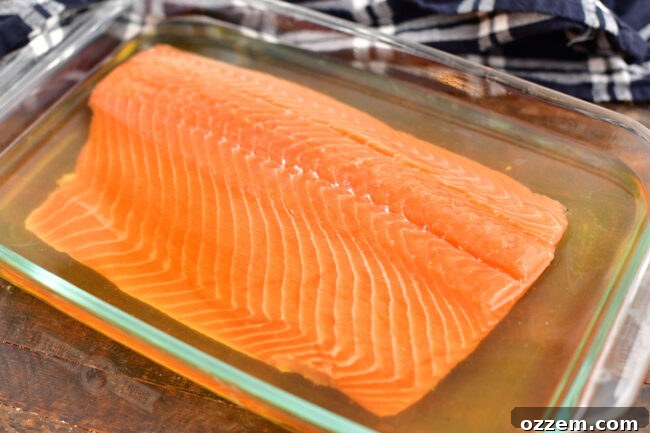
- In a large bowl or directly in your chosen baking/aluminum pan, combine the lukewarm water, kosher coarse salt, and dark brown sugar. Stir vigorously until the salt and sugar are completely dissolved.
- Carefully place your whole side of salmon fillet, skin-side down, into the brining solution. Ensure the entire fillet is submerged.
- Place a small plate or a food storage container filled with dried beans (or a similar light weight) directly on top of the salmon to keep it fully immersed in the brine. Be gentle; you don’t want to crush the delicate fish.
- Transfer the brining salmon to the refrigerator and let it brine for approximately 2 to 4 hours.
2. Form the Pellicle
- After brining, remove the salmon from the solution and gently pat it thoroughly dry with paper towels. You want the surface to be as dry as possible.
- Place the dry salmon fillet, skin-side down, on a wire rack set over a baking sheet (or directly on a clean, dry surface if refrigerated).
- Leave the salmon uncovered in the refrigerator for 1 to 4 hours. This crucial step allows a shiny, slightly tacky film (the pellicle) to form on the surface, which is vital for smoke adhesion and texture.
3. Prepare Your Smoker
- While the salmon is brining and forming its pellicle, preheat your smoker to a consistent temperature of 225°F (107°C). It’s critical to maintain this temperature and avoid going higher.
- If possible, place a drip pan filled with water directly under your grill grate. If your smoker’s design doesn’t allow for this, position it to the side of the main grate. This helps maintain a moist environment and stabilize temperatures.
- Tips for Temperature Control:
- To help keep temperatures down and produce a consistent smoke, you can soak your wood chips for 30-60 minutes before adding them to the smoker.
- Adding ice to your water-filled drip pan can also help regulate and lower the internal temperature of the smoker if it runs too hot.
4. Prepare the Salmon for Smoking
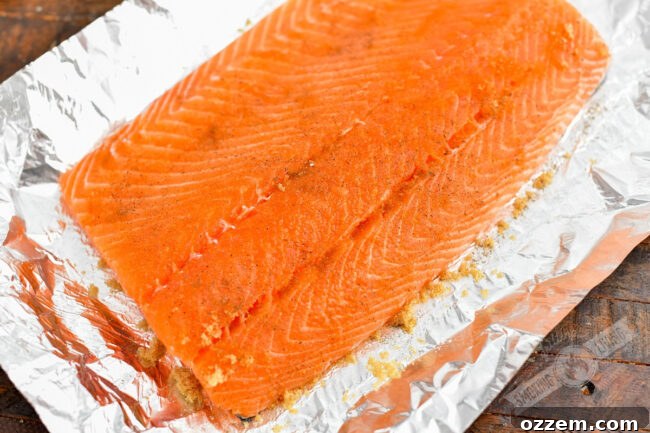
- After forming the pellicle, gently run your hand over the salmon fillet to check for any pin bones that might have been missed. Use fish bone tweezers (or clean regular tweezers in a pinch) to carefully remove any remaining bones.
- Lightly season the pellicle-formed surface of the fillet with a small amount of additional kosher salt, dark brown sugar, and fresh cracked black pepper. Remember, the brine has already seasoned the fish internally, so a light touch is all that’s needed here for extra flavor and crust.
- Place the seasoned salmon fillet, skin-side down, onto a sheet of heavy-duty aluminum foil. This prevents sticking and makes transferring the delicate fish much easier.
5. Smoke the Salmon
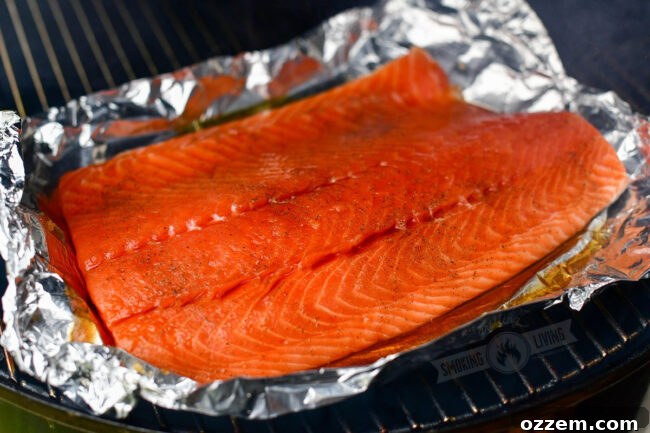
- Carefully transfer the aluminum foil with the salmon onto the grate of your pre-heated smoker.
- Close the smoker lid and maintain the temperature at 225°F (107°C).
- Smoke the salmon until its internal temperature reaches 140°F (60°C). Begin checking the internal temperature with an instant-read thermometer after about 30 minutes, especially for thinner fillets, as they will cook faster.
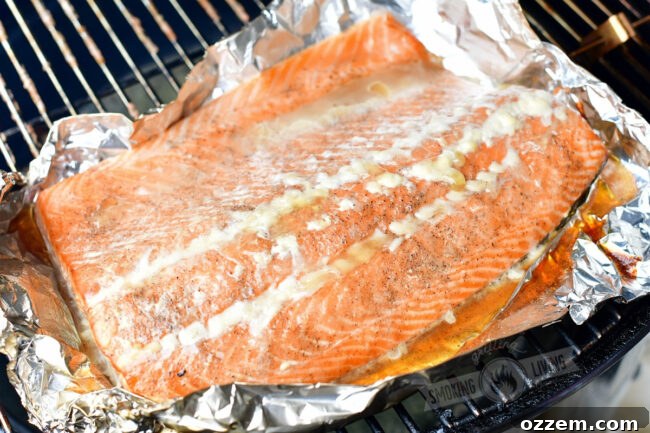
- Once the salmon reaches 140°F, remove it from the smoker.
6. Rest and Serve
- Allow the hot smoked salmon to rest for about 5 minutes before flaking or slicing and serving. This resting period allows the juices to redistribute, ensuring maximum moisture and flavor.
Storing Your Perfectly Smoked Salmon
Proper storage is key to enjoying your delicious hot smoked salmon for days to come.
- Refrigeration: Place any leftover salmon in an airtight food storage container or wrap it tightly in plastic wrap. Stored correctly, hot smoked salmon will maintain its quality in the refrigerator for up to 5 days.
- Freezing: For longer storage, hot smoked salmon freezes beautifully. Wrap individual portions or the entire cooked fillet tightly in plastic wrap, then place the wrapped salmon into a freezer-safe zip-top bag, pressing out as much air as possible. Label with the date and freeze for up to 3 months. Thaw in the refrigerator overnight before reheating or enjoying cold.
Creative Ways to Enjoy Leftover Smoked Salmon
The versatility of hot smoked salmon means leftovers are a culinary treasure. Here are some ideas to incorporate it into your meals:
- Breakfast:
- Mix flaked smoked salmon into scrambled eggs or an omelet.
- Serve it alongside Eggs Benedict instead of ham for a gourmet twist.
- A classic choice: pile it onto a toasted bagel with cream cheese, capers, and red onion.
- Lunch:
- Flake it over your favorite green salad for a healthy and satisfying meal.
- Combine it with mashed avocado on toast for an elevated avocado toast experience.
- Whip up a creamy smoked salmon dip, perfect with crackers or crudités.
- Toss flaked salmon with buttery pasta, a squeeze of lemon, and fresh herbs for a quick and elegant dish.
- Dinner:
- Gently reheat the salmon in the oven at a low temperature (around 200°F/93°C) until just warmed through, then serve with roasted vegetables, rice, or a fresh salad as your main course.
- Incorporate it into fish tacos or a hearty chowder.
Troubleshooting Common Smoked Salmon Issues
- Dry Salmon: This is usually a sign of overcooking or not brining sufficiently. Always use a thermometer and remove the fish at 140°F. Ensure your brine is properly balanced and the fish brines for the recommended time.
- Too Much Smoke Flavor: If your salmon tastes overly smoky or bitter, you might be using too strong a wood type (like mesquite or too much hickory), or you might be generating too much heavy smoke. Use milder woods and aim for a “thin blue smoke” from your smoker, which indicates clean combustion.
- Excessive Albumin: While brining helps reduce this, high and fluctuating temperatures can still cause albumin to leach out. Maintaining a consistent 225°F is key to minimizing this milky white protein.
Conclusion: Embrace the Art of Hot Smoked Salmon
Making hot smoked salmon at home is a rewarding culinary adventure that yields incredible results. With a focus on quality ingredients, careful brining, precise temperature control, and the right wood choice, you can consistently produce salmon that is wonderfully juicy, tender, and bursting with smoky flavor. This guide equips you with all the knowledge to achieve perfection. So, fire up your smoker and prepare to savor the best hot smoked salmon you’ve ever tasted!
PIN THIS RECIPE
Hot Smoked Salmon Recipe
Hot Smoked Salmon
Print Recipe
Pin Recipe
Ingredients
Brine:
- 4 cups lukewarm water
- 3 tbsp kosher coarse salt
- 3 tbsp dark brown sugar
Salmon:
- 2 lbs whole side of salmon fillet, skin on
- 1-2 tbsp dark brown sugar
- 1-2 tsp kosher coarse salt to taste
- 1/2-1 tsp fresh cracked black pepper to taste
Instructions
Brine:
-
Combine water, kosher salt, and dark brown sugar and stir until completely dissolved. Pour the brining solution into a baking or aluminum pan and add salmon into it.
-
Place a small plate or a food storage container filled with some dried beans to weigh down salmon into the brining solution. Make sure it’s not too heavy where it crushes the fish.
-
Place into the refrigerator for about 2 hours.
Prepare the smoker:
-
While salmon is brining, it’s a good time to prepare smoker and get it to temperature.
-
Prepare your smoker and get the temperature to 225°. You will want to keep the temperature no higher than 225°. Place a drip pan with water under the grill grate if possible, or place it off to the side of the main grill grate. (This will depend on the type of smoker.)
Prepare salmon:
-
Take salmon out of the brine and pat it dry with paper towels.
-
Gently rub your hand on the fillet to make sure there are no bones accidentally left behind. Use fish bone tweezers (or regular tweezers in a pinch) and take out any bones.
-
Season the fillet with salt, peppers, and sugar.
-
Place salmon fillet skin down on a sheet of aluminum foil.
Smoking salmon:
-
Place the foil with salmon on the grate of the pre-heated smoker and smoke until internal temperature of salmon reaches 140°. (Make sure to start checking the temperature after 30 minutes on the smoker. Smaller/thinner fillets will be done faster.)
-
Take it off the smoker and let it rest for about 5 minutes before serving.
Nutrition