
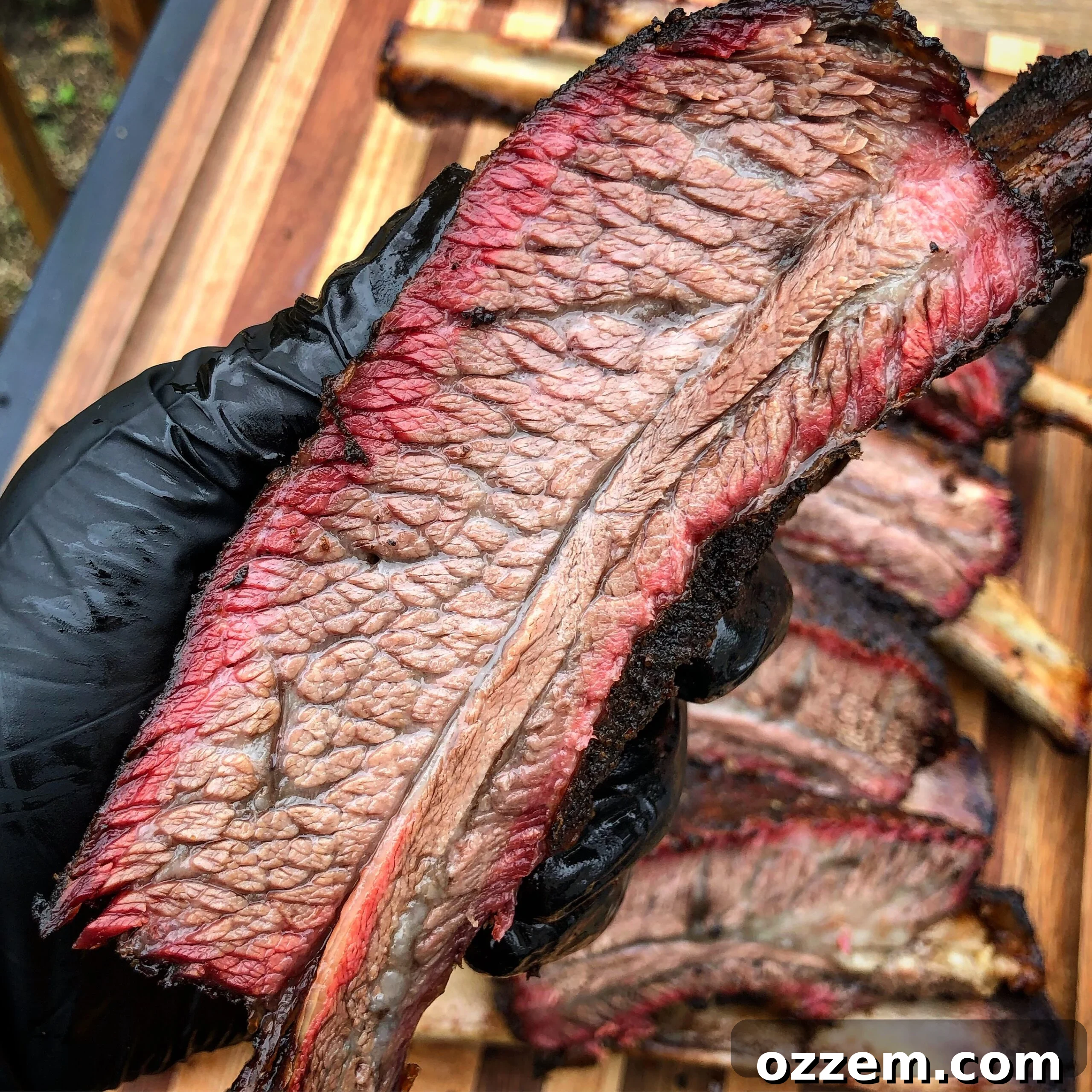
Prepare yourself for an extraordinary culinary journey into the world of smoked beef plate ribs. Often hailed as “brisket on a stick,” these magnificent cuts of beef represent the pinnacle of barbecue artistry. The sheer size, incredible richness, and deep, smoky flavor of beef plate ribs make them a coveted dish among pitmasters and home cooks alike. While the process of achieving perfectly tender and juicy ribs requires patience and dedication, the method itself is surprisingly straightforward, relying on just a few fundamental ingredients and techniques. This comprehensive guide will walk you through every step, from sourcing these elusive “dino bones” to presenting them at your table, ensuring a result that’s nothing short of spectacular.
The Allure of Beef Plate Ribs: A Smoker’s Delight
Smoked beef plate ribs offer a unique and unparalleled barbecue experience. Unlike their smaller counterparts, beef short ribs, plate ribs are cut from the belly section of the steer, specifically bones 6, 7, and 8. This cut is characterized by its generous marbling, substantial meat thickness, and impressive bone length, which earns them the affectionate nickname “dino bones.” When cooked low and slow over wood smoke, the connective tissues and fat slowly render, transforming into gelatinous succulence while the exterior develops a dark, flavorful crust known as “bark.” This combination of rich, beefy flavor, melt-in-your-mouth tenderness, and smoky crunch is what elevates beef plate ribs into a league of their own, making them a true centerpiece for any gathering.
Sourcing the Perfect Rack: Your Butcher is Your Best Friend
One of the initial, and often most challenging, hurdles to overcome when embarking on your smoked beef plate rib adventure is simply finding them. These ribs are typically sectioned into thinner strips and marketed as beef short ribs, which, while delicious, don’t offer the same grand presentation or deep cooking experience as a full, uncut rack. To secure the genuine article, your best strategy is to connect with local butcher shops. Call ahead and specifically ask for “beef plate ribs” or a “full, uncut rack of short ribs.” Explain that you’re looking for the large, meaty, three-bone sections, sometimes referred to as ‘flanken-style’ or ‘English-cut’ when sliced thin, but you desire the whole plate. A standard three-bone rack typically provides a generous portion for two to three people, with one individual bone often being more than enough to satisfy a single appetite.
Mastering the Prep: Trimming for Maximum Flavor and Bark
Proper trimming is a critical first step in preparing your beef plate ribs for the smoker, directly impacting both the formation of that delicious bark and the overall tenderness of the final product. Just like pork ribs, a rack of beef plate ribs will have a distinct meaty side and a bone side. Begin by carefully inspecting the meaty side. Your goal here is to remove any large, excessive pockets of hard fat, silver skin, or membrane that might hinder the formation of bark or prevent the seasoning from penetrating the meat. While some fat is essential for moisture and flavor, too much will simply render off without contributing to the desired crust. By exposing more of the underlying muscle, you create a larger surface area for the smoke and seasoning to work their magic, leading to a more robust bark.
Next, flip the rack to the bone side. Here, you’ll typically find a thick, silvery membrane covering the bones. While some pitmasters choose to leave it on, removing this membrane is highly recommended. It’s tough and doesn’t render, preventing seasoning from reaching the meat and creating an unpleasant chew. To remove it, use a butter knife or the handle of a spoon to gently pry up a corner of the membrane. Once you have a good grip, use a paper towel to hold onto the slippery membrane and pull it off in a single, smooth motion. This process might take a bit of effort, but it’s well worth it for the improved texture and flavor penetration. Once trimmed, your ribs are ready for the crucial seasoning phase.
The Art of Seasoning: Crafting the Iconic Texas Bark
With your beef plate ribs expertly trimmed, it’s time to build the foundation of flavor. For an authentic Texas-style barbecue experience, simplicity reigns supreme. A 50/50 blend of coarse kosher salt and freshly cracked black pepper is the gold standard. This classic combination not only enhances the natural, rich beef flavor but also plays a vital role in developing that coveted dark, crunchy bark during the smoking process. Before applying this essential rub, however, a binder is highly recommended. The binder acts as a “glue,” ensuring the seasoning adheres uniformly to the meat and doesn’t simply fall off during handling or in the smoker. For beef ribs, hot sauce is an excellent choice for a binder. Its mild acidity and subtle spice complement the beef beautifully without overpowering its natural taste.
Apply a thin, even layer of hot sauce over the entire surface of the ribs, ensuring all sides are covered. Don’t worry about the heat; most of the spice will dissipate during the long cook, leaving behind only a hint of tang and an enhanced flavor profile. Once coated, liberally apply the salt and pepper mix. Since beef plate ribs are a substantial cut of meat, don’t be shy with the seasoning; the ribs can handle a generous amount. Aim for an even, thorough coating on all surfaces. After seasoning, let the ribs rest at room temperature for 30 to 45 minutes. This allows the meat’s temperature to rise slightly, promoting more even cooking, and gives the salt time to begin penetrating the surface, enhancing moisture retention and flavor.
Firing Up the Smoker: Setting the Stage for Perfection
As your seasoned ribs come to room temperature, it’s the perfect moment to ignite your smoker. While these particular ribs were expertly prepared on a Jess Pryles Signature Pitts and Spitts offset smoker, the beauty of barbecue lies in its adaptability. You can achieve fantastic results using any type of smoker—be it an offset, pellet grill, kamado, or electric smoker. The key is consistent temperature control. Aim to bring your smoker’s temperature up to a stable range of 250-275 degrees Fahrenheit (approximately 120-135 degrees Celsius). This precise temperature window is crucial for the low-and-slow cooking method, allowing the beef to tenderize gradually while absorbing maximum smoke flavor and developing a robust bark.
Consider your wood choice carefully, as it significantly impacts the final flavor. Oak is a traditional Texas favorite for beef, offering a strong yet balanced smoke profile that beautifully complements the richness of the ribs. Other excellent choices include hickory for a more assertive flavor, or pecan for a slightly sweeter, milder smoke. Once your smoker reaches the target temperature and produces clean, thin blue smoke, carefully place the beef plate ribs directly on the grates, meat side up. Insert a reliable, leave-in meat thermometer probe into the thickest part of the meat, avoiding the bone. This is perhaps the most vital tool in your barbecue arsenal. Cooking to precise internal temperatures, rather than relying solely on time, is the only way to guarantee your ribs are perfectly cooked—never overdone or undercooked.
For consistent and accurate temperature monitoring, high-quality thermometers are indispensable. Brands like Thermoworks are renowned for their precision and durability. Devices such as the Thermoworks Smoke (a two-channel alarm thermometer) or the Thermoworks Signals (a four-channel alarm thermometer) allow you to monitor both the smoker’s ambient temperature and the internal temperature of your meat simultaneously, providing peace of mind throughout the long cooking process. Investing in a quality thermometer is an investment in consistently delicious barbecue.
The Patient Cook: Low, Slow, and Unwrapped
And now, the wait begins. The mantra of great barbecue is “low and slow,” and smoked beef plate ribs are the epitome of this philosophy. Patience is not just a virtue here; it’s a necessity. For an average three-bone rack of beef plate ribs, you can expect a cooking time of anywhere between 6 to 8 hours, and sometimes even longer, depending on the specific characteristics of the meat and the consistency of your smoker. During this extended period, your primary task is to maintain a stable smoker temperature within the 250-275°F range. Resist the urge to frequently open the lid, as “if you’re looking, it’s not cooking” – each peek causes temperature fluctuations and extends the overall cook time.
A key aspect of this method is cooking the ribs “straight through” without wrapping them in foil or butcher paper during the main smoking phase. This unwrapped approach is crucial for achieving that magnificent, deep mahogany bark. Wrapping too early can soften the bark and prevent it from fully developing. As the ribs cook, you’ll observe the bark forming, darkening, and creating a savory, almost crunchy exterior that contrasts beautifully with the tender interior. You might also notice the internal temperature of the ribs plateauing for a period, often referred to as “the stall.” This is a normal phenomenon caused by evaporative cooling on the meat’s surface. Trust the process; the stall will eventually pass, and the temperature will continue to rise.
Achieving Pitmaster Perfection: The Probe Tender Test
While the internal temperature of your beef plate ribs is an important guideline, the ultimate determinant of doneness for barbecue is tenderness. For beef ribs, the ideal finished internal temperature typically falls between 205 and 210 degrees Fahrenheit (96-99 degrees Celsius). However, relying solely on temperature can be misleading because every cut of meat is unique. Once your ribs approach the 205°F mark, it’s time to begin performing the “probe tender” test.
This test involves inserting your meat thermometer probe (or a thin skewer) into various parts of the thickest meat sections. A perfectly cooked rib will offer little to no resistance, feeling like “butter” or “hot butter” as the probe glides in effortlessly. This sensation indicates that the collagen and connective tissues within the meat have broken down sufficiently, transforming into gelatin and resulting in that highly sought-after, fall-apart tender texture. Check several spots to ensure even tenderness across the entire rack. If you feel any significant resistance, continue cooking, patiently waiting for those stubborn tissues to fully render.
The Critical Rest: Locking in Juices and Preserving Bark
Once your beef plate ribs pass the probe tender test and reach their optimal internal temperature, the journey is not quite over. The resting phase is just as crucial as the smoking itself, and skipping it is a common mistake that can lead to dry, less flavorful ribs. Immediately after pulling the ribs from the smoker, wrap them snugly in unwaxed pink butcher paper. Butcher paper is preferred over aluminum foil because it allows the meat to “breathe,” preventing the bark from becoming soggy while still retaining essential heat and moisture. Once wrapped, transfer the ribs to a room-temperature cooler (without ice) and let them rest for at least one hour, or even up to two hours for larger racks.
The rest serves several vital purposes. Firstly, it allows the cooking process to gently slow down (known as carryover cooking) and then halts it, preventing the ribs from becoming overcooked. Secondly, and most importantly, it gives the internal juices, which have migrated to the center of the meat during cooking, ample time to redistribute throughout the entire cut. This reabsorption results in a significantly juicier, more tender, and flavorful final product. You’ve invested hours of patience into these ribs; an additional hour of resting is a small price to pay for barbecue perfection.
The Grand Finale: Slicing and Savoring Your “Dino Bones”
The moment of truth has arrived! After their well-deserved rest, carefully remove the beef plate ribs from the cooler and unwrap them. The aroma alone will be intoxicating. With a sharp knife, slice between the bones, creating individual “dino bones” ready for serving. As you slice, you’ll immediately notice the incredibly tender meat, often barely clinging to the bone, and the beautiful smoke ring just beneath the dark, savory bark. Remember, one bone is typically a substantial serving for one person, so portion accordingly.
Take that first glorious bite. The meat should be incredibly tender, juicy, and bursting with rich beefy flavor complemented by the smoky depth and the satisfying crunch of the bark. Pair these magnificent ribs with classic barbecue sides like creamy coleslaw, tangy pickles, fluffy cornbread, or hearty baked beans. For beverages, a robust craft beer, a dry red wine, or even a classic iced tea would complement the richness of the beef perfectly. Smoked beef plate ribs are more than just a meal; they’re an experience, a testament to the art of low and slow barbecue, and a dish that will undoubtedly impress and delight anyone fortunate enough to try them.
Troubleshooting Common Smoked Rib Issues
Even seasoned pitmasters encounter challenges, but understanding common issues can help you avoid them. If your ribs turn out dry, it could be due to cooking at too high a temperature, not resting them long enough, or an inconsistent smoker temperature leading to excessive moisture loss. Tough ribs usually indicate insufficient cooking time or temperature, meaning the connective tissues haven’t fully broken down; the probe tender test is your best defense here. Uneven bark or smoke flavor might suggest inconsistent airflow in your smoker or placing ribs too close to the heat source. By paying close attention to temperature, wood choice, and patience, you can consistently produce succulent, smoky beef plate ribs every time.
Smoked Beef Plate Ribs
Ingredients
- 1 rack Beef plate ribs
- 1/4 cup Kosher Salt
- 1/4 cup Black pepper
- 1 tbsp Hot sauce
Instructions
-
Trim any excess fat from the meaty side of the ribs.
-
Remove the thick membrane from the bone side of the ribs.
-
Apply a thin, even layer of hot sauce as a binder over all surfaces of the ribs.
-
Generously season both sides with a 50/50 mix of kosher salt and black pepper, ensuring even coverage.
-
Smoke the ribs at 250-275 degrees Fahrenheit (120-135°C) until the meat is probe tender, typically reaching an internal temperature between 205-210 degrees Fahrenheit (96-99°C). This process usually takes approximately 6-8 hours.
-
Once tender, remove the ribs from the smoker, wrap them tightly in pink butcher paper, and let them rest in an insulated cooler for at least 1 hour before slicing and serving.
Like this recipe? Rate and comment below!
For more delectable dishes and barbecue inspiration, be sure to explore our full collection of recipes.