
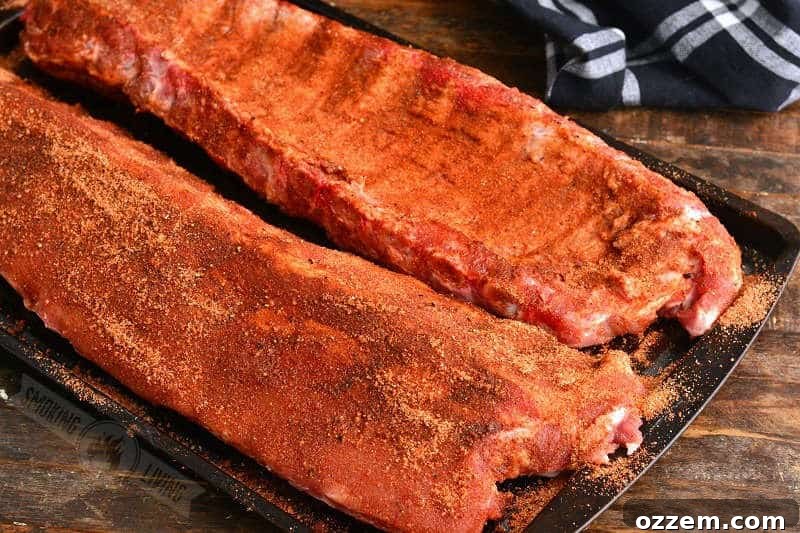
Welcome to the definitive guide on mastering the art of smoked pork ribs! Alongside brisket, pulled pork, and chicken, perfectly smoked ribs stand as a cornerstone of American barbecue. If you’ve ever dreamt of serving up the most succulent, flavorful ribs that impress everyone at your next backyard gathering, you’ve come to the right place. This comprehensive guide will walk you through everything you need to know about preparing and smoking pork ribs, from understanding the different cuts to achieving that coveted tender, juicy result every time. Get ready to transform your barbecue skills and create truly unforgettable smoked pork ribs.
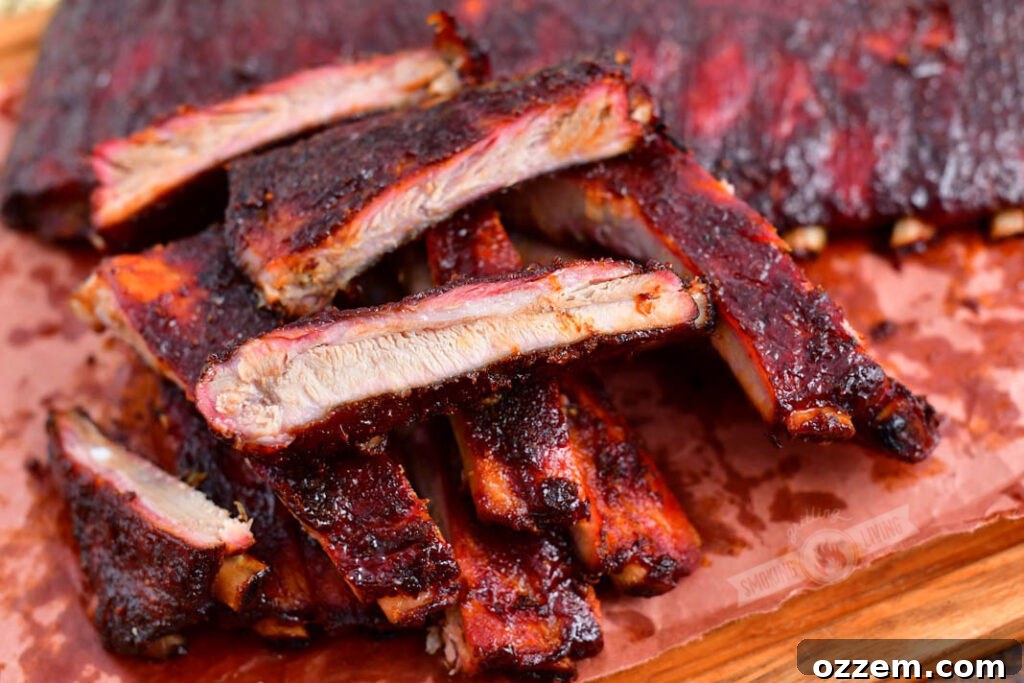
Understanding Different Types of Pork Ribs for Smoking
Before you even fire up your smoker, it’s crucial to understand the various cuts of pork ribs available. Each type offers a unique profile in terms of meat-to-bone ratio, fat content, and overall texture once cooked. Knowing these differences will help you choose the best ribs to suit your taste preferences and smoking style.
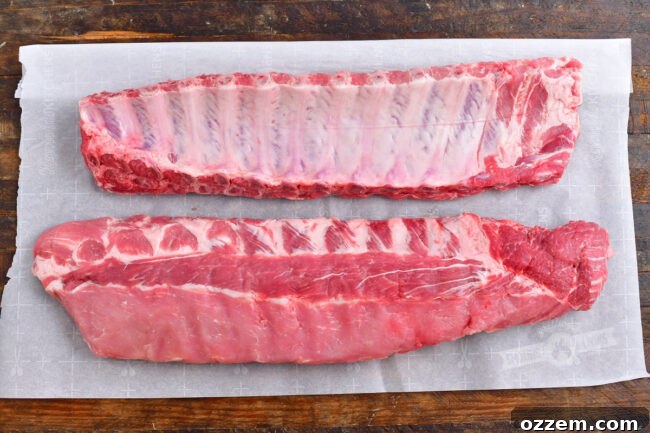
Baby Back Ribs: The Tender Choice
Baby back ribs, often simply called “back ribs,” are highly prized for their tenderness and leaner profile. They originate from the upper portion of the hog’s rib cage, specifically from the area closest to the spine, where the loin meets the rib. The name “baby back” refers to their shorter length compared to spareribs, not that they come from juvenile pigs. These ribs feature a curved shape and typically have 10 to 16 bones per rack, each bone measuring between 3 to 6 inches long. Because they are cut from an area adjacent to the pork tenderloin, they boast a delicate texture and less fat, which often translates to a higher price point. If you prefer a leaner, more delicate rib that cooks relatively quickly, baby back ribs are an excellent choice.
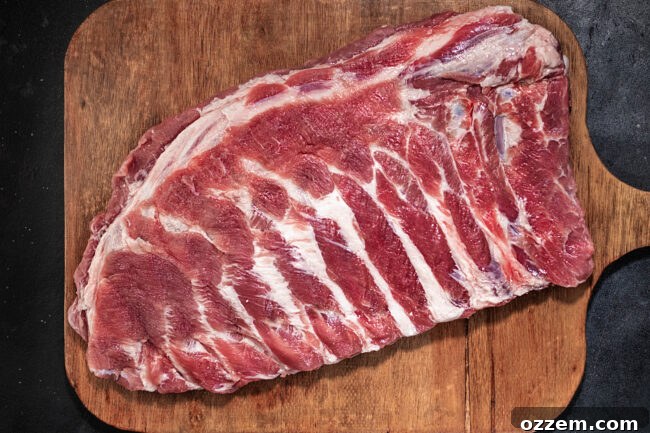
Spareribs: The Full-Flavored Original
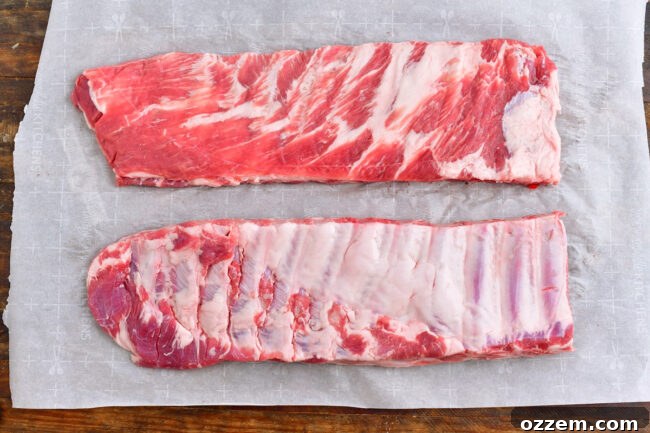
Spareribs are cut from the belly section of the pig, extending from where the baby back ribs end down towards the sternum. This cut includes the breastbone and cartilage, making it a larger, flatter, and bonier rack compared to baby backs. Spareribs are known for their generous marbling and higher fat content, which renders down beautifully during a long smoke, imparting incredible flavor and moisture. The bones are larger, with significant meat both between and around them. Many barbecue enthusiasts prefer spareribs precisely because of this rich flavor and succulent texture that the fat provides. Finding a full, untrimmed rack of spareribs can be challenging in standard grocery stores, as many retailers pre-trim them into St. Louis style. For a true full sparerib experience, your local butcher shop is usually the best source.
St. Louis Cut Ribs: The BBQ Champion’s Choice
The St. Louis cut is a specific butchering style derived from the full sparerib. To create this cut, the breastbone, cartilage, and any fatty flap meat are removed, leaving a uniform, rectangular rack of ribs. This trimming process results in a flatter, more even rack, which is ideal for competition barbecue and allows for more consistent cooking and easier slicing. St. Louis cut ribs retain the excellent fat content and robust flavor of spareribs but in a more manageable and aesthetically pleasing form. They are wider and less curved than baby back ribs and, due to their size and fat marbling, typically require a slightly longer cooking time to reach optimal tenderness.
What About Country Style Ribs?
It’s important to clarify that “Country Style Ribs” are a bit of a misnomer in the rib family. Despite their name, these are not true ribs. Country style ribs are actually cut from the blade end of the loin near the pork shoulder. They are boneless or contain only a small piece of shoulder blade, and are essentially pork chops cut into strips that resemble rib meat. While delicious and versatile for many cooking methods, they differ significantly from traditional pork ribs in structure and origin.
St. Louis Ribs vs. Baby Back Ribs: A Head-to-Head Comparison
When it comes to choosing between the two most popular rib cuts for smoking, understanding their key differences can help you make an informed decision:
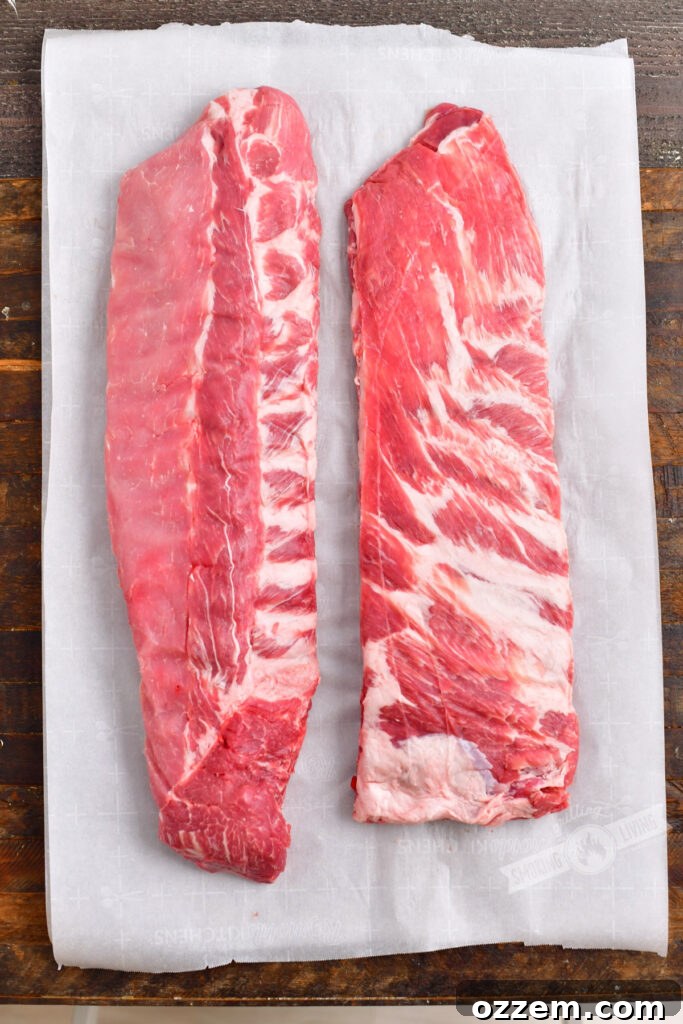
- Origin: St. Louis ribs are a trimmed version of spareribs, coming from the side and belly of the pig. Baby back ribs come from the upper part of the rib cage, closest to the spine.
- Size and Shape: St. Louis ribs are larger, wider, flatter, and more rectangular. Baby back ribs are smaller, narrower, and have a more pronounced curve.
- Meat and Fat Content: St. Louis ribs generally have more fat marbling, contributing to a richer, more intense flavor and juicier texture. Baby back ribs are leaner and more tender, with meat typically found between and on top of the bones.
- Price: Baby back ribs are often more expensive per pound due to their tenderness and association with the lean loin cut. St. Louis ribs offer excellent value, especially given their robust flavor.
- Cooking Time: Due to their size and fat content, St. Louis ribs usually require a longer cooking time compared to baby back ribs.
- Texture: Baby back ribs tend to be very tender and “fall-off-the-bone” when cooked properly. St. Louis ribs, with their higher fat content, yield a wonderfully juicy and satisfying “bite-off-the-bone” texture, which is often preferred by competition pitmasters.
Tips for Choosing the Best Pork Ribs
Selecting the right rack of ribs is the first step towards a successful smoke. Here’s what to look for:
- Marbling: Seek out ribs with good marbling – small streaks of fat running through the meat. This fat will render during cooking, adding flavor and moisture. Avoid racks with large, concentrated pockets of fat that won’t fully render.
- Even Thickness: Look for racks with a consistent thickness across the entire length. This ensures even cooking; racks with one end much thicker than the other will cook unevenly.
- Meat Content: While some fat is good, ensure there’s a decent amount of meat on the bones. You want a good balance between meat, fat, and bone.
- Color: The meat should have a fresh, pinkish color. Avoid any ribs with a grayish or dull appearance.
- Packaging: If buying cryovac-packaged ribs, check that the seal is intact with no leaks or punctures. Once home, open the package, discard any excess liquid, and pat the ribs thoroughly dry with paper towels before proceeding. This step is crucial for good bark formation.
Determining How Many Ribs to Serve
Estimating portions for smoked ribs can be tricky, as appetites vary greatly, as does the size of individual racks. Here’s a general guideline:
- Weight per Person: A good rule of thumb is to estimate ¾ to 1 pound of ribs per person.
- Ribs per Person (Baby Back): For baby back ribs, which are smaller, plan for about 6 ribs per person. An average full rack of baby back ribs (typically 1.75 to 2.5 lbs) can comfortably feed 2 people as a main course.
- Ribs per Person (St. Louis Cut): St. Louis cut ribs are larger, so aim for 4-5 ribs per person. A full rack of St. Louis ribs (usually 2.5 to 3.5 lbs) can serve 2-3 people.
- Consider the Meal: If ribs are the sole protein and you’re serving hearty sides, lean towards the higher end of the estimate. If you’re offering other grilled meats, appetizers, and a wide array of sides, you can comfortably reduce the portion to 3-4 ribs per person. Always err on the side of caution and get a little extra; leftover ribs are never a bad thing!
Mastering the Art of Smoking Pork Ribs
Regardless of the cut you choose, the secret to truly outstanding ribs lies in the “low and slow” cooking method. While ribs can be cooked in an oven, slow cooker, or Instant Pot, the unparalleled flavor and tenderness of smoked ribs make the smoker the preferred choice for any barbecue enthusiast. Our focus here will be exclusively on achieving perfection on your smoker.
Essential Rib Preparation: Removing the Membrane
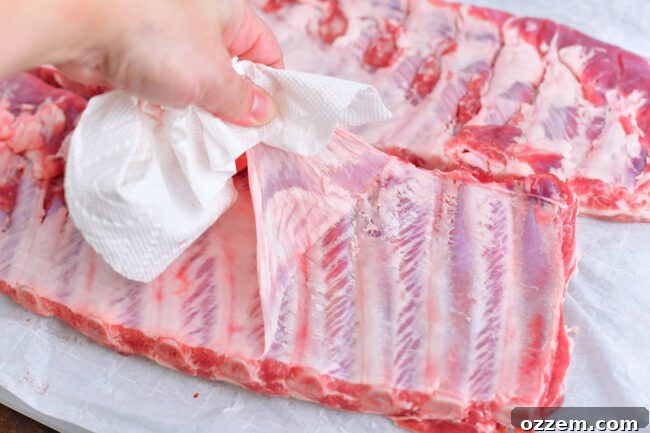
Before any rub or smoke touches your ribs, a critical step is to remove the membrane (also known as silver skin) from the back of the rack. This thin, silverskin-like layer, if left on, becomes tough and chewy, creating an unpleasant texture that prevents your rub from penetrating the meat effectively. Most butchers can do this for you upon request, but it’s a simple process to do yourself.
To remove the membrane:
- Place the ribs bone-side up on a clean cutting board.
- At one end of the rack, locate the edge of the thin, white membrane.
- Use a small knife or the tip of a spoon to gently lift a corner of the membrane, working your way underneath it. Be careful not to cut through the membrane or the meat.
- Once you have enough membrane lifted to get a grip, grab it firmly with a paper towel. The paper towel provides extra grip, preventing your fingers from slipping.
- Slowly and steadily pull the membrane away from the bones across the entire rack. It should come off in a single, satisfying sheet. If it tears, simply repeat the process from where it broke.
- Discard the membrane.
Trimming Your Ribs for Perfection
Beyond removing the membrane, a quick trim can significantly improve the cooking and presentation of your ribs. For spareribs or St. Louis cuts, you might find loose flaps of meat or excess fat on the ends. Trim these away, as they can burn or cook inconsistently. For baby back ribs, ensure any thick, hard fat deposits are trimmed down. The goal is to create a more uniform thickness for even cooking.
The Magic Smoking Temperature: 225°F (107°C)
For succulent, tender smoked ribs, the ideal temperature range is consistently 225°F to 250°F (107°C to 121°C). This low temperature allows the connective tissues in the ribs to slowly break down and the fat to render, resulting in an incredibly tender product without drying out the meat. If you’re using an electric or pellet smoker, simply set it to 225°F. For charcoal or wood smokers, maintain this temperature range by carefully managing your vents and fuel, aiming for a consistent, thin blue smoke for the best flavor.
Popular Methods for Smoking Ribs
There are several approaches to smoking ribs, each yielding slightly different results in terms of tenderness and bark formation. Here are some of the most popular methods:
Memphis Style: The Dry Rub Revelation
Memphis style ribs celebrate the pure flavor of the pork and the aromatic complexity of a dry rub. This method emphasizes a bold, savory, and often slightly sweet and spicy rub, without the interference of heavy sauces. The ribs are generously coated in a dry rub, massaged in, and often left to marinate in the refrigerator overnight (or for at least 2-4 hours). This extended contact allows the spices to deeply infuse into the meat and fat. During cooking, no sauce is applied, allowing the rub to form a beautiful, caramelized bark. While baby back ribs are commonly prepared Memphis style, St. Louis cut ribs also shine with this approach, offering a richer flavor profile from their higher fat content. You can even add an extra sprinkle of rub in the last few minutes of cooking for an intensified flavor kick.
St. Louis Style: The Saucy Sensation
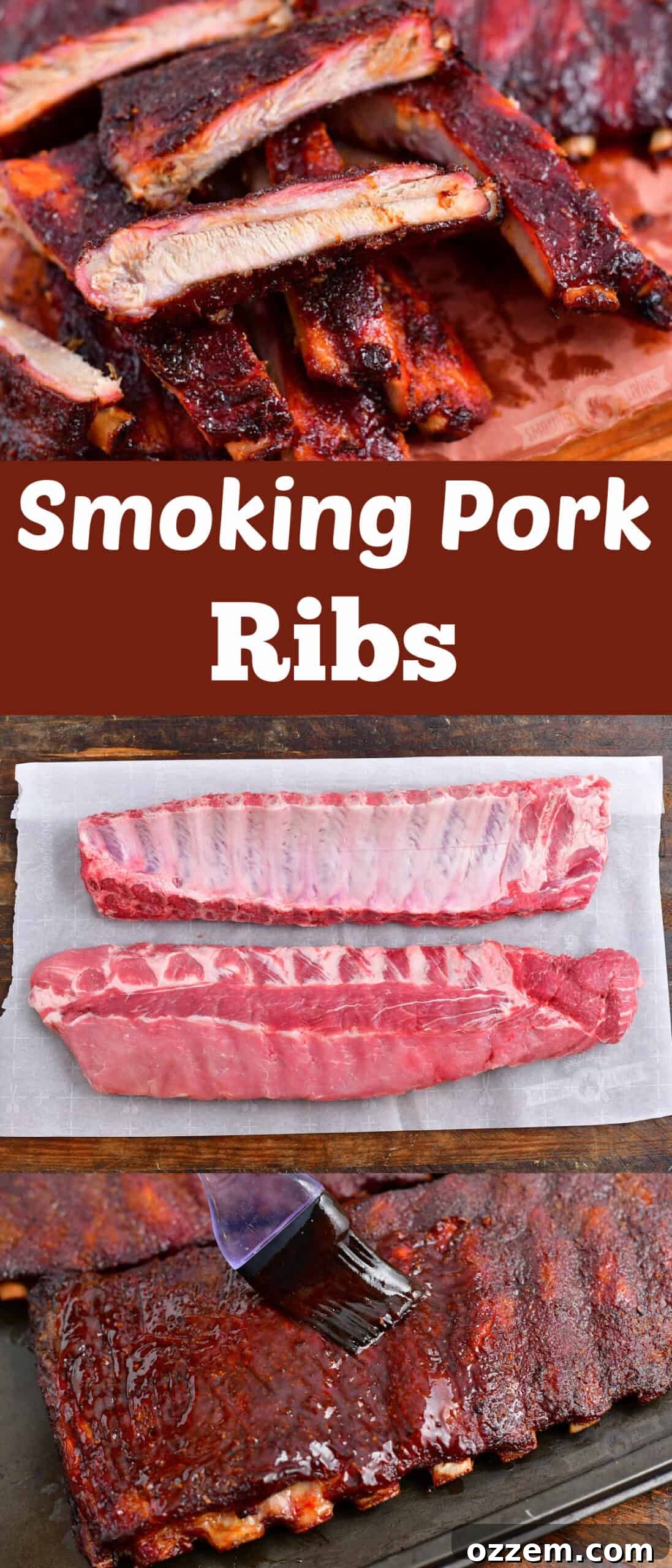
Beyond being a specific cut, “St. Louis style” also describes a method of cooking where ribs are finished with a sweet and tangy barbecue sauce. Unlike Memphis style, the focus here is on the delicious interplay between the smoked meat, the foundational dry rub, and a generous coating of sticky, caramelized sauce. Typically, the sauce is brushed onto the ribs during the final 30-60 minutes of cooking, allowing it to warm through and slightly carmelize without burning. This method is perfect for those who love that classic, saucy barbecue experience.
The 3-2-1 Method: Foolproof Fall-Off-The-Bone Tenderness
The 3-2-1 method is a widely popular technique, especially for St. Louis ribs, known for consistently delivering incredibly tender, fall-off-the-bone results. This method breaks the smoking process into three distinct phases:
- 3 Hours (Smoke Phase): Place the seasoned ribs directly on the smoker grates, bone-side down, for 3 hours. During this phase, the ribs absorb the majority of the smoke flavor and begin to form a bark.
- 2 Hours (Wrap Phase – “The Texas Crutch”): Remove the ribs from the smoker. Place each rack on a large piece of heavy-duty aluminum foil (or two layers of regular foil). Add a small amount of liquid (e.g., apple juice, beer, apple cider vinegar, or broth – about ¼ cup) to the foil packet. Wrap the ribs tightly, sealing all edges. Return the wrapped ribs to the smoker for 2 hours. This steaming environment tenderizes the ribs rapidly, making them incredibly moist.
- 1 Hour (Finish Phase): Carefully unwrap the ribs, draining any excess liquid. Place them back on the smoker grates for the final hour. This allows the bark to firm up again and provides an opportunity to apply barbecue sauce if desired.
While the 3-2-1 method almost guarantees “fall-off-the-bone” tenderness, some purists argue it might soften the bark too much. Adjustments like a 2-2-1 or 3-1-1 method can be used for slightly firmer, “bite-off-the-bone” ribs.
The Role of Rib Rubs and BBQ Sauces
Embracing the Dry Rub
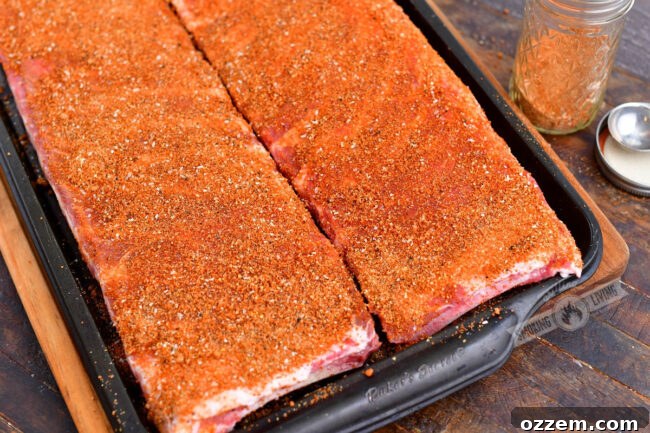
A good dry rub is fundamental to smoked ribs, providing a deep layer of flavor and contributing to the formation of that beautiful, caramelized bark. Don’t be shy – generously coat both sides of your ribs with your chosen rub. Whether you prefer a sweet, savory, or spicy blend, ensure every inch of meat is covered. For best results, allow the ribs to “marinate” in the rub for at least 2 hours, or ideally, overnight (up to 24 hours) in the refrigerator, tightly covered. This gives the spices time to penetrate the meat. Remember to pull the ribs out of the fridge about an hour before smoking to let them come closer to room temperature while your smoker preheats. You can use your favorite store-bought rub or try crafting your own custom blend for a truly personal touch.
The Allure of BBQ Sauces
For every dry rub devotee, there’s a barbecue lover who craves ribs slathered in a rich, sweet, and tangy sauce. BBQ sauce adds another dimension of flavor and a glossy finish that many find irresistible.
- St. Louis Ribs: These are often the go-to cut for sauced ribs. The generous meat and fat content stand up well to a bold sauce.
- Baby Back Ribs: While delicious with just a rub, baby backs can also be sauced. The choice often comes down to personal preference and whether you prioritize bark over a sticky coating.
Timing is Key: If you choose to sauce your ribs, apply it during the last 10-15 minutes of the smoking process. Applying sauce too early will cause it to burn and become bitter due to the sugar content. The goal is to warm the sauce and allow it to slightly caramelize, creating a beautiful glaze without scorching. Be aware that saucing will alter or soften the crispy bark formed by the rub.
How to Tell if Your Smoked Ribs Are Perfectly Done
Knowing when ribs are truly done is often the most challenging aspect for home pitmasters. Unlike larger cuts of meat, getting an accurate internal temperature reading can be difficult due to the bones. Instead, rely on a combination of visual cues and physical tests:
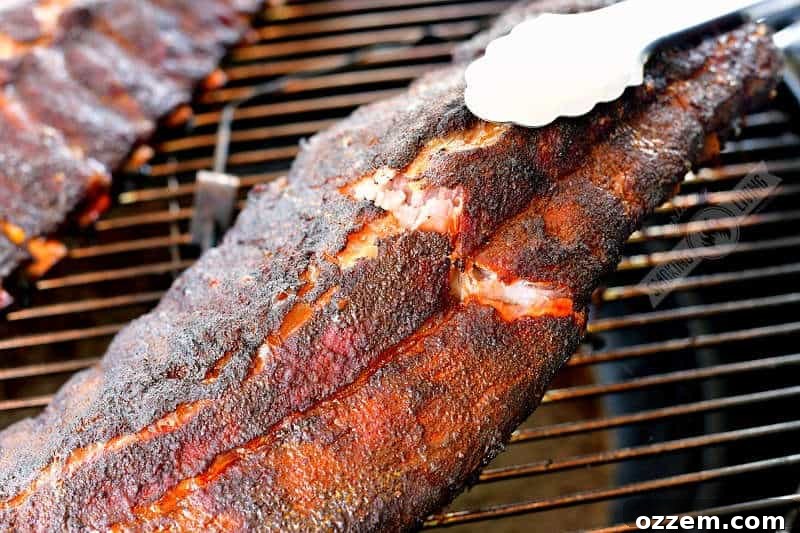
- The Bend Test (or Bounce Test): This is one of the most reliable indicators. Using long tongs, pick up the rack of ribs about a third of the way from one end. Gently bounce the ribs up and down. If the rack is limp and the meat on the surface shows significant cracks and tears, they are likely done. If they feel stiff and don’t bend much, they need more time. Perfectly cooked ribs will bend easily to almost a 90-degree angle, with the meat visibly cracking on top.
- Meat Pull-Back from the Bone: Observe the ends of the rib bones. As the ribs cook and the meat contracts, it will pull back from the tips of the bones, exposing about ¼ to ½ inch of bone. This is a good visual cue, but don’t rely solely on it.
- The Toothpick Test: Insert a toothpick or a skewer between the rib bones into the thickest part of the meat. If it slides in and out with very little resistance, similar to poking into soft butter, your ribs are done.
- The Twist Test: Grab an individual rib bone from the center of the rack and gently twist. If the bone wiggles easily or feels like it’s about to come loose, the ribs are ready.
- Internal Temperature (Guideline, not Absolute): While difficult to get a consistent reading, if you can find a meaty spot between the bones, aim for an internal temperature of 190°F (88°C) to 203°F (95°C) for true “fall-off-the-bone” tenderness. Remember, the USDA safe minimum temperature for pork is 145°F (63°C), but ribs need to go much higher to break down connective tissues and become tender.
Always use a combination of these tests for the most accurate assessment of doneness. Experience will be your best teacher, but these tests will guide you to consistently perfect results.
The Importance of Resting Your Ribs
Once your ribs have reached the desired tenderness, resist the urge to cut into them immediately. Just like other smoked meats, ribs benefit greatly from a rest. Remove them from the smoker, wrap them loosely in foil, and let them rest on your counter for 15-20 minutes. This allows the internal juices to redistribute, resulting in a moister, more flavorful final product. After resting, slice the ribs between the bones and serve your masterpiece!
Embark on Your Rib Smoking Journey!
Smoking pork ribs is a rewarding endeavor that transforms simple racks of meat into culinary delights. By understanding the different cuts, meticulously preparing them, maintaining a consistent low temperature, and applying the right techniques, you are now equipped to create smoked ribs that will be the highlight of any meal. Whether you prefer the lean tenderness of baby back ribs, the rich flavor of St. Louis cut, or the classic appeal of the 3-2-1 method, remember that patience and attention to detail are your best allies. So fire up that smoker, experiment with rubs and sauces, and get ready to enjoy some of the best smoked pork ribs you’ve ever tasted!