
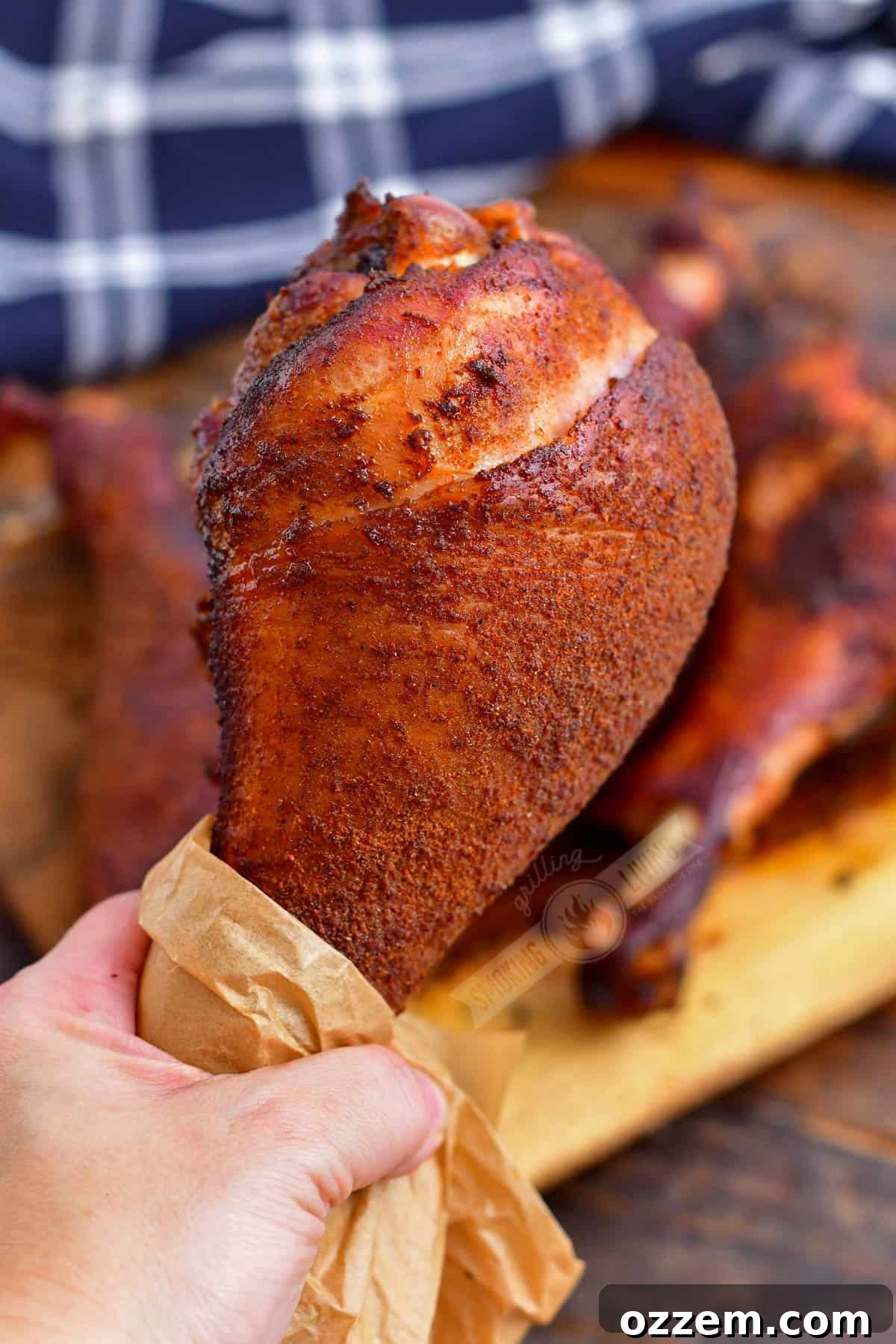
Indulge in the irresistible allure of **smoked turkey legs**, a culinary delight that transcends the ordinary and transports you straight to the bustling atmosphere of a Renaissance fair or the magical lands of a Disney theme park. This isn’t just a meal; it’s an experience – a hearty, flavorful, and incredibly satisfying treat that’s perfect for holiday gatherings, backyard BBQs, or simply a weekend craving. Imagine sinking your teeth into succulent, fall-off-the-bone turkey meat, richly infused with a subtle hint of smoky goodness, all encased in a perfectly seasoned, crispy skin. The secret to this exquisite flavor and unparalleled tenderness lies in a meticulous process involving a flavorful brine and a generous coat of aromatic seasoning, culminating in hours of slow smoking.
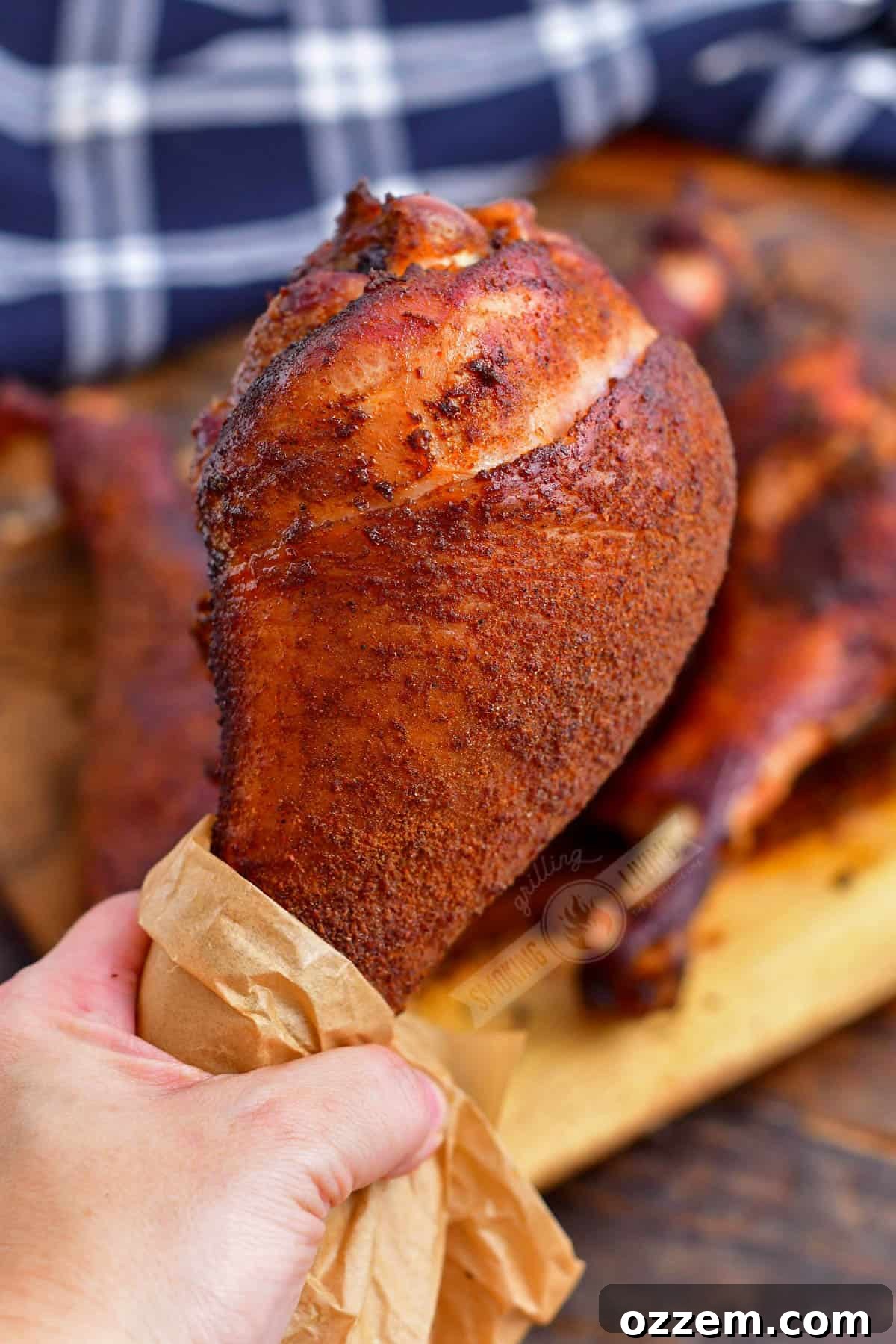
If you’ve ever found yourself longing for that iconic, oversized turkey leg without the long lines and crowded venues, you’re in luck. Mastering the art of smoking turkey legs at home is surprisingly straightforward and incredibly rewarding. Forget complex culinary techniques; this recipe breaks down the process into easy-to-follow steps, promising a dish so juicy and tender, it will become a staple in your outdoor cooking repertoire. The transformative power of brining combined with the slow-smoke method yields a depth of flavor and moisture that simply cannot be achieved through other cooking methods. Get ready to impress your family and friends with a truly memorable meal that brings the fair right to your backyard.
Mastering the Art of Smoked Turkey Legs
Creating perfectly smoked turkey legs at home is a culinary journey that begins with a few essential steps: brining, seasoning, and slow smoking. Each stage plays a crucial role in developing the deep flavor and tender texture that makes these turkey legs so famous. From selecting the right wood chips to maintaining the ideal smoker temperature, we’ll guide you through every detail to ensure a successful and delicious outcome.
The Indispensable Brine: Why It Matters
Brining is the cornerstone of truly succulent smoked turkey legs. Turkey, especially the leg meat, can lean towards the drier side if not properly prepared. A good brine not only infuses the meat with incredible flavor but also helps it retain moisture throughout the long smoking process, resulting in an exceptionally juicy and tender final product. Think of it as a flavor bath that guarantees every bite is moist and seasoned from the inside out. Skipping this step would be a missed opportunity to elevate your turkey legs from good to unforgettable.
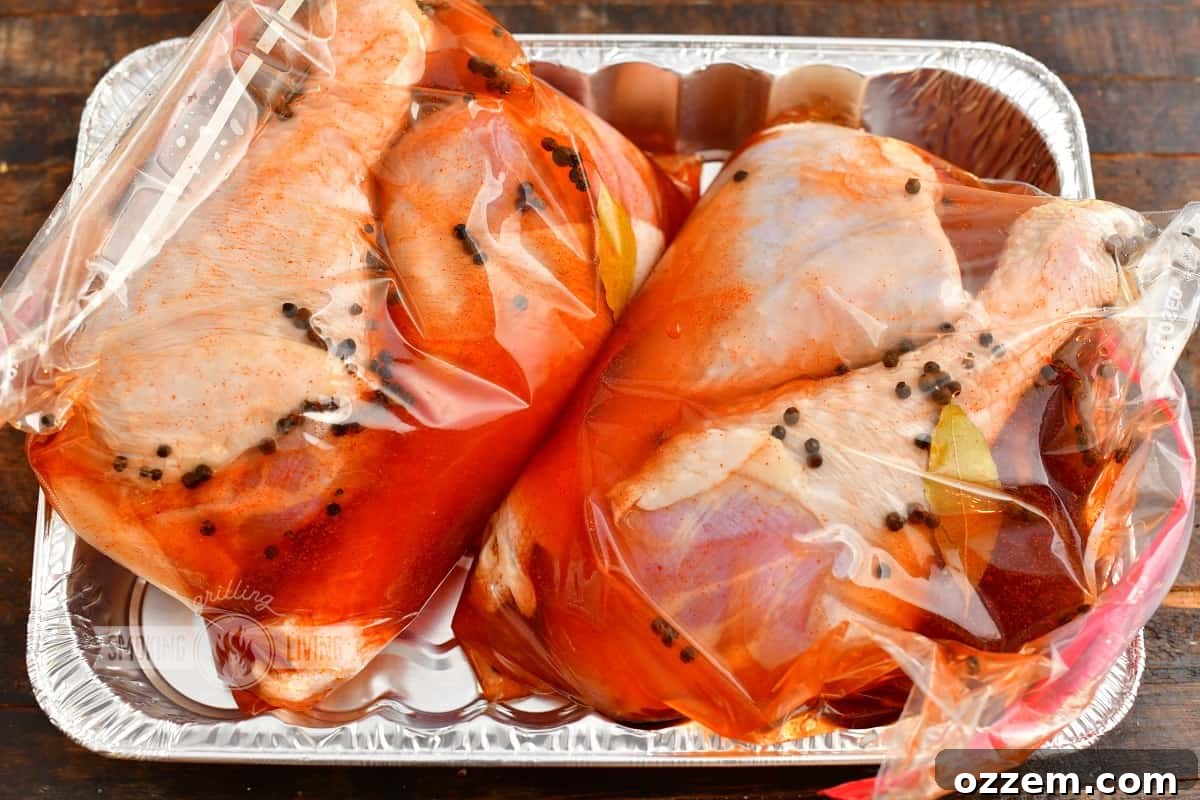
To prepare your turkey legs for their flavor infusion, gently place 2-3 legs into large, sturdy zip-top bags. The exact number will depend on the size of your turkey legs and the capacity of your bags. In a separate pitcher or large bowl, combine all the brine ingredients and stir thoroughly until the salt and sugar are fully dissolved. This ensures an even distribution of flavor. Carefully stand each bag upright and pour the brine over the turkey legs, making sure they are completely submerged. Remove as much air as possible from the bags before sealing them tightly. As a preventative measure against potential leaks – which can be a messy ordeal – place the sealed bags into a large aluminum pan or a deep mixing bowl before refrigerating. Allow the turkey legs to brine for an optimal period of 12-18 hours. This duration strikes the perfect balance, allowing the flavors to penetrate deeply without making the meat overly salty.
Setting Up Your Smoker for Perfection
Achieving that signature smoky flavor requires the right smoker setup and consistent temperature. Whether you’re using a gas, charcoal, or electric smoker, the goal is low and slow cooking at a steady temperature.
For Gas Smokers:
A dedicated smoker box is a highly recommended, inexpensive investment that takes up minimal space on your grill. Fill it with your chosen wood chips and place it directly over a burner. If you don’t have a smoker box, a simple DIY hack works wonders: take a generous piece of aluminum foil and place your wood chips in the center. It’s beneficial to soak half of your wood chips in water for about an hour beforehand and mix them with the dry chips. The soaked chips produce smoke for longer, while the dry chips ignite quickly. Tightly wrap the mixed chips in two layers of foil, then poke several holes on top to allow the smoke to escape. Position this wood chip packet directly on one of your main burners. Set your smoker to maintain a consistent temperature of 225°F (107°C). You only need one burner on low to generate smoke, using indirect heat for the turkey legs.
For Charcoal Smokers:
Set up your charcoal smoker for an indirect, **short smoke** period. Aim to achieve and maintain a steady internal temperature of 225°F (107°C). This typically involves arranging charcoal on one side of the smoker and placing the meat on the opposite side. To introduce moisture and help regulate temperature, place an aluminum roasting pan filled with water or the smoker’s designated water pan on the grate below the meat, or alongside the meat, depending on your smoker’s design. This water pan helps stabilize the temperature and keeps the cooking environment moist.
For Electric Smokers:
Electric smokers are renowned for their ease of use and consistent temperature control. Simply load your desired wood chips into the smoker’s designated tray, set the temperature to 225°F (107°C), and allow it to preheat. Most electric smokers come with a water pan, which you should fill and place as directed to maintain humidity and prevent the turkey from drying out.
Crafting the Perfect Turkey Leg Seasoning
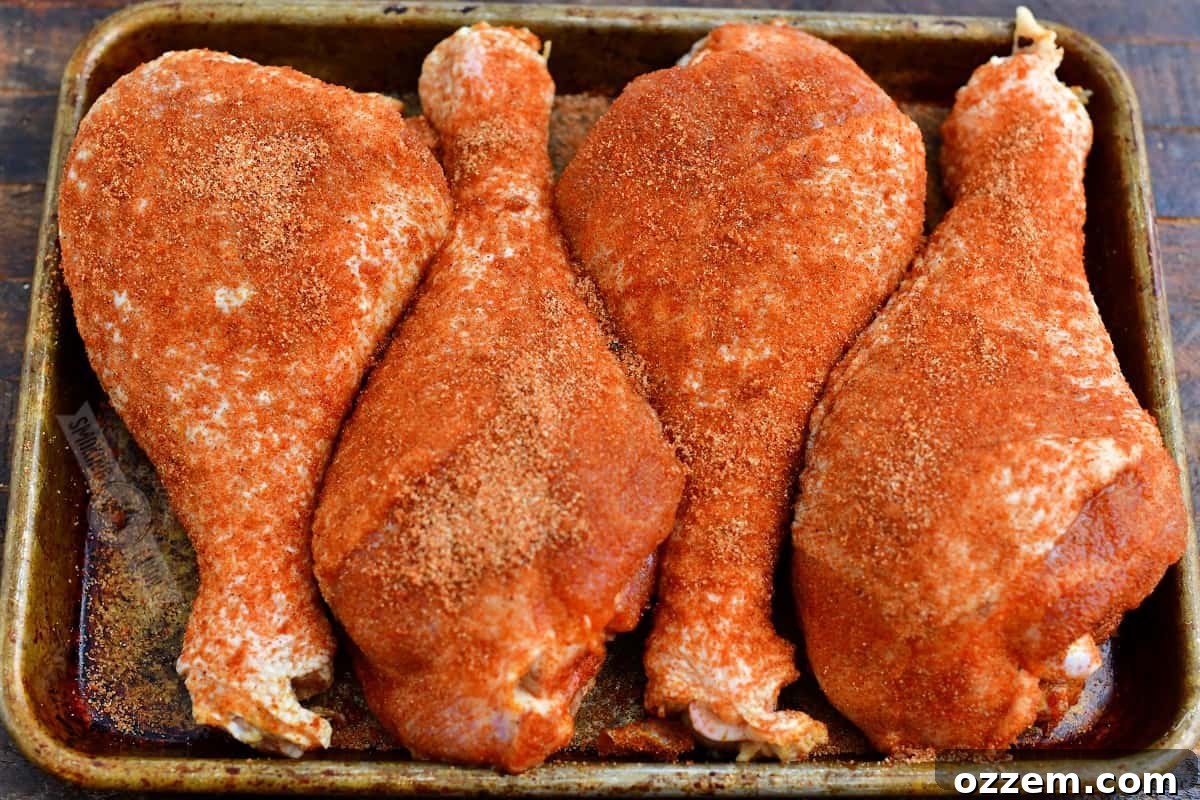
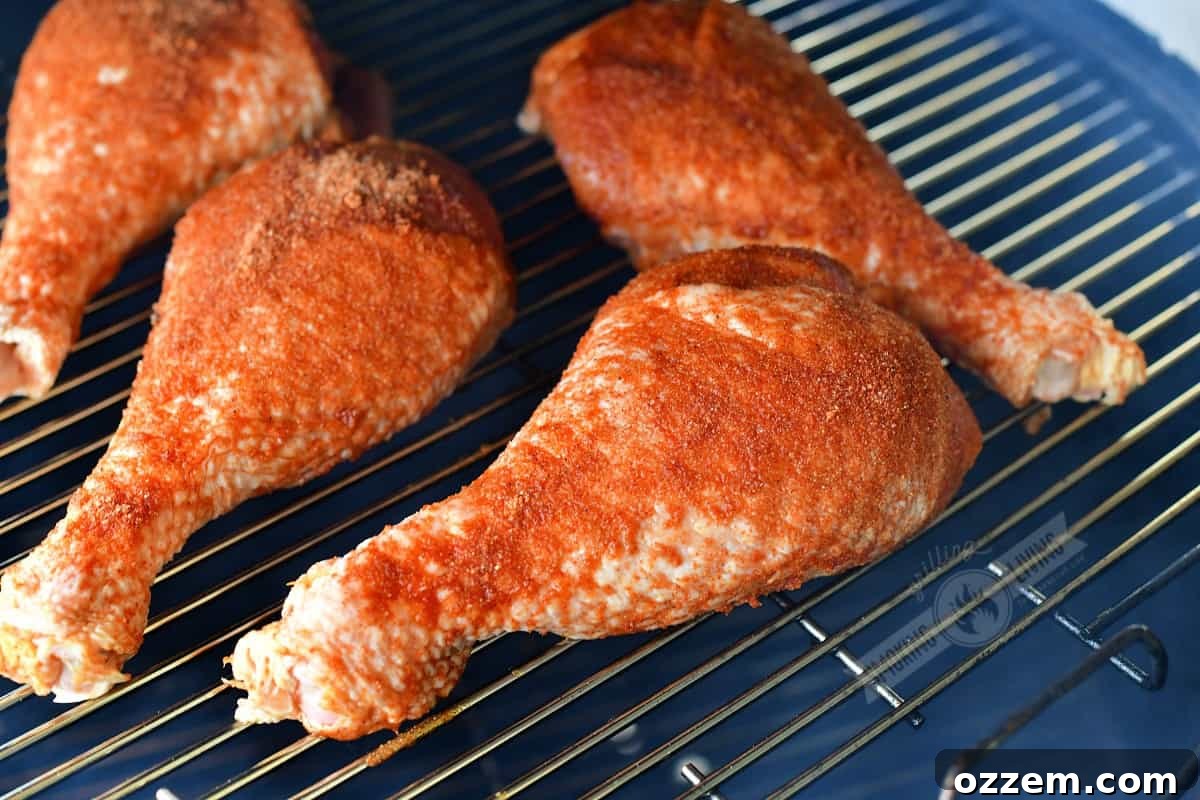
A vibrant, flavorful seasoning blend is key to achieving that mouthwatering outer crust and enhancing the turkey’s natural taste. The right blend creates a beautiful mahogany color and a delightful crispness on the skin. Before applying, mix all your chosen seasoning ingredients thoroughly in a small bowl and set aside. Once the turkey legs have completed their brining time, remove them from the brine and meticulously pat them completely dry with paper towels. This crucial step ensures that the seasoning adheres properly and promotes a crispier skin during smoking. Now, generously and evenly season the turkey legs all over with your prepared spice blend. Instead of rubbing, gently pat the seasoning into the meat. Rubbing can clump the spices and prevent even distribution, whereas patting helps them form a uniform, flavorful crust.
For accurate temperature monitoring, insert the probe of a reliable digital thermometer into the thickest part of the thigh, making sure to position it diagonally along the bone without touching it. Touching the bone will give an inaccurate reading. If you feel resistance from the bone, simply reposition the probe slightly until it’s nestled perfectly within the meat. This precision ensures you cook the turkey to the ideal internal temperature for safety and tenderness.
The Smoking Process: Low and Slow
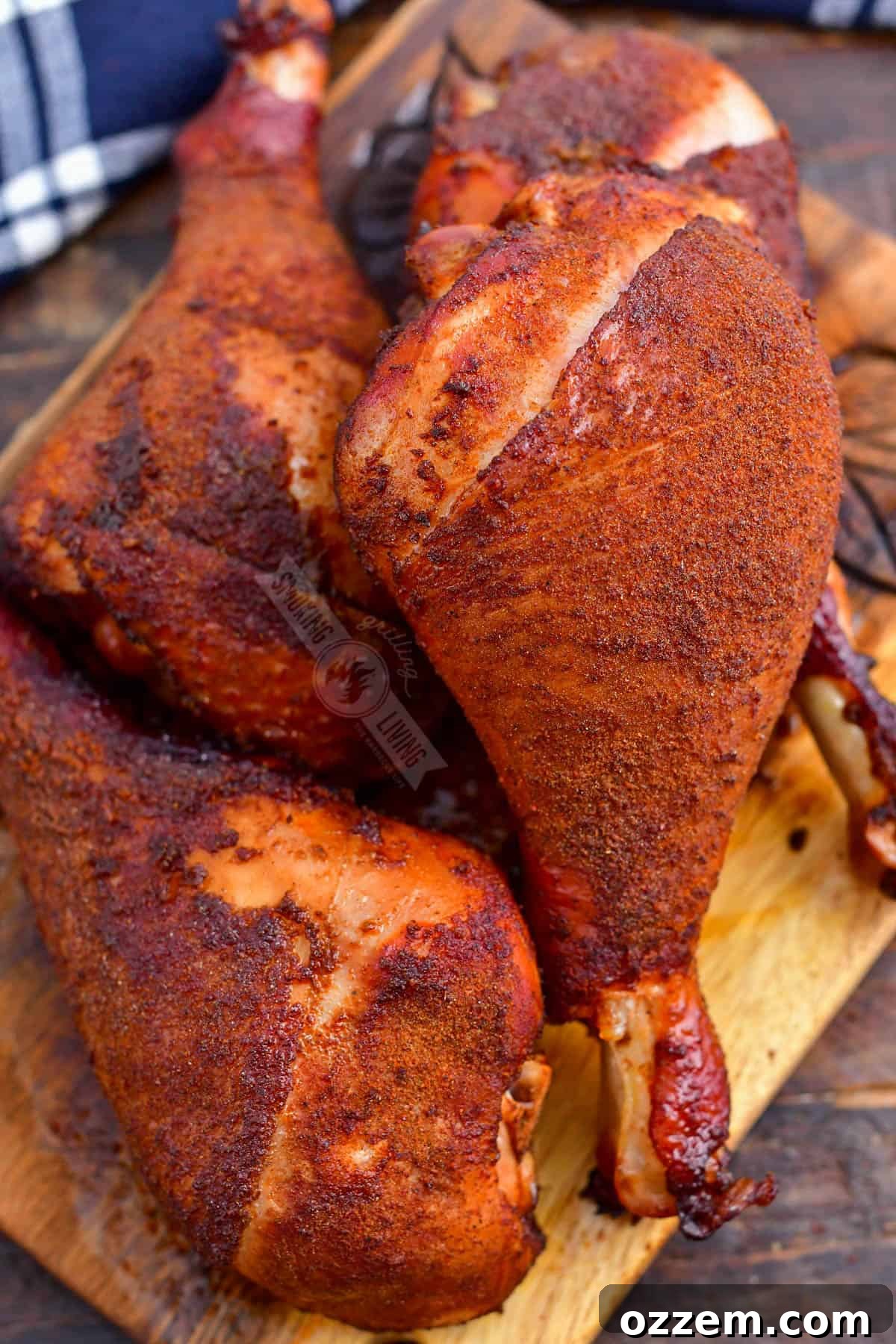
With your smoker preheated and your turkey legs seasoned, it’s time for the magic to happen. Once your smoker has reached and is consistently holding a steady temperature of 225°F (107°C), carefully arrange the seasoned turkey legs directly onto the grate. If you’re using an ambient thermometer probe, which is highly recommended for accuracy, place it on the grate next to the meat to monitor the smoker’s internal temperature. Immediately close the lid to trap the smoke and heat. The turkey legs will smoke until their internal temperature reaches 170°F (77°C). While the safe internal temperature for turkey is generally 165°F (74°C), personal experience shows that leg meat, particularly the darker thigh meat, benefits from reaching 170°F for optimal tenderness and doneness without being dry. This slightly higher temperature ensures the connective tissues break down beautifully, yielding that desirable fall-off-the-bone texture.
Throughout the smoking process, resist the urge to constantly open the smoker lid, as this causes temperature fluctuations and extends cooking time. Trust your thermometer to guide you. Once the target internal temperature is reached, remove the turkey legs from the smoker and let them rest for at least 5-10 minutes. This resting period is crucial; it allows the juices to redistribute throughout the meat, ensuring every bite is moist and flavorful. Carving too early will result in dry turkey.
Frequently Asked Questions About Smoked Turkey Legs
Where can I find turkey legs for smoking?
Turkey legs are a surprisingly common item and are generally available year-round in most grocery stores, not just during the fall holidays. Check the meat counter or the frozen poultry section. If you can’t readily locate them, don’t hesitate to ask your butcher or grocery store meat department manager. Many stores are happy to special order them for you at no additional cost, ensuring you get the perfect cut for your smoking adventure. Specialty butcher shops and online meat purveyors are also excellent sources for high-quality turkey legs.
What is the ideal smoker temperature for turkey legs?
For consistently juicy and tender smoked turkey legs, you’ll want to set your smoker to a precise temperature of 225°F (107°C). It’s crucial to maintain this temperature throughout the entire smoking process. Avoid letting the temperature dip significantly below this point, and equally important, don’t allow it to climb higher than 240°F (115°C). Consistent low temperature ensures the meat cooks slowly, allowing the smoke to penetrate deeply and the connective tissues to break down without drying out the meat.
What type of wood should I use for smoking turkey?
The choice of wood greatly influences the final flavor profile of your smoked turkey legs. For a mild and slightly sweet smoke flavor that complements turkey beautifully, apple, cherry, and maple woods are excellent choices and personal favorites among many pitmasters. Cherry wood, in particular, also imparts a beautiful reddish hue to the turkey skin. If you prefer a slightly stronger, more robust smoky flavor, hickory is a fantastic option. However, exercise caution with very strong woods like mesquite; it can easily overpower the delicate flavor of turkey, making it taste bitter or overly intense.
How long do turkey legs typically take to smoke?
The smoking time for turkey legs is primarily dependent on their size. Smaller hen legs will naturally cook faster, potentially taking about an hour less than the larger, more robust tom legs. Most readily available turkey legs at grocery stores tend to be from hens. On average, you can expect smoked turkey legs to take approximately 2.5 to 3 hours to reach the desired internal temperature. Always rely on an accurate meat thermometer rather than strictly on time to determine doneness, as every piece of meat and every smoker can vary.
What is the finished internal temperature for smoked turkey legs?
While the USDA recommends an internal temperature of 165°F (74°C) for cooked turkey, I’ve consistently found that turkey leg meat achieves superior tenderness and juiciness when smoked until it reaches 170°F (77°C). At 165°F, the leg meat, especially around the bone, can sometimes feel slightly underdone. Cooking to 170°F allows the connective tissues in the leg and thigh to break down more thoroughly, resulting in that delightful, tender texture that truly falls off the bone. Always use a reliable digital meat thermometer to ensure accuracy.
How many turkey legs should I plan per person?
Turkey legs vary significantly in size. Some “giant” turkey legs, often found at fairs, can easily satisfy two people, while smaller ones are ideal for a single serving. When estimating, remember that turkey legs are bone-in meat. A good rule of thumb is to estimate about 3/4 lb (approx. 340g) of meat per person, accounting for the bone weight. Therefore, if a turkey leg weighs between 1 to 1 1/4 lb (450-570g), it should be sufficient for one adult. If serving with many sides, you might get away with slightly less per leg, but err on the side of generosity.
How do I correctly insert a digital read thermometer?
Correct placement of your digital thermometer probe is vital for accurate readings. Insert the probe through the top of the turkey leg, aiming for the thickest part of the thigh. Guide the probe diagonally, ensuring it runs parallel to the bone but crucially, does not touch the bone. If the probe makes contact with the bone, it will give you an artificially high reading. If you feel the probe hitting bone, simply pull it out slightly and reinsert it until it’s solely in the meaty portion. This precision helps you monitor the true internal temperature of the meat.
Why is my cooked turkey meat still pink?
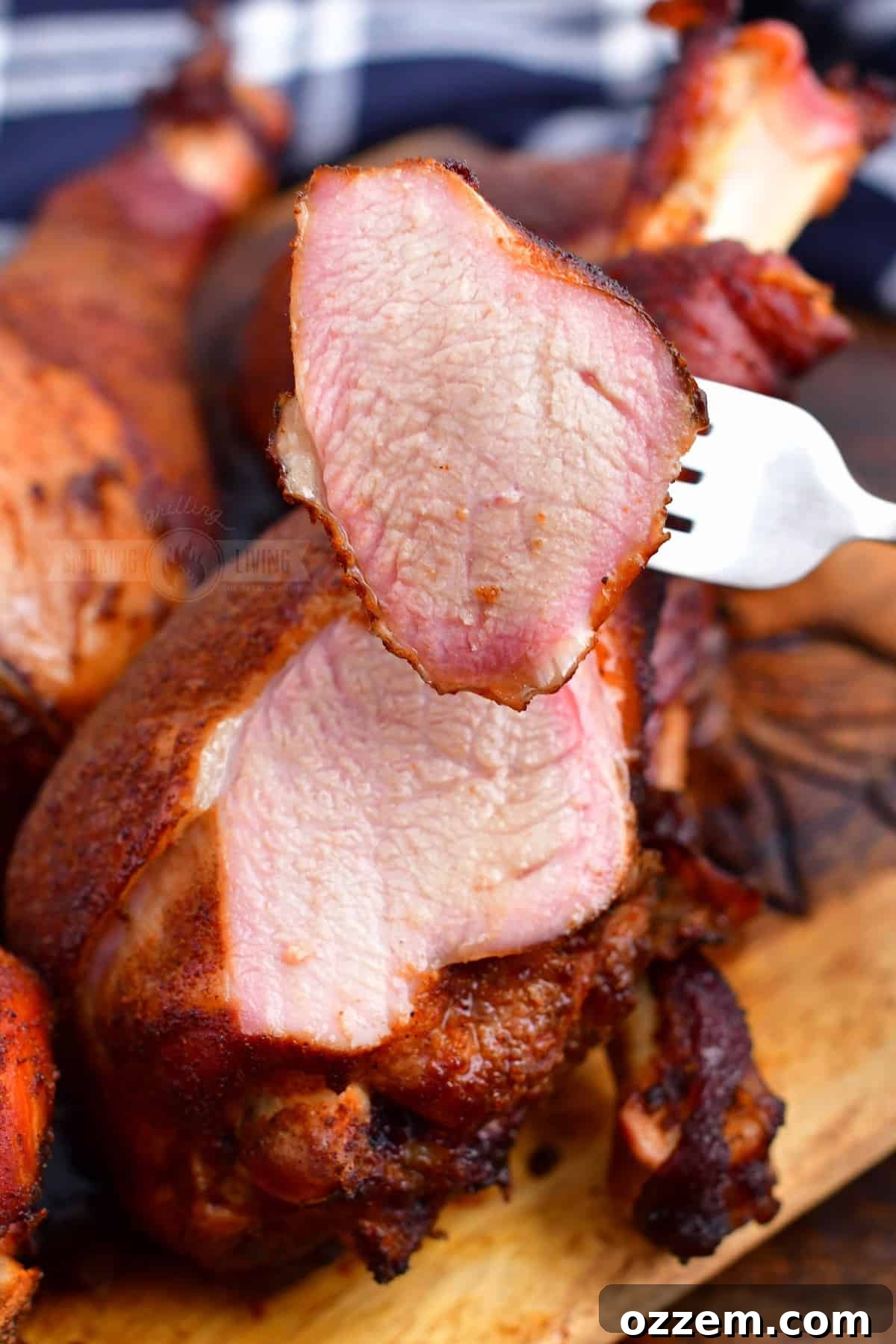
It’s important to understand that smoked meats often retain a pink hue, even when fully cooked to a safe internal temperature. This phenomenon is known as a “smoke ring.” The smoke gases, particularly nitric oxide and carbon monoxide, react with the myoglobin in the meat, creating a pinkish color, similar to how curing salts affect ham. You will typically see a pink ring just beneath the skin, and sometimes even a slight pinkish tint deeper into the center of the meat. This is perfectly normal and a sign of good smoking! The most critical factor is always to ensure that your turkey legs have reached a safe internal temperature (170°F or 77°C as recommended for legs) using a reliable thermometer. The color alone is not an indicator of doneness for smoked meats.
The Essential Brine for Unbeatable Juiciness and Flavor
The brine is not just a suggestion; it’s a vital component for truly exceptional smoked turkey legs. This simple yet powerful step transforms otherwise ordinary poultry into a deeply flavorful, incredibly tender, and remarkably juicy experience. While turkey leg meat is naturally more succulent than breast meat, turkey is generally a leaner bird compared to chicken, making it particularly susceptible to drying out during longer cooking times. This is where the brine works its magic, ensuring moisture retention and infusing every fiber with taste.
For this effective turkey brine, you will need a balanced combination of ingredients: lukewarm water to help dissolve the solids, a generous amount of coarse salt for seasoning and moisture retention, brown sugar to balance the saltiness and aid in browning, paprika for color and a subtle peppery note, aromatic bay leaves for an earthy undertone, and finally, whole peppercorns and whole allspice to contribute complex, warm spice notes that perfectly complement the turkey. Together, these ingredients create a robust flavor profile that penetrates the meat, guaranteeing a truly irresistible outcome.
Crafting a Flawless Seasoning for Smoked Turkey Legs
Beyond the brine, the external seasoning blend is your opportunity to add another layer of exquisite flavor and create that highly coveted crispy, caramelized skin. Every bite, especially that perfectly seasoned skin, should be a heavenly experience. Our carefully curated seasoning blend delivers a delightful balance of sweet, savory, and subtly spicy notes, resulting in a beautiful crust and an explosion of flavor. For this irresistible seasoning, gather the following:
- Brown sugar: Adds a touch of sweetness and helps create that desirable caramelized crust.
- Garlic powder & Onion powder: Essential savory aromatics that build a foundational flavor.
- Paprika: Contributes a mild, earthy sweetness and a vibrant red color.
- Black pepper: Provides a classic peppery kick.
- Cayenne pepper: A pinch for a subtle warmth and a touch of heat, which can be adjusted to your preference.
- Allspice: Adds a complex, warm, and slightly sweet spice note that beautifully complements turkey.
- Salt: Enhances all the other flavors and contributes to the overall seasoning.
Together, these spices form a bright, flavorful coat that not only tastes incredible but also creates an appetizing visual appeal. The interplay of these ingredients ensures that the seasoning penetrates the outer layer, offering a depth of flavor that lasts from the first bite to the last.
Perfect Serving Suggestions for Your Smoked Turkey Legs
The beauty of smoked turkey legs lies not just in their incredible taste, but also in their versatile serving potential. Traditionally, these portable feasts are enjoyed on the go at theme parks or fairs. When preparing them for a backyard BBQ, holiday feast, or casual get-together, consider sides that complement their hearty nature and are easy to enjoy, even with one hand if you want to keep that fair-like casual vibe.
For a truly classic American BBQ experience, pair your smoked turkey legs with traditional, crowd-pleasing sides. Think creamy potato salad, a tangy and crunchy coleslaw, or a vibrant pasta salad. These cool, refreshing options provide a wonderful contrast to the warm, smoky turkey.
Elevate your meal with a comforting side like **smoked mac and cheese**. You can even place a pan of it on the smoker alongside your turkey legs, allowing it to absorb some of that delicious smoky flavor for an extra layer of richness. Other fantastic options include grilled corn on the cob, baked beans, or even a simple green salad with a bright vinaigrette to cut through the richness of the meat. Don’t forget some crusty bread or cornbread to sop up any lingering juices. For beverages, consider a crisp craft beer, a dry hard cider, or a refreshing iced tea to complete the experience.
PIN THIS RECIPE FOR LATER
DID YOU TRY THIS RECIPE? PLEASE leave a 🌟 star rating! Let me know how you liked it by leaving the 📝 comment below or share and tag me on social media @grillingsmokingliving. DON’T FORGET to subscribe to my newsletter!
Smoked Turkey Legs Recipe
Smoked turkey legs is a great recipe for your smoker, it’s so juicy, tender, and full of flavor from the brine and the coat of seasoning.
Pin Recipe
Ingredients
- 5 lbs turkey legs
Brine:
- 6-8 cups lukewarm water
- 1/3 cup coarse salt
- 1/4 cup brown sugar
- 1 tbsp paprika
- 2 bay leaves
- 1 tbsp whole peppercorns
- 1 tbsp whole allspice
Seasoning:
- 1 tbsp garlic powder
- 1 tbsp onion powder
- 3 tbsp brown sugar
- 1 tbsp paprika
- 1 tsp cracked black pepper
- 1 tsp ground allspice
- 2 tsp salt (to taste)
- 1/4 tsp cayenne pepper (to taste)
Instructions
Brine:
- Place turkey legs into large zip-top bags (2-3 legs per bag, depending on size).
- Combine all brine ingredients in a pitcher and stir well. Stand bags upright and pour brine into each bag to completely cover the legs. Remove air and seal.
- Place bags into a large aluminum pan or mixing bowl to catch any potential leaks.
- Refrigerate and let brine for 12-18 hours.
Prepare the smoker:
- For smoking turkey, use apple, cherry, or maple wood.
- Set up your smoker for indirect heat and maintain a steady 225°F (107°C). Place an aluminum roasting pan with water or the smoker’s water pan on the level below the meat grate or next to the meat (placement depends on your smoker).
Season:
- Mix all seasoning ingredients together and set aside.
- Remove turkey legs from brine and pat them thoroughly dry with paper towels. Season generously and evenly all over with the seasoning mix, patting it in (do not rub).
- Insert a digital thermometer probe into the thickest part of the thigh diagonally, along the bone but not touching it. Reposition slightly if it hits the bone.
Cook:
- Once the smoker is at a steady temperature, place seasoned legs onto the grate. Place an ambient thermometer probe on the grate next to the meat (recommended).
- Close the lid immediately and cook until the internal temperature reaches 170°F (77°C). (While 165°F (74°C) is safe for turkey, leg meat is often more tender at 170°F.)
- Let the smoked turkey legs rest for about 5-10 minutes before serving.
Notes
Wood Options: Apple, cherry, and maple are excellent choices. For a stronger flavor, consider hickory. Avoid mesquite, as its flavor can be too intense.
How much turkey legs per person? Giant legs can feed 2 people, smaller ones are good for 1. Estimate about 3/4 lb (340g) of meat per person (minus bone weight). A 1 to 1 1/4 lb (450-570g) leg is typically good for one person.
Nutrition
Carbohydrates: 16g |
Protein: 93g |
Fat: 32g |
Saturated Fat: 10g |
Cholesterol: 334mg |
Sodium: 2682mg |
Potassium: 1394mg |
Fiber: 1g |
Sugar: 11g |
Vitamin A: 898IU |
Vitamin C: 1mg |
Calcium: 106mg |
Iron: 9mg
Originally published on Grilling Smoking Living in November 2020.