
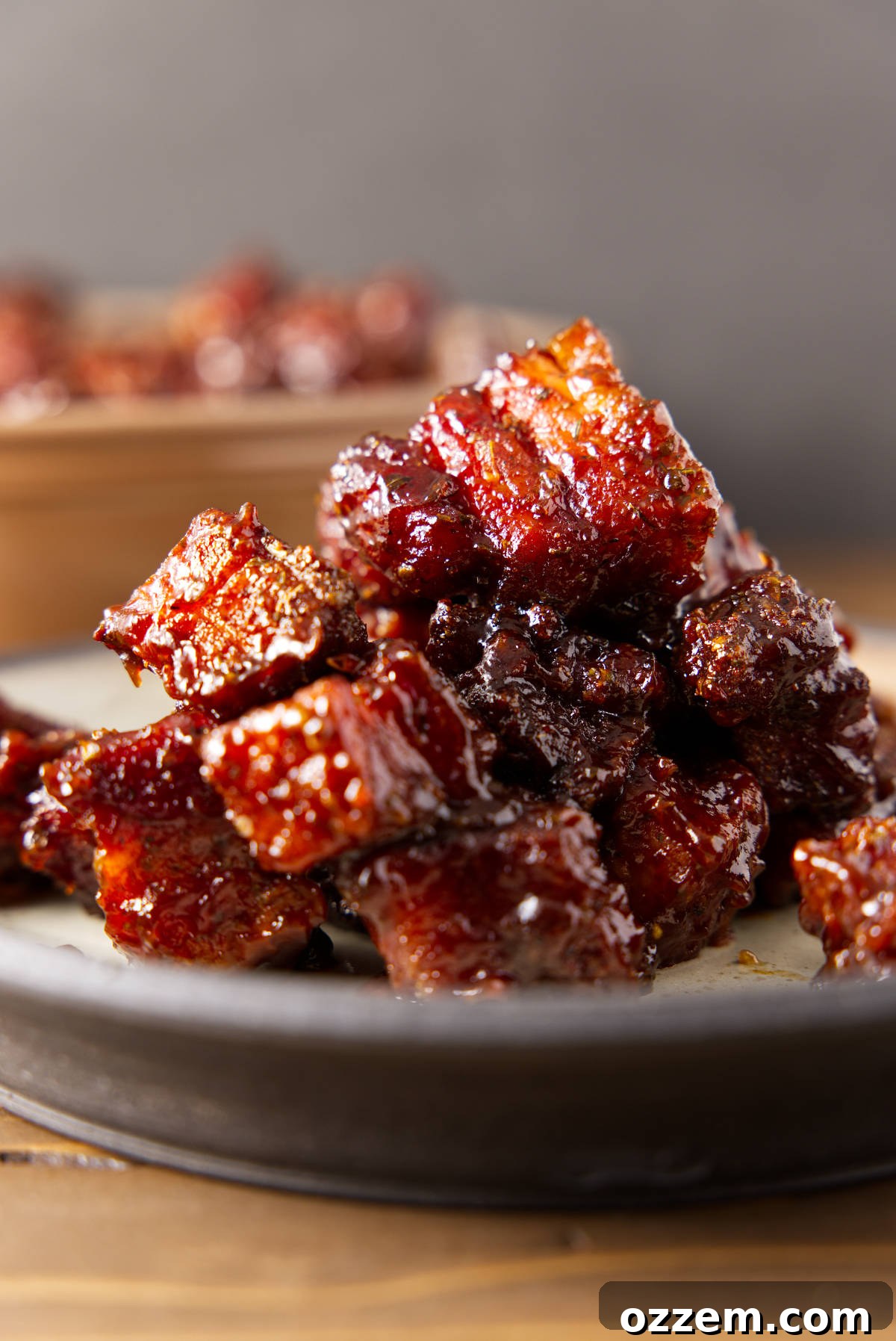
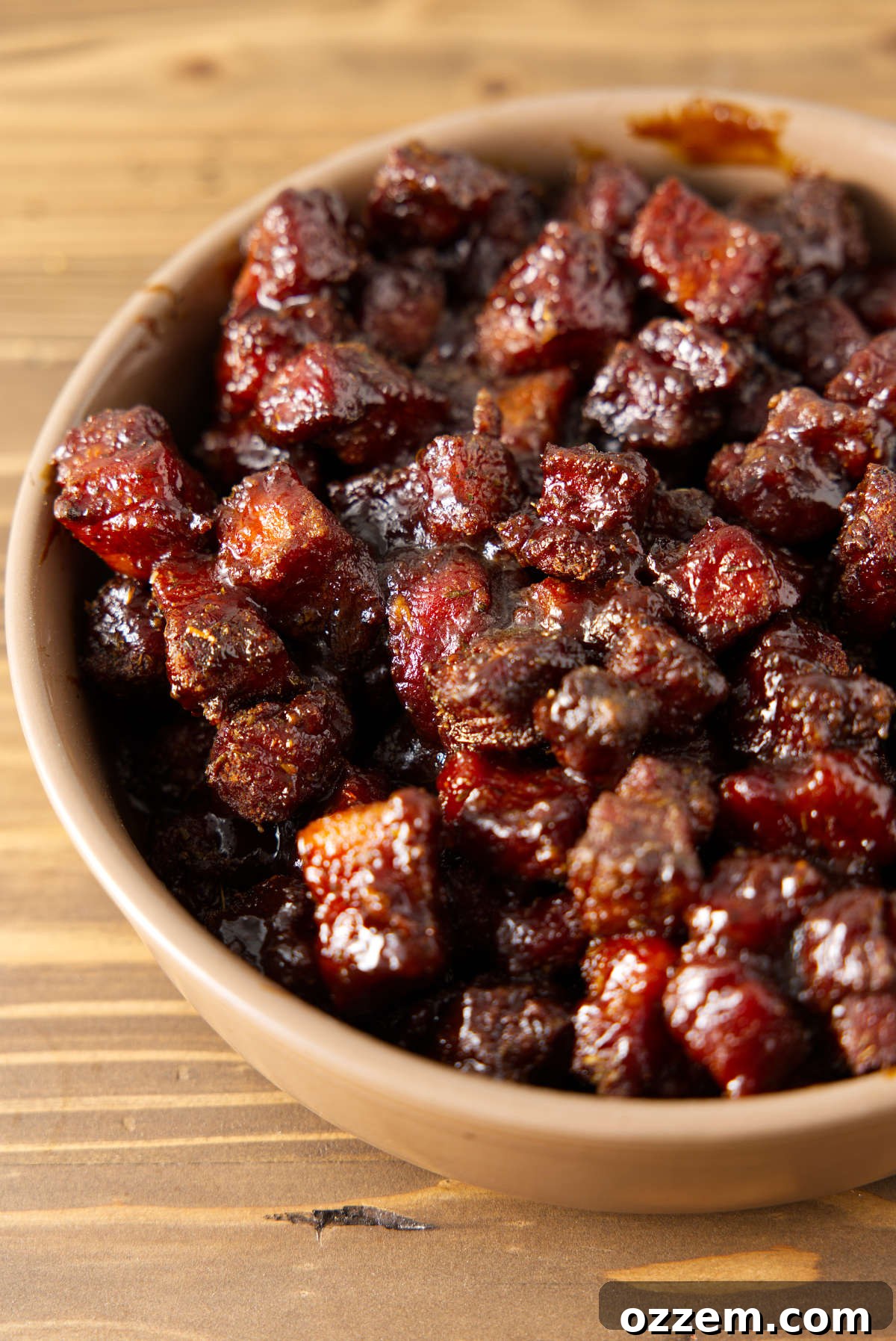
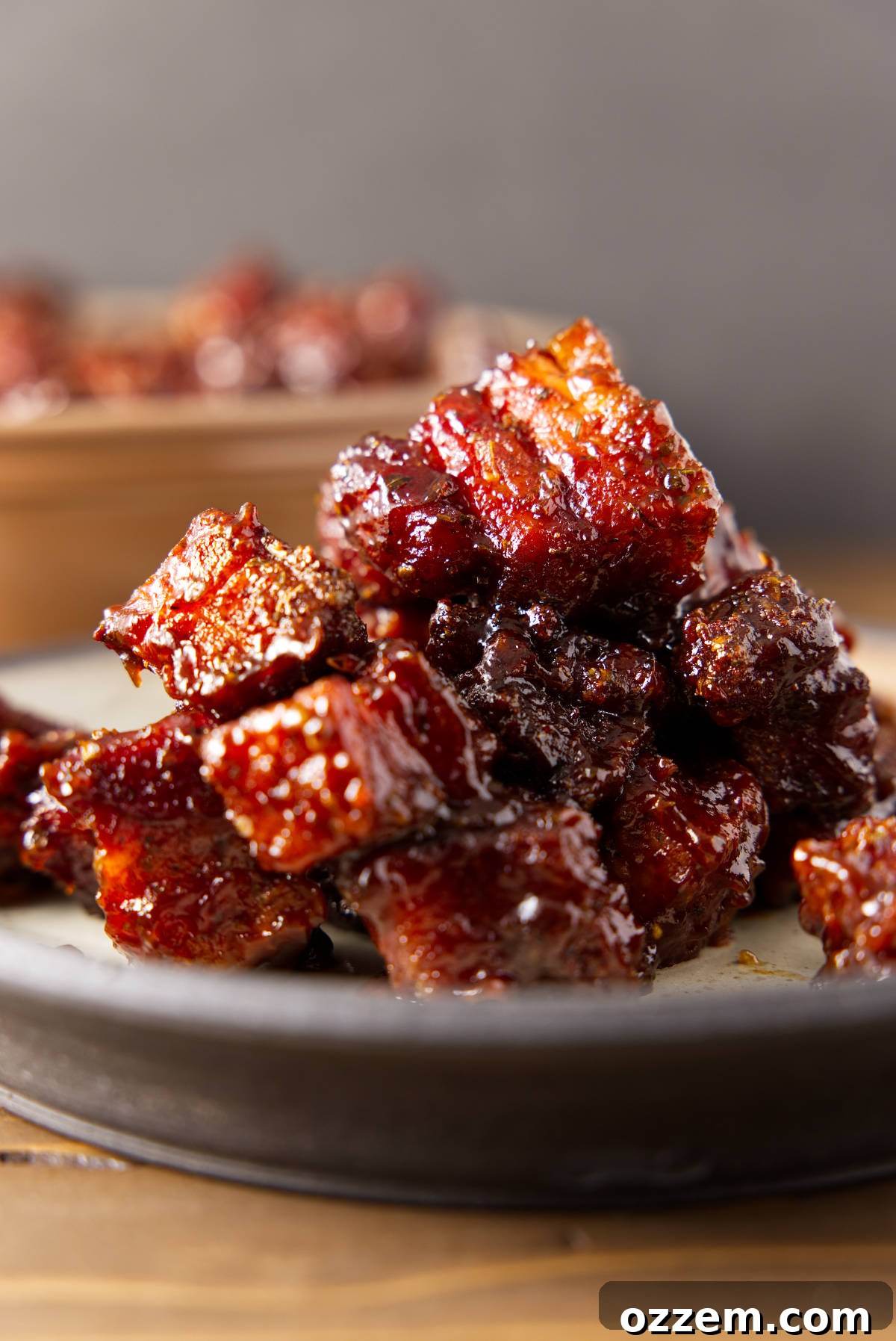
Pork Belly Burnt Ends are a true revelation for barbecue enthusiasts, transforming a simple cut of meat into an extraordinary culinary experience. These bite-sized cubes of pork belly are meticulously smoked low and slow, typically on a Traeger pellet grill, until they achieve an unparalleled tenderness and are deeply infused with rich, smoky flavors. The magic culminates when these succulent morsels are generously coated in a luscious, sticky BBQ sauce, often sweetened with a touch of honey, creating a caramelized crust that perfectly complements their melt-in-your-mouth interior. It’s a symphony of sweet, savory, and smoky notes that defines everything remarkable about authentic barbecue.
Whether you’re hosting a lively backyard cookout, planning a special weekend feast, or simply craving an exceptional treat, these smoked pork belly burnt ends are an impeccable choice. Their distinctive appeal lies in the contrast between their crispy, caramelized exterior and their supremely tender, juicy core. This textural interplay, combined with their irresistible flavor profile, makes them seriously addictive – a true “meat candy” that will have everyone asking for more. Once you experience the depth of flavor and tender texture, you’ll undoubtedly agree that pork belly burnt ends deserve a permanent, celebrated spot in your barbecue repertoire.
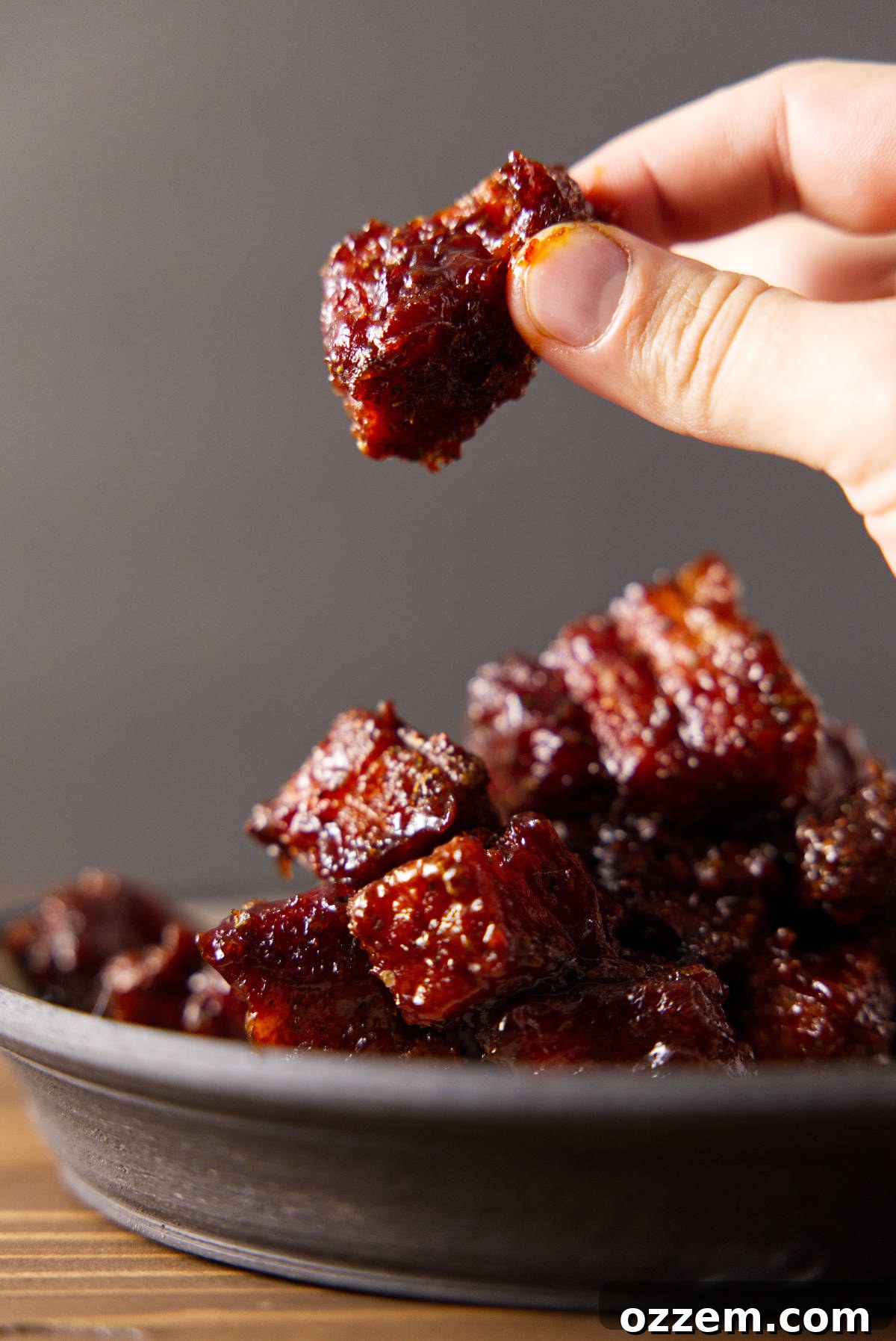
🤤 Why You Need to Make These Smoked Pork Belly Burnt Ends!
- Unforgettable Flavor Explosion: Prepare your taste buds for an extraordinary journey. The rich, tangy BBQ sauce, perfectly balanced with sweet honey and deep smoky spices from the rub, creates a flavor profile that is both complex and incredibly satisfying. Each bite delivers a burst of savory sweetness that will impress even the most discerning palates and leave you craving more.
- Guaranteed Crowd Favorite: These burnt ends are the ultimate showstopper at any gathering. Their visually appealing caramelized glaze and mouthwatering aroma will draw everyone in, making them an instant hit. Be prepared for a flurry of compliments and requests for the recipe – they’re perfect for feeding a large crowd and creating lasting culinary memories.
- Surprisingly Easy to Master: Despite their gourmet appearance and taste, making these pork belly burnt ends is a straightforward process. With simple, accessible ingredients and clear, easy-to-follow steps, even novice pitmasters can achieve impressive results. We’ve simplified the technique to ensure a hassle-free cooking experience.
- Customizable to Your Taste: Whether you prefer a gentle warmth or a fiery kick, this recipe is incredibly adaptable. Easily adjust the heat level by incorporating hot sauce, cayenne pepper, or red pepper flakes. For an even richer sweetness, you can partially or entirely substitute the honey with dark brown sugar or maple syrup. The possibilities for personalizing the flavor are truly endless.
- Melt-in-Your-Mouth Tenderness: The secret to their incredible texture lies in the slow-cooking method. Smoked at a low temperature for hours, the pork belly fat renders beautifully, resulting in incredibly juicy, fork-tender bites that practically dissolve in your mouth. This luscious texture is a hallmark of perfectly executed burnt ends.
- Versatile Serving Options: While phenomenal on their own, these burnt ends are also incredibly versatile. Serve them as an appetizer, a main course alongside classic BBQ sides like coleslaw or mac and cheese, or even chopped and added to tacos, sandwiches, or chili for an elevated smoky twist.
🗒️ Essential Ingredients for Perfect Pork Belly Burnt Ends
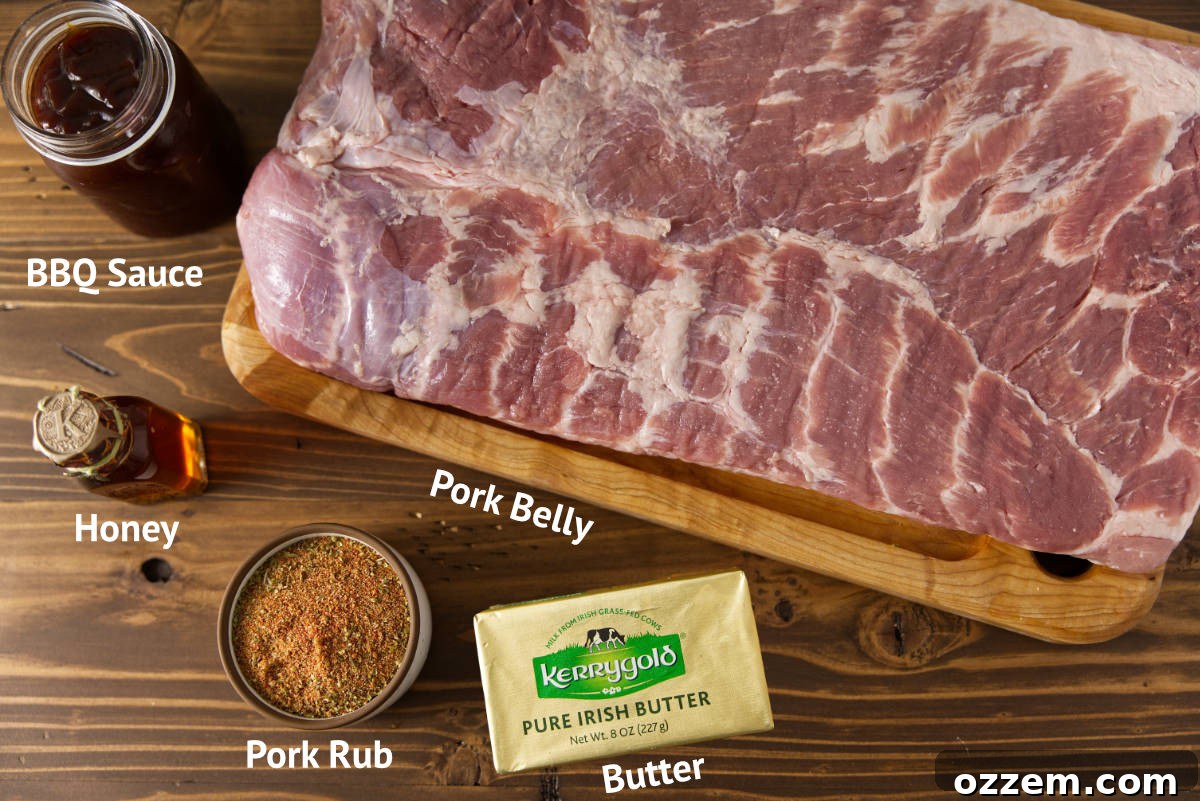
Crafting these sensational smoked pork belly burnt ends requires a concise list of simple yet powerful ingredients. Each component plays a crucial role in developing the deep, complex flavors and desirable texture of this barbecue delicacy. For a precise breakdown and exact measurements, make sure to consult the recipe card located further down this page.
- Pork Belly: The undisputed star of the dish. Opt for a high-quality, skinless slab of pork belly, ideally with a good balance of meat and fat. The generous fat content is what renders down during the long smoking process, infusing the meat with incredible moisture and flavor, resulting in those perfectly tender and juicy “burnt ends.” Look for a piece that’s roughly 2-3 pounds for a manageable batch.
- Pork Rub: This is where the initial layer of flavor truly begins. A good pork rub is a blend of aromatic spices, herbs, and usually some sugar and salt. It adheres to the pork belly cubes, creating a savory bark and infusing them with deep, complex notes before they even hit the smoker. You can use your favorite store-bought rub or create your own custom blend with ingredients like paprika, garlic powder, onion powder, brown sugar, and chili powder.
- BBQ Sauce: The finishing glaze that transforms the smoked pork belly into true burnt ends. Choose a sweet and tangy BBQ sauce that you absolutely love, as its flavor will define the final taste profile. A Kansas City-style sauce with notes of tomato, vinegar, and brown sugar works exceptionally well, creating that desirable sticky, caramelized crust. Feel free to experiment with different varieties to match your preference.
- Honey: This golden, viscous sweetener is key to achieving that beautiful, glossy, and caramelized exterior. Honey not only adds a rich, natural sweetness but also helps the BBQ sauce adhere and creates a delectable glaze as it cooks down on the smoker. It enhances the overall stickiness and depth of flavor, making each bite even more irresistible.
- Unsalted Butter: Added during the final saucing stage, butter contributes an extra layer of richness and succulence. As it melts and mixes with the BBQ sauce and honey, it creates an even more luxurious glaze, helping to keep the pork belly incredibly moist and tender during the second smoke session. It also adds a silky mouthfeel to the finished burnt ends.
👨🍳 The Art of Crafting Perfect Pork Belly Burnt Ends: A Step-by-Step Guide
Transforming a simple slab of pork belly into these delectable burnt ends is a process that’s both rewarding and surprisingly approachable. With careful attention to each step, you’ll create smoky, tender, and irresistibly glazed bites that are sure to impress. This section outlines the essential stages to guide you through the journey from raw pork belly to BBQ heaven. For a quick-reference guide and printable format, please refer to the comprehensive printable recipe card below.
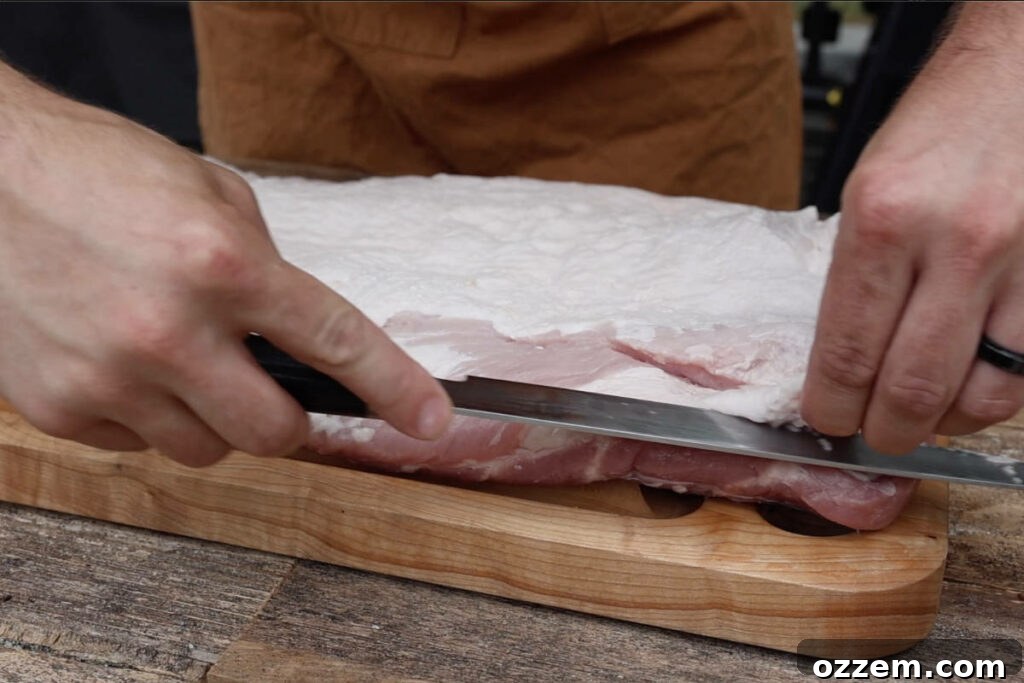
- Prepare the Pork Belly for Smoking: Begin by unboxing your pork belly and inspecting it. The first crucial step is to trim any tough, rubbery skin that might be left by your butcher, as this will not render down during cooking and can be unpleasant to eat. Carefully slice it off, aiming to leave as much of the underlying fat cap as possible. While you want to remove any excessively thick or hard pieces of fat that won’t easily render, avoid trimming too much of the fat, as this is essential for keeping the burnt ends moist, juicy, and flavorful during the long smoke. A good fat cap is your friend in this recipe.
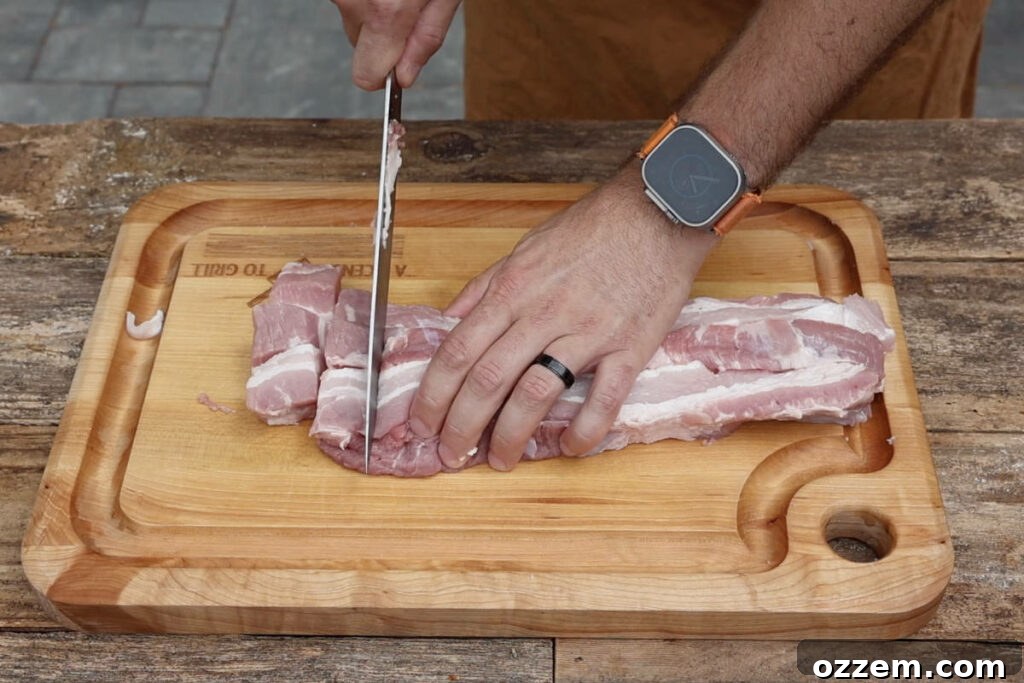
- Precisely Slice into Cubes: Once trimmed, place the pork belly on a sturdy cutting board. Using a sharp knife, slice the pork belly into uniform cubes. Aim for pieces that are approximately 1 to 2 inches in size. Consistency is key here; uniformly sized cubes will ensure that every piece cooks at roughly the same rate, preventing some from drying out while others are still undercooked. This also contributes to the pleasing aesthetic of the finished burnt ends.
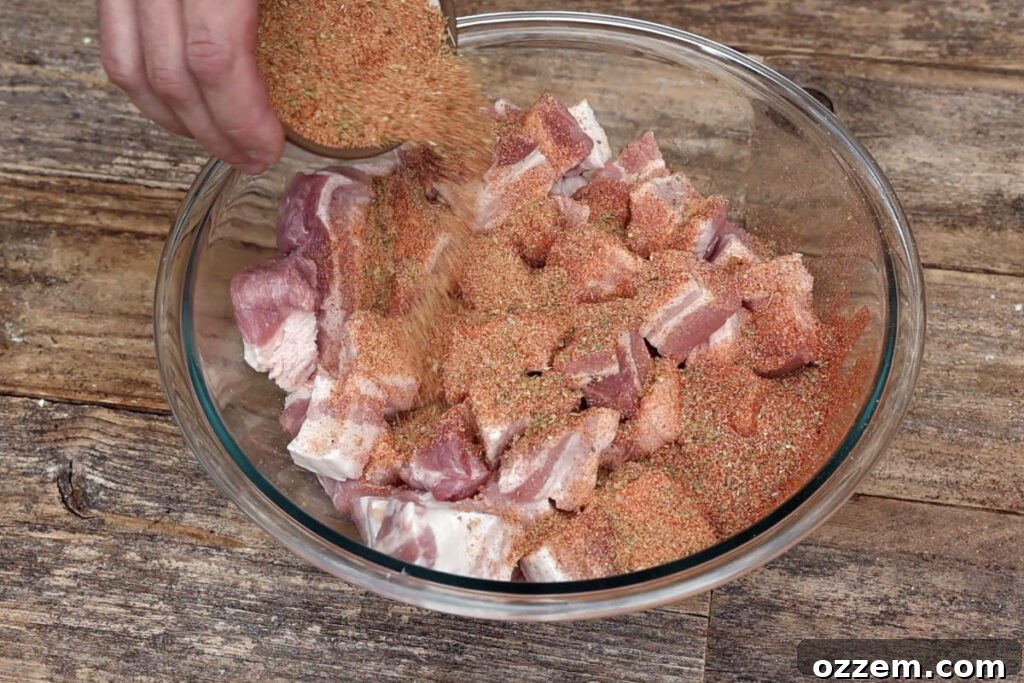
- Generously Season with Pork Rub: Transfer your neatly cut pork belly cubes into a large mixing bowl. Now, it’s time to apply your chosen pork rub. Sprinkle the rub generously over all the cubes. Using your hands (gloves are recommended for easy cleanup), toss and mix the cubes thoroughly until each piece is completely coated in the seasoning. Ensure an even application on all sides to create a consistent and flavorful bark during the smoking process. Don’t be shy with the rub – it’s crucial for flavor development.
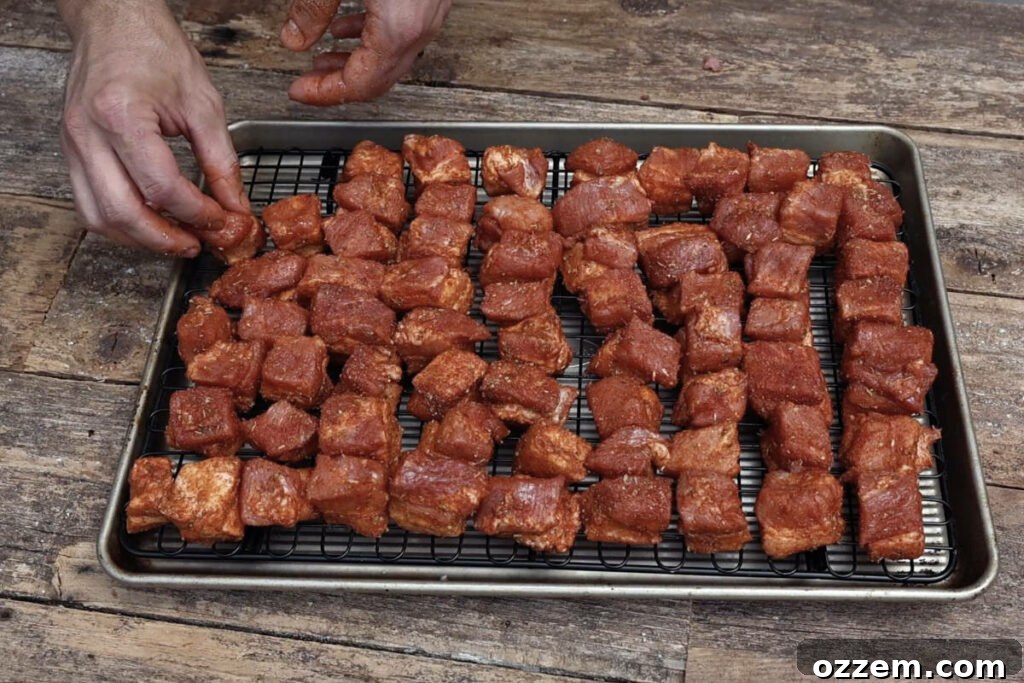
- Arrange and Begin the Initial Smoke: Once seasoned, arrange the pork belly cubes in a single layer on a wire rack. This setup is important as it allows for optimal smoke circulation around all sides of each cube, promoting even cooking and bark formation. Carefully transfer the wire rack to your preheated smoker. Set your smoker to a consistent temperature, typically around 250°F (121°C). Allow the pork belly to smoke for the initial phase, which usually lasts between 2 to 3 hours, or until the internal temperature of the pork belly reaches approximately 180-190°F (82-88°C). During this stage, the fat begins to render, and the meat starts to absorb that beautiful smoky flavor.
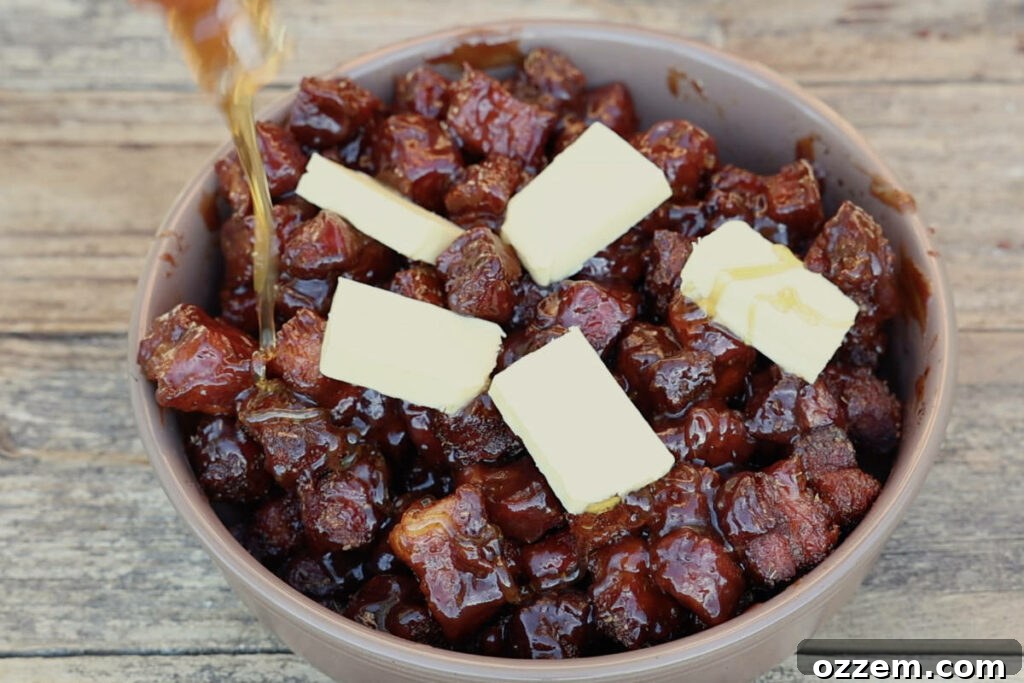
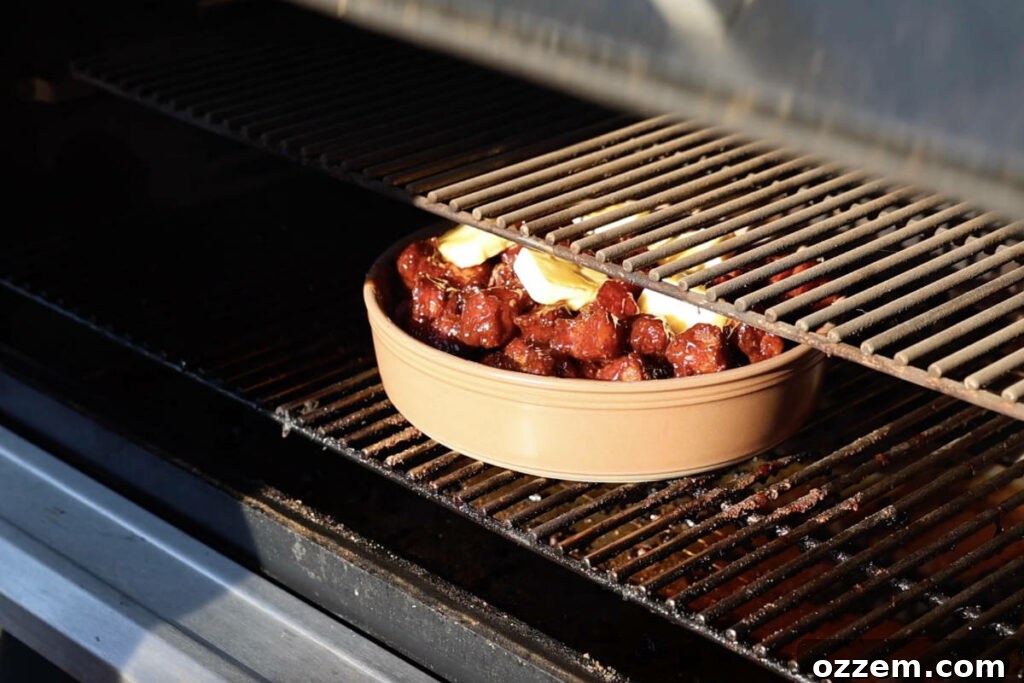
- Sauce and Braise for Tenderness: Once the pork belly has reached its target internal temperature and developed a nice bark, carefully remove the wire rack from the smoker. Transfer all the smoked pork belly cubes into a sturdy baking dish or aluminum pan. Pour your favorite BBQ sauce over the cubes, then gently toss them to ensure every piece is thoroughly coated. Distribute small pats of butter evenly over the sauced pork belly, and finally, drizzle a generous amount of honey over everything. The butter and honey will melt and combine with the BBQ sauce, creating a rich, glossy glaze.
- The Second Smoke (Braise): Cover the baking dish tightly with aluminum foil. This crucial step creates a braising environment, allowing the pork belly to steam in its own juices and the luscious sauce, making it incredibly tender. Place the covered dish back onto the smoker, maintaining the 250°F (121°C) temperature. Continue smoking for another 1 to 1.5 hours, or until the pork belly reaches an internal temperature of around 205°F (96°C). At this point, the meat should be exceptionally tender, almost falling apart.
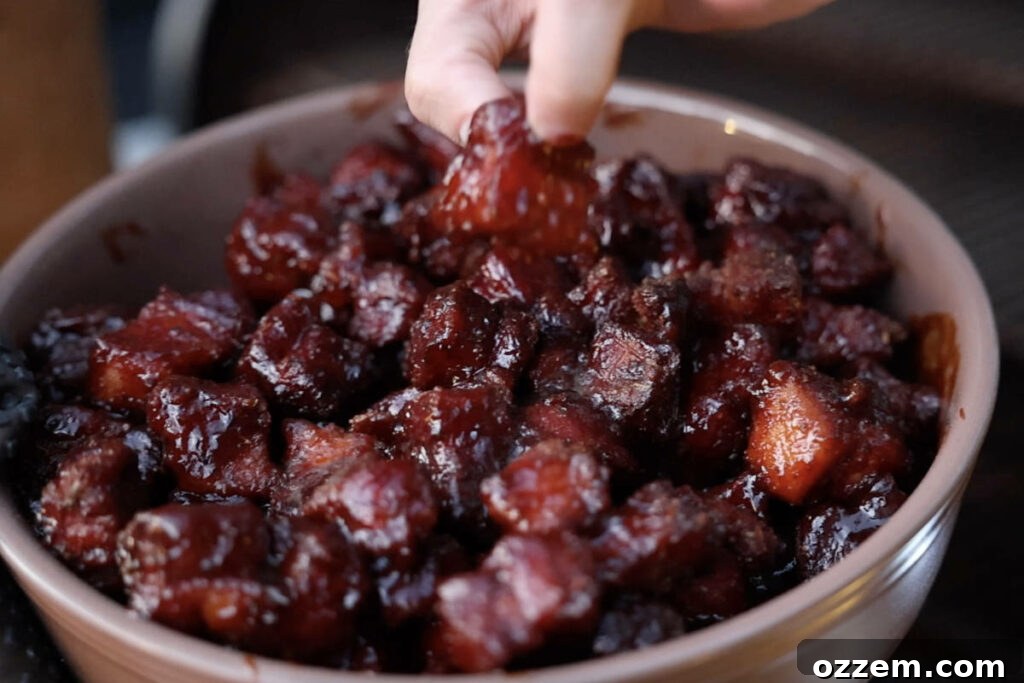
- Rest and Serve for Perfection: Once the burnt ends have reached peak tenderness, carefully remove the baking dish from the smoker. Before serving, it’s a good idea to discard any excess liquid that has accumulated at the bottom of the pan – this prevents the burnt ends from becoming soggy. Let the pork belly burnt ends rest uncovered for about 10-15 minutes. This allows the juices to redistribute, ensuring maximum tenderness and flavor. Then, serve them hot and watch them disappear!
😉 Pro Tips for Unforgettable Pork Belly Burnt Ends
- Strategic Fat Trimming is Key: While the fat is crucial for moisture, knowing how much to trim makes all the difference. Remove any thick, rubbery skin completely, as it will never tenderize. For the fat cap, trim off any excessively hard or thick pockets that won’t render easily, but be sure to leave a decent layer (about 1/4 to 1/2 inch) of fat attached to the meat. This ensures the pork belly remains incredibly moist and renders into luscious pockets of flavor throughout the cooking process.
- Utilize a Wire Rack for Evenness: For the initial smoking phase, placing your pork belly cubes on a wire rack set inside a baking sheet is a game-changer. This setup ensures 360-degree airflow around each cube, allowing for superior smoke penetration and the development of a beautiful, even bark (the flavorful crust) on all sides. It also prevents the bottom of the cubes from sitting in rendered fat, which could prevent crisping.
- Embrace the Low and Slow Philosophy: Patience is a virtue when it comes to perfect burnt ends. Maintaining a consistent smoker temperature around 250°F (121°C) is ideal. This low and slow approach allows the tough connective tissues in the pork belly to break down gradually, the fat to render slowly and melt into the meat, and the pork to absorb maximum smoky flavor without drying out. Rushing the process will result in tough, chewy burnt ends.
- The Power of Spritzing: To further enhance moisture and flavor during the initial smoke, consider spritzing the pork belly cubes every 30-45 minutes. A simple mixture of equal parts apple juice and apple cider vinegar works wonders. The apple juice adds a subtle sweetness and helps with bark formation, while the apple cider vinegar helps to tenderize the surface and provide a slight tang. This prevents the exterior from drying out and keeps the bark pliable.
- Don’t Skip the Rest Period: Just like with any large cut of smoked meat, resting your burnt ends after removing them from the smoker is vital. After discarding excess liquid, allow the finished pork belly burnt ends to rest uncovered for at least 10-15 minutes. This allows the internal juices, which have been driven to the center during cooking, to redistribute throughout the meat, resulting in a more consistently juicy and tender bite.
- Unleash Your Inner Flavor Scientist: Don’t be afraid to customize! The base recipe is fantastic, but the world of BBQ is all about personal preference. Experiment with different types of wood pellets (hickory, apple, cherry for pork). Introduce extra layers of sweetness with brown sugar, maple syrup, or even a touch of molasses in your sauce. For those who love heat, a few dashes of your favorite hot sauce or a pinch of red pepper flakes can provide an exciting kick. The options are truly boundless, so make these burnt ends uniquely yours.
🤔 Substitutions and Creative Variations for Pork Belly Burnt Ends
While the classic pork belly burnt ends recipe is a masterpiece in itself, there’s always room for culinary creativity. Don’t hesitate to experiment with these substitutions and variations to tailor the flavors to your preference or simply to try something new and exciting. These simple tweaks can open up a whole new world of smoky deliciousness.
- Elevate the Heat: For those who love a spicy kick, it’s easy to dial up the heat. Incorporate a pinch of cayenne pepper, a teaspoon of chipotle powder for smoky heat, or a generous dash of your favorite spicy BBQ sauce during the saucing stage. Even a few finely diced jalapeños or habaneros added to the pan can infuse a vibrant, fiery flavor.
- Explore Alternative Sweeteners: While honey provides a unique stickiness and flavor, you can switch it up for different sweet notes. Swap out honey for rich, dark maple syrup for a distinctive woody sweetness, or use brown sugar, which caramelizes beautifully and adds a deep, molasses-like flavor. Agave nectar can also offer a lighter, more subtle sweetness.
- Experiment with Glaze Variations: The BBQ sauce and honey combination is fantastic, but don’t limit yourself. Try a tangy, mustard-based Carolina Gold BBQ sauce for a different regional flavor profile. For an unexpected twist, consider an Asian-inspired teriyaki glaze with soy sauce, ginger, garlic, and a touch of sesame oil, which offers a delightful umami balance. A bourbon glaze can also add sophisticated depth.
- Diversify Smoky Enhancements: The type of wood chips or pellets you use significantly impacts the final smoky flavor. While oak and hickory are common, experiment with fruitwoods like applewood or cherry for a milder, sweeter smoke that beautifully complements pork. Pecan wood provides a nutty, rich smoke, while mesquite offers a very strong, distinct flavor profile.
- Add a Textural Finish: For an exciting textural contrast, finish your burnt ends with an intriguing topping. A sprinkle of crispy fried onions adds a savory crunch. For a double pork punch, crush some pork rinds and dust them over the finished burnt ends just before serving – this introduces an extra layer of savory, crispy goodness that is truly addictive.
🥡 Storing and Reheating Your Delicious Pork Belly Burnt Ends
Don’t let any leftover pork belly burnt ends go to waste – they’re just as delicious the next day! To properly store them, ensure the burnt ends have completely cooled to room temperature. Once cooled, transfer them to an airtight container and place it in the refrigerator. They will maintain their quality and flavor for up to 3-4 days. For longer storage, pork belly burnt ends freeze exceptionally well. Arrange them in a single layer on a baking sheet and freeze until solid, then transfer them to a freezer-safe airtight container or heavy-duty freezer bag. They can be stored in the freezer for up to 3 months. When you’re ready to enjoy them again, simply transfer the frozen burnt ends to the refrigerator and let them thaw overnight.
When it comes to reheating, the goal is to warm them through without drying them out or losing that precious caramelized texture. Your best methods are the oven or an air fryer:
- Oven Method: Preheat your oven to a moderate 300°F (150°C). Place the thawed burnt ends in a single layer on a baking sheet. To help retain moisture and prevent them from drying out, lightly spritz them with a little apple juice or water, then cover the baking sheet tightly with aluminum foil. Heat for about 15-20 minutes, or until they are thoroughly warmed through and sizzling gently.
- Air Fryer Method: For a quicker and slightly crispier reheat, the air fryer is an excellent choice. Arrange the thawed burnt ends in a single layer in the air fryer basket, ensuring not to overcrowd it. Set the air fryer to 250°F (121°C) and heat for 8-10 minutes, shaking the basket halfway through. Keep an eye on them to prevent over-crisping.
If you’re truly short on time, the microwave can be used, but it’s generally the least ideal method for maintaining texture. Place a small portion of burnt ends in a microwave-safe dish, cover it with a damp paper towel to create steam, and heat in 30-second intervals until warmed through, stirring between intervals.
Beyond simply reheating, leftover Pork Belly Burnt Ends are incredibly versatile and can be repurposed into new, exciting dishes. Try chopping them into smaller pieces and using them as a luxurious, smoky topping for creamy mac and cheese or folding them into a hearty and flavorful chili for an added layer of rich, smoky depth. Their intense flavor punch can elevate many different meals, transforming everyday dishes into gourmet delights.
❓ Frequently Asked Questions About Pork Belly Burnt Ends
Absolutely! Pork belly burnt ends are an excellent make-ahead dish, perfect for entertaining. Once they are fully cooked, allow them to cool completely. Store them in an airtight container in the refrigerator for up to 3-4 days. When your guests arrive, simply reheat them in the oven at 300°F (150°C), covered with foil, for 15-20 minutes until warmed through. They’ll taste just as incredible as if they were freshly made.
Keeping your pork belly burnt ends moist is crucial for that tender, juicy result. Several techniques can help: Firstly, stick to a low and slow smoking temperature of 250°F (121°C) to allow the fat to render gradually. Secondly, during the second stage of cooking (after saucing), make sure to cover the baking dish tightly with aluminum foil. This creates a steamy environment that braises the pork, preventing moisture loss. Additionally, adding butter and honey to the sauce significantly contributes to moisture retention and a rich glaze. For an extra safeguard, spritzing the pork belly every 30-45 minutes with a mixture of apple juice and apple cider vinegar during the initial smoke helps to keep the surface moist.
Yes, you can absolutely adapt this burnt ends concept to other meats, with beef brisket being the most popular alternative, often referred to as “brisket burnt ends.” To do this, you would typically use the fattier “point” end of a beef brisket. Smoke the entire brisket as usual until it reaches an internal temperature of around 190°F (88°C). Then, separate the point from the flat, cube the point into 1-2 inch pieces, and proceed with the saucing and second smoke stage just as you would with the pork belly. The result is equally tender, smoky, and delicious beef burnt ends.
🐖 More Irresistible BBQ Recipes to Try
Traeger
Master the Art of 3-2-1 Ribs
Traeger
Juicy Smoked Pork Butt (Smoked Pork Shoulder)
Main Dish
Succulent Traeger Bacon-Wrapped Pork Tenderloin
Traeger
Easy Smoked Pork Loin
CONNECT WITH A LICENSE TO GRILL!
Stay updated with our latest grilling adventures and recipes by following us on social media!
Did you whip up this incredible recipe? We’d love to hear your thoughts! Share your experience and tell us all about it in the comments section below!
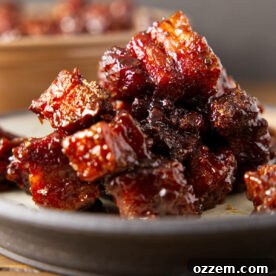
Pork Belly Burnt Ends
Pin
Review Recipe
Equipment You’ll Need
-
Traeger Timberline 1300 Pellet Grill (or any smoker)
-
Thermoworks Thermapen ONE (instant-read thermometer)
-
John Boos Maple Butcher Block (or large cutting board)
-
New West 12″ Chef Knife (or any sharp chef’s knife)
-
Large Baking Dish or Aluminum Pan
-
Wire Rack
-
Large Mixing Bowl
Ingredients
1x2x3x
- 5 pounds Pork Belly, skinless and ideally with a good fat-to-meat ratio
- ½ cup Pork Rub, your favorite savory and slightly sweet blend
- 1 cup BBQ Sauce, sweet and tangy style works best
- ½ cup Honey, or maple syrup for a different sweetness
- ¼ cup Unsalted Butter, cut into pats for even melting
- (Optional) 1:1 mixture of Apple Juice and Apple Cider Vinegar for spritzing
Instructions
-
Prepare Pork Belly: Carefully trim any remaining tough skin from the pork belly, if present. While you want to remove hard, thick sections of fat that won’t render, avoid trimming off too much fat, as it’s essential for flavor and moisture.
-
Slice and Season: Slice the pork belly into uniform 1″ to 2″ cubes. Place the cubes in a large mixing bowl, pour the pork rub over them, and toss thoroughly until each piece is evenly coated in seasoning.
-
First Smoke (Bark Formation): Arrange the seasoned pork belly cubes on a wire rack set over a baking sheet. Place them on your smoker preheated to 250°F (121°C). Smoke for 2-3 hours, or until the internal temperature of the pork reaches 180-190°F (82-88°C) and a desirable bark has formed.
-
Optional Spritzing: For added moisture and flavor, spritz the pork belly with a 1:1 mixture of apple juice and apple cider vinegar every 30-45 minutes during the initial smoking phase.
-
Sauce and Braise Prep: Remove the wire racks from the smoker. Transfer the partially smoked pork belly cubes into a sturdy baking dish or aluminum pan. Pour the BBQ sauce over the pork belly and mix well to ensure all pieces are coated. Distribute the pats of butter on top, then generously drizzle with honey. For extra heat, this is the perfect time to add some hot sauce or red pepper flakes if desired.
-
Second Smoke (Tenderizing): Cover the baking dish tightly with aluminum foil to create a braising environment. Place it back on the smoker at 250°F (121°C) for another 1-1½ hours, or until the pork reaches a super tender internal temperature of 205°F (96°C). The cubes should yield easily to a probe.
-
Rest and Serve: Once tender, remove the pork belly burnt ends from the smoker. Carefully discard any excess liquid or rendered fat from the bottom of the pan to prevent the burnt ends from becoming greasy. Let them rest uncovered for 10-15 minutes to allow the juices to redistribute, then serve them hot and enjoy!
Video
Notes
- Always use a reliable meat thermometer to monitor the internal temperature of the pork while it smokes. The cooking times provided in the recipe card are merely a guide; the actual internal temperature of the pork belly is the most crucial indicator of doneness and tenderness.
- Don’t underestimate the power of a good spritz! Applying a spritz, if you like, consisting of half apple juice and half apple cider vinegar every 30-45 minutes during the initial smoking phase helps keep the pork belly moist and contributes to a beautiful, flavorful bark.
- For optimal caramelization and glaze, consider briefly removing the foil during the last 15-20 minutes of the second smoke, if your burnt ends are not quite as sticky as you’d like. This allows the sauce to thicken and adhere even more.
Nutrition Information
Nutrition information is automatically calculated and should only be used as an approximation. Individual results may vary based on exact ingredients and preparation methods.