

There are few dishes that evoke the true spirit of American barbecue quite like Smoked Pulled Pork. This culinary masterpiece transforms a humble cut of meat into a succulent, flavorful feast, making it a cornerstone of backyard cookouts, tailgating parties, and family gatherings across the nation. Imagine perfectly tender, melt-in-your-mouth pork, infused with a deep, earthy smoke flavor, all brought together with a vibrant, tangy mustard BBQ sauce. This isn’t just a recipe; it’s an experience – a Carolina-inspired combination that guarantees empty plates and requests for seconds, every single time.
If you share my passion for authentic BBQ, you’re in for a treat. Explore some of my other signature recipes that put a unique spin on classic favorites: from the bold flavors of Smokey Jack and Coke Ribs to the irresistible indulgence of Pork Belly Lollipops, or the sweet and savory notes of Cherry Coke Smoked Chicken. Prepare your taste buds for an unforgettable journey into the heart of barbecue excellence!

Table of Contents
- What is Classic Pulled Pork?
- The Star Ingredients for Your Smoked Pulled Pork with Mustard BBQ Sauce
- Preparing Your Pork Shoulder for Perfection
- Seasoning for Superior Flavor
- The Ultimate 2-Step Method for Tender Pulled Pork
- Mastering the Carolina-Inspired Mustard BBQ Sauce
- The Critical Resting Phase
- Crafting the Perfect Smoked Pulled Pork Sandwich
- Final Thoughts
- Frequently Asked Questions:
- More Mouthwatering Smoked Pork Recipes:
- Smoked Pulled Pork with Mustard BBQ Sauce Recipe
What is Classic Pulled Pork?
At its heart, classic smoked pulled pork is a celebration of patience and technique. It involves smoking a specific cut of pork – typically the pork shoulder or pork butt – at a low temperature for an extended period, until the meat becomes incredibly tender, allowing it to be easily shredded or “pulled.” This beloved American BBQ staple, often generously mixed with a complementary BBQ sauce, delivers a rich, smoky, and deeply satisfying experience that truly melts in your mouth.
Historically, pulled pork finds its roots in the Southern United States, where barbecue is more than just cooking; it’s a cultural institution. The tradition of cooking tougher cuts of meat “low and slow” allowed for incredible tenderness and flavor development, transforming an inexpensive cut into a dish fit for royalty. The term “pork butt” might sound confusing, but it actually refers to a section of the pig’s shoulder, specifically the upper part of the front leg. During the colonial era, butchers in New England would pack these less desirable cuts into large barrels known as “butts” for storage and transport, giving rise to the name.
For the absolute best pulled pork, a bone-in pork shoulder is highly recommended. The bone helps to conduct heat evenly throughout the meat during those long hours on the smoker, contributing to a more consistent cook. Furthermore, the bone itself adds flavor and moisture, resulting in a more succulent final product. While boneless options exist, they often cook less uniformly due to their irregular shape once the bone is removed.
A pork shoulder is a substantial cut, typically weighing between 7 to 10 pounds. Its size makes it an economical choice, as a single shoulder can comfortably feed a large gathering of 10 or more people, often leaving delicious leftovers for days to come. The high fat content and connective tissue in this cut are precisely what make it perfect for smoking; the long cooking process breaks down these elements, rendering the fat and converting collagen into gelatin, which imbues the meat with its signature tenderness and juiciness.
The Star Ingredients for Your Smoked Pulled Pork with Mustard BBQ Sauce
Creating exceptional smoked pulled pork with a distinctive Carolina-style mustard BBQ sauce starts with selecting the right, high-quality ingredients. Each component plays a crucial role in building layers of flavor that will leave your guests raving.
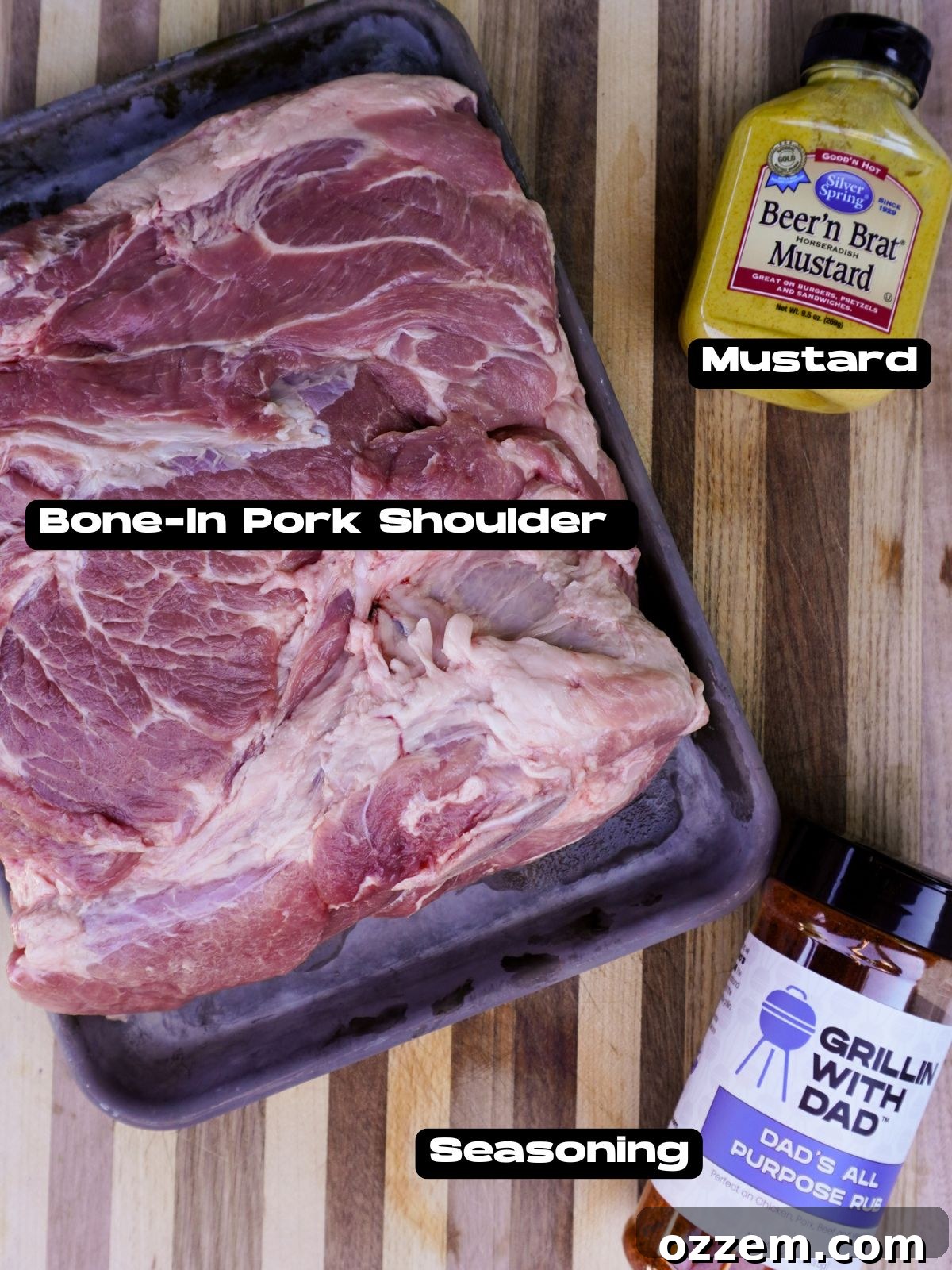
- Pork Shoulder: Aim for a high-quality, bone-in pork shoulder weighing around 7-10 lbs. The bone-in aspect is key for even cooking and enhanced flavor. The size should be chosen based on your guest count, remembering that a larger cut yields more delicious servings.
- Mustard (for binder & sauce): For a truly unique kick, I highly recommend a horseradish mustard. Its pungent, zesty profile acts as an excellent binder for the rub, ensuring it adheres beautifully to the meat, while also injecting a subtle, savory “zing” that elevates the overall dish. This versatile ingredient is also the foundation of our tangy BBQ sauce.
- All-Purpose Seasoning/Rub: A well-balanced all-purpose BBQ rub is essential. Look for one that complements the rich flavor of pork and harmonizes with the bold notes of mustard. A good rub typically contains a blend of salt, pepper, garlic powder, onion powder, paprika, and sometimes a touch of brown sugar or chili powder.
- Honey: This natural sweetener plays a vital role in balancing the sharp tanginess of the mustard in our BBQ sauce, adding a beautiful depth and richness.
- Brown Sugar: Like honey, brown sugar contributes sweetness and a molasses-like richness to the sauce, helping to round out the flavors and create that perfect sweet-and-tangy balance.
- Ketchup: Ketchup provides a classic, familiar base for the BBQ sauce, contributing body, a touch of acidity, and fundamental tomato flavor.
- Apple Cider Vinegar: A cornerstone of Carolina-style BBQ sauces, apple cider vinegar delivers a bright, sharp tang that cuts through the richness of the pork and the sweetness of the other sauce ingredients, creating a perfectly balanced flavor profile.
- Worcestershire Sauce: Just a touch of Worcestershire sauce adds a complex layer of umami, depth, and savory notes, tying all the diverse ingredients of the sauce together into a cohesive, irresistible blend.
Preparing Your Pork Shoulder for Perfection
Before your pork shoulder even sees the smoker, a few crucial preparation steps will lay the groundwork for a successful and incredibly delicious pulled pork. Taking your time here will significantly impact the final texture and flavor.
First, carefully remove the large pork shoulder from its packaging. It’s absolutely essential to pat it thoroughly dry with paper towels. Do NOT wash the pork under running water, as this can spread bacteria around your kitchen. Patting it dry not only makes the meat easier to handle but also helps the seasoning adhere much better, creating that fantastic bark we all crave.
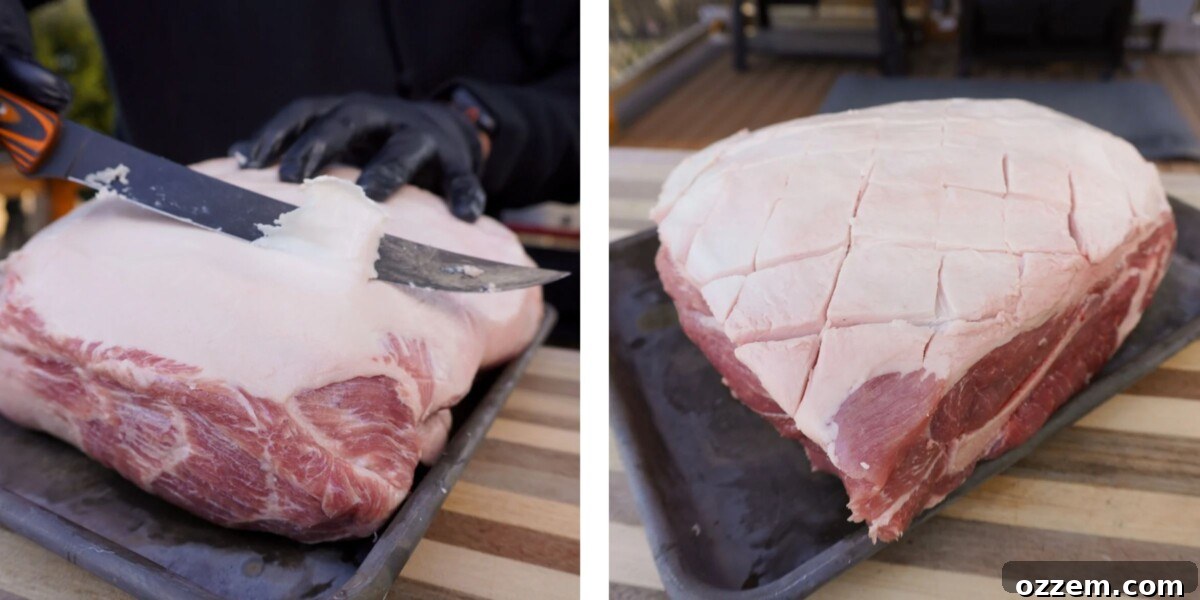
Next, turn your attention to the fat cap. While some fat is desirable for moisture and flavor, an excessively thick fat cap won’t fully render down during cooking, leading to unappetizing fatty bites in your pulled pork. Using a sharp knife, slowly and carefully trim down the fat cap to about a 1/4 inch thickness. Take your time, removing small strips at a time to avoid cutting too deep into the meat. This optimal fat layer will render beautifully, basting the meat from above and contributing to its juiciness without being greasy.
Once the fat cap is trimmed to perfection, it’s time for scoring. Using your knife, gently score the fat cap in a crisscross or checkered pattern. Ensure you cut through the fat but not deeply into the meat itself. Scoring serves two vital purposes: it allows the dry rub and smoke to penetrate deeper into the fat and underlying meat, infusing every bite with flavor, and it also helps the fat render more efficiently, resulting in that delightful, savory bark.
Seasoning for Superior Flavor
With your pork shoulder expertly trimmed and scored, the next critical step is seasoning, which will build the foundation of flavor for your pulled pork. This stage is where you truly begin to transform the raw meat into a masterpiece.
Before applying the dry rub, I always start with a binder. For this specific recipe, a robust horseradish mustard is my go-to choice. I personally use Silver Spring Foods’ horseradish mustard, which offers a bold, zesty flavor that adds a fantastic kick. The mustard not only ensures your seasoning adheres evenly and effectively to the pork but also imparts an extra layer of savory depth and a subtle, delightful tang that perfectly complements the rich pork flavor.
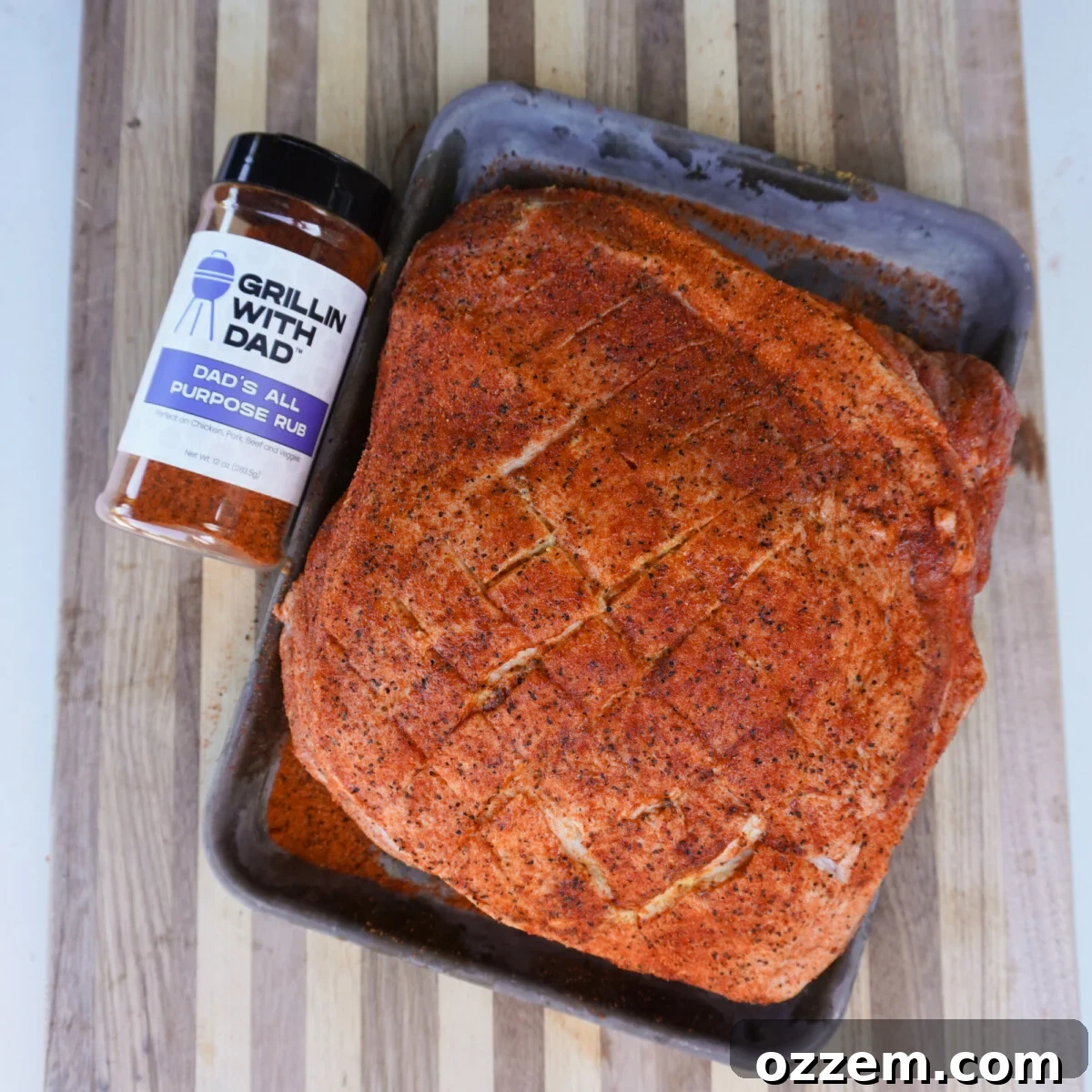
For the primary seasoning, I recommend using a high-quality all-purpose rub, such as Dad’s All Purpose Rub. A good rub should offer a balanced blend of savory, sweet, and smoky notes that enhance the natural taste of the pork without overpowering it. When it comes to seasoning a large cut like a pork shoulder, remember this golden rule: DON’T BE SHY! This is a substantial piece of meat, and insufficient seasoning will result in bland pulled pork. Be generous and ensure every surface of the pork shoulder is thoroughly coated.
To apply the rub, pat it firmly onto the meat rather than rubbing it in. This technique helps the spices adhere better and prevents them from simply falling off, ensuring an even and consistent coating. Once seasoned, allow the pork shoulder to rest at room temperature for approximately 30 minutes. This crucial “sweating” period allows the surface of the meat to warm slightly and the spices to begin dissolving, opening up the pores of the meat to absorb all those wonderful flavors. This step is a small detail that makes a big difference in the final taste of your pulled pork.
The Ultimate 2-Step Method for Tender Pulled Pork
Achieving truly perfect pulled pork is a testament to patience and a specific cooking methodology. The secret lies in a “low and slow” approach, allowing the meat’s tough connective tissues to gradually break down and render, transforming it into that coveted, fall-apart tender consistency. This two-step process ensures maximum smoke flavor and unparalleled tenderness.
The pork shoulder contains a significant amount of fat and collagen. These elements require ample time at a consistent, low temperature to slowly render and convert into gelatin. This conversion is what yields the incredibly juicy and tender texture of pulled pork. Rushing the process will result in dry, tough meat. Patience, truly, is your most important ingredient here.
Step 1 – Smoke Low and Slow: Building the Bark and Flavor Foundation
Begin by preheating your grill or smoker to a consistent 250 degrees Fahrenheit (121°C). The key is to set it up for indirect heat, ensuring the pork cooks gently without direct exposure to flames. Whether you use a charcoal smoker, pellet grill, or an offset smoker, the target temperature and general principles remain the same. For optimal smoke flavor, consider using hardwoods like hickory, oak, or apple wood chips or chunks.
Once your smoker is stable at 250°F, place the seasoned pork shoulder directly on the grates. Close the lid and let the magic happen. For the first 4 hours, resist the urge to peek! Opening the smoker releases heat and smoke, extending the cooking time and hindering the formation of a beautiful bark. Allow the smoke to deeply penetrate the meat and the bark to begin developing undisturbed.
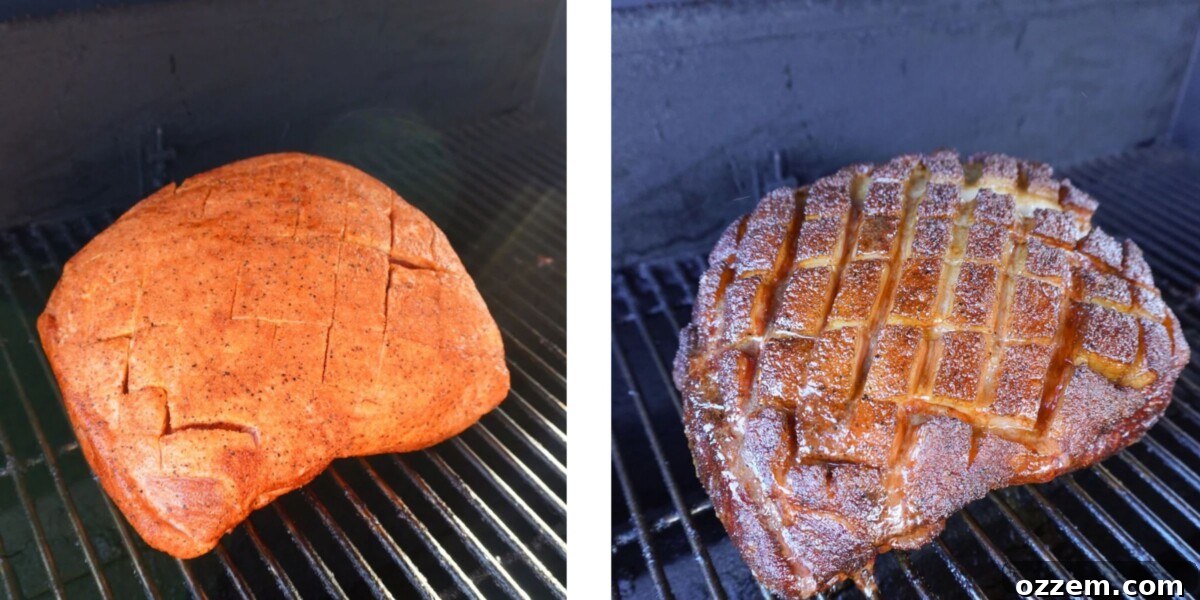
After the initial 4 hours, you can start checking the bark. If it appears to be drying out, fill a spray bottle with about 1/2 cup of apple cider vinegar and spritz the pork every hour or so. This light mist helps keep the surface moist, prevents the bark from becoming too hard or burnt, and contributes a subtle tangy flavor that enhances the crust development. This spritzing technique is crucial for building a deliciously savory and robust bark.
The total cooking time will vary depending on the size of your pork shoulder, but a good estimate is approximately 1.5 hours per pound. This means a 7-9 pound shoulder can take anywhere from 7 to 9 hours for this initial smoking phase. During this time, the internal temperature of the pork will slowly climb, typically reaching around 170-175 degrees Fahrenheit (77-79°C). This is also often when the “stall” occurs, where the internal temperature plateaus due to evaporative cooling. Don’t worry; this is normal and part of the low-and-slow process!
Step 2 – Wrapping for Ultimate Tenderness: The “Texas Crutch”
The second stage of our cooking process is designed to push the meat past the stall, tenderize it to an incredible degree, and infuse it with even more moisture and flavor. This is often referred to as the “Texas Crutch” among BBQ enthusiasts.
Once your smoked pork shoulder reaches an internal temperature of approximately 170-175 degrees Fahrenheit (77-79°C) and has developed a rich bark, it’s time to transfer it. Carefully move the pork from the grill grates into a sturdy aluminum pan or onto a large sheet of heavy-duty aluminum foil. Here’s where we add an extra layer of flavor and moisture: pour about a cup of apple juice into the pan or over the pork before sealing. The apple juice will steam the meat, keeping it incredibly moist and adding a subtle fruity sweetness.
Now, tightly seal the entire pan with another sheet of aluminum foil, or if using just foil, wrap the pork completely and securely. This wrap creates a moist, steamy environment that helps break down the remaining connective tissue, ensuring the meat becomes incredibly tender without drying out.
Increase your grill or smoker temperature to 275 degrees Fahrenheit (135°C) and return the wrapped pork to the smoker. Continue cooking for another 2-3 hours, or until the internal temperature reaches the target range of 200-205 degrees Fahrenheit (93-96°C). At this higher temperature, the pork will power through the stall and reach its optimal tenderness much faster.
Recipe Tip
Once the pork shoulder is wrapped, it will no longer absorb significant smoke flavor. This means you can comfortably finish the cooking process in a conventional oven, set to 275°F, if you prefer, freeing up your smoker for other tasks or saving on fuel.
The most crucial test at this stage isn’t just temperature, but tenderness. Carefully unwrap a corner of the foil (watch out for steam!) and gently insert a thermometer probe or a fork into the thickest part of the meat. If it slides in with very little resistance, feeling like “a hot knife through butter,” then your pork is perfectly done. If you encounter any resistance, re-wrap it tightly and continue cooking, checking again every 30 minutes until it achieves that desired fork-tender consistency. Tenderness is absolutely key for shreddable pulled pork. Many common mistakes happen when pork is removed too soon, resulting in a tough, chewy product. Be patient and trust the probe tenderness test!
The final internal temperature for perfectly smoked pulled pork can range anywhere from 200 to 205 degrees Fahrenheit (93-96°C). This range indicates that the collagen has fully broken down, yielding that incredible, melt-in-your-mouth texture.
Mastering the Carolina-Inspired Mustard BBQ Sauce
While the perfectly smoked pork is undoubtedly the star, the vibrant, tangy Carolina-inspired Mustard BBQ Sauce is the co-star that truly makes this recipe shine. This sauce is a hallmark of South Carolina barbecue, known for its bright, zesty character that beautifully complements the rich, smoky pork.
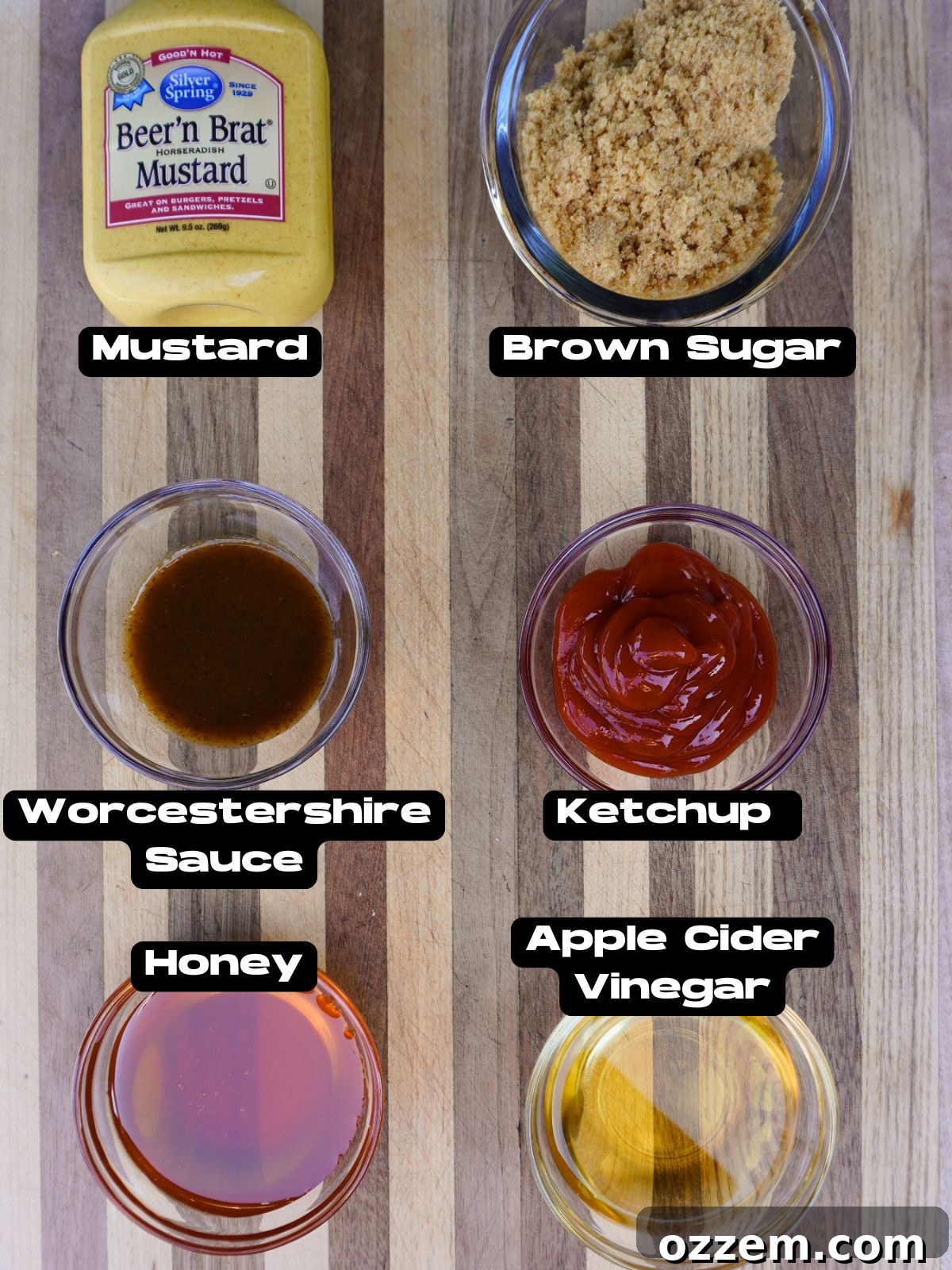
Crafting this incredible sauce is surprisingly simple. In a medium saucepan, combine the horseradish mustard (the same bold mustard used as your binder!), honey, brown sugar, apple cider vinegar, Worcestershire sauce, ketchup, and a tablespoon of your all-purpose seasoning. Each ingredient plays a crucial role: the mustards provide the characteristic tang and subtle heat, honey and brown sugar add sweetness to balance the acidity, apple cider vinegar brightens the entire profile, ketchup gives it body, and Worcestershire sauce adds a deep umami backbone.
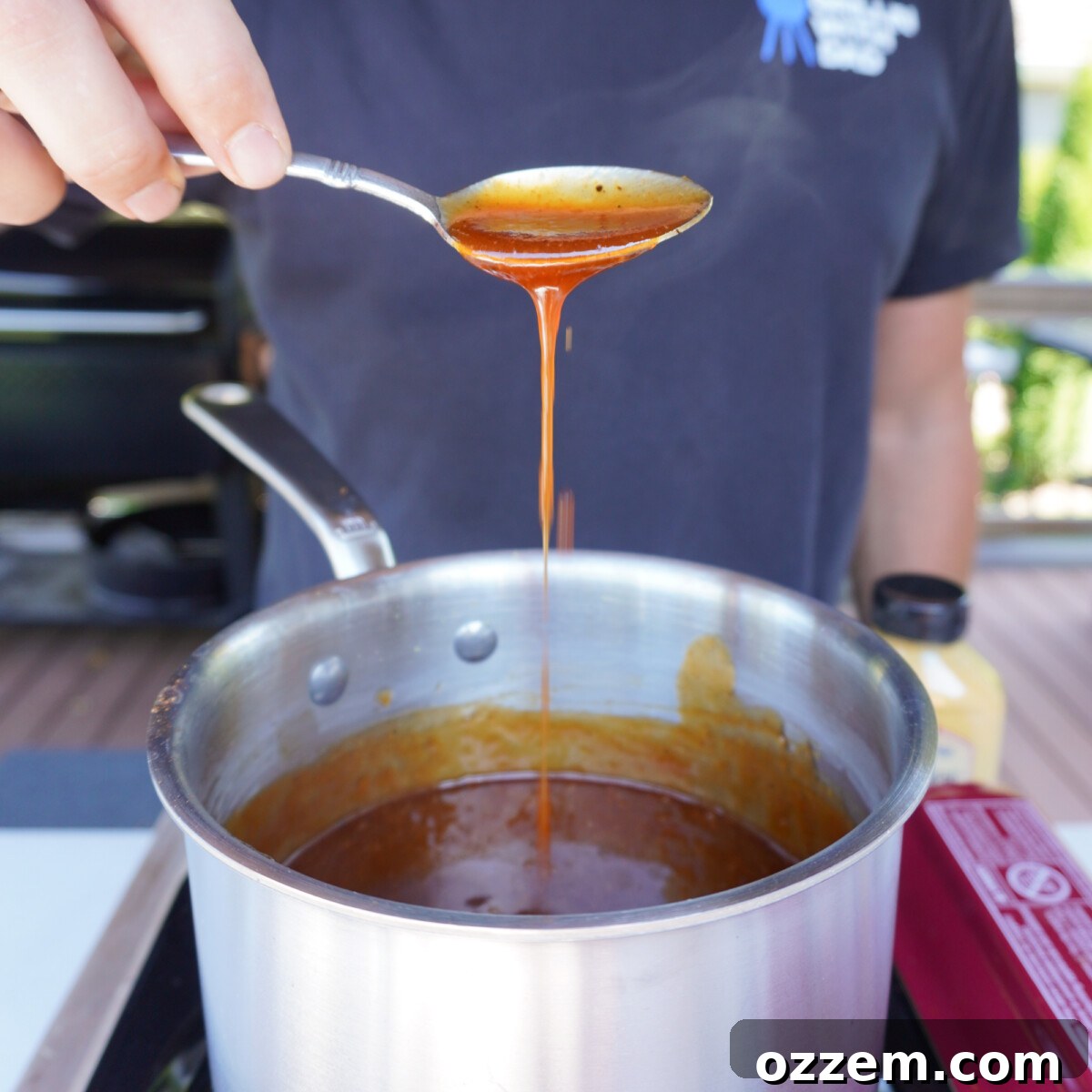
Whisk all the ingredients together until well combined. Place the saucepan over low heat and bring the mixture to a gentle simmer. Allow it to simmer for about 10 minutes, stirring occasionally. During this time, the flavors will meld and deepen, and the sauce will begin to thicken to a perfect consistency. You want it to be thick enough to cling to the pork but still pourable.
This mustard BBQ sauce is so incredibly versatile and delicious, it’s not just for pulled pork! I’ve used it on smoked ribs with outstanding results. Feel free to adjust the sweetness or tanginess to your personal preference by adding a little more honey, brown sugar, or apple cider vinegar.
The Critical Resting Phase
You’ve meticulously smoked your pork shoulder for hours, achieving that perfect fork-tender texture. Now, as tempting as it is to dive right in, there’s one final, absolutely critical step that cannot be skipped: resting the pulled pork. This phase is just as important as the smoking itself in ensuring a truly juicy and flavorful end product.
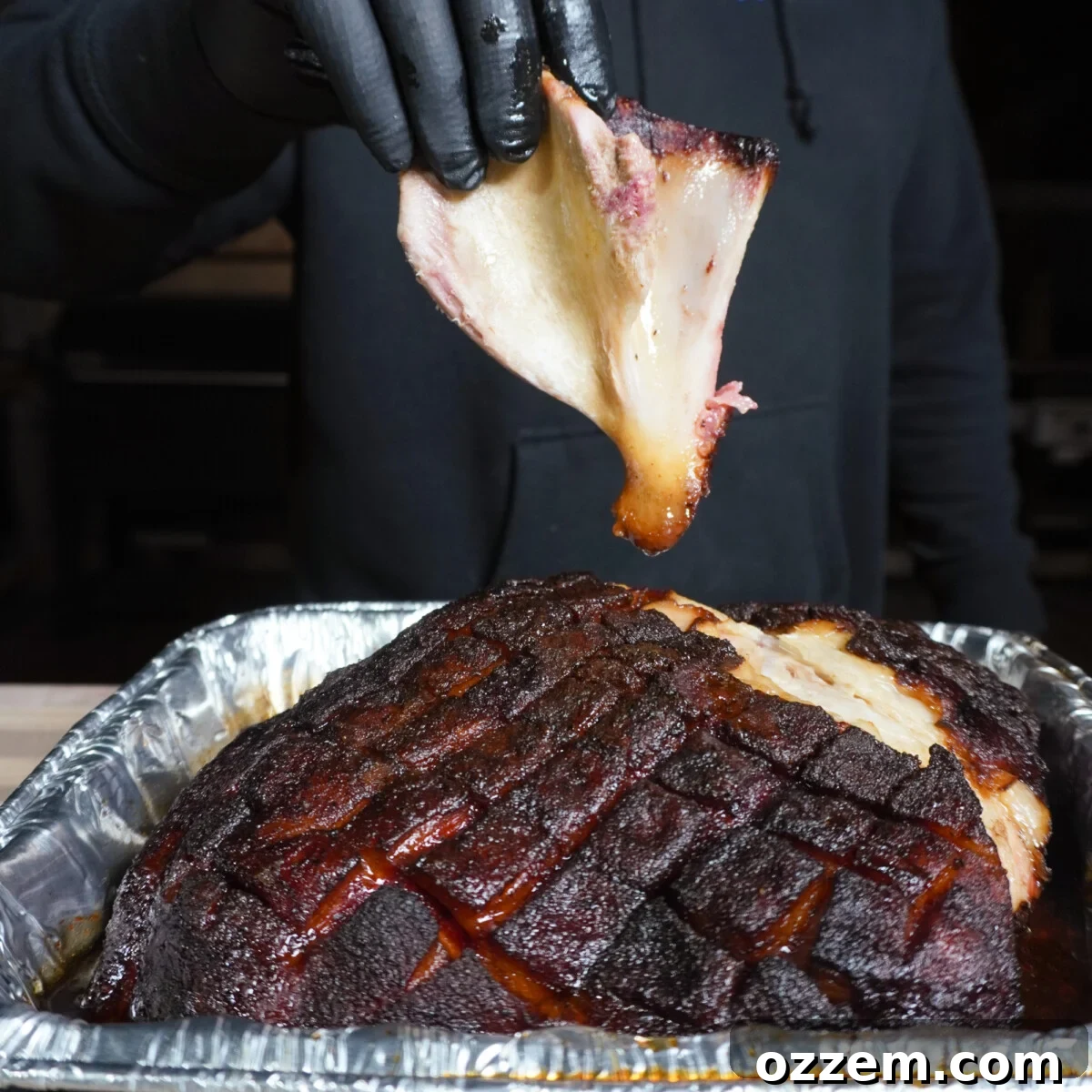
When the pork is pulled from the smoker, its internal temperature is high, and the muscle fibers are tight, holding onto their juices. Cutting or shredding the meat immediately would cause these precious juices to escape, leaving you with dry pulled pork. Resting allows the muscle fibers to relax and reabsorb these juices, resulting in a significantly more moist and flavorful meat.
To rest the pork, keep it wrapped in its aluminum foil (or in the pan, sealed with foil) and transfer it to an insulated cooler or a turned-off oven. The goal is to keep it warm without actively cooking it. Allow the pork to rest for at least 1 hour, or even up to 2-3 hours for a larger shoulder. Remember, this is a substantial piece of meat that has endured hours of cooking, so it needs adequate time for the internal temperatures to equalize and the juices to redistribute evenly throughout.
Once rested, the first satisfying step is to remove the bone. If your pork shoulder was perfectly cooked to the correct tenderness, the bone should slide out effortlessly and cleanly, with virtually no resistance. This is a clear indicator of success!
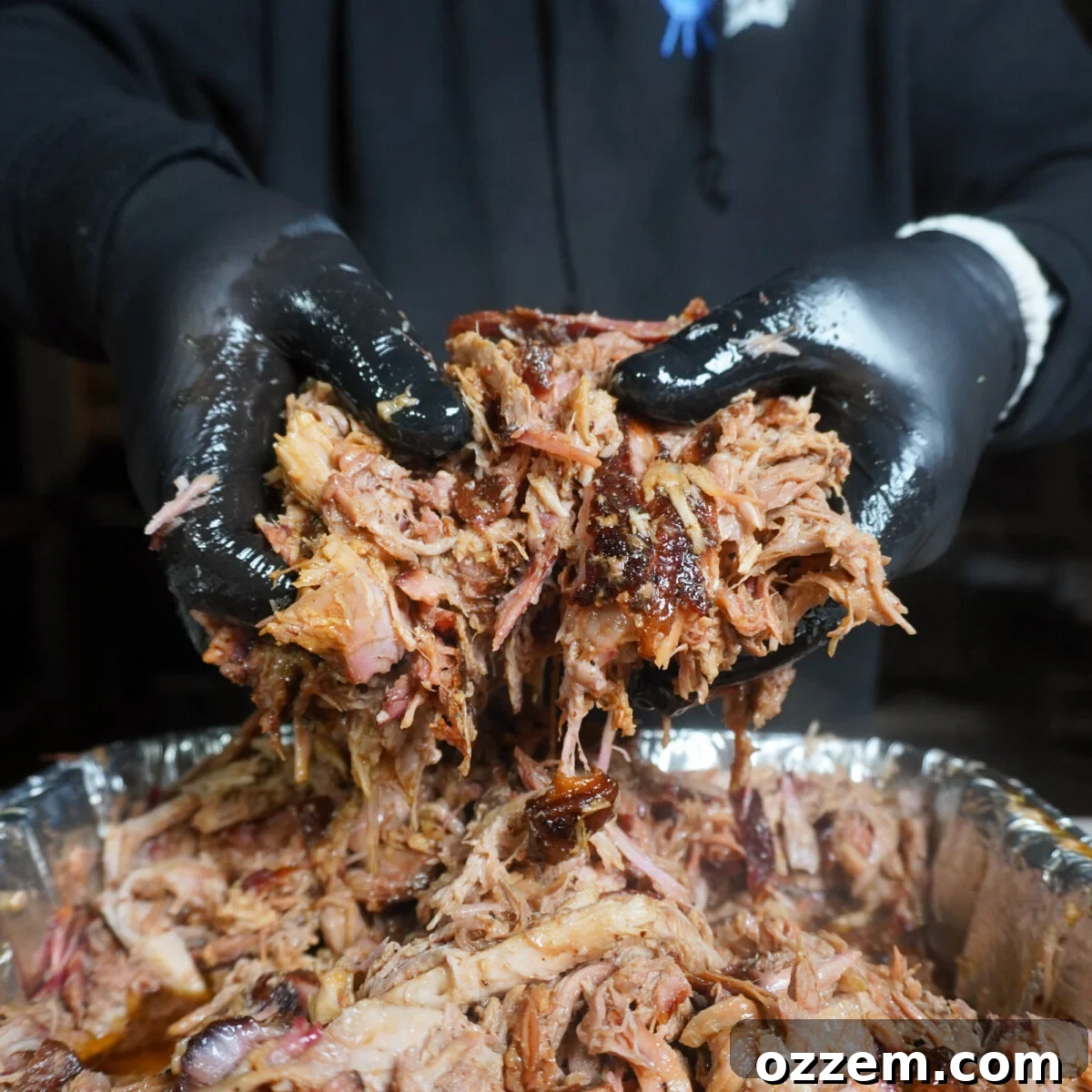
Keep the now bone-free, classic smoked pulled pork in its aluminum pan, which will contain all the delicious rendered juices. Using heat-resistant gloves (I find glove liners under nitrile gloves offer excellent protection), begin to shred the meat. You can use your hands, two forks, or even a specialized shredding tool. As you shred, mix the pork with all those flavorful rendered juices at the bottom of the pan. These juices are liquid gold, adding incredible moisture and intensifying the pork’s natural flavor.
Finally, pour about half of your freshly made Carolina-inspired mustard BBQ sauce over the shredded pork. Mix it thoroughly, ensuring every strand of tender pork is coated in that irresistible tangy, sweet, and savory goodness. Reserve the remaining sauce for serving on the side.
Crafting the Perfect Smoked Pulled Pork Sandwich
With the pork shoulder perfectly rested, shredded, and infused with our zesty mustard BBQ sauce, the moment you’ve been waiting for has arrived: it’s time to assemble the BEST Smoked Pulled Pork with Mustard BBQ Sauce sandwiches! The beauty of this dish is its inherent simplicity, requiring minimal fuss to create maximum impact.
For the ultimate sandwich experience, there’s no need for elaborate toppings or complex additions. The star is truly the meat and the sauce. The choice of bread, however, can elevate the experience significantly. For this particular recipe, I highly recommend using pretzel buns. Their unique flavor profile – a subtle salty crust with a soft, chewy interior – provides the perfect counterpoint to the savory, tangy pulled pork. Their ideal size and robust structure also ensure they can hold a generous helping of meat without falling apart.
To assemble, simply open a pretzel bun and pile on a substantial, generous heaping of the saucy, shredded pulled pork. Don’t be shy! For an extra burst of flavor and a satisfying crunch, layer a few crisp pickle chips on top. The bright acidity of the pickles cuts through the richness of the pork and complements the tang of the mustard sauce beautifully. Then, for those who love extra sauce (and who doesn’t?), drizzle a little more of that Carolina-inspired mustard BBQ sauce directly over the pork.
Take that first glorious bite and prepare for an explosion of flavors and textures. You’ll experience the incredible tenderness of the smoked pork, the complex savoriness of the spices, and the irresistible tangy kick from the mustard BBQ sauce, all perfectly encased in a soft, flavorful pretzel bun. It’s a harmonious blend that creates a perfect bite every single time, showcasing the best of classic barbecue with a delightful Carolina twist.

Whether you’re orchestrating a lively backyard cookout, cheering on your favorite team at a tailgate party, or simply yearning for the authentic taste of true barbecue at home, this smoked pulled pork with mustard BBQ sauce is a dish that consistently delivers. Its smoky depth, tangy zest, and utterly addictive quality will make you proud to fire up your smoker and share this culinary gem with everyone you know.
Final Thoughts
There’s a special kind of magic that happens when you combine the art of low-and-slow smoking with a perfectly balanced, tangy sauce. This Smoked Pulled Pork with Mustard BBQ Sauce recipe is a shining example of that magic, consistently delivering incredible results that impress even the most discerning barbecue connoisseurs. The journey from a humble pork shoulder to a pile of exquisitely tender, flavor-packed meat is a rewarding one, and the final dish is nothing short of spectacular.
Whether you’re diligently planning an epic summer barbecue, assembling a game-day feast to remember, or simply aiming to treat your family to an extraordinary homemade meal, this recipe always comes through. The meticulous low and slow smoking process ensures every strand of pork is incredibly juicy and tender, while the vibrant Carolina-style mustard BBQ sauce provides the ideal counterpoint—a delightful symphony of sweet, spicy, and savory notes that dance on the palate. Serve it proudly piled high on soft buns, nestled alongside your favorite classic sides like coleslaw or baked beans, or even enjoyed straight from the platter. No matter how you choose to savor it, this smoked pulled pork is destined to be the undisputed star of your table, creating lasting memories and fulfilling cravings for authentic, soulful barbecue.
Frequently Asked Questions:
While not strictly mandatory, a bone-in pork shoulder is highly recommended for optimal results. The bone helps distribute heat more evenly throughout the meat during the long smoking process, leading to a more consistent cook and enhanced moisture retention. Additionally, the bone itself contributes valuable flavor to the meat. Boneless pork shoulders, due to their irregular shape once the bone is removed, can sometimes cook unevenly, potentially resulting in drier or overcooked sections. If you can, always opt for bone-in.
Both butcher paper and aluminum foil have their advocates for the wrapping stage (the “Texas Crutch”). My personal preference leans towards using aluminum foil, especially when aiming for maximum moisture and tenderness. Foil creates a much tighter seal, trapping all the internal steam and rendered juices, which effectively braises the meat and prevents it from drying out. This method ensures an incredibly succulent and juicy pulled pork. When using foil, I often place the pork in an aluminum pan and then seal the top with foil for extra containment of those precious liquids. Butcher paper, on the other hand, is more breathable, allowing some moisture to escape, which can result in a slightly firmer bark, though it may compromise a bit on overall juiciness compared to foil.
For pulled pork, you want hardwoods that provide a robust, yet balanced smoke flavor. Classic choices include hickory, which offers a strong, bacon-like flavor; oak, a medium-strength smoke that’s versatile and pairs well with pork; and apple or cherry wood, which impart a milder, slightly fruity smoke. You can use a single type of wood or blend them for a more complex flavor profile. Avoid overly strong woods like mesquite, which can sometimes overpower the delicate pork flavor if used exclusively.
The most reliable indicator for perfectly done pulled pork is not just internal temperature, but “probe tenderness.” While the target internal temperature is usually between 200-205°F (93-96°C), the meat must feel like “a hot knife through butter” when a probe thermometer or fork is inserted. This means there should be virtually no resistance. If the probe meets resistance, the connective tissues haven’t fully broken down, and the pork needs more time, regardless of the temperature reading. Continue cooking and checking every 30 minutes until that silken tenderness is achieved.
More Mouthwatering Smoked Pork Recipes:
Pork
Dr. Pepper Pulled Pork
Pork
Classic Pulled Pork
Pork
Cuban Sandwich
Pork
Pulled Pork Nachos
If you tried these Smoked Pulled Pork with Mustard BBQ Sauce or any other recipe on my blog, please leave a 🌟 star rating and let me know how it went in the📝 comments. I love hearing from you!

Smoked Pulled Pork with Mustard BBQ Sauce
Ingredients
Pulled Pork Ingredients
- 8 lbs Bone in pork shoulder
- 3 tbsp All purpose seasoning
- 2 tbsp Horseradish mustard
Mustard Sauce Ingredients
- 3/4 cup Horseradish mustard
- 1/2 cup Honey
- 1/2 cup Apple cider vinegar
- 1/4 cup Brown sugar
- 2 tbsp Worcestershire sauce
- 2 tbsp Ketchup
- 1 tbsp All purpose seasoning
Instructions
-
Remove the pork shoulder from its packaging and pat it thoroughly dry with paper towels.
-
Carefully trim the fat cap, leaving approximately 1/4 inch thickness. Score the fat cap in a checkered pattern to allow for better flavor penetration and rendering.
-
Generously coat the entire pork shoulder with horseradish mustard, using it as a binder. Then, season heavily with your all-purpose seasoning, patting it firmly onto all surfaces of the meat. Allow it to rest at room temperature for 30 minutes.
-
Preheat your grill or smoker to a stable 250 degrees Fahrenheit (121°C), setting it up for indirect heat. Place the seasoned pork shoulder directly on the grates.
-
For the first 4 hours, leave the pork undisturbed to absorb smoke and develop bark. After 4 hours, begin to spritz the pork every hour with apple cider vinegar to keep it moist and enhance bark development.
-
Continue smoking until the internal temperature of the pork reaches 170-175 degrees Fahrenheit (77-79°C). This typically takes 7-9 hours depending on the size.
-
Carefully transfer the pork shoulder from the grill and place it into a sturdy aluminum pan or onto a large sheet of heavy-duty foil. Pour 1 cup of apple juice over the pork.
-
Tightly wrap the pan (or pork if using foil only) with aluminum foil, sealing it completely. Increase the grill temperature to 275 degrees Fahrenheit (135°C).
-
Return the wrapped pork to the smoker (or oven) and continue cooking until the internal temperature reaches around 200-205 degrees Fahrenheit (93-96°C).
-
Crucially, check for probe tenderness: the probe should slide into the meat with minimal to no resistance. If not, re-wrap and continue cooking, checking every 30 minutes until it’s fork-tender.
-
Once tender, remove the wrapped pork from the grill and let it rest in an insulated cooler or a turned-off oven for a minimum of 1 hour. This allows the juices to redistribute.
-
While the pork rests, prepare the Carolina-inspired mustard BBQ sauce: In a saucepan, combine horseradish mustard, honey, brown sugar, apple cider vinegar, Worcestershire sauce, ketchup, and 1 tbsp of all-purpose seasoning.
-
Mix all the sauce ingredients together and simmer over low heat for about 10 minutes, stirring occasionally, until the sauce thickens to your desired consistency.
-
After resting, remove the bone from the pork (it should slide out easily). Using heat-resistant gloves, shred the meat in the pan, mixing it with all the delicious rendered juices. Pour about half of the prepared mustard sauce over the pulled pork and mix it thoroughly.
-
Assemble your ultimate Smoked Pulled Pork sandwich on pretzel buns with a generous pile of the saucy pork and a few pickle chips. Enjoy!
Notes
- For the best results, always try to purchase a bone-in pork shoulder. The bone assists in cooking the meat more evenly and adds to the overall flavor and moisture.
- During the initial smoking phase, resist the urge to peek inside the smoker for the first 4 hours. Consistent temperature and uninterrupted smoke absorption are key to developing a great bark. Only after this initial period should you start checking and spritzing if needed.
- Once the pork shoulder is wrapped (the “Texas Crutch” phase), it will no longer absorb significant smoke flavor. At this stage, it is perfectly acceptable and convenient to finish the cook in a conventional oven set to the same temperature (275°F) if you prefer.
- Tenderness is the ultimate indicator of doneness, more so than internal temperature alone. The final temperature on truly fork-tender pulled pork typically ranges between 200 to 205 degrees Fahrenheit (93-96°C). However, the critical test is when a probe or fork slides into the meat with virtually no resistance, like “a hot knife through butter.” If you feel resistance, the meat is not yet done, and removing it too soon will result in dry and tough pulled pork. Be patient and trust the tenderness test!
Nutrition
Like this recipe? Rate and comment below!