
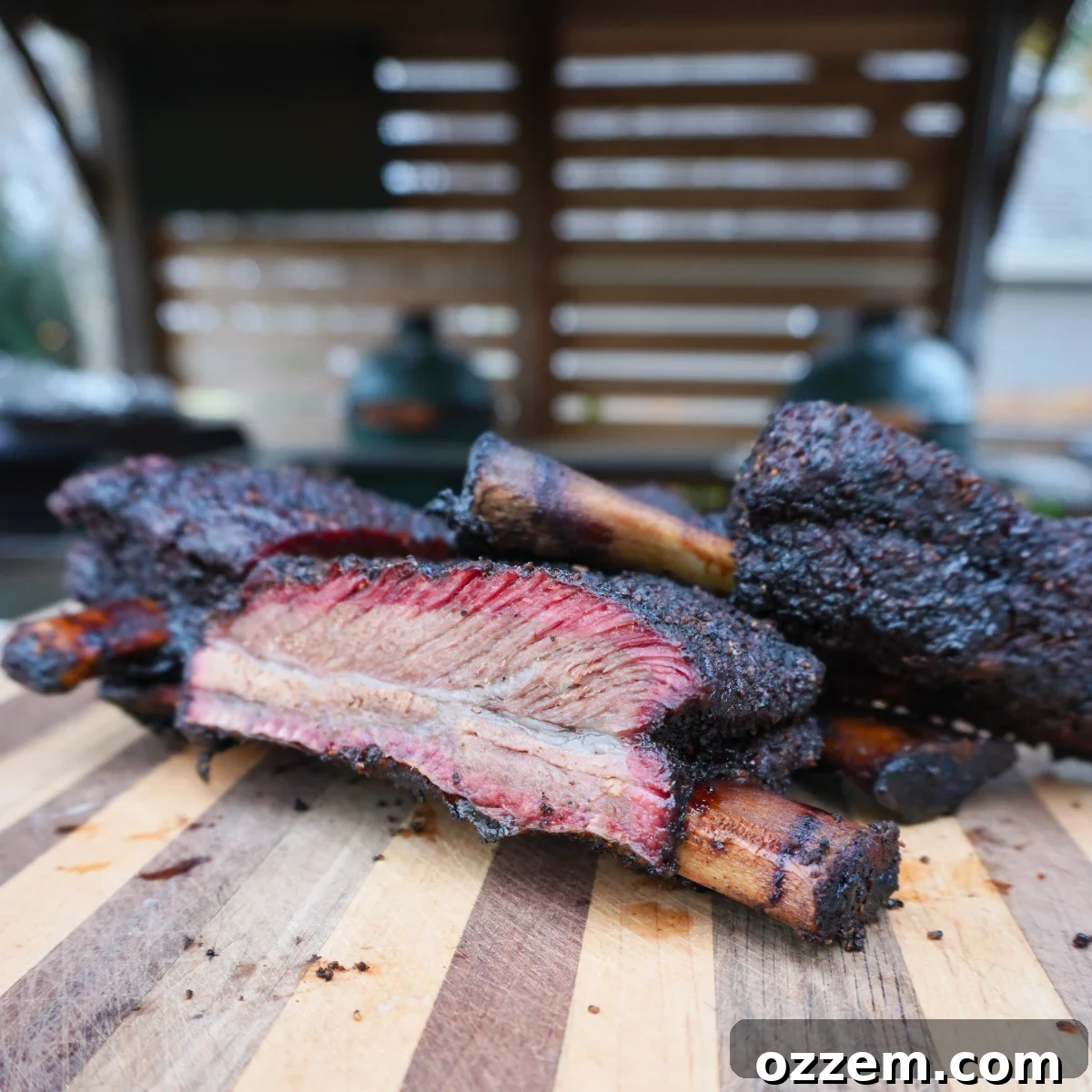
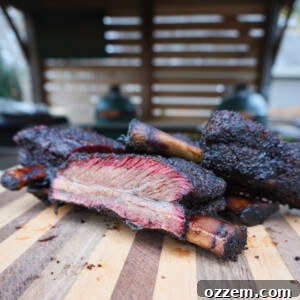
Experience the pinnacle of backyard barbecue with these incredible Smoked Beef Short Ribs. Perfectly cooked on a pellet grill, these ribs emerge astonishingly tender, bursting with rich, beefy flavor, and adorned with a desirable smoky bark. While reminiscent of a full brisket in their luxurious taste and texture, these short ribs offer a more manageable and quicker smoking experience, typically ready in just 6 to 8 hours. If you’re a devotee of perfectly smoked brisket, prepare to be amazed; these short ribs are an absolute game-changer and a must-try for your next cookout.
For those eager to master the art of smoking larger cuts, be sure to explore my foolproof smoked brisket method, guaranteed to deliver succulent results every time.
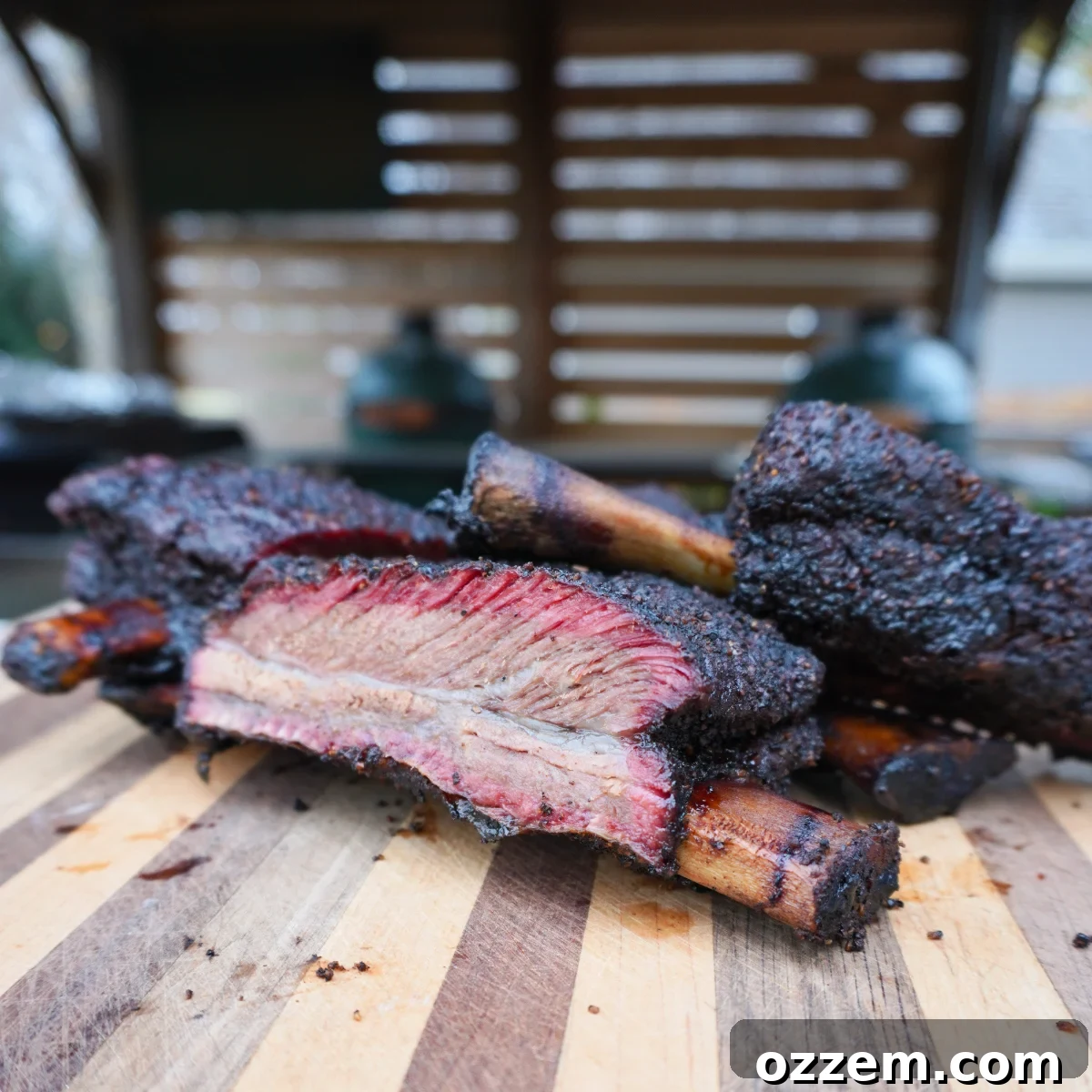
Table of Contents
- What Are Beef Short Ribs?
- Sourcing the Best Beef Short Ribs
- Step 1: Prepare and Season Your Beef Short Ribs
- Step 2: The Smoking Process – Low and Slow Perfection
- The Critical Resting Phase for Ultimate Juiciness
- Slicing and Serving Your Masterpiece
- Frequently Asked Questions About Smoked Beef Short Ribs
- More Delicious Rib Recipes to Try
- Smoked Beef Short Ribs Recipe Card
What Are Beef Short Ribs? Understanding Your Cut
Beef short ribs are a highly prized cut of beef renowned for their intense flavor and melt-in-your-mouth tenderness when cooked properly. They originate from the plate, chuck, brisket, or rib sections of a steer, with the “beef plate short ribs” (often called “dinosaur ribs”) being the most sought-after for smoking. These particular ribs come in large, meaty racks, typically containing three to four bones, each five to eight inches long and three to five inches thick.
What makes short ribs so special is their generous marbling – intricate streaks of fat woven throughout the muscle – combined with a significant amount of connective tissue. During the long, slow cooking process, this connective tissue breaks down into gelatin, infusing the meat with moisture and creating that characteristic succulent, fall-off-the-bone texture. The rich fat content renders slowly, basting the meat from within and contributing to an unparalleled, robust beefy flavor that stands out in any BBQ spread.
It’s crucial to understand the distinction between beef short ribs and other rib cuts. While beef back ribs are often shorter, flatter, and have less meat, hugging closer to the spine, short ribs are meaty, long, and often curved. Back ribs typically yield less meat because most of the muscle is harvested as ribeye steaks, leaving only the intercostal meat between the bones. Short ribs, by contrast, are harvested specifically for their ample muscle and rich fat, making them a more substantial and flavorful option for smoking.
Sourcing the Best Beef Short Ribs for Smoking
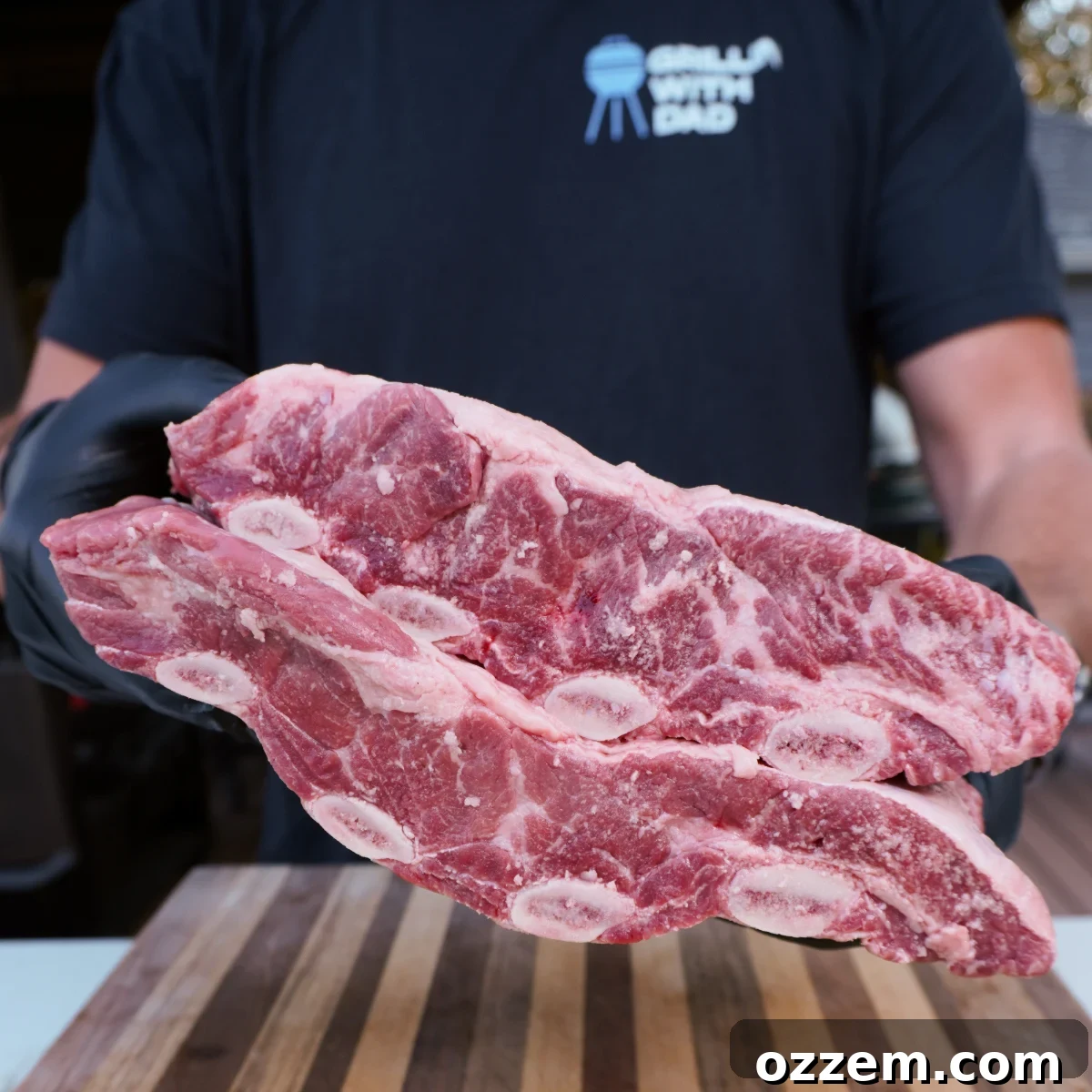
Finding the right cut of beef short ribs is perhaps the most critical step in achieving BBQ perfection. Many grocery stores will unfortunately slice beef ribs into thin strips, often labeled as “flanken-style” or “Korean-style” short ribs, which are not suitable for low-and-slow smoking. What you need are full, untrimmed racks of beef plate ribs, often referred to as “dinosaur ribs” due to their impressive size.
Your best bet is to call local butcher shops and ask specifically for “beef plate ribs” or “uncut beef short ribs.” A good butcher understands the difference and can either stock them or order them for you. Don’t be shy about discussing your smoking plans; they might offer valuable advice. In some areas, specialty meat stores, such as Wild Fork, are excellent resources for high-quality, specific cuts of meat like these. Look for ribs with good marbling, a deep red color, and a consistent layer of meat across the top of the bones.
Step 1: Prepare and Season Your Beef Short Ribs
Proper preparation is key to developing that coveted smoky bark and ensuring a tender interior. A rack of beef short ribs, much like pork ribs, will have a meaty side and a bone side. Here’s how to get them ready:
Trimming the Fat
Begin by inspecting the meaty side of the ribs. You’ll likely find a thick cap of fat. It’s important to remove most, if not all, of this excess fat. While some fat is good for flavor, too much will prevent your rub from penetrating the meat and inhibit the formation of a beautiful, flavorful bark – the delicious crust that develops on the surface during smoking. Trim carefully, exposing as much of the underlying muscle as possible without gouging the meat.
Removing the Membrane
Next, turn the ribs over to the bone side. Here, you’ll typically find a thick, silvery membrane. While some pitmasters choose to leave it on, I highly recommend removing it. This membrane can become tough and chewy when cooked, preventing seasonings from reaching the meat and hindering the breakdown of connective tissues. To remove it, slide a butter knife or a thin spatula under the membrane on one end of the rack, then use a paper towel for grip and pull it off in a single, satisfying sheet.
Applying the Binder and Rub
Before your chosen seasoning touches the meat, a binder is essential. A binder helps the rub adhere evenly to the ribs and creates a moist surface that promotes bark development. My go-to binder is hot sauce – don’t worry, the heat dissipates during the long cook, leaving behind no noticeable spice but a hint of tanginess that complements the beef. Other popular binders include yellow mustard or a light coating of olive oil.
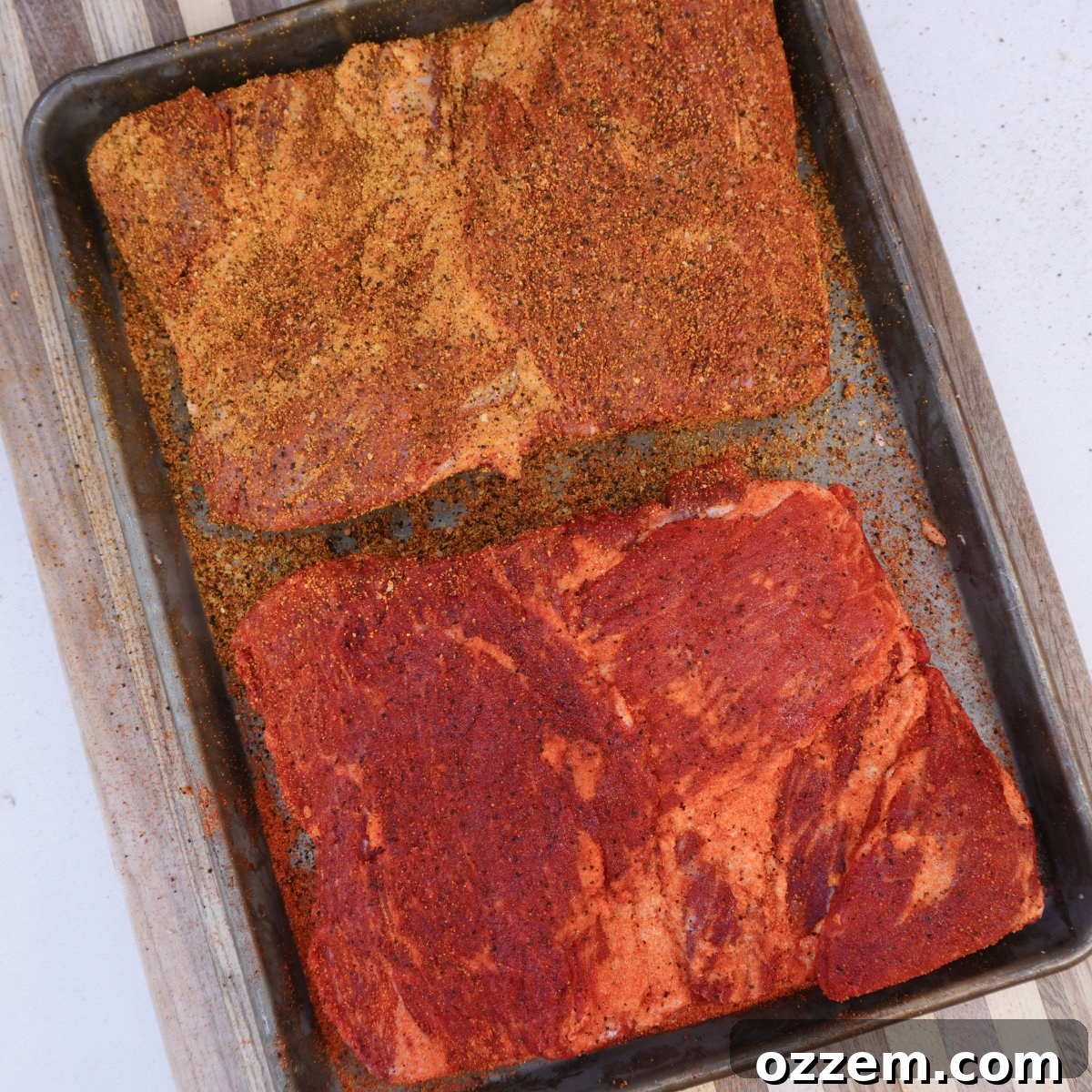
Once the ribs are coated with the binder, it’s time for the rub. Beef short ribs can handle a generous amount of seasoning, so don’t be shy! For this recipe, I experimented with two distinct flavor profiles:
- Traditional BBQ: One rack was seasoned with my signature Dad’s All Purpose rub, which delivers classic barbecue notes of salt, pepper, and paprika. This rub creates a savory, well-rounded flavor that appeals to everyone.
- Peppery & Garlic: The other rack received a liberal coating of Rolling Bones BBQ beef seasoning, which emphasizes robust peppery and garlic notes. This blend truly amplifies the inherent beefiness of the short ribs.
Apply an even, thick layer of your chosen rub to all sides of the ribs, including the edges. After seasoning, let the ribs sit at room temperature for 30-45 minutes. This crucial step allows the seasoning to “sweat” into the meat, creating a deeper flavor penetration and ensuring the rub adheres firmly before hitting the smoker.
Step 2: The Smoking Process – Low and Slow Perfection
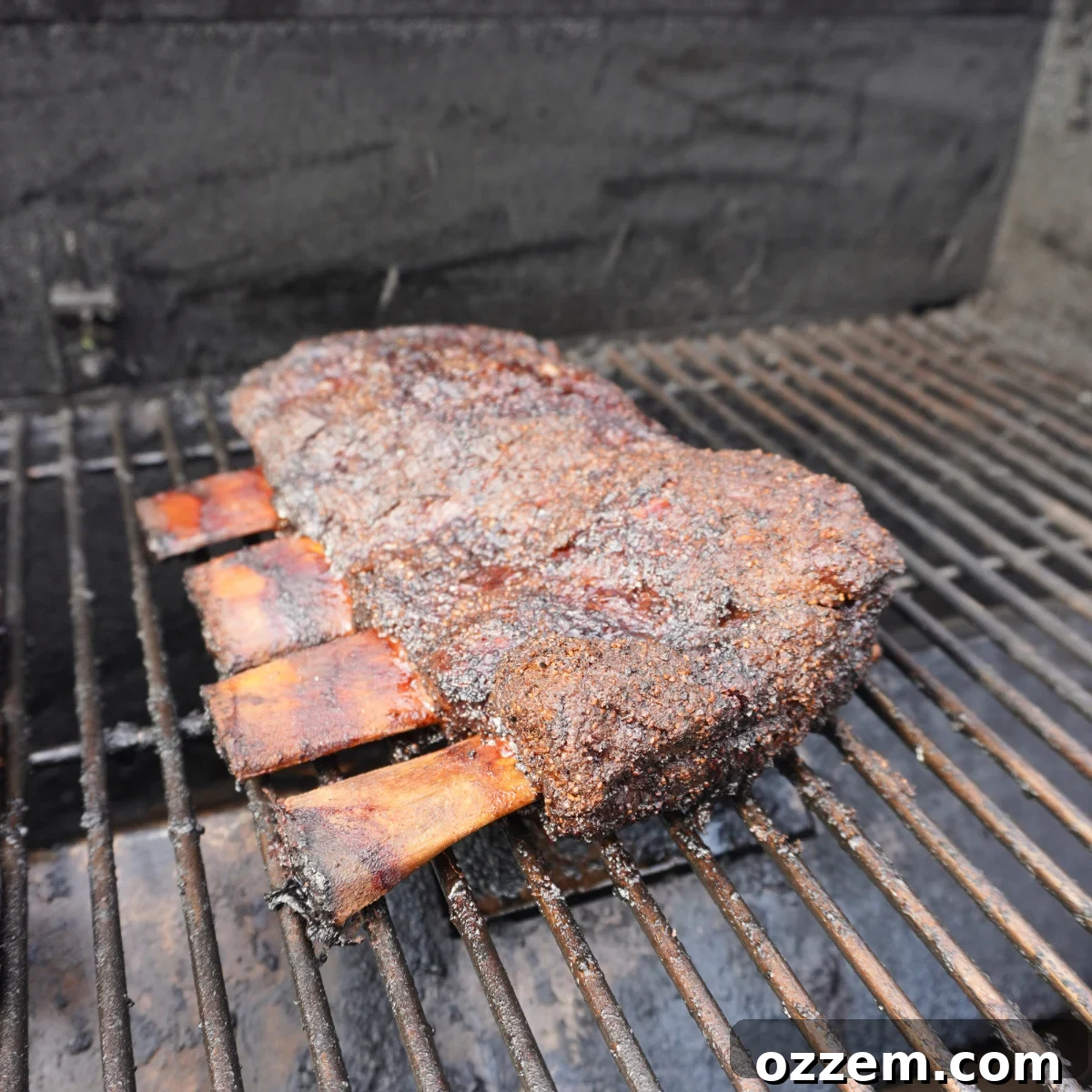
Smoking beef short ribs is a testament to the magic of “low and slow” cooking. This method transforms tough connective tissues into tender, juicy perfection. For this recipe, I utilized my reliable Weber Searwood pellet grill, known for its consistent temperature control and excellent smoke production. The principles, however, apply to any smoker.
Setting Up Your Smoker
Fire up your pellet grill or smoker and stabilize the temperature between 250-275°F (121-135°C). This temperature range is ideal for slow cooking beef ribs, allowing the fat to render and connective tissues to break down without drying out the meat. If using a charcoal or offset smoker, maintain consistent temperature by managing your fuel and airflow.
Wood Selection for Optimal Flavor
The type of wood you choose significantly impacts the final flavor of your smoked beef short ribs. For beef, robust woods like oak, hickory, and mesquite are excellent choices, imparting a strong, traditional smoke flavor. For a slightly milder and sweeter smoke, consider using cherry or apple wood, often in combination with a stronger wood. Avoid overly strong woods that can overpower the natural beefy taste.
The Long Haul: Smoking Unwrapped
Place the seasoned beef short ribs directly on the smoker grates, meat side up. Now, the waiting begins. Good barbecue demands patience, and these ribs are no exception. For an average 3-bone rack of beef short ribs, expect a total cook time of anywhere between 6 to 8 hours. The key during this period is maintaining your smoker’s temperature within the 250-275°F range. Unlike some other cuts, we won’t be wrapping these ribs in foil during the cook. This “naked” smoking method is crucial for developing that thick, rich, and intensely flavored bark.
Spritzing for Moisture and Bark
Keep an eye on your ribs throughout the cook. If the surface appears dry, especially after a few hours, you can spritz them lightly every hour or so. A mixture of equal parts apple cider vinegar and water is a classic choice, as the acidity helps tenderize and promote bark development. You can also use beef broth or even just plain water. Spritzing adds moisture to the surface, which aids in smoke absorption and prevents the bark from becoming too tough.
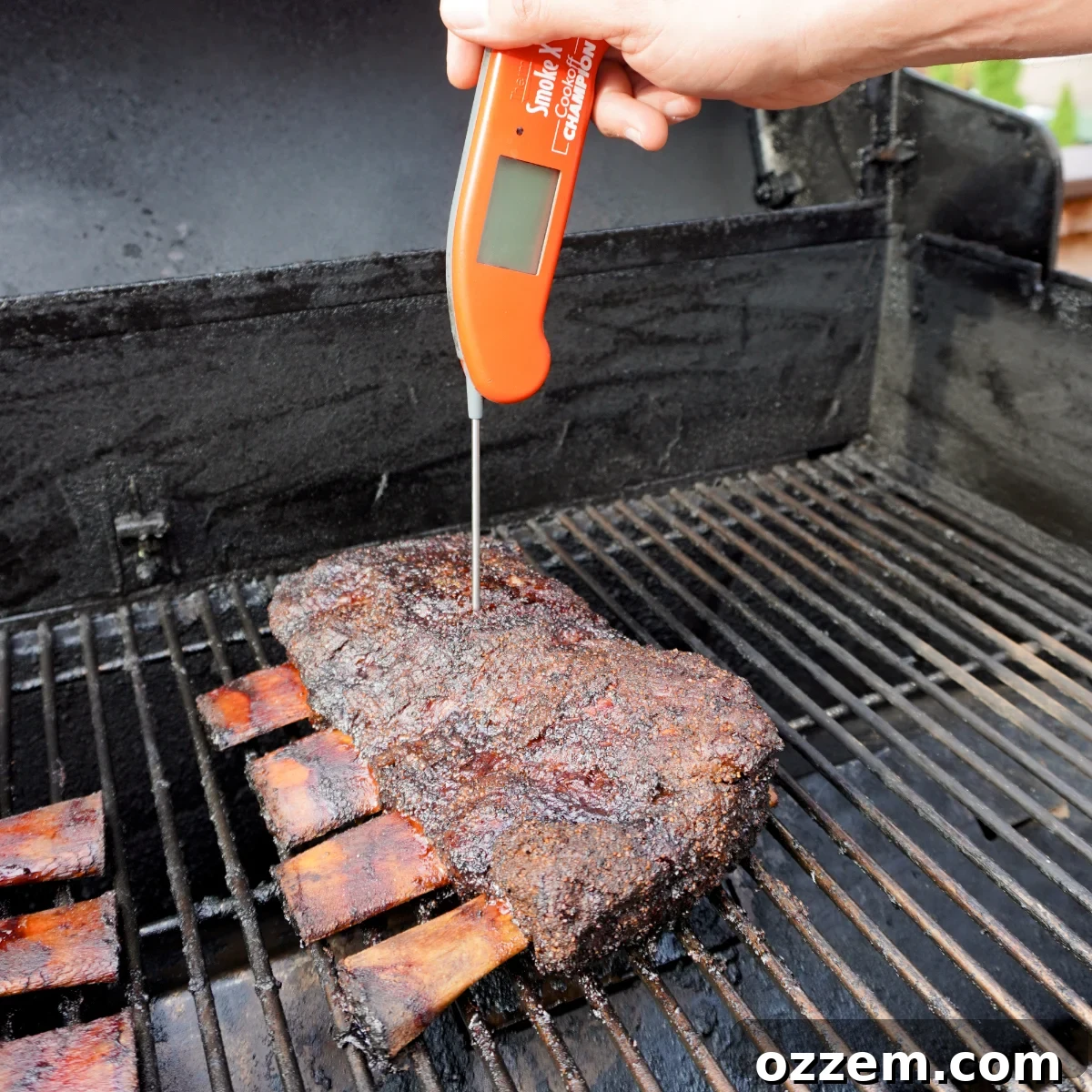
Monitoring for Doneness: Temperature and Tenderness
The ideal finished internal temperature for beef ribs typically falls between 205-210°F (96-99°C). However, temperature is only one indicator. The true test of doneness for smoked ribs is tenderness. Once your ribs reach around 205°F, begin checking for “probe tenderness.”
To do this, gently insert your temperature probe into various parts of the meat between the bones. It should slide in with very little to no resistance, feeling like pushing a hot knife through butter. If you encounter any significant resistance, continue smoking and check again in 20-30 minutes. This feeling indicates that the collagen and connective tissues have completely broken down, resulting in incredibly tender meat. Remember, every rack of ribs is different, so cook to tenderness, not just a specific time or temperature.
The Critical Resting Phase for Ultimate Juiciness
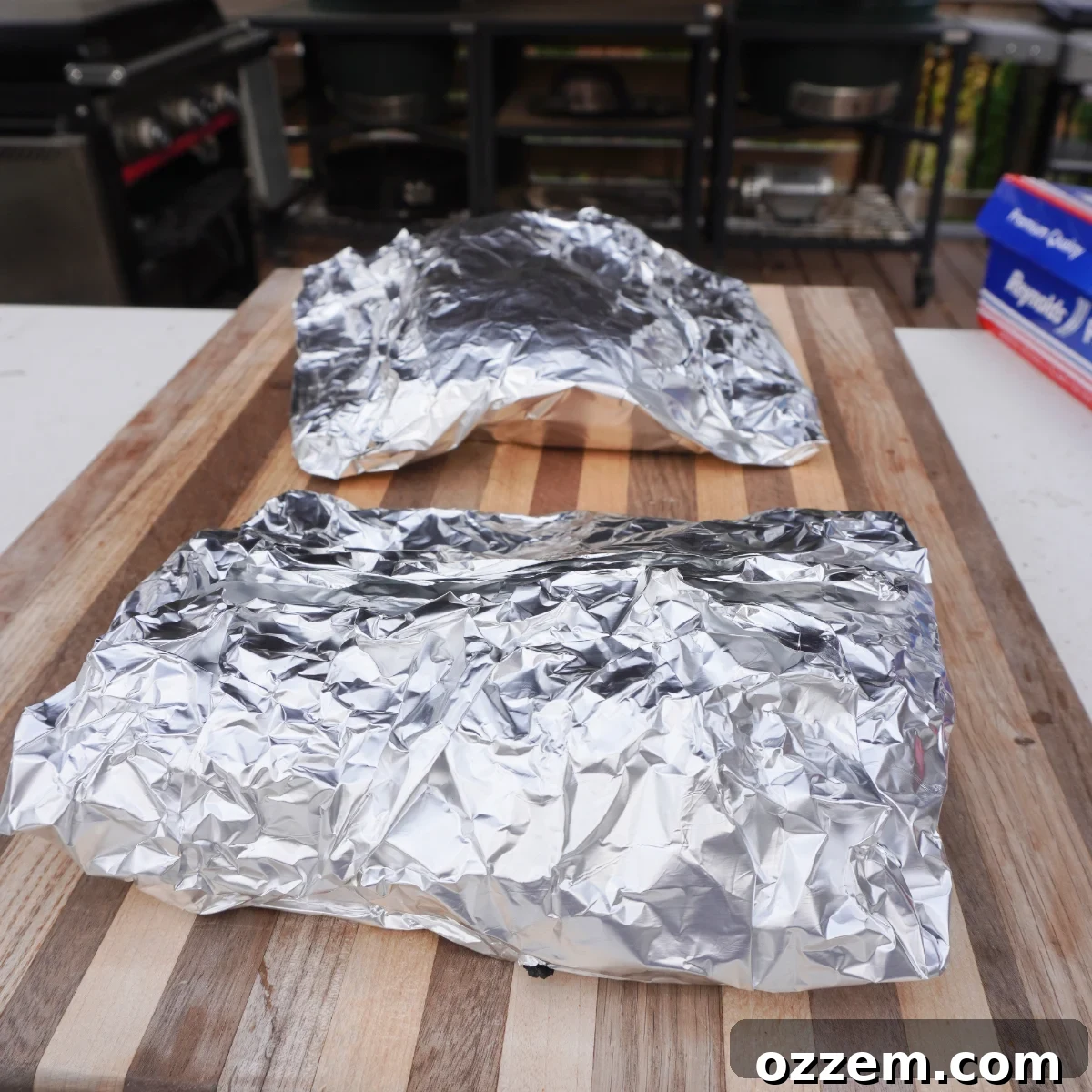
Once your smoked beef ribs achieve that perfect probe tenderness, resist the urge to immediately slice into them! This final resting phase is absolutely crucial for locking in moisture and ensuring every bite is as juicy as possible. Pull the ribs from the smoker and immediately wrap them tightly in aluminum foil. For an even better rest, place the foil-wrapped ribs into a room-temperature cooler (without ice) for about an hour.
During this rest, the internal temperature of the ribs will slowly decrease, allowing the muscle fibers to relax. This relaxation process enables the precious juices, which have been pushed to the center of the meat during cooking, to redistribute throughout the entire cut. Skipping this step often results in drier, less flavorful ribs, as the juices would simply run out onto your cutting board. The rest period allows the ribs to “reabsorb” these vital liquids, resulting in an exceptionally tender and moist final product. This hour of patience will be richly rewarded.
Slicing and Serving Your Masterpiece
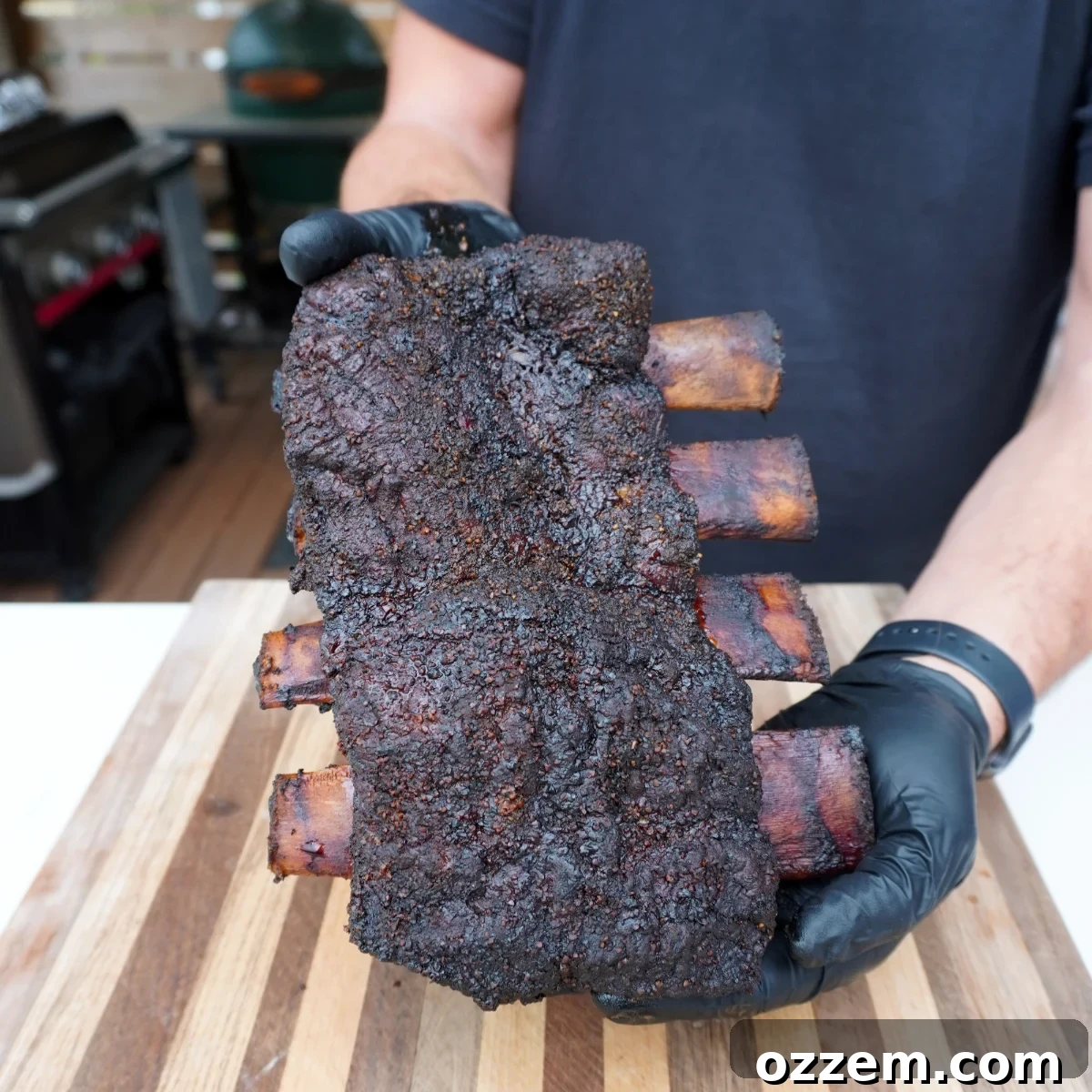
After a full hour of resting, it’s finally time to unveil your masterpiece. Carefully remove the smoked beef short ribs from the cooler and unwrap the foil. The aroma alone will be intoxicating! Use a sharp knife to slice neatly between each bone, creating individual portions that are ready to be devoured. The meat should be so tender that it almost falls off the bone, yet still hold its shape.
Serve these magnificent short ribs with your favorite barbecue sides – think creamy coleslaw, tangy pickles, fluffy cornbread, or a hearty potato salad. While they are incredibly flavorful on their own, a drizzle of your preferred BBQ sauce can add an extra layer of enjoyment. Prepare for rave reviews; these smoked beef short ribs are a true showstopper that will elevate any gathering!
Frequently Asked Questions About Smoked Beef Short Ribs
The primary distinction lies in their origin and meat content. Short ribs, especially plate short ribs, come from the lower rib cage area (the plate primal) and are known for their thick, rich meat cap. Beef back ribs, on the other hand, are from the upper rib cage (the rib primal), closer to the spine. Most of the meat on back ribs is stripped for ribeye steaks, leaving less meat between the bones, making them leaner and typically less substantial than short ribs.
Achieving tender beef short ribs requires a low-and-slow cooking method, whether smoking, braising, or slow cooking. This process allows the tough connective tissues within the meat to slowly break down into gelatin. When smoking at temperatures between 250-275°F (121-135°C), beef short ribs typically become probe-tender in about 6 to 8 hours. The exact time can vary based on the size and thickness of the ribs, as well as smoker consistency.
For these Smoked Beef Short Ribs, the recipe opts for a “no-wrap” method during the main cook. This technique is chosen to maximize bark development, creating a more intense smoky flavor and a desirable crust. While wrapping can sometimes speed up the cook or help retain moisture, for beef short ribs, leaving them unwrapped allows the bark to form beautifully. A foil wrap is recommended for the resting phase *after* they come off the smoker to redistribute juices.
Bark is the delicious, flavorful crust that forms on the exterior of smoked meats. It’s a complex combination of rendered fat, caramelized sugars from the rub, and compounds from the smoke reacting with the meat’s surface. To achieve great bark on short ribs, ensure you have a generous rub application, maintain a consistent low smoking temperature, avoid wrapping during the main cook, and consider spritzing periodically to keep the surface moist for better smoke adhesion and bark development.
More Delicious Rib Recipes to Try
Beef
Smoked Short Ribs
Beef
Smoked Beef Ribs
Pork
Ribs in Dr. Pepper BBQ Sauce
Game Meat
Grilled Venison Rack in Blueberry Sauce
Smoked Beef Short Ribs
These smoked beef short ribs are the epitome of tender, juicy, and flavor-packed barbecue. With simple seasoning and a patient smoking process, you’ll create a crowd-pleasing dish that rivals brisket.
Ingredients
- 2 racks Beef short ribs (preferably plate ribs)
- 2 tbsp Hot sauce (as a binder)
- 4 tbsp Dad’s All Purpose rub (or your favorite beef rub)
- 4 tbsp Steak rub (optional, for varied flavor)
- Apple cider vinegar (for spritzing, if needed)
Instructions
- Prepare the Ribs: Trim all visible excess fat from the meaty side of the ribs to expose the meat. This promotes bark formation.
- Remove Membrane: Flip the ribs to the bone side and carefully remove the thick, silvery membrane. Use a butter knife to lift an edge, then pull with a paper towel for grip.
- Apply Binder & Seasoning: Coat each rack evenly with hot sauce, which acts as a binder. Then, apply a generous layer of your chosen rub(s) to all sides of the ribs, ensuring full coverage.
- Rest at Room Temperature: Let the seasoned ribs sit at room temperature for 30-45 minutes. This allows the rub to adhere and penetrate the meat.
- Preheat Smoker: Preheat your pellet grill or smoker to a consistent temperature between 250-275°F (121-135°C).
- Smoke the Ribs: Place the ribs directly on the smoker grate, meat side up. Smoke for 6-8 hours, or until probe tender. Do not wrap the ribs during this phase.
- Spritz (Optional): If the ribs appear dry on the surface, spritz them every hour or so with apple cider vinegar to maintain moisture and enhance bark development.
- Check for Tenderness: Once the internal temperature reaches 205°F (96°C), begin checking for tenderness. Insert a thermometer probe into the meat; it should slide in with minimal resistance, like butter. If not, continue smoking and check every 20 minutes until tender.
- Rest the Ribs: When the ribs are perfectly probe tender, remove them from the smoker. Tightly wrap each rack in heavy-duty aluminum foil and place them in a room-temperature cooler for a minimum of 1 hour. This resting period is crucial for juices to redistribute.
- Slice and Serve: After resting, unwrap the ribs, slice carefully between each bone, and serve immediately. Enjoy your incredibly tender and flavorful smoked beef short ribs!
Notes
Patience is Key: Resist the temptation to increase smoker temperatures to speed up the cook. Low and slow is the secret to tender ribs.
Don’t Skip the Rest: The 1-hour rest period after smoking is non-negotiable for juicy, flavorful short ribs. Allow the meat time to relax and reabsorb its juices.
Like this recipe? Rate and comment below! Your feedback helps others discover delicious BBQ.