
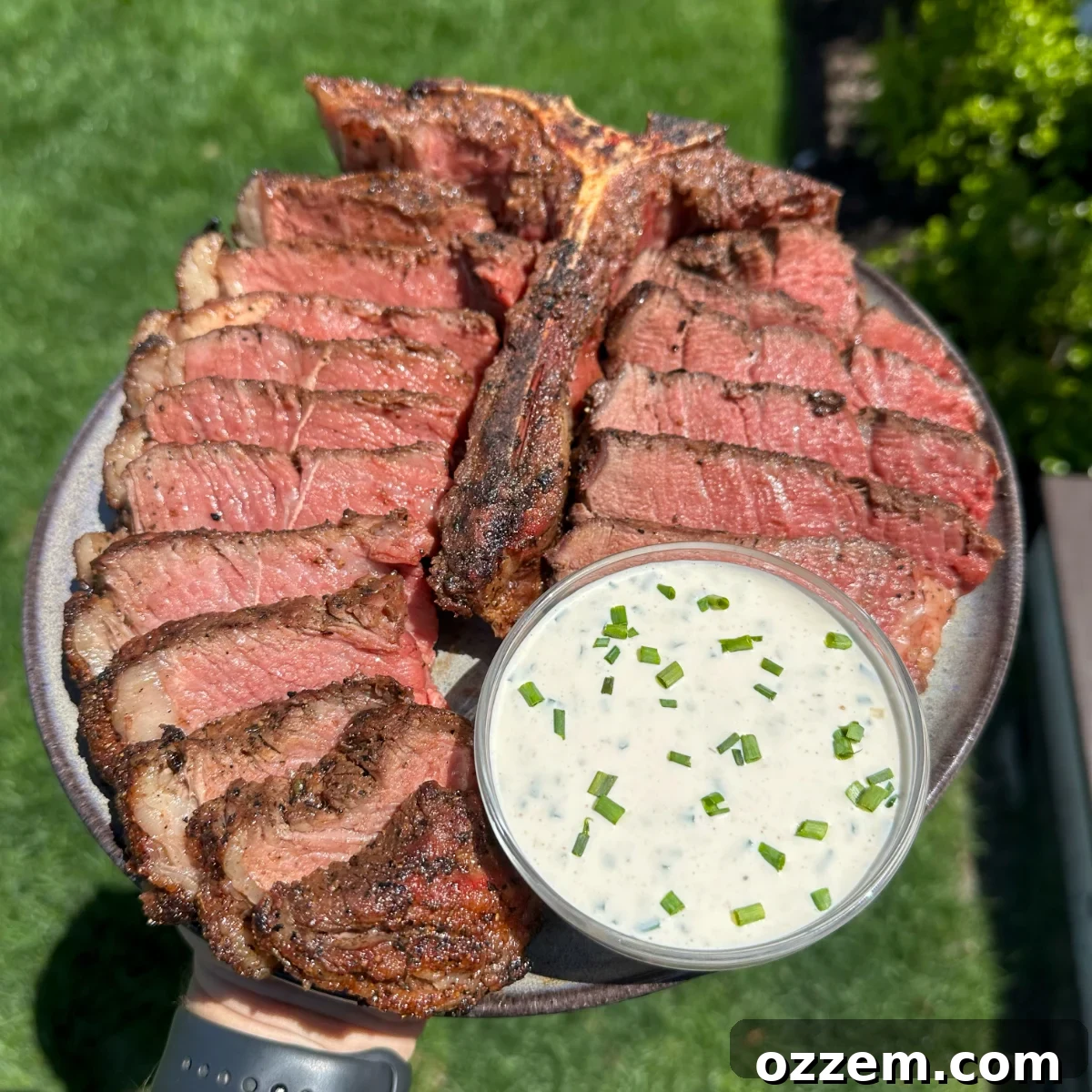
The Porterhouse steak stands out as a true culinary marvel, offering a unique “two-in-one” experience that delights every steak enthusiast. This impressive cut provides the best of both worlds: the robust, richly marbled flavor of a New York strip on one side, perfectly balanced with the unparalleled tenderness of a delicate filet mignon on the other, all separated by a distinctive T-shaped bone. Larger and more substantial than a standard T-bone, the Porterhouse typically boasts a generously sized filet, making it an ideal choice for sharing a luxurious meal for two, or for those with a truly hearty appetite. While often leaner than a heavily marbled ribeye, its inherent tenderness, succulent juices, and deep, beefy flavor profile are simply unmatched.
Preparing a Porterhouse is not just about cooking; it’s about crafting an unforgettable dining experience. Its striking appearance, with the prominent bone and distinct halves, makes for an impressive presentation that’s sure to garner admiration. To elevate this magnificent steak even further, pairing it with a homemade, creamy horseradish sauce adds a zesty, pungent kick that beautifully complements the steak’s rich notes. This combination creates a winning dish that promises satisfaction with every bite. If you’re passionate about achieving steak perfection, you might also enjoy mastering a seared Peter Luger copycat steak, known for its impeccably crispy crust, perfect medium-rare interior, and decadent butter bath.
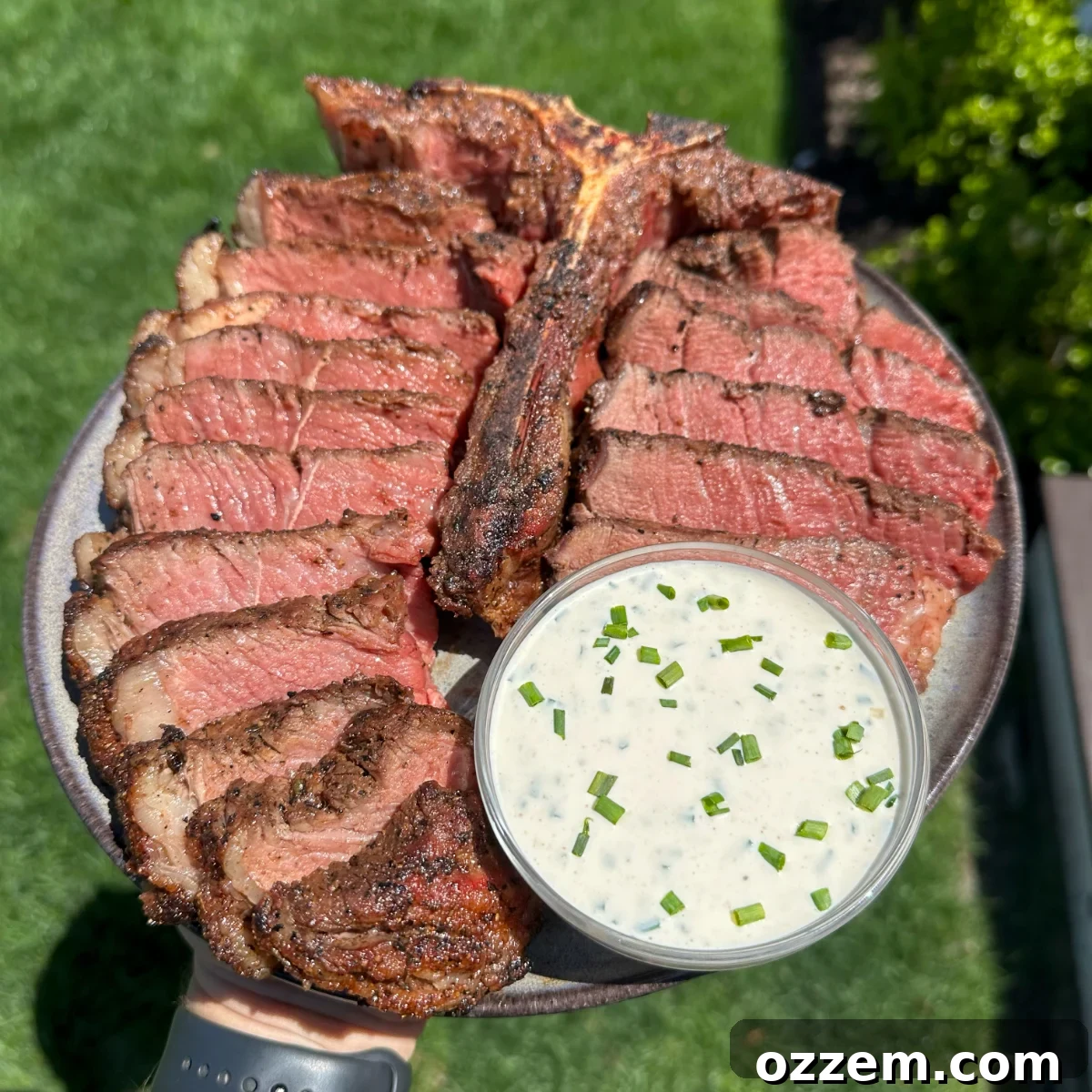
Table of Contents
- Selecting and Preparing Your Porterhouse Steak
- Mastering the Reverse Sear Grill Technique
- The Art of Resting Your Steak
- Crafting the Perfect Horseradish Sauce
- Frequently Asked Questions About Grilling Steak
- Similar Grilling Recipe Ideas
- Porterhouse Steak Recipe Card
Selecting and Preparing Your Porterhouse Steak
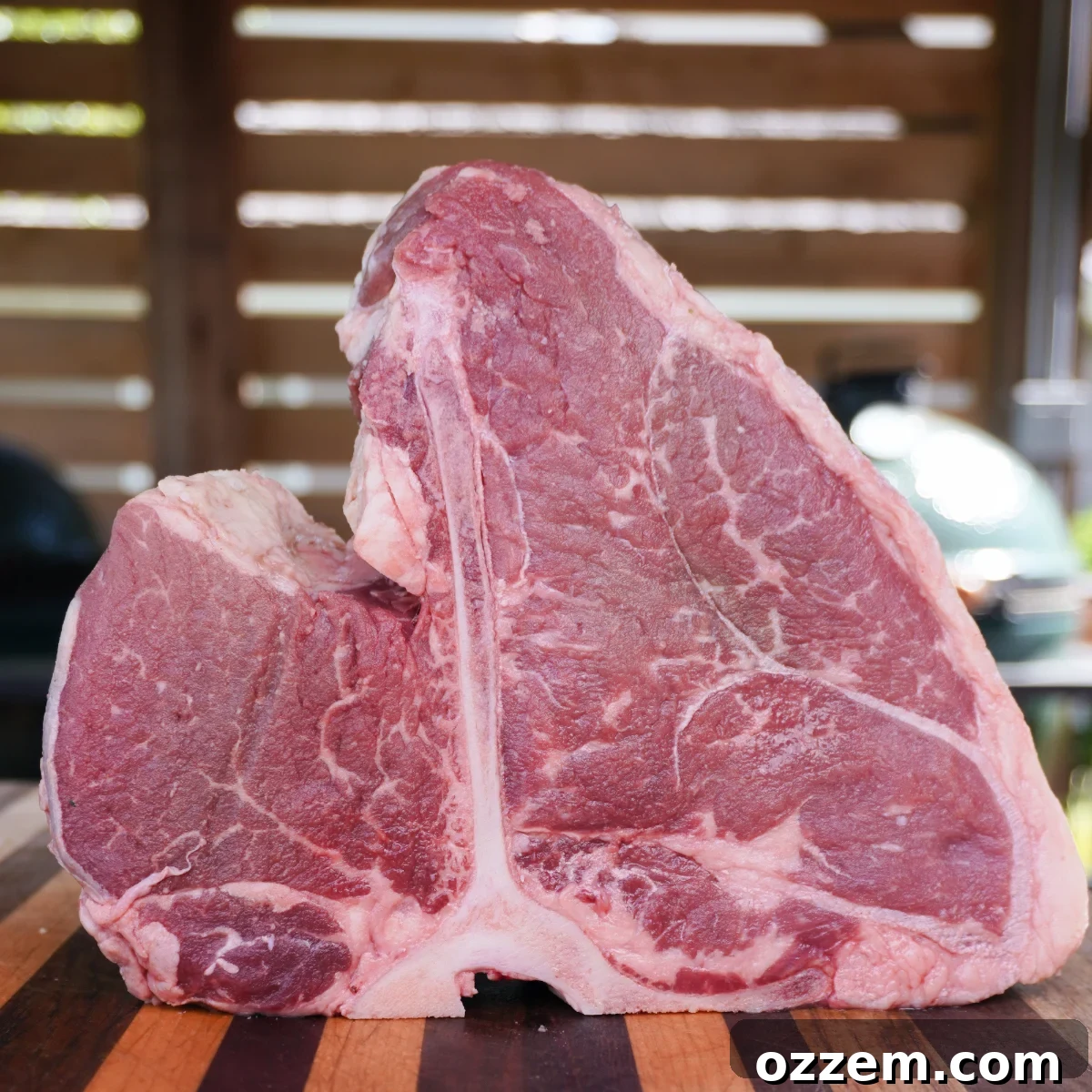
The journey to a perfect grilled Porterhouse begins with careful selection and meticulous preparation. This impressive cut is renowned not only for the melt-in-your-mouth tenderness of its filet mignon side but also for the deep, beefy intensity and rich marbling found in its New York strip counterpart. Its substantial size and thickness make it an excellent candidate for generous seasoning, allowing flavors to penetrate deeply without overpowering the steak’s natural, inherent deliciousness.
Choosing the Best Porterhouse
When selecting your Porterhouse steak, look for a thick cut, ideally 1.5 to 2 inches, as this thickness is crucial for achieving a desirable crust without overcooking the interior. Examine the marbling – those fine veins of fat running through the New York strip are key to flavor and juiciness. A bright red color indicates freshness, and a good, sturdy bone will also contribute to flavor and moisture retention during cooking. Remember, a true Porterhouse will have a filet mignon section that is at least 1.25 inches thick at its widest point, distinguishing it from a smaller T-bone.
Bringing Your Steak to Room Temperature
One of the most critical steps, often overlooked, is allowing your steak to come to room temperature before grilling. Remove the Porterhouse from the refrigerator 45 minutes to 1 hour before you plan to cook. This process is vital for ensuring even cooking throughout the steak. A cold steak placed directly on a hot grill will cook unevenly, resulting in an overcooked exterior and a cold or undercooked center. Allowing it to warm up gently ensures that the heat can penetrate more uniformly, leading to a perfectly cooked steak from edge to edge.
The Perfect Seasoning Blend
Before applying any seasoning, gently pat the steak dry with paper towels. This step is essential for promoting a beautiful, crispy crust, as moisture on the surface can prevent proper searing. For this magnificent cut, I highly recommend a powerful flavor combination: an even mix of Dad’s Steak Seasoning and Dad’s All Purpose Rub. The steak seasoning is designed to infuse rich butter, aromatic garlic, and savory herb flavors, creating a complex and irresistible base. Complementing this, the all-purpose rub delivers essential salt and pepper, forming a perfect equilibrium of taste that enhances, rather than masks, the steak’s natural goodness.
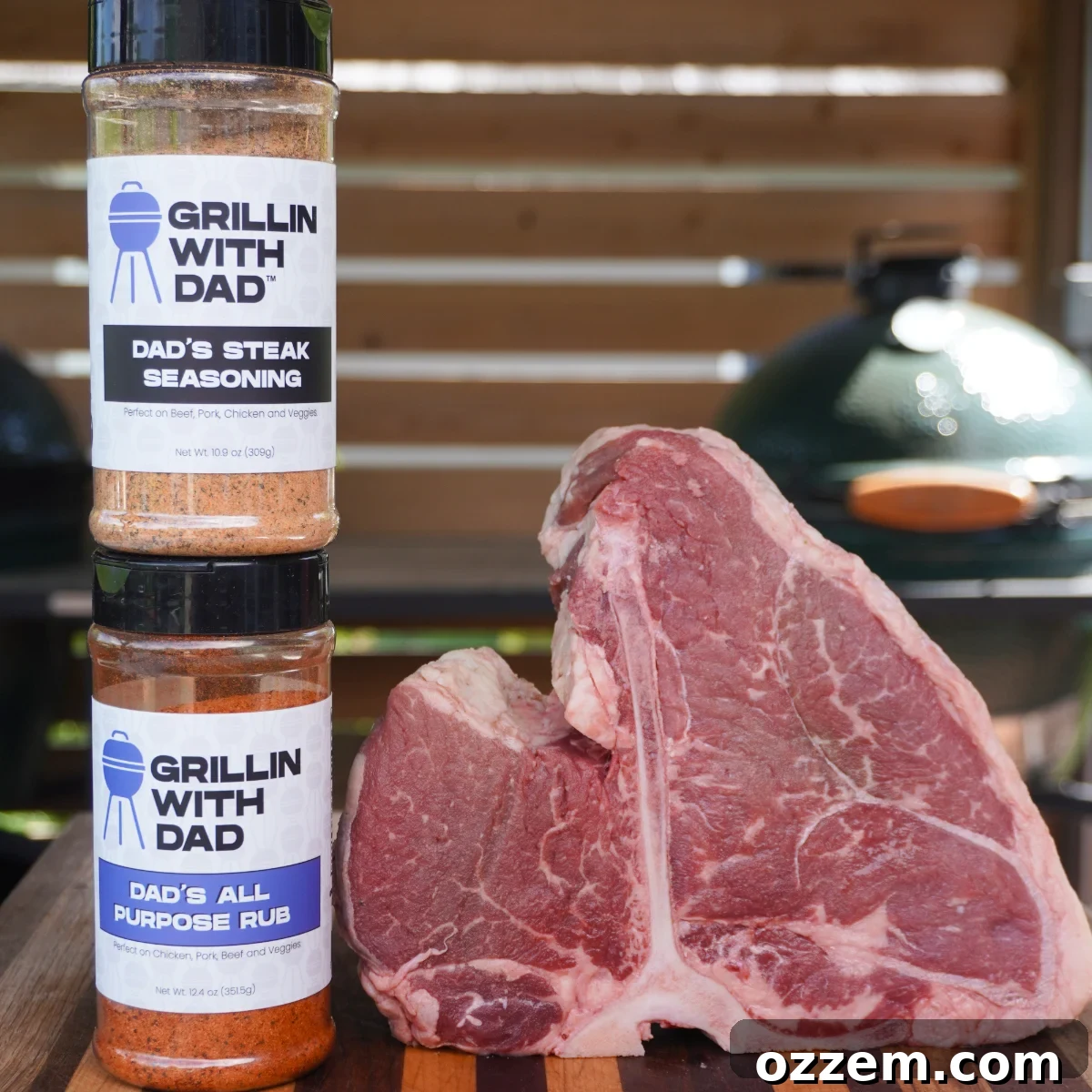
Ensure that you liberally coat all sides of the steak, including the edges, with your chosen seasoning blend. Don’t be shy; a thick cut like the Porterhouse can handle a significant amount of seasoning. Once seasoned, let the steak rest at room temperature for another 45 minutes to 1 hour. This extended resting period allows the salt to draw out some moisture from the meat, which then reabsorbs the seasoning, creating a deeply flavorful crust and ensuring every bite is infused with taste.
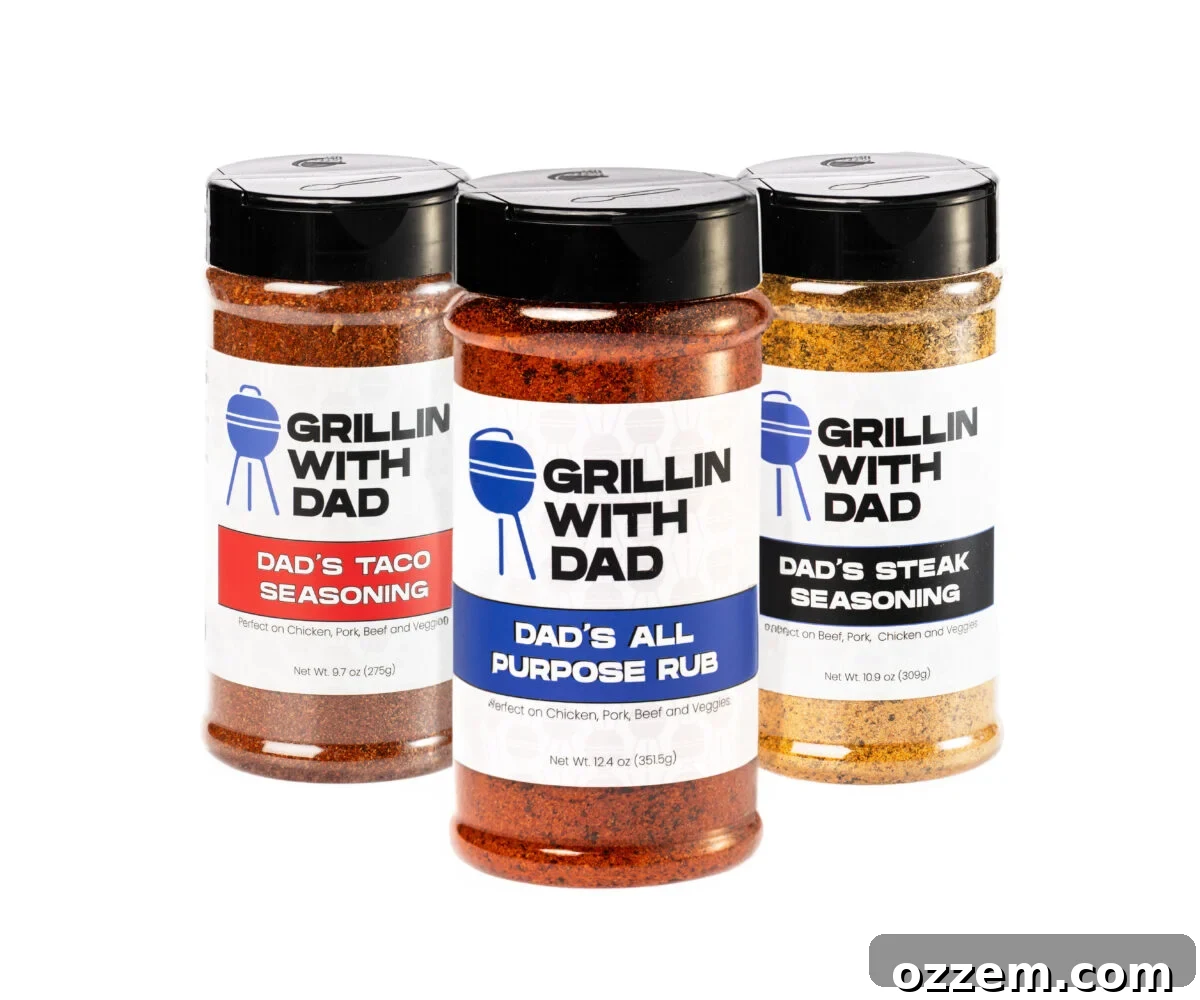
Dad’s Premium Seasonings
Unlock incredible flavors for all your grilling adventures!
Mastering the Reverse Sear Grill Technique
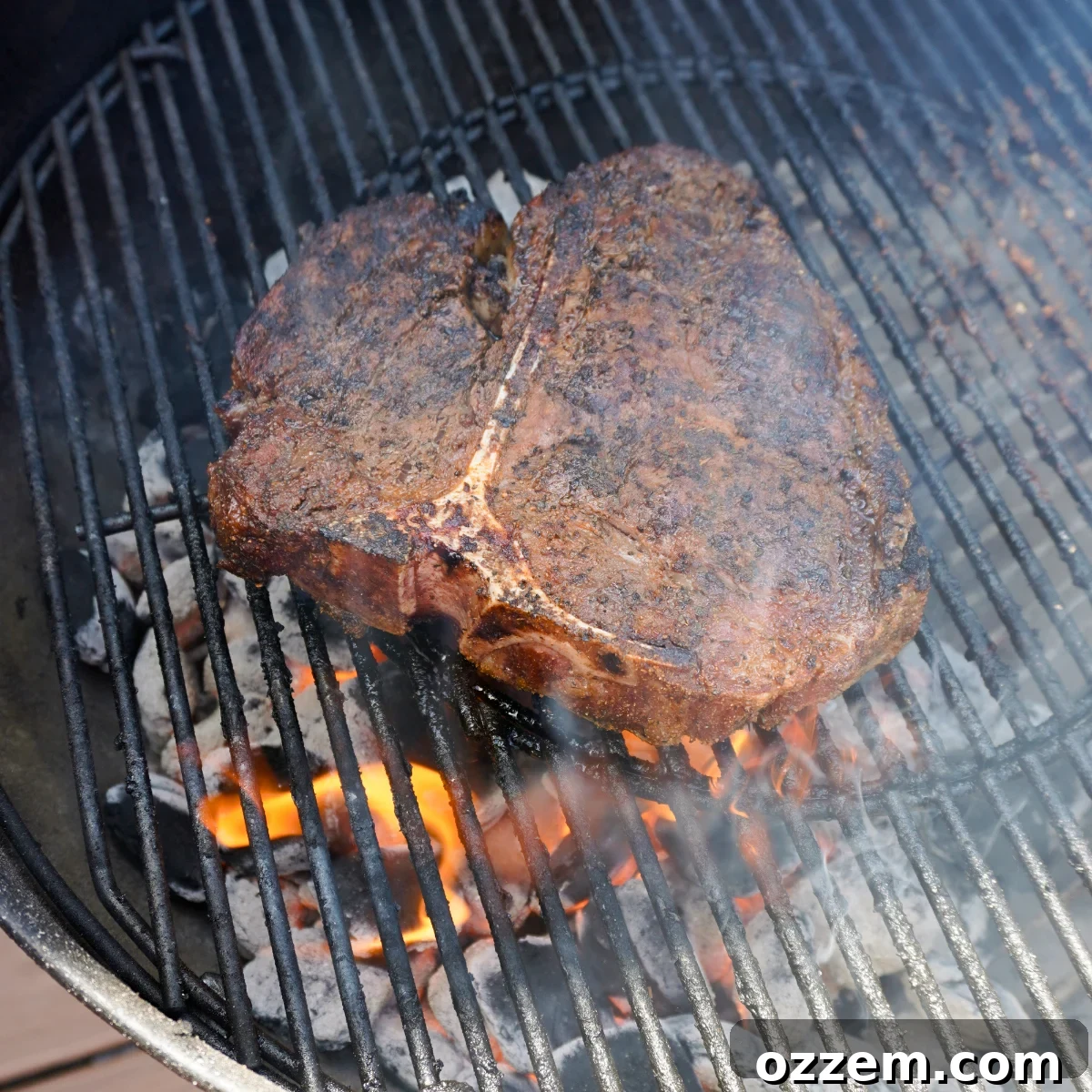
For a thick, magnificent cut like the Porterhouse steak, the reverse sear method is unequivocally the best way to achieve grilling perfection. This technique involves cooking the steak slowly over indirect heat until it reaches a specific internal temperature, then finishing it with a quick sear over high, direct heat. The result is a steak with a beautifully even pink interior from edge to edge and an irresistibly crispy, deeply browned crust – the hallmark of a perfectly grilled steak.
The Unique Challenge of the Porterhouse
Grilling a Porterhouse presents a unique challenge due to its dual nature: the lean, quick-cooking filet mignon on one side of the bone, and the fattier, slower-cooking New York strip on the other. If not managed carefully, the filet can easily overcook while you’re waiting for the strip to reach your desired doneness. The key to success is monitoring the temperature on both sides of the bone. To ensure a harmonious cook, beyond traditional flipping, incorporate regular rotations of the steak on the grill. This helps distribute heat more evenly across both cuts, allowing them to progress towards your target doneness in unison.
Setting Up Your Grill for Success
Begin by preheating your grill to a moderate temperature, around 400 degrees Fahrenheit (200°C), setting it up for dual-zone cooking. This means establishing both an indirect heat zone (where there is no direct flame beneath the food) and a direct heat zone (where the food is directly over the flame). On a gas grill, this usually means turning off burners on one side. For a charcoal grill, arrange coals on one side of the grill grate. This setup is crucial for the reverse sear method.
The Slow Cook: Indirect Heat
Once your grill is ready, place the seasoned Porterhouse steak on the indirect side of the grate. This is where the magic of the slow cook happens. Allow the steak to cook gently, flipping and rotating it every 3-5 minutes. Consistent rotation is particularly important for the Porterhouse, helping to mitigate the temperature differences between the filet and the New York strip and ensuring both cuts cook evenly. Continue cooking until the internal temperature of the steak reaches approximately 110 degrees Fahrenheit (43°C). Use a reliable instant-read meat thermometer, inserting it into the thickest part of the New York strip side, away from the bone.
The Final Sear: Direct Heat
After reaching the target internal temperature of 110°F, it’s time for the high-heat sear. Move the steak from the indirect zone directly over the high heat. Sear all sides of the steak vigorously, not just the top and bottom. This includes the edges and the bone-side of the steak. The goal here is to create a deep, caramelized crust, locking in juices and adding incredible texture and flavor. This searing phase should be relatively quick, typically 1-2 minutes per side, depending on your grill’s heat. For a perfect medium-rare doneness, remove the Porterhouse from the grill when its internal temperature reads between 120 and 125 degrees Fahrenheit (49-52°C).
Expert Grilling Tip
To ensure uniform cooking across both distinct cuts of your Porterhouse, consistently rotate the steak while it cooks on the indirect heat zone. This simple technique balances the heat exposure, allowing the leaner filet and the richer New York strip to reach perfect doneness simultaneously.
The Art of Resting Your Steak
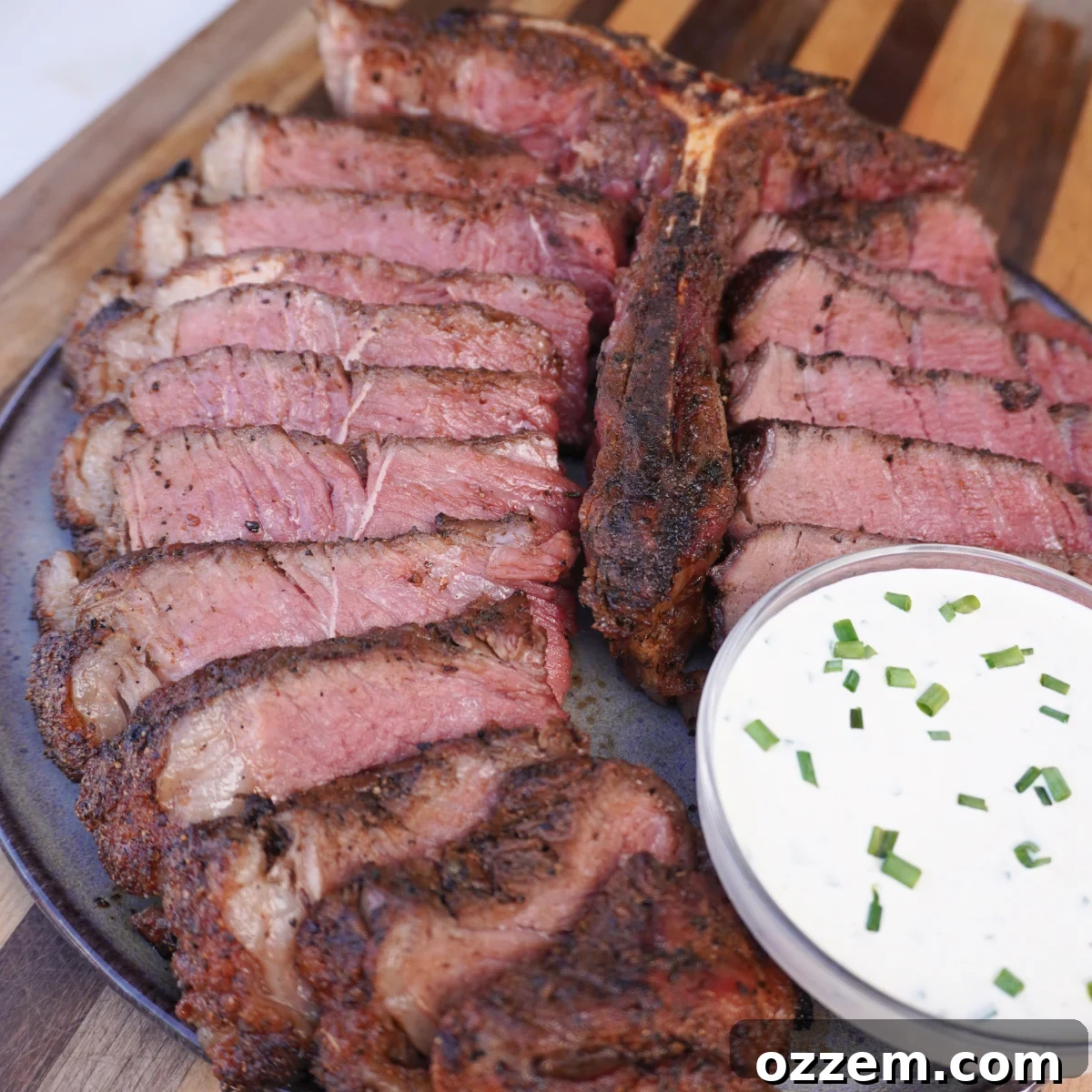
Once your Porterhouse has achieved its desired internal temperature, resist the urge to cut into it immediately. This final step is arguably one of the most important for a juicy, tender steak. Transfer the grilled steak to a clean cutting board and let it rest, uncovered, for 10-15 minutes. During grilling, the muscle fibers contract, pushing the juices towards the center of the steak. Resting allows these fibers to relax and the juices to redistribute evenly throughout the entire cut. Cutting too early will result in a loss of these precious juices onto your cutting board, leaving your steak dry. The steak will also experience ‘carryover cooking’ during this rest, meaning its internal temperature will rise by a few more degrees, which is factored into the removal temperatures.
Crafting the Perfect Horseradish Sauce
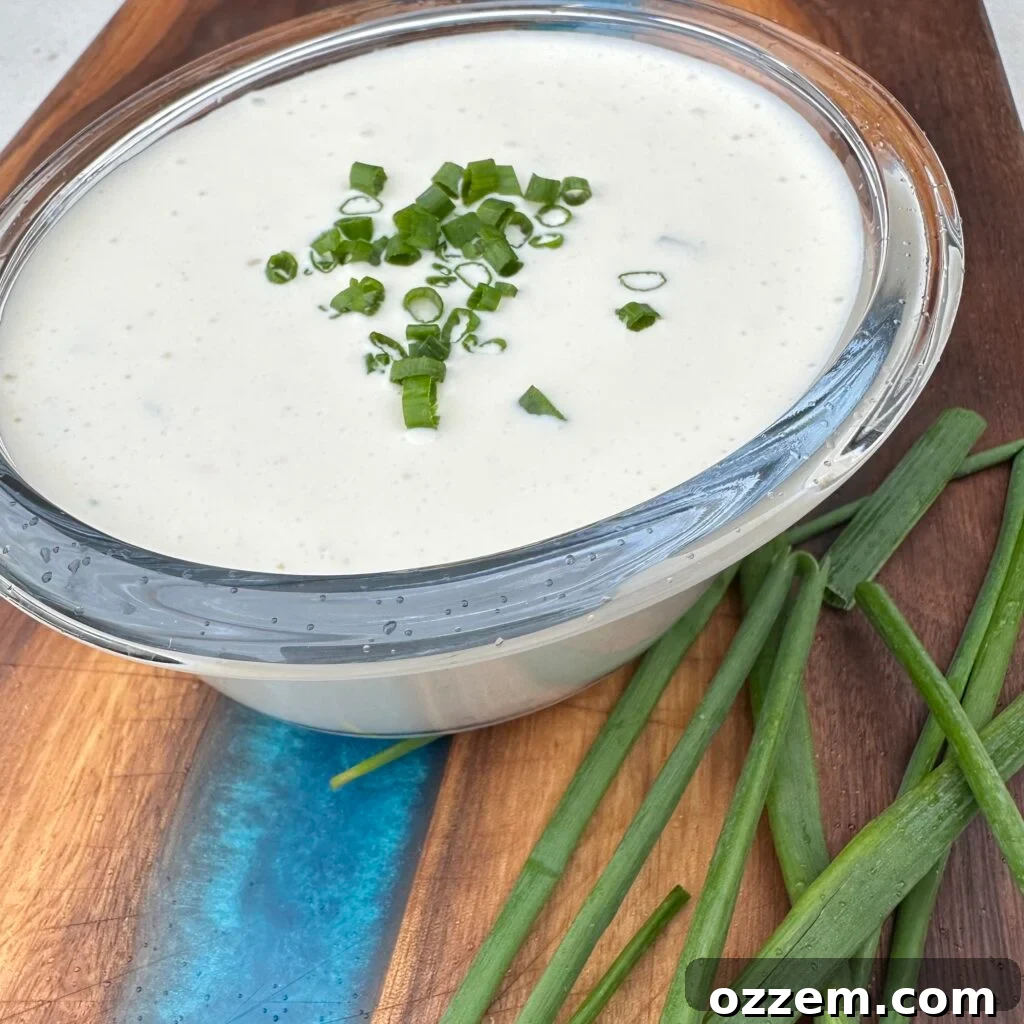
No magnificent grilled Porterhouse is truly complete without the perfect accompaniment, and a creamy, zesty horseradish sauce is precisely that. This sauce is a symphony of savory, fresh, and delightfully spicy notes, making it an ideal counterpoint to the rich, robust flavors of a perfectly cooked steak. Its vibrant kick cuts through the richness, cleansing the palate and enhancing every bite.
Simple Ingredients, Bold Flavor
Creating this exquisite sauce is incredibly straightforward. You’ll need just a few key ingredients: freshly grated horseradish (or high-quality prepared horseradish if fresh is unavailable), creamy sour cream, rich mayonnaise, a splash of tangy apple cider vinegar, and a handful of finely chopped fresh chives. Using freshly ground horseradish will deliver the most potent and authentic spice, but a good quality prepared variety will still yield excellent results.
Mixing to Perfection
In a medium mixing bowl, combine the freshly ground horseradish, sour cream, mayonnaise, apple cider vinegar, and chopped chives. Using a whisk, gently blend all the ingredients together until the sauce achieves a smooth, consistent texture. Avoid over-whisking, which can make the sauce too thin. Taste and adjust the seasoning as needed; you might want a little more horseradish for an extra kick, or a pinch of salt and pepper to balance the flavors. Once mixed, cover the bowl and refrigerate the sauce for at least 30 minutes before serving. This allows the flavors to meld and deepen, resulting in a more harmonious and delicious sauce.
Frequently Asked Questions About Grilling Steak
The best cut of steak depends on your desired cooking method and flavor profile. For quick, high-heat grilling (like a Porterhouse or T-bone), look for cuts with good marbling, such as a ribeye or New York strip, which offer rich flavor and tenderness. For longer cooks, roasts, or stews, more economical and meatier cuts like a chuck roast or brisket are excellent choices, often benefiting from slow cooking methods.
The internal temperature for removing your steak depends entirely on your preferred doneness, keeping in mind that the steak’s temperature will rise by 5-10 degrees Fahrenheit during the resting period (carryover cooking). For a **medium-rare** steak, remove it between 120-125 degrees Fahrenheit (49-52°C). For a **medium** cooked steak, aim for anywhere between 135-140 degrees Fahrenheit (57-60°C). If you prefer **medium-well**, remove at 145-150 degrees Fahrenheit (63-65°C). Anything over this will be well done, which can result in a tougher texture. Always remember to rest the meat for 10-15 minutes before slicing to allow the juices to redistribute.
Both the Porterhouse and T-bone steaks are cut from the short loin of the cow and feature a T-shaped bone separating two distinct cuts: the New York strip and the filet mignon. The key difference lies in the size of the filet mignon. A Porterhouse steak is cut from the rear of the short loin, where the filet mignon is larger – legally, it must be at least 1.25 inches thick at its widest point. A T-bone is cut from further forward, resulting in a smaller filet section (typically less than 1.25 inches thick). Therefore, a Porterhouse offers a more generous portion of the prized, tender filet.
Achieving a perfect crust is crucial for a great steak. First, ensure your steak is thoroughly patted dry before seasoning, as moisture inhibits browning. Second, use a high-heat searing method. For the reverse sear, this means moving the steak to the direct heat zone of a very hot grill (or a screaming hot cast-iron pan) for a short period (1-2 minutes per side). Make sure the cooking surface is as hot as possible to create that flavorful, caramelized exterior.
Similar Grilling Recipe Ideas:
Beef
Steak Pinwheel
Beef
Grilled Tomahawk Steak
Beef
Steak and Shrimp Dinner
Beef
Beef Tataki
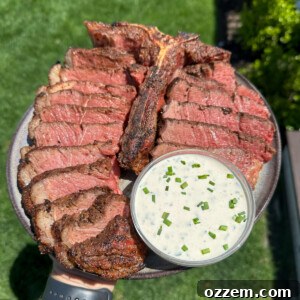
Porterhouse Steak
Maciek Zurawski
5 minutes
20 minutes
2 People
Ingredients
Porterhouse Steak Ingredients
- 1 Porterhouse steak (1.5-2 inches thick)
- 2 tbsp Dad’s All Purpose rub
- 2 tbsp Dad’s Steak seasoning
Horseradish Sauce Ingredients
- 1/4 cup Sour cream
- 1/4 cup Mayo
- 2 tbsp Freshly ground horseradish (or prepared)
- 2 tbsp Chopped chives
- 1 tbsp Apple cider vinegar
Instructions
- Pat the Porterhouse steak dry with paper towels. Season all sides generously with Dad’s All Purpose rub and Dad’s Steak seasoning.
- Set the seasoned steak aside at room temperature for 45 minutes to 1 hour to allow flavors to penetrate and for even cooking.
- Preheat your grill to high heat (around 400 degrees Fahrenheit / 200°C) and set it for dual-zone cooking (direct and indirect heat zones).
- Place the seasoned Porterhouse steak on the indirect side of the grill first. Cook until the internal temperature reaches 110 degrees Fahrenheit (43°C). Flip and rotate the steak every 3-5 minutes to ensure an even cook on both the filet and New York strip cuts.
- Next, move the steak to the direct heat side and sear all sides (top, bottom, and edges). For a perfect medium-rare, remove the steak off the grill when its internal temperature is between 120 and 125 degrees Fahrenheit (49-52°C).
- Transfer the steak to a cutting board and let it rest for 10-15 minutes before slicing and serving. This allows the juices to redistribute for maximum tenderness and flavor.
- For the horseradish sauce, in a mixing bowl, combine freshly ground horseradish, sour cream, mayo, a splash of apple cider vinegar, and chopped chives. Whisk the ingredients together until the liquid has a smooth, creamy consistency. Chill until serving.
Video
Watch the full grilling process here: Porterhouse Steak Grilling Guide
Nutrition Information (per serving, approximate)
Carbohydrates: 3g |
Protein: 36g |
Fat: 52g |
Saturated Fat: 16g |
Polyunsaturated Fat: 14g |
Monounsaturated Fat: 17g |
Trans Fat: 0.1g |
Cholesterol: 124mg |
Sodium: 342mg |
Potassium: 609mg |
Fiber: 0.5g |
Sugar: 2g |
Vitamin A: 198IU |
Vitamin C: 4mg |
Calcium: 50mg |
Iron: 4mg
Enjoyed this recipe? Share your thoughts and experiences below!
Your feedback helps us create more delicious content.