
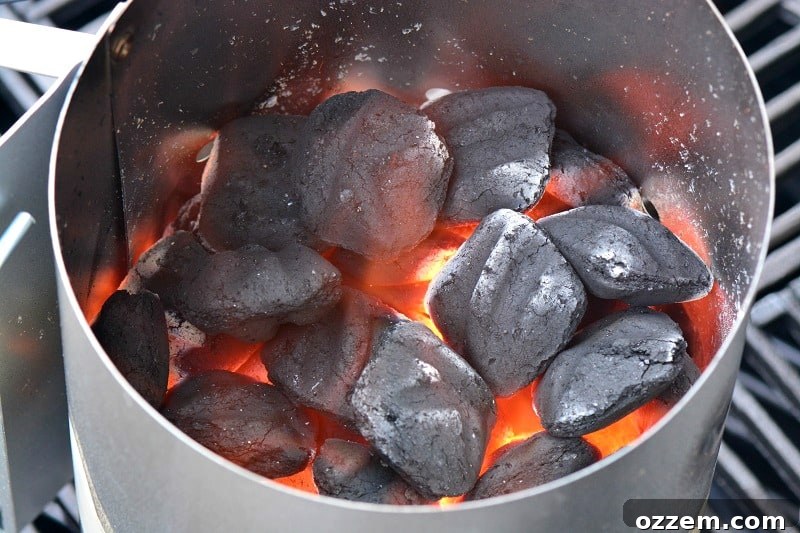
Embarking on the quest for the perfect backyard grilling experience begins with selecting the right grill. With a plethora of options available, each promising unique advantages, the decision can often feel daunting. However, by considering your personal needs, desired culinary adventures, and practical constraints, you can confidently choose a grill that transforms your outdoor cooking dreams into a delicious reality. Do you envision hosting grand gatherings that demand a large cooking capacity? Is your outdoor space limited, calling for a more compact solution? Perhaps you’re eager to delve into the art of smoking and slow cooking, requiring specific functionalities? And, of course, the investment – price is undeniably a significant factor in shaping your choice. This comprehensive guide will navigate the diverse landscape of grills, with a particular focus on the timeless appeal and unmatched flavor of charcoal grilling, helping you discover the ideal companion for your culinary exploits.

Mastering the Flames: The Allure of Charcoal Grills
Imagine a serene evening, the air filled with the tantalizing aroma of sizzling steak, or perhaps the smoky whisper of a perfectly charred burger. For many, this quintessential backyard experience is synonymous with the distinct flavor imparted only by a charcoal grill. The rich, authentic taste that charcoal grilling delivers is unparalleled, creating a depth of flavor that simply cannot be replicated by other cooking methods. It’s more than just cooking; it’s a sensory journey that evokes cherished memories and creates new ones.
My own grilling journey began over a decade and a half ago with a hybrid grill – a combination of charcoal and gas. Despite the convenience offered by the gas side, which occupied a significant portion of the cooking surface, our family consistently gravitated towards the smaller charcoal section. In fact, we rarely, if ever, utilized the gas burners, never even purchasing a propane tank. This early preference solidified my belief in the superior flavor profile that charcoal provides. When the time came to upgrade, there was no question: a dedicated, spacious charcoal grill was the only way to go.
While gas grills undoubtedly offer the appeal of instant gratification – a quick start with the flip of a switch and effortless temperature management – the resulting flavor often falls short for discerning palates. The convenience of a gas grill is undeniable, making quick weeknight meals a breeze. However, for those who truly appreciate the nuanced flavors of outdoor cooking, the outcome can sometimes feel akin to cooking indoors on a stovetop. Even with an open flame, the distinct, smoky character that defines genuine grilled food is frequently absent, leaving a void that convenience alone cannot fill.
Embracing charcoal grilling means embracing a craft. It requires a touch more patience, a bit more effort, and certainly more practice to master the art of fire management. Yet, this investment of time and skill is profoundly rewarding. The process of arranging the coals, igniting them, and controlling the airflow to achieve the perfect temperature becomes a labor of love, a ritual that culminates in incredibly flavorful results. The deep char, the smoky essence, and the perfectly seared crust are a testament to the effort, reflecting a hundred percent in the taste and texture of your food. So, whether you’re dusting off a beloved old friend or welcoming a brand-new addition to your backyard arsenal, it’s time to ignite the coals and rediscover the joy of authentic grilling!
Unveiling the Diversity: Popular Types of Charcoal Grills for Your Backyard
The world of charcoal grilling offers a fascinating array of designs, each engineered to cater to different cooking styles and preferences. While the fundamental principle of cooking over glowing coals remains constant, the execution varies significantly across different grill types. For backyard enthusiasts, three primary categories stand out as perennial favorites: the sophisticated ceramic kamado, the expansive barrel grill, and the iconic kettle grill. Understanding the unique attributes of each will guide you towards the perfect choice for your outdoor culinary adventures.
The Pinnacle of Versatility: Ceramic Kamado Grills
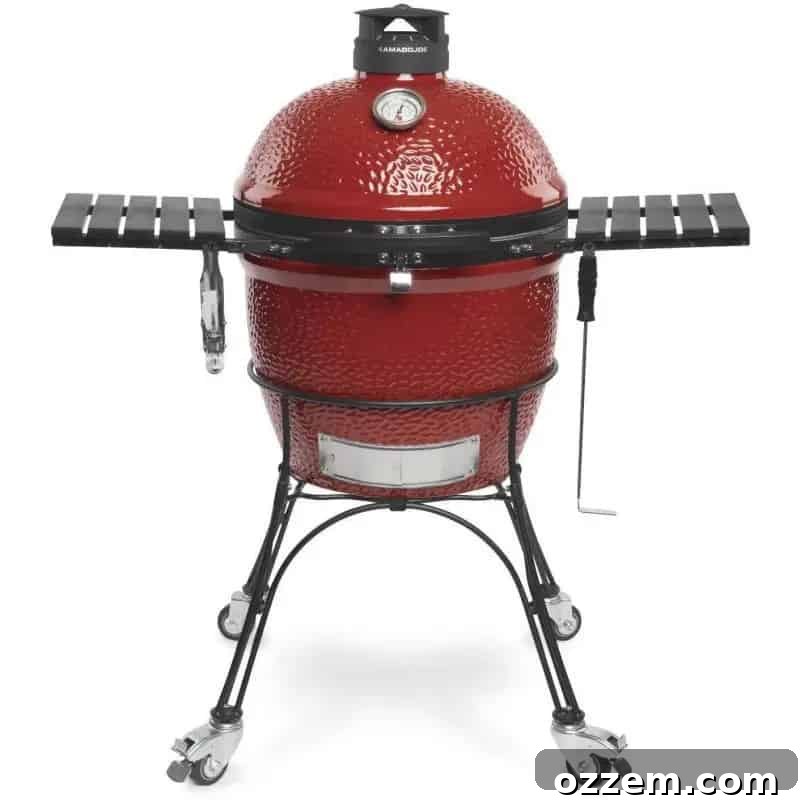
Ceramic Kamado grills represent the zenith of charcoal grilling technology for many barbecue aficionados. Often considered a dream grill, their widespread adoption is somewhat limited by their premium price point, yet their performance justifies the investment for those who make the leap. The allure of the Kamado lies in its exceptional quality, remarkable durability, and unparalleled versatility. Constructed from heavy-duty, thick ceramic, these grills boast superior insulation properties, making them incredibly efficient and consistent cooking machines.
The robust ceramic construction of a Kamado grill is its defining feature. This thick material excels at retaining and distributing heat uniformly, ensuring that temperatures remain steady throughout the cooking chamber. This exceptional insulation means your food cooks evenly, regardless of its position on the grate, eliminating hot and cold spots. Furthermore, the outstanding heat retention translates into impressive fuel efficiency; once the desired temperature is reached, a Kamado requires significantly less charcoal and wood to maintain it for extended periods compared to thinner-walled grills. This not only saves on fuel costs but also allows for incredibly long, stable cooks, which is crucial for low-and-slow smoking.
The versatility of ceramic kamado grills is truly astounding. Thanks to their superior design and insulation, these grills are capable of far more than just grilling a steak. They excel at virtually any cooking method: you can achieve perfect searing temperatures for steaks and burgers, maintain precise low temperatures for hours of smoking brisket or ribs, roast whole chickens to juicy perfection, and even bake pizzas or bread with a delightful, wood-fired crust. This multi-functionality makes a kamado an outdoor kitchen in itself, capable of handling an entire meal from appetizers to desserts.
The origins of the kamado can be traced back to ancient Japan, where clay ovens known as “kamados” were used for cooking rice. When these traditional designs were introduced and re-engineered in America, ceramic replaced clay, further enhancing their thermal properties, moisture retention, and overall durability. While the initial cost can be substantial, the investment in a kamado grill often pays dividends through its longevity, fuel efficiency, and the sheer quality of the food it produces. It’s a grill designed to be a centerpiece of your outdoor cooking for decades.
PROS: Exceptional insulation and precise temperature control, superior fuel efficiency, unmatched versatility for grilling, roasting, baking, and smoking, incredible durability, and consistent, even cooking.
CONS: High initial purchase price, very heavy and less portable due to ceramic construction, can have a steeper learning curve for advanced techniques.
Spacious and Adaptable: Barrel Grills
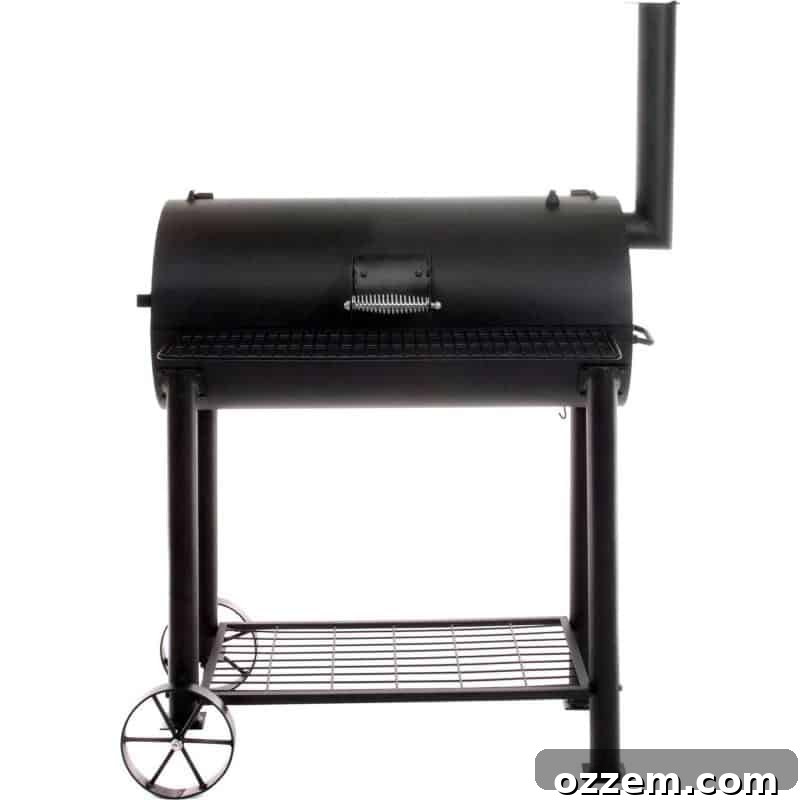
Barrel grills are instantly recognizable by their distinctive horizontal, cylindrical shape, typically split in half to create a hinged lid and a spacious cooking chamber. Their design offers a generously sized, rectangular grilling surface, making them an excellent choice for those who frequently host large gatherings or cook for bigger families. If you often find yourself running out of space on smaller grills, a barrel grill’s expansive capacity will be a welcome change, allowing you to cook multiple items simultaneously with ease.
One of the most appealing features of many barrel grills on the market is their inherent adaptability, particularly the option to convert them into an offset smoker. This is achieved by attaching a separate firebox to the side of the main cooking chamber. In this configuration, charcoal and wood are burned in the offset firebox, and the smoke and heat are drawn across the main chamber, slow-cooking food indirectly. This capability transforms a simple grill into a dedicated smoker, perfect for preparing succulent briskets, tender ribs, and flavorful pulled pork. For individuals who enjoy both grilling and the art of low-and-slow smoking, a barrel grill with an offset smoker option offers incredible convenience and value, combining multiple cooking functions into a single unit.
The quality of barrel grills can vary considerably. At the higher end, you’ll find models constructed from thick, heavy-gauge steel with well-sealed seams and effective insulation. These premium barrel grills offer decent temperature control and consistent performance, allowing for both effective grilling and successful smoking. However, more budget-friendly options often feature thinner materials and less insulation, which can lead to challenges in maintaining stable temperatures, particularly in varying weather conditions. Thin-walled barrel grills are prone to heat loss, requiring more fuel and constant monitoring, which can make long smoking sessions difficult and result in unevenly cooked food. As with most grilling equipment, higher quality materials and construction will naturally be reflected in the price, but often provide a more reliable and enjoyable cooking experience.
PROS: Large cooking capacity ideal for entertaining crowds, multi-functional (many models can be converted into an offset smoker), relatively affordable compared to kamados.
CONS: Quality varies significantly, with cheaper models often suffering from poor insulation and temperature control; can be less fuel-efficient than kamados; takes up considerable space.
The Enduring Classic: Kettle Grills
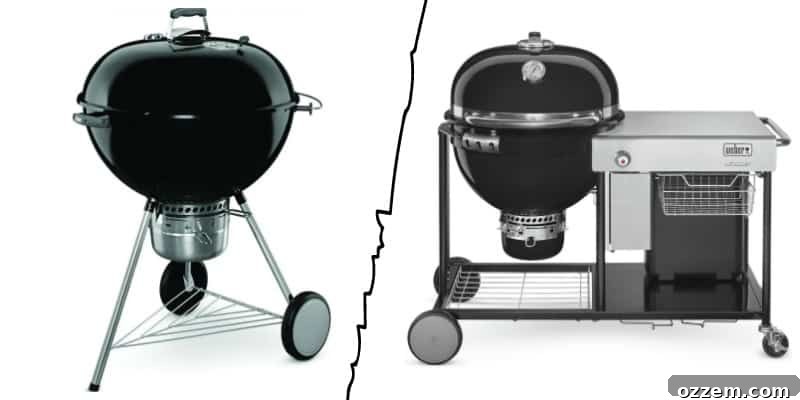
The kettle grill stands as arguably the most ubiquitous and recognizable charcoal grill design in the world, a testament to its enduring popularity and effective simplicity. Characterized by its iconic rounded shape, domed lid, and sturdy tripod base, the kettle grill typically features a charcoal grate at the bottom, a cooking grate above it, and an ash catcher below for convenient cleanup. These grills are celebrated for their ease of use, portability, and reliable performance in direct heat grilling, making them a staple in countless backyards.
The genius behind the kettle grill’s design can be attributed to George Stephen, who invented it in 1952 while working at Weber Brothers Metal Works. He recognized that cutting a buoy in half and adding legs, vents, and a cooking grate created a remarkably efficient cooking vessel. The rounded bottom and domed lid are not merely aesthetic choices; they are crucial to the grill’s functionality. This spherical design promotes natural convection, allowing heat to circulate evenly throughout the entire cooking chamber. This ensures that food cooks more uniformly and helps maintain stable temperatures, a significant advantage over open-top grills. The lid also allows for indirect cooking, trapping smoke and heat for more versatile grilling.
Kettle grills are incredibly user-friendly and highly maneuverable. Their relatively lightweight construction and often wheeled bases make them easy to position in your yard or move for storage. They excel at their primary purpose: direct heat grilling. Achieving perfect searing temperatures for steaks, burgers, chicken, and vegetables is straightforward, and with practice, one can master direct and indirect cooking zones for more complex tasks.
However, the kettle grill does have its limitations, particularly when it comes to low-and-slow cooking or smoking. While many resourceful grillers devise clever methods to smoke on a kettle, its thinner metal construction and less insulated design mean it struggles to maintain consistent low temperatures for extended periods. Heat retention is not its strongest suit compared to ceramic kamados or even some higher-end barrel grills, making it less than optimal for long smoking sessions that demand precise, unwavering temperatures. Additionally, the standard cooking grate, while effective, often lacks the robust heat retention of cast iron, which can be a personal drawback for those seeking intense searing capabilities.
PROS: Highly affordable and widely available, easy to use and maintain, excellent for direct heat grilling, portable, iconic and time-tested design.
CONS: Less ideal for long-duration smoking or low-and-slow cooking due to limited insulation, cooking capacity can be restrictive for very large gatherings, standard grates may not offer the best searing capabilities compared to cast iron.
Expand Your Grilling Knowledge: Essential Charcoal Grilling Resources
To truly elevate your charcoal grilling game, mastering not just the equipment but also the techniques and tools is paramount. From understanding the different types of charcoal to efficiently lighting your coals and having the right accessories at hand, every detail contributes to a more successful and enjoyable grilling experience. Explore these valuable resources to further enhance your skills and confidence in charcoal grilling.
Must-Have Tools For Charcoal Grilling Success
Mastering the Start: How to Light Coals in a Chimney Starter
Demystifying Charcoal: Understanding Different Types of Coals
Choosing the perfect charcoal grill is a deeply personal decision, one that balances your culinary aspirations with your practical needs and budget. Whether you dream of the precise control and versatility of a ceramic kamado, the expansive cooking surface and smoking capabilities of a barrel grill, or the classic simplicity and reliability of a kettle grill, there’s a charcoal option perfectly suited for you. Each type offers a unique pathway to that irresistible, smoky flavor that only charcoal can deliver. So, consider your backyard, your guest list, and your grilling ambitions, and get ready to ignite the coals for an unforgettable outdoor cooking journey. Happy grilling!