
Mastering Traeger Smoked Beef Short Ribs: The Ultimate Dino Ribs Recipe
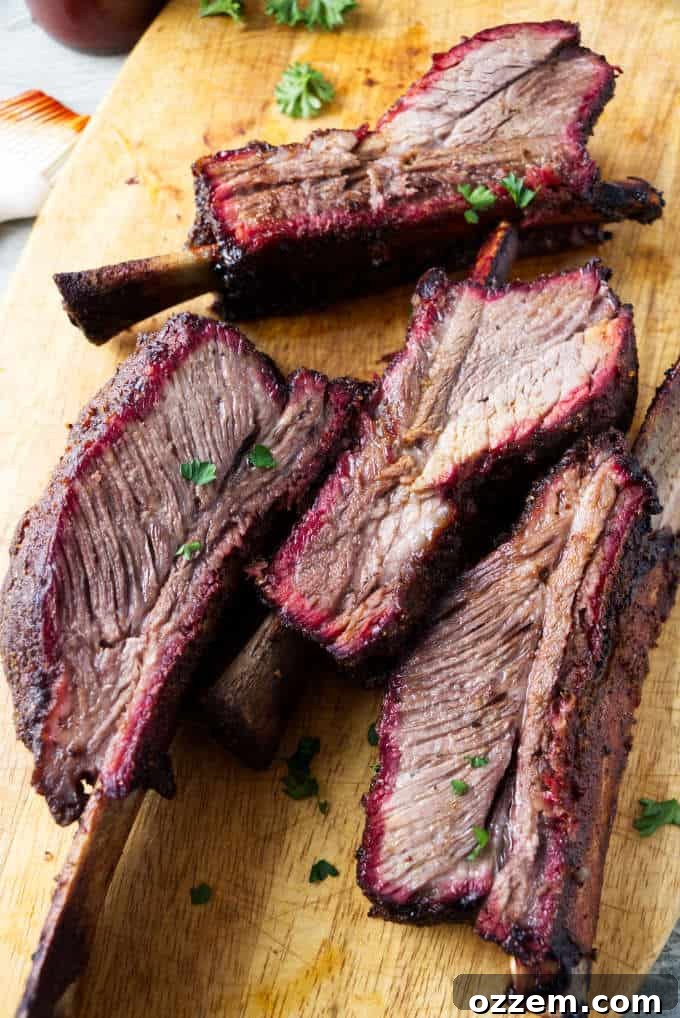
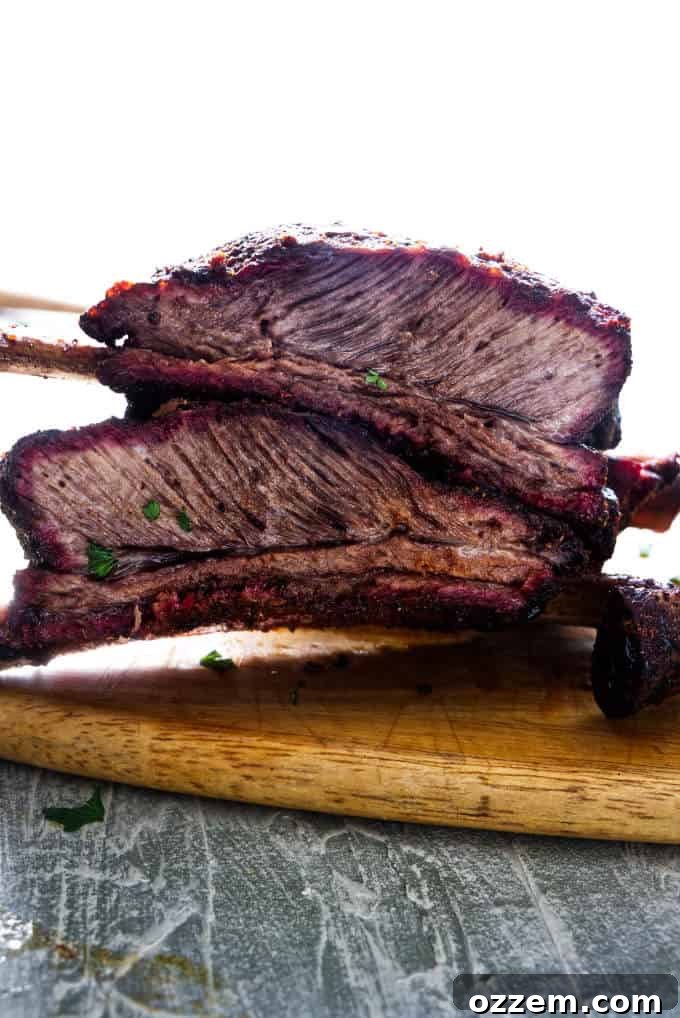
Prepare to experience barbecue perfection with our guide to crafting fall-off-the-bone, tender, juicy, and incredibly flavorful beef short plate ribs on your Traeger smoker. Often hailed as “brisket on a stick” due to their rich, beefy taste and succulent texture, these magnificent ribs, affectionately known as “dino ribs,” are guaranteed to be the star of any backyard gathering. Our unique blend of a tangy mustard rub and a mellowing brandy-apple juice spritz creates a flavor profile that is nothing short of extraordinary. Follow this detailed recipe to unlock the secrets to consistently perfect smoked beef short ribs every time.
The distinctive mustard rub provides a vibrant, tangy kick that beautifully complements the deep, smoky flavor of the beef. Meanwhile, a strategic spritz of brandy and apple juice during the smoking process ensures the ribs remain incredibly moist, forming a gorgeous bark while infusing them with subtle notes of fruit and warmth. This combination results in a balanced, complex flavor that will have your guests raving.
Beef short plate ribs are renowned for their impressive size and generous meatiness, making them an undeniable showstopper at any BBQ. While this cut can be inherently tough, the magic of low-and-slow smoking on a Traeger transforms it into a remarkably tender, rich, and beefy delight. This recipe focuses on achieving that coveted tenderness and robust flavor, turning a challenging cut into an accessible masterpiece for any home pitmaster.
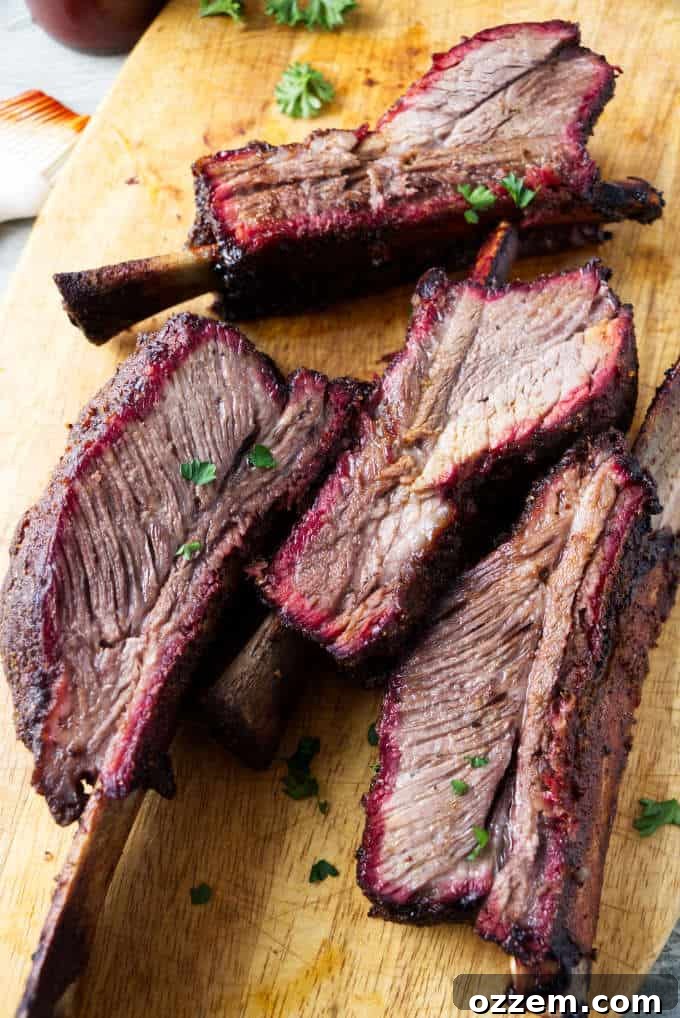
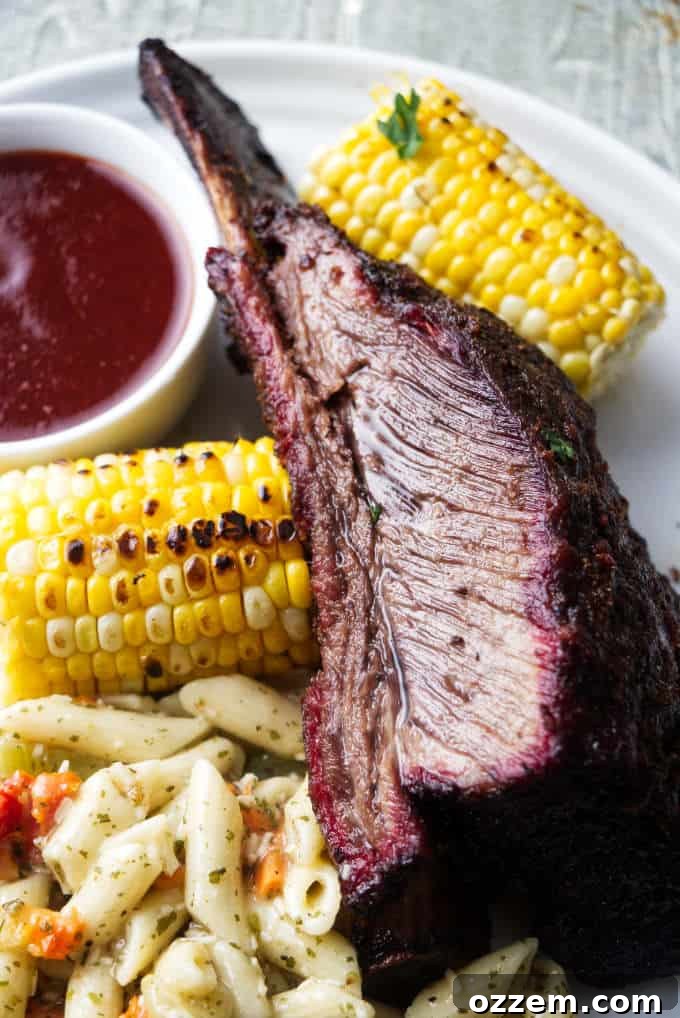
These ribs are so incredibly delicious and packed with flavor that many find them perfect on their own, requiring no additional sauce. However, for those who cherish the classic BBQ experience, feel free to serve them with our Kansas City-style BBQ sauce. This sauce also pairs wonderfully with our grilled potato wedges for a complete meal.
Important Note: This recipe is specifically designed for thick, meaty beef plate ribs. If your ribs are thinner beef back ribs, you’ll find a more suitable method and adjusted cooking times in our dedicated smoked beef back ribs recipe. Understanding the difference between these cuts is crucial for achieving optimal results, as plate ribs require a longer, slower smoke to reach their peak tenderness.
Why This Smoked Dino Ribs Recipe Shines
Our Traeger Smoked Beef Short Ribs recipe isn’t just another BBQ guide; it’s a pathway to an unforgettable culinary experience. Here’s why this particular approach stands out:
- Minimal Preparation Time: Despite the impressive outcome, the hands-on preparation for these ribs takes less than ten minutes. This allows you more time to enjoy the smoking process and less time fussing in the kitchen.
- Engaging Smoking Experience: There’s immense satisfaction in watching these magnificent “dino ribs” slowly transform in your Traeger, absorbing rich smoky flavors. It’s a rewarding culinary journey from start to finish.
- Simple, Flavorful Ingredients: We focus on a few high-quality ingredients that work synergistically to create a deep, complex flavor profile without overcomplicating the process. Each component plays a crucial role.
- Perfect for Any Occasion: Whether it’s a casual family dinner, a festive cookout, or an outdoor party, these impressive ribs are guaranteed to impress your guests and make a memorable statement.
- The Brandy Spritz Advantage: A unique brandy and apple juice spritz is key to keeping the ribs incredibly moist throughout their long smoke. It also adds a fantastic aromatic depth and contributes to the formation of that perfect, flavorful bark.
Essential Ingredients for Traeger Smoked Beef Plate Ribs
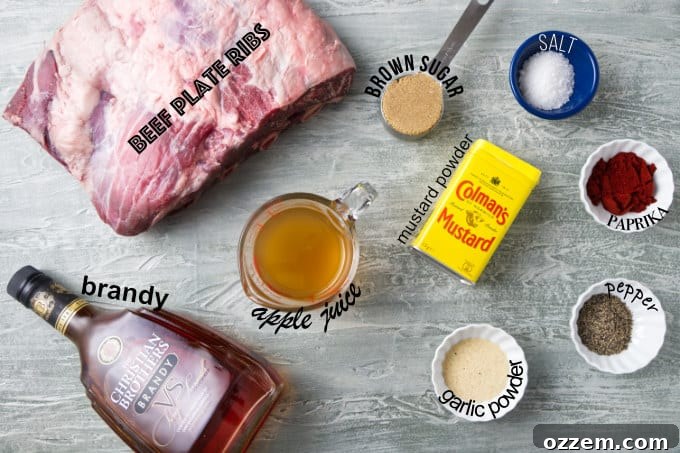
Crafting phenomenal smoked beef short ribs starts with selecting the right ingredients. Here’s what you’ll need to achieve that coveted “brisket on a stick” flavor:
- 1 Rack of Beef Short Plate Ribs (Dino Ribs): Look for a meaty rack, typically 4-5 pounds. These are distinct from beef back ribs due to their substantial meat content layered on top of the bones.
For the Irresistible Mustard Rub:
This savory and slightly sweet rub forms a perfect crust and seals in juices.
- Brown Sugar: Essential for developing a sweet, caramelized bark and balancing the savory notes.
- Mustard Powder: Provides a tangy depth and helps the rub adhere to the meat, creating a fantastic crust.
- Smoked Paprika: Adds a beautiful reddish hue and enhances the smoky flavor of the ribs.
- Kosher Salt: Crucial for flavor enhancement and acts as a key component in the dry brine, tenderizing the meat.
- Freshly Ground Black Pepper: Contributes a sharp, pungent kick that complements the rich beef.
- Garlic Powder: Delivers an aromatic foundation that deepens the overall flavor profile.
For the Flavorful Spritz:
This liquid application keeps the ribs moist and adds an extra layer of flavor.
- Apple Juice: Adds sweetness and moisture, preventing the surface from drying out.
- Brandy: Infuses a subtle, sophisticated warmth and aroma, elevating the flavor of the smoke.
How To Make Perfectly Smoked Traeger Beef Plate Ribs
Achieving tender, juicy “dino ribs” is a patient process, but each step is straightforward and crucial for the final succulent result. Let’s walk through it:
Step 1: Set Up Your Traeger Smoker
Begin by preheating your Traeger pellet grill to a consistent 250°F (121°C). The type of wood pellets you choose can significantly influence the final flavor. While beef is incredibly versatile and pairs well with many woods, classic choices for ribs include oak, hickory, maple, or cherry pellets, which impart a robust yet balanced smoky aroma. I personally favor a Pit Boss Competition Blend for its well-rounded profile and excellent smoke delivery, creating a beautiful depth of flavor that complements the beef perfectly.
Step 2: Expertly Remove the Membrane (Silverskin)
For the most tender and flavorful ribs, it’s highly recommended to remove the tough silverskin membrane from the backside of the ribs. This thin layer of connective tissue sits directly on top of the bones and does not break down during cooking, resulting in a chewy texture if left intact. To remove it, gently slide a butter knife or a small, rounded implement underneath the membrane at one end of the rack. Once you’ve lifted enough to get a grip, use a paper towel or a clean rag for better traction and slowly pull the membrane away from the bones. It may come off in several pieces, but persistence will ensure a clean removal, allowing your rub to penetrate and the meat to tenderize fully.
Step 3: Apply the Flavorful Mustard Rub and Dry Brine
In a small bowl, thoroughly combine all the ingredients for your mustard rub until you have a uniform mixture. Generously coat all sides of the beef short ribs with this flavorful rub, ensuring every crevice is covered. For immediate cooking, allow the ribs to sit at room temperature for at least ten minutes, letting the rub adhere. However, for truly exceptional flavor development and unparalleled tenderness, I highly recommend placing the seasoned ribs in the refrigerator overnight. This extended period acts as a dry brine, drawing out moisture and then reabsorbing it with concentrated flavors, while the salt works to break down protein fibers. This crucial step is the secret to achieving those incredible, fall-off-the-bone Traeger smoked beef short ribs.
Step 4: Prepare Your Brandy-Apple Spritz
In a food-safe spray bottle, combine the apple juice and brandy. This spritz mixture will be vital in keeping your ribs moist and enhancing their flavor during the long smoke. If you don’t have a spray bottle readily available, a basting brush or a BBQ mop can serve as suitable alternatives, though a spray bottle offers the most even application.
Step 5: Initiate the Slow Smoking Process
Carefully place your prepared beef short ribs directly onto the grates of your preheated Traeger smoker. Maintain the smoker temperature at a steady 250°F (121°C) and allow the ribs to cook undisturbed for the initial hours. The entire smoking process for thick plate ribs typically ranges from 8 to 10 hours, depending on their size and thickness. Patience is key during this phase, as the low temperature and steady smoke work their magic to break down tough connective tissues.
Step 6: The Art of Spritzing
Once the ribs have been smoking for approximately 4 to 5 hours, it’s time to begin the spritzing process. Every half hour or so during the remaining cook time, lightly mist the beef short ribs with your brandy-apple juice solution. This regular application of liquid serves multiple purposes: it helps to prevent the surface of the ribs (the bark) from drying out or burning, adds an additional layer of moisture, and infuses the meat with the delightful notes of apple and brandy, contributing to a richer, more complex flavor profile.
Step 7: Determine Doneness for Ultimate Tenderness
The true measure of perfectly smoked ribs is their tenderness, not just a specific cook time. To check for doneness, gently insert a fork or a skewer into the thickest part of the meat, avoiding the bone. It should slide in with very little resistance, indicating that the collagen has broken down into gelatin, resulting in a buttery-tender texture. For a more precise assessment, use a reliable meat thermometer to check the internal temperature. The ideal range for fall-off-the-bone beef short ribs is between 203°F and 208°F (95°C-98°C). A high-quality thermometer, such as a ThermoWorks Signals WiFi thermometer for continuous monitoring or a ThermoWorks ONE Thermapen for instant checks, is an invaluable tool to ensure you hit that perfect mark every time.
Step 8: Rest for Optimal Juiciness
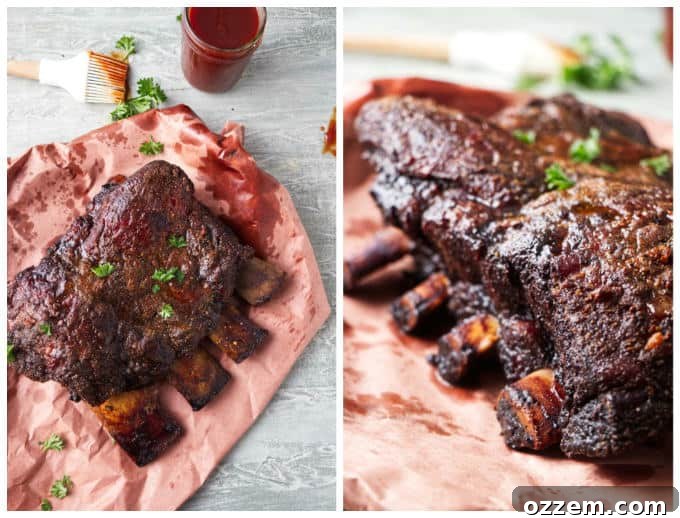
Once your beef short ribs reach their ideal tenderness and internal temperature, remove them from the Traeger. Carefully wrap them tightly in aluminum foil or butcher paper. This crucial resting period, lasting between 30 to 45 minutes, allows the meat fibers to relax and reabsorb the flavorful juices, resulting in an even more moist and tender final product. Resist the temptation to slice them immediately; patience here will be richly rewarded. After resting, slice against the grain and serve these magnificent “dino ribs” to a chorus of delighted groans.
Expert Tips for Unforgettable Traeger Smoked Beef Short Ribs
While the step-by-step instructions lay the foundation, these additional insights and techniques will elevate your smoked beef short ribs from great to absolutely legendary.
The Importance of Removing the Membrane
As mentioned in the cooking steps, the silverskin membrane on the underside of the ribs is a layer of dense connective tissue that remains chewy even after hours of smoking. Removing it is optional, but it significantly improves the eating experience, allowing the meat to become more uniformly tender and ensuring your rub flavors can penetrate deeper into the muscle. Use a butter knife to carefully loosen an edge, then grip with a paper towel and pull it off. Don’t be discouraged if it comes off in pieces; the effort is well worth it for a superior texture.
Mastering the Mustard Rub and Dry Brine Technique
Our delicious mustard-seasoned dry rub isn’t just for flavor; it’s a vital component of the dry brining process. By allowing the ribs to sit with the rub, especially overnight in the refrigerator, you initiate a natural tenderization process. The salt in the rub draws moisture out of the meat, then, through osmosis, the meat reabsorbs that moisture, bringing the delicious seasonings deep into the muscle fibers. This also relaxes the protein structure, making the meat incredibly tender and juicy. This dry brining method is, without a doubt, the single best thing you can do to ensure your Traeger smoked short ribs are succulent and truly fall-off-the-bone tender.
The Art and Science of Spritzing
Spritzing the ribs during the latter half of the smoking process is a crucial technique for maintaining moisture and ensuring an even cook. The cool liquid lightly lowers the surface temperature of the ribs, preventing the rub and bark from overcooking, becoming too dark, or drying out prematurely. It also continually adds a layer of flavor. Using a food-grade spray bottle provides the most consistent and even application, a modern upgrade from traditional basting brushes. Our spritz, featuring a splash of brandy, creates a fantastic aroma that permeates your backyard as the ribs cook. If you prefer to omit alcohol, apple cider vinegar or additional apple juice are excellent non-alcoholic alternatives that still provide moisture and flavor.
BBQ Sauce: A Matter of Personal Preference
With this recipe, your “dino ribs” will develop such a rich, flavorful, and crunchy bark, and the meat itself will be so tender and delicious, that many find barbecue sauce unnecessary. The natural flavors of the beef and the expertly crafted rub and spritz truly shine. However, if you are a devoted sauce lover, feel free to add your favorite Kansas City-style BBQ sauce during the last hour of cooking or serve it on the side for dipping. These Traeger smoked beef short ribs are a culinary triumph either way!
Frequently Asked Questions About Smoked Beef Short Ribs
Why are my beef short ribs tough?
The most common reason for tough beef short ribs is cooking them too quickly or at too high a temperature. Beef short ribs contain a significant amount of connective tissue, primarily collagen. For these ribs to become fall-off-the-bone tender, this collagen needs a long, slow cook at a low temperature to gradually break down and transform into succulent gelatin. If cooked too fast or at too high a heat, the collagen contracts, expelling moisture and resulting in dry, tough meat. Remember the mantra: “low and slow” is the only way to treat these naturally robust cuts of meat with the care they deserve, ensuring a melt-in-your-mouth experience.
What is the difference between beef short ribs and beef back ribs?
Understanding the different cuts of beef ribs is key to choosing the right recipe. Ribs come from several primal cuts of the cow: the rib, plate, and chuck. All are delicious for barbecue when prepared correctly.
- Beef Short Plate Ribs (Dino Ribs): These are the star of this recipe, typically coming from the “short plate” primal cut. They are characterized by a thick, impressive layer of rich meat on top of the rib bones, making them exceptionally meaty and visually striking – hence their popular nickname, “dino ribs.” This cut is often compared to brisket due to its robust beefy flavor and the way it transforms into tender perfection with slow smoking. When you see those Instagram-worthy, intensely meaty ribs with juices oozing, you’re likely looking at short plate ribs.
- Other Short Rib Cuts: While less common than plate ribs, short ribs can also be sourced from the rib or chuck primal cuts. These tend to be less meaty on top of the bone compared to plate ribs but still offer a fantastic, rich beefy flavor that excels when slow-smoked.
- Beef Back Ribs: These originate from the “rib” primal cut, specifically from the dorsal area of the steer, where prime rib and ribeye steaks are also found. Because butchers prioritize maximizing meat on these more expensive steak cuts, beef back ribs usually have most of the meat situated between the bones, with less meat on top. While less outwardly meaty, they still possess an incredible beef flavor. If you visit your butcher, you might be able to request “extra meaty” beef back ribs, but generally, expect the meat concentration to be intercostal. Our smoked beef back ribs recipe is specifically tailored for this cut.
Can I substitute other types of beef ribs in this recipe?
Absolutely! All beef ribs benefit immensely from a low-and-slow smoking method. You can certainly use other types of beef ribs with this recipe, and you will still achieve incredible results. However, it’s crucial to understand that cooking times will vary significantly depending on the thickness and cut of your ribs. Thinner cuts like beef back ribs will cook faster than the substantial short plate ribs. The best way to ensure perfect doneness, regardless of the cut, is to use a reliable meat thermometer. Aim for the same internal temperature range (203°F to 208°F / 95°C-98°C) and the fork-tender test to determine when your ribs are ready. A good instant-read thermometer like the ThermoWorks ONE Thermapen will be your best friend here.
Expand Your Grilling Horizon: Other Delicious Recipes
After mastering these incredible smoked beef short ribs, you might be looking for your next culinary adventure. We’ve got more delicious ideas to keep your grill fired up!
Did you know your air fryer can produce astonishingly tender ribs? Our air fryer beef back ribs recipe delivers juicy, finger-licking-good results perfect for those rainy days when you still crave that satisfying barbecue fix without firing up the smoker.
If you’re aiming to make a truly grand statement at your next outdoor gathering, try cooking this whole grilled salmon. It’s an incredibly easy and impressive way to grill fish on your Traeger. Once grilled to perfection, the moist, tender fillets effortlessly peel away from the bone. The subtle kiss of smokiness from the Traeger transforms this salmon into a sensational dish!
CONNECT WITH A LICENSE TO GRILL!
Be sure to follow us on our social media accounts for more grilling inspiration, tips, and mouth-watering recipes.
- YouTube
- TikTok
Did you make this recipe? We’d love to hear about your experience in the comments below!
💬 Tell Me What You Think!
Have you tried out this incredible Traeger Smoked Beef Short Ribs recipe? Please share your thoughts by leaving a comment below and let us know how much you loved it! Don’t forget to snap a picture of your magnificent “dino ribs” and post it to your favorite social platform. Be sure to tag us at @alicensetogrill and let us know how your ribs turned out!
Traeger Smoked Beef Short Ribs (Dino Ribs)
Author: Joshua Boquist
Published: November 20, 2020
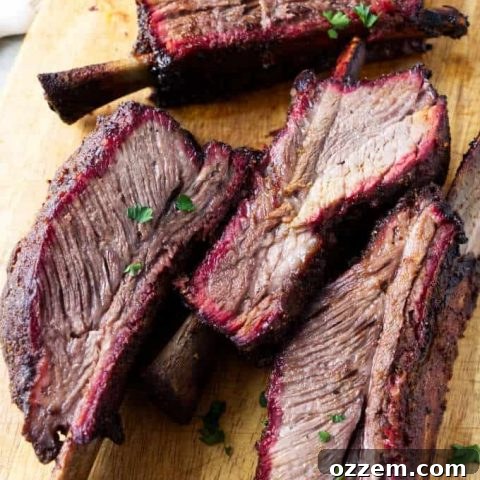
Beef plate ribs, sometimes sold as beef short ribs, are larger and meatier than back ribs, earning them the nickname ‘dino ribs’. These ribs excel with a long, slow smoke, resulting in juicy, fork-tender meat. We’ve enhanced these ribs with a sweet mustard rub and an apple brandy spritz during the cooking process. These ribs are absolutely worth the wait!
Yield: 4 servings
Prep Time: 10 minutes
Cook Time: 8 hours
Total Time: 8 hours 10 minutes
Category: Main Dish
Cuisine: American
Keywords: beef, dinner, grilling, smoked beef, smoked ribs, beef plate ribs, smoked beef ribs, smoked beef plate ribs, traeger beef ribs, traeger beef plate ribs
Rating: 4.6 out of 5 stars (97 reviews)
Print Recipe
Ingredients
- 1 rack of beef plate ribs (about 4 to 5 pounds)
For the mustard rub
- 1/4 cup brown sugar
- 2 tablespoons ground mustard powder
- 1 tablespoon smoked paprika
- 1 tablespoon kosher salt
- 1 tablespoon ground black pepper
- 1 tablespoon garlic powder
For the rib spritz
- 1/2 cup apple juice
- 1/4 cup brandy
Instructions
- Preheat your Traeger smoker to 250°F (121°C). Choose your favorite type of wood pellets; Pit Boss Competition Blend or Traeger Signature Blend are excellent choices for beef.
- Turn the ribs over so the bony side faces up and carefully peel off the membrane (silverskin). Use a rounded knife to get under the membrane and loosen it. Once lifted, use a paper towel to grip and pull it off. It may come off in one piece or smaller sections.
- Generously coat both sides of the ribs with the prepared mustard rub. Let the ribs sit for 10 to 20 minutes to allow the rub to settle into the meat. For enhanced tenderness and flavor, you can also let the ribs sit in the refrigerator overnight with the rub; this acts as an effective dry brine.
- Combine the apple juice and brandy in a food-safe spray bottle. Set aside.
- Place the seasoned ribs directly into the pre-heated smoker and cook for 8 to 10 hours. During the last 4 to 5 hours of cooking, spritz the ribs with the apple juice and brandy solution approximately every 30 minutes.
- Check for doneness by inserting a fork or skewer into the thickest part of the meat; it should pierce with very little resistance, indicating the meat is tender. Alternatively, use a meat thermometer; the internal temperature should be between 203°F and 208°F (95°C-98°C).
- Remove the cooked ribs from the smoker and wrap them securely with butcher paper or aluminum foil. Allow the ribs to rest for 30 to 45 minutes before slicing and serving.
Notes
- Always use a trusty meat thermometer to monitor the internal temperature and ensure perfect results. Tools like the ThermoWorks Signals (leave-in) or the ThermoWorks ONE (instant-read) are highly recommended.
- The dry rub will create a delicious, savory crust (bark) on the ribs, providing so much flavor that barbecue sauce becomes optional.
- Removing the tough membrane on the back of the ribs is crucial for maximum tenderness and allows the rub to fully penetrate the meat.
- The long, slow smoking process is essential for breaking down the tough connective fibers in the beef, transforming them into succulent, tender meat.
- A food-safe spray bottle is ideal for evenly applying the spritz mixture.
Smoked Beef Dino Ribs Video Guide
Watch how beef dino ribs (also known as beef plate ribs) are smoked low and slow until they become fall-off-the-bone tender.
Recommended Products
As an Amazon Associate and member of other affiliate programs, I earn from qualifying purchases.
- Traeger Pro 780 WiFi Pellet Grill
- Thermoworks Signals
- Traeger Signature Blend Wood Pellets
- Pit Boss Competition Blend – 40 lbs
- BBQ Spritz Spray Bottle
- BBQ Basting Mop
Nutrition Information:
Amount Per Serving (based on 1 serving):
- Calories: 208
- Total Fat: 8g
- Saturated Fat: 3g
- Trans Fat: 0g
- Unsaturated Fat: 4g
- Cholesterol: 28mg
- Sodium: 1615mg
- Carbohydrates: 19g
- Fiber: 2g
- Sugar: 15g
- Protein: 9g
Nutrition information is a guideline only, is calculated automatically by third-party software, and absolute accuracy is not guaranteed.