
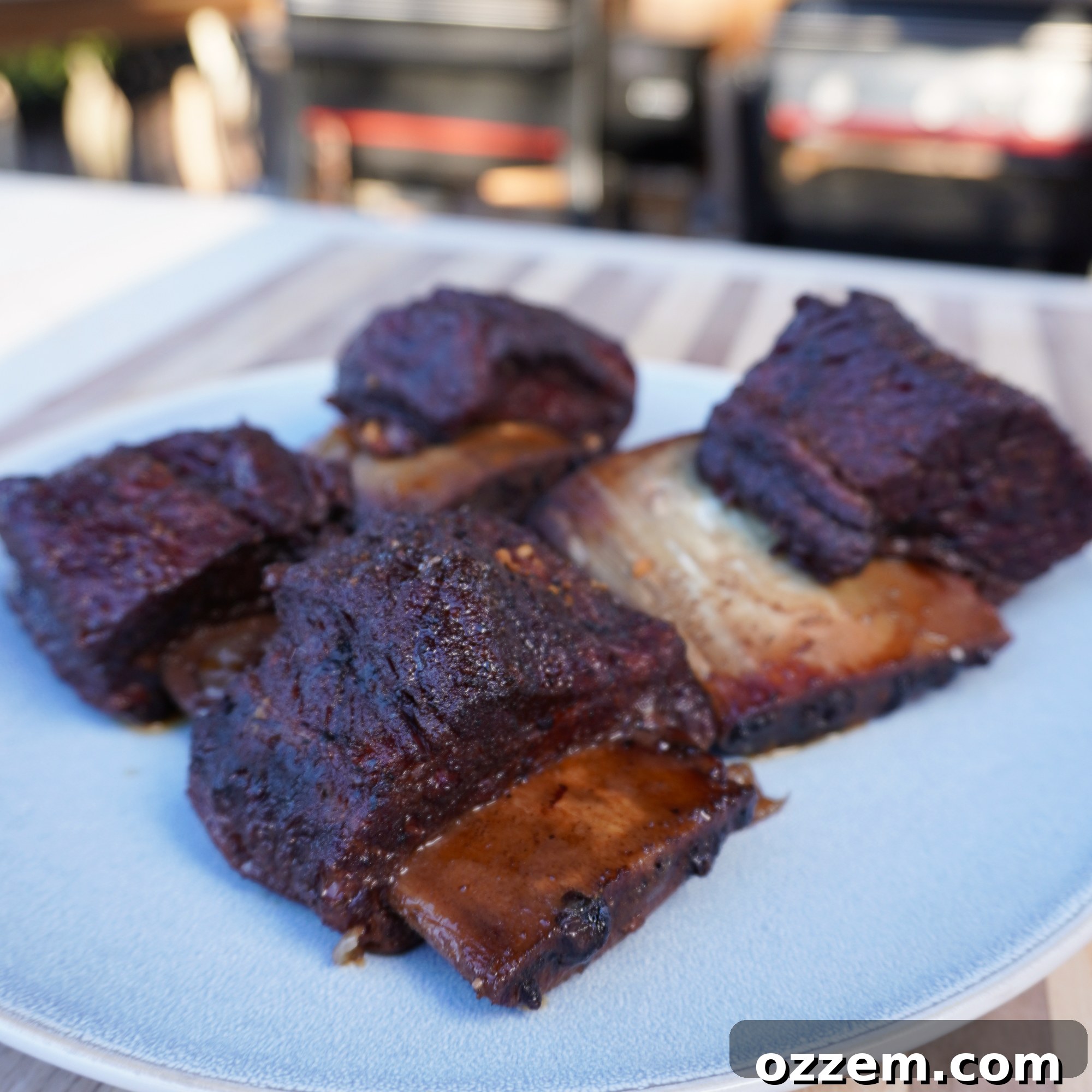
Ultimate Smoked Short Ribs: A Recipe for Unforgettable Flavor
Imagine a chilly winter evening, the air crisp and cold. What could be more comforting than a plate piled high with tender, smoky beef? This Smoked Short Rib recipe is not just a meal; it’s an experience designed to envelop you in warmth and rich flavor, leaving you deeply satisfied and completely nourished. The unparalleled smokiness infused into the ribs, coupled with the luxurious broth derived from red wine and robust beef stock, transforms these braised smoked short ribs into an truly unforgettable dish. Prepare to impress your taste buds and those of your guests with this culinary masterpiece.
If you’re eager to explore more impressive beef rib preparations, consider mastering a full rack with my Easy Smoked Beef Plate Ribs recipe. For a truly hearty and soul-satisfying meal that showcases the versatility of short ribs, you absolutely must try this Grilled Short Ribs Ragu. It’s a dish celebrated for its incredible tenderness, subtle smokiness, and an explosion of savory flavors that will make it a new family favorite.
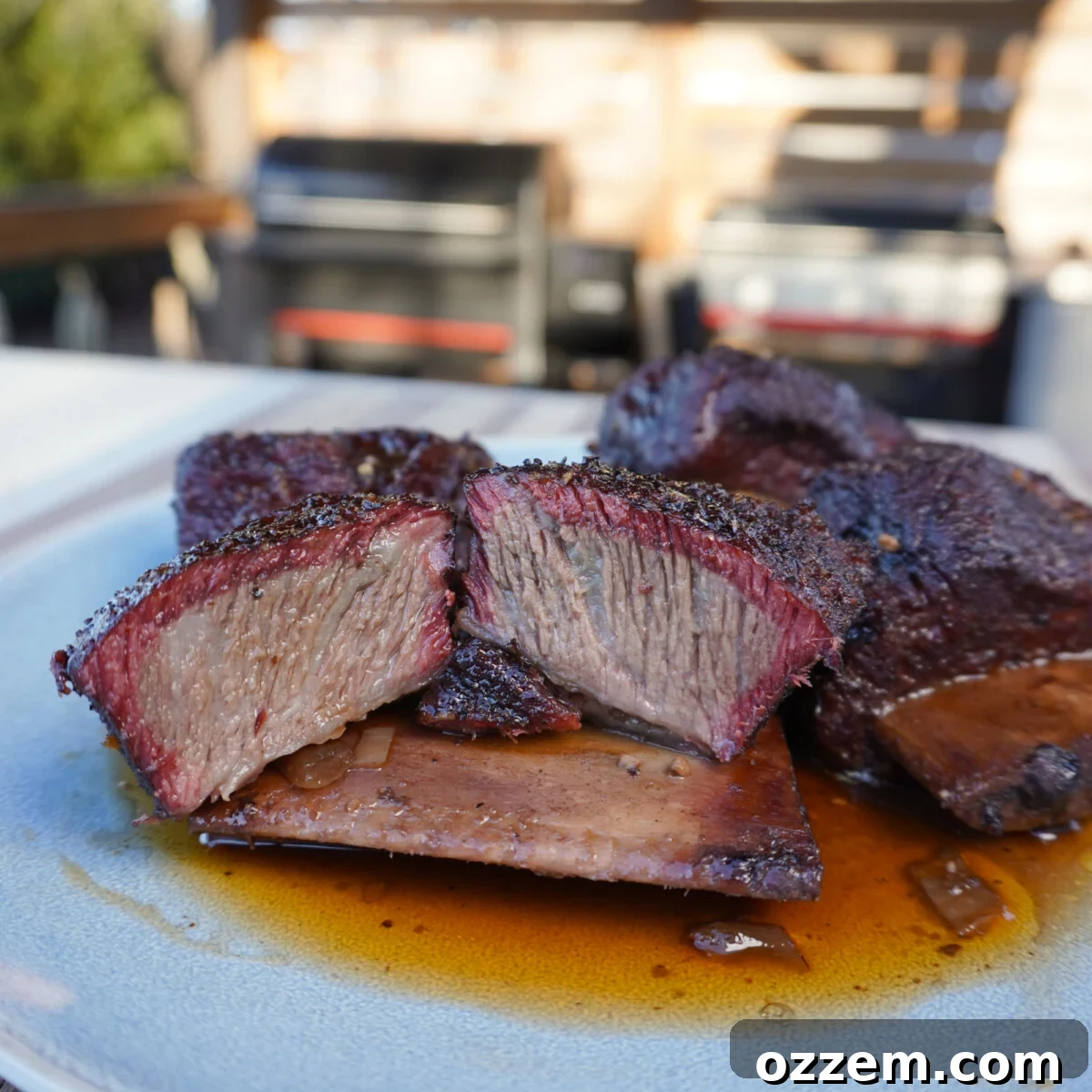
Table of Contents
- What Are Beef Short Ribs?
- Essential Short Rib Ingredients
- Step 1: Prepare Your Short Ribs for Smoking
- Step 2: The Art of Smoking and Braising Short Ribs
- Expert Short Rib Smoking Tips
- Frequently Asked Questions
- Similar Smoked Beef Recipes
- Smoked Short Ribs Recipe (Detailed)
What Are Beef Short Ribs?
Beef short ribs are a highly prized cut of beef, celebrated for their rich flavor and incredible tenderness when cooked correctly. These cuts are typically sourced from the brisket, chuck, plate, or rib areas of the cow. Often, you might hear them affectionately referred to as “brisket on a stick,” “dino ribs,” or “dino bones” due to their impressive size and robust appearance. Each short rib consists of a segment of the rib bone surrounded by a generous portion of meat, making them perfect for slow cooking methods.
Short ribs are available in several forms, catering to different culinary applications. You can find them as a full rack, usually comprising three to four bones, ideal for a grand presentation. Alternatively, they might be cut thin across the bones, known as flanken-style ribs, which are popular for grilling quickly in Korean BBQ. For this recipe, we’ll be focusing on the more common, thicker cut, parallel with the bones, often cubed to include both the bone and the marbled meat on top. This specific cut, often simply labeled “short ribs,” is the most readily available and perfectly suited for the smoking and braising technique we’re employing today.
The meat itself is renowned for its exceptional marbling, which contributes significantly to its inherently beefy flavor and succulent texture. When prepared with patience and precision, these ribs transform into a fall-apart tender delicacy that practically melts in your mouth. This remarkable quality is precisely why beef ribs and short ribs hold such a revered place in the world of barbecue and comfort food.
To unlock the full potential of these cuts, achieving that desired super tender and utterly delicious result, it’s essential to break down the considerable fat and connective tissues woven throughout the meat. The most effective way to accomplish this on a smoker is through a method known as “low and slow” cooking. This extended, gentle heat allows the collagen to slowly convert into gelatin, moistening the meat from within. After developing a beautiful, flavorful bark on the exterior during the initial smoking phase, we’ll transition them into a delectable braise. This final braising step ensures an unparalleled level of tenderness and infuses the ribs with a complex, savory depth that truly makes them shine.
Essential Short Rib Ingredients
Crafting the perfect smoked short ribs begins with selecting quality ingredients that work in harmony to build layers of flavor. Here’s a detailed look at what you’ll need:
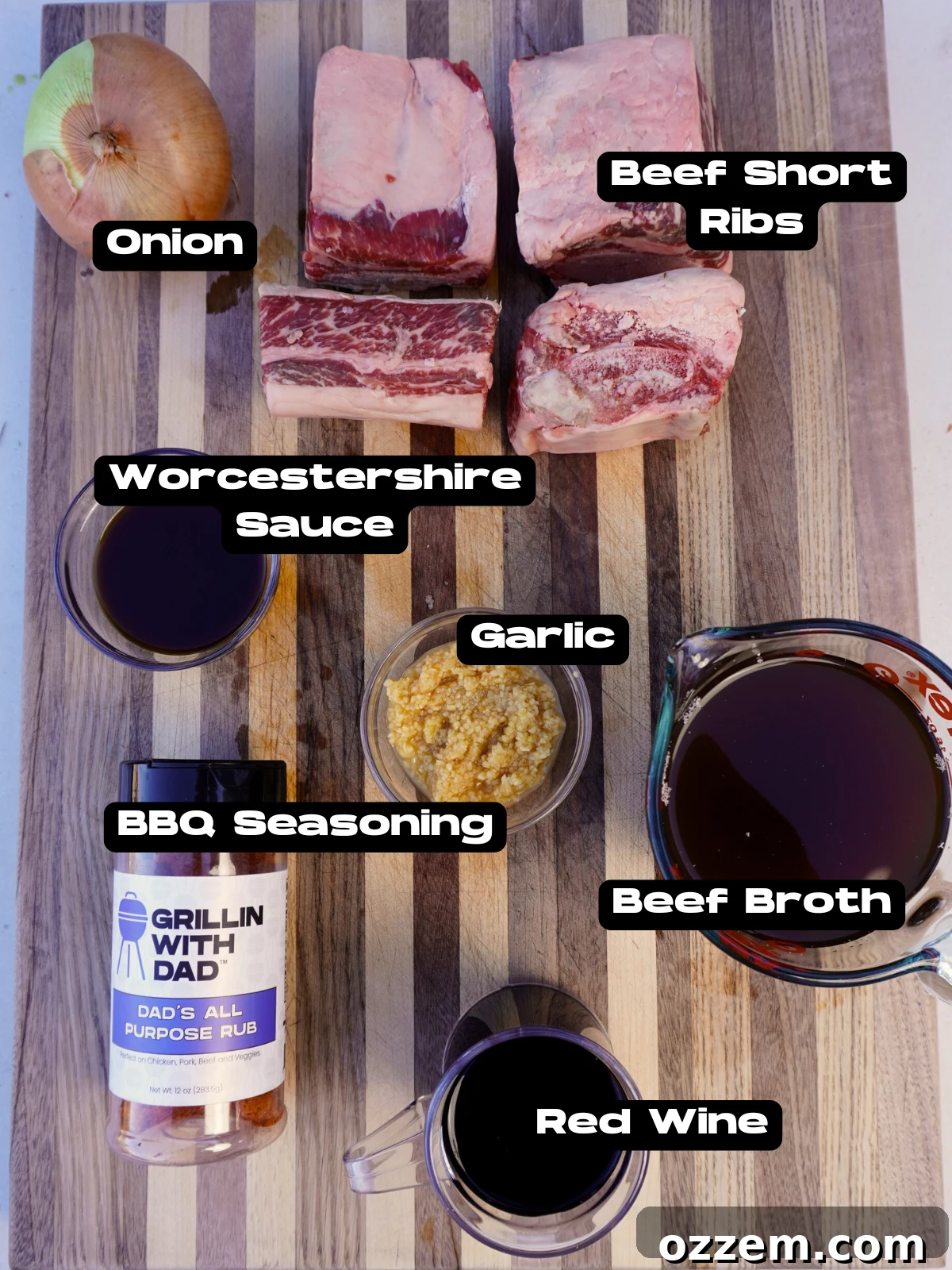
- Beef Short Ribs: These are, undeniably, the star of our recipe. Opt for cubed short ribs that include both the bone and a generous portion of surrounding, well-marbled meat. The bone contributes depth of flavor, while the marbling ensures juiciness.
- Seasoning: For the initial smoke, I highly recommend a high-quality, all-purpose beef seasoning. Its balanced blend of salt, pepper, and spices will create a fantastic bark and enhance the natural beef flavor. For the braise, an Italian blend can add aromatic herbs that complement the rich broth beautifully.
- Beef Broth: This liquid gold is crucial for the braising process. It not only adds significant moisture to keep the ribs from drying out but also infuses them with a foundational savory flavor that deepens throughout the cook.
- Onion: Diced onion provides a sweet and pungent base for our braising liquid. As it slowly cooks down, it caramelizes and releases aromatic compounds that add a complex savory depth to the final sauce.
- Garlic: The indispensable backbone of many savory dishes, minced garlic offers a rich, robust, and slightly spicy flavor profile. Its aromatic qualities are essential for building the profound taste of our braise.
- Red Wine: A key ingredient for a sophisticated braise, red wine contributes a beautiful color, additional layers of fruity acidity, and an incredible depth of flavor. As it simmers, the alcohol evaporates, leaving behind a concentrated essence that elevates the broth. (See tips for substitutions if you prefer to omit it.)
- Worcestershire Sauce: This fermented condiment is a secret weapon for adding a powerful umami punch. Its complex blend of savory, sweet, and tangy notes significantly enhances the beefiness of the ribs and creates an incredibly rich, well-rounded final sauce.
Step 1: Prepare Your Short Ribs for Smoking
Proper preparation is the first crucial step towards achieving perfectly tender and flavorful smoked short ribs. This initial stage sets the foundation for a successful cook, ensuring maximum flavor penetration and a desirable texture.
To begin, carefully inspect your beef short ribs. You’ll need to remove any significant fat caps and, most importantly, the silver skin that often covers the meat side. The silver skin is a tough, silvery membrane that, if left on, will become unpleasantly chewy and rubbery after cooking. Some pieces might peel off easily with a firm grip, while others may require a gentle, precise slice with a sharp knife, taking care not to remove too much valuable meat. Removing this membrane is vital because it exposes the underlying meat, allowing our seasoning to penetrate deeply and form a delicious bark.
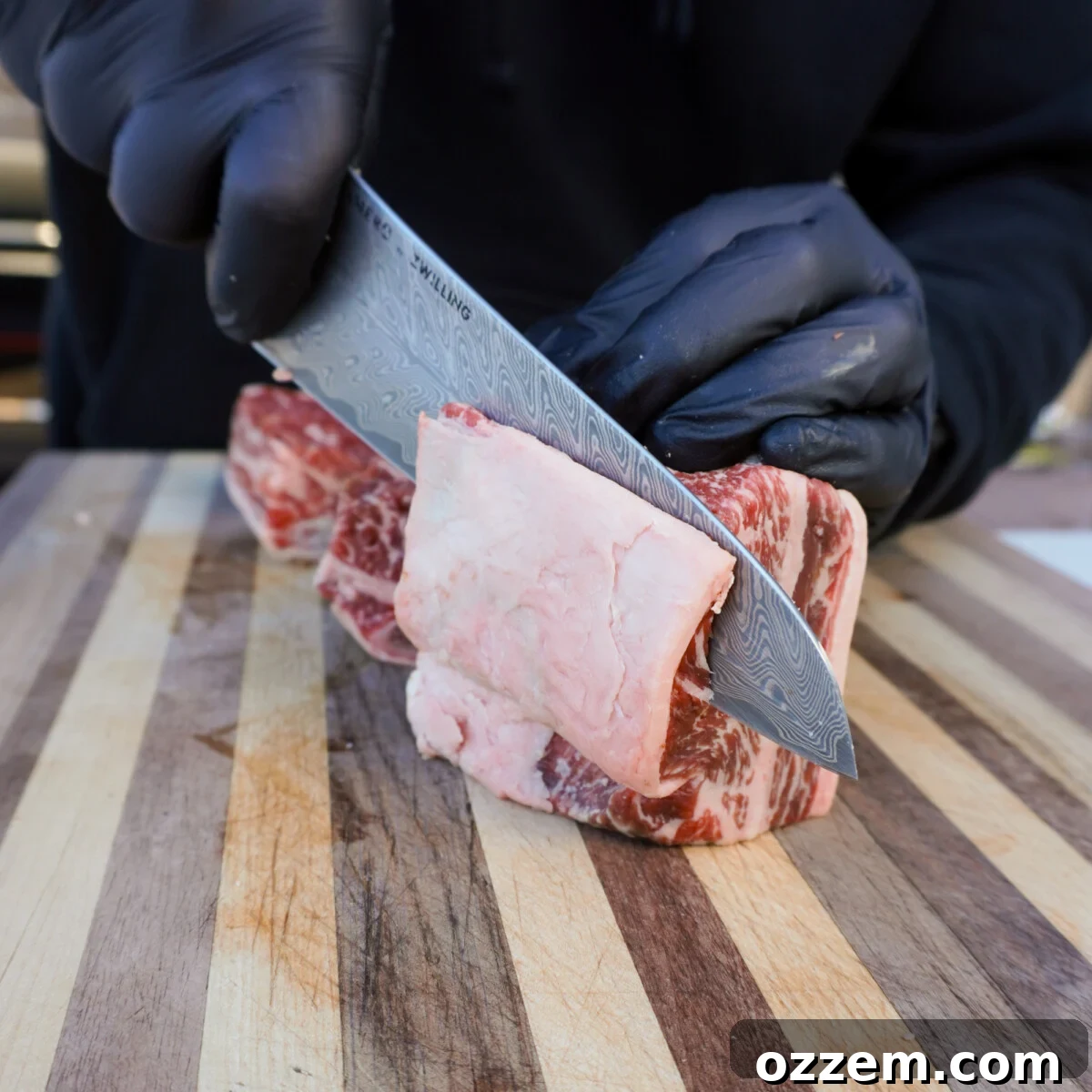
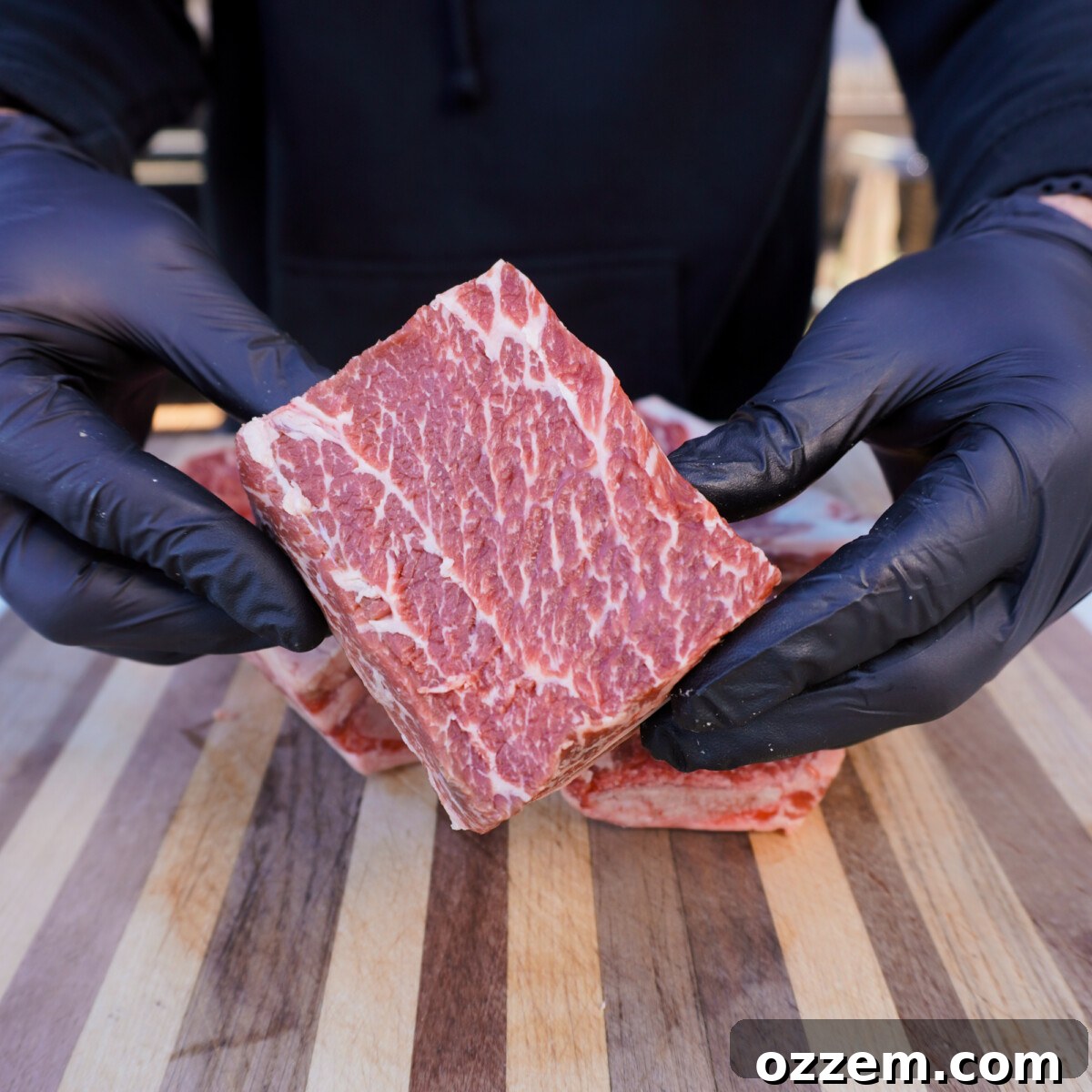
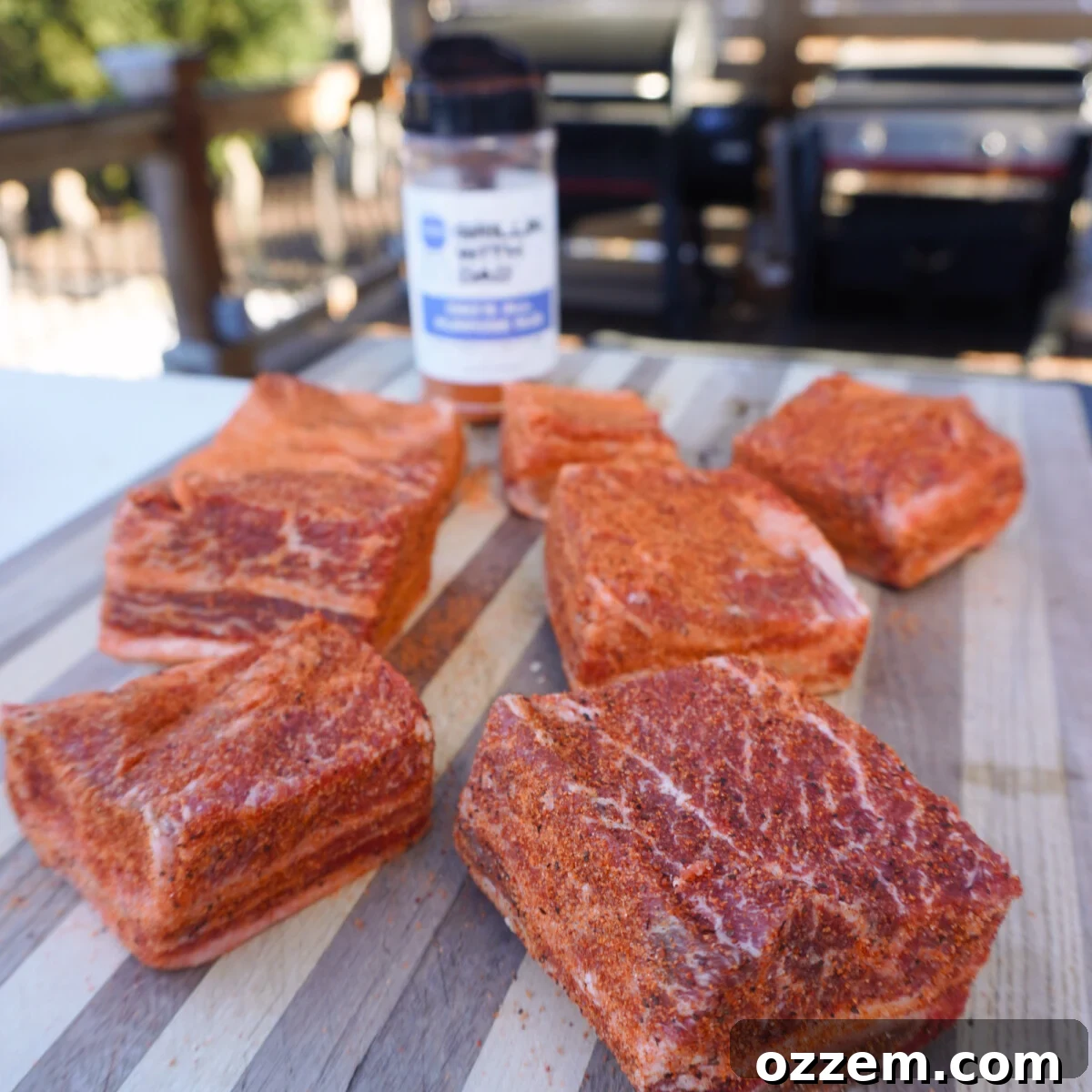
Once trimmed, it’s time to generously season your beef short ribs. I highly recommend using Dad’s All Purpose rub. This expertly crafted blend provides the perfect balance of savory, peppery notes with just the right hint of spice, designed to truly enhance the naturally rich and delicious flavor of beef. Don’t be shy; ensure all sides of the ribs are thoroughly coated for maximum flavor development.
After seasoning, allow the short ribs to rest at room temperature for approximately 20-30 minutes. This resting period, often referred to as “sweating out,” serves a dual purpose: it allows the seasoning to adhere better to the meat, drawing out a small amount of moisture that creates a tacky surface, and it brings the meat closer to room temperature, promoting a more even cook when it hits the smoker.
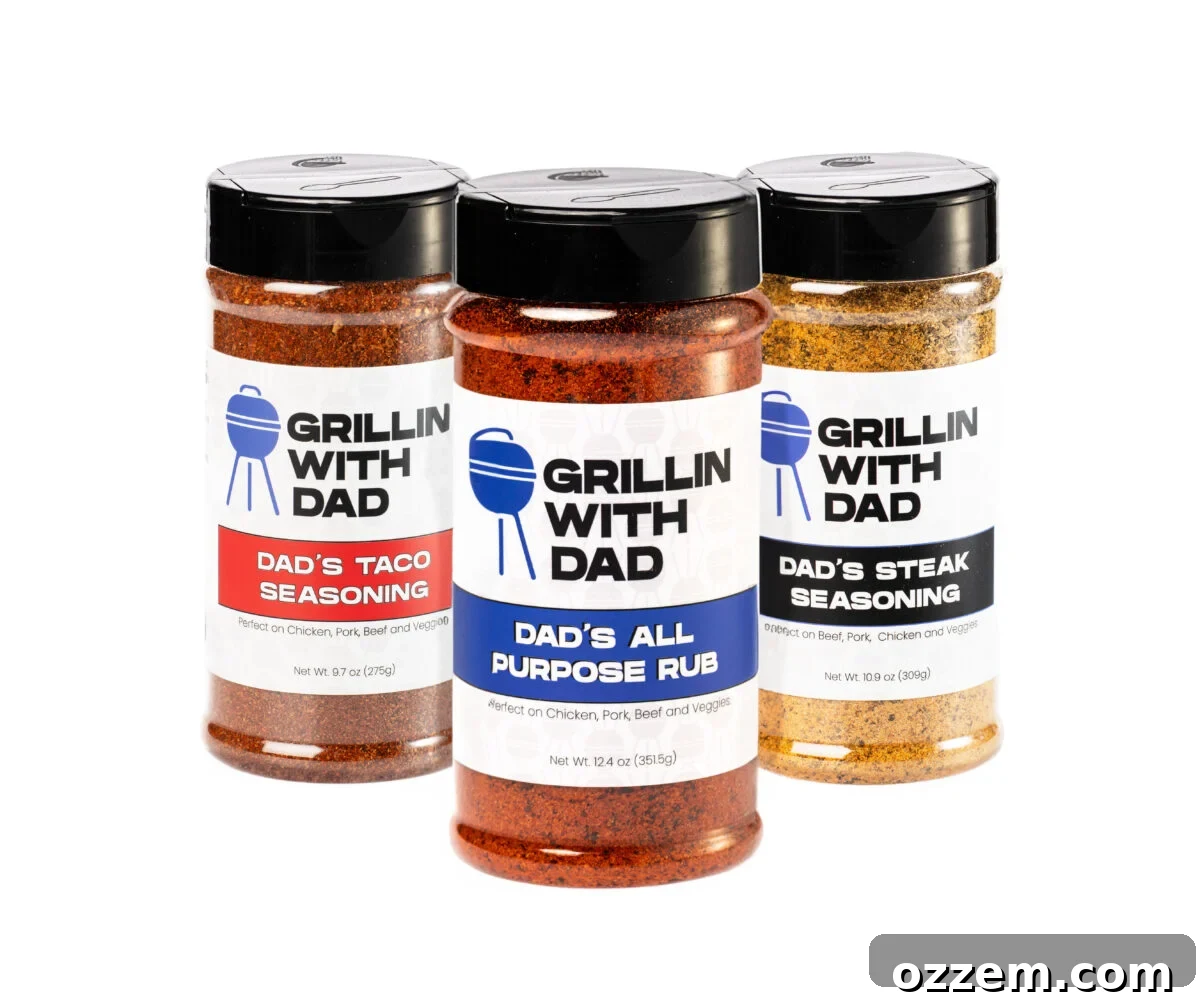
Dad’s Seasonings
Unlock incredible flavor with our must-have grilling seasonings!
Step 2: The Art of Smoking and Braising Short Ribs
This dual-stage cooking method is the secret to achieving smoked short ribs that are both deeply flavorful from the smoke and incredibly tender from the braise. It’s a patient process, but the results are undeniably worth every moment.
First, pre-heat your grill or smoker to a consistent 250 degrees Fahrenheit (approximately 121 degrees Celsius). Ensure your setup is configured for indirect heat, which is crucial for slow cooking and preventing the ribs from burning. Once your smoker reaches the target temperature and is holding steady, carefully place the seasoned short ribs directly onto the grates. Allow them to smoke undisturbed for 3-4 hours, or until a beautiful, dark, and flavorful bark has formed on the exterior. At this stage, the internal temperature of the ribs will typically be between 160-170 degrees Fahrenheit (71-77 degrees Celsius). Keep in mind that smoking times can vary significantly based on your specific smoker, external weather conditions, and the size and thickness of your short ribs. The golden rule here is low and slow; resist the urge to rush the process. Let the smoke work its magic, infusing the beef with that delicious, signature smoky flavor we crave.
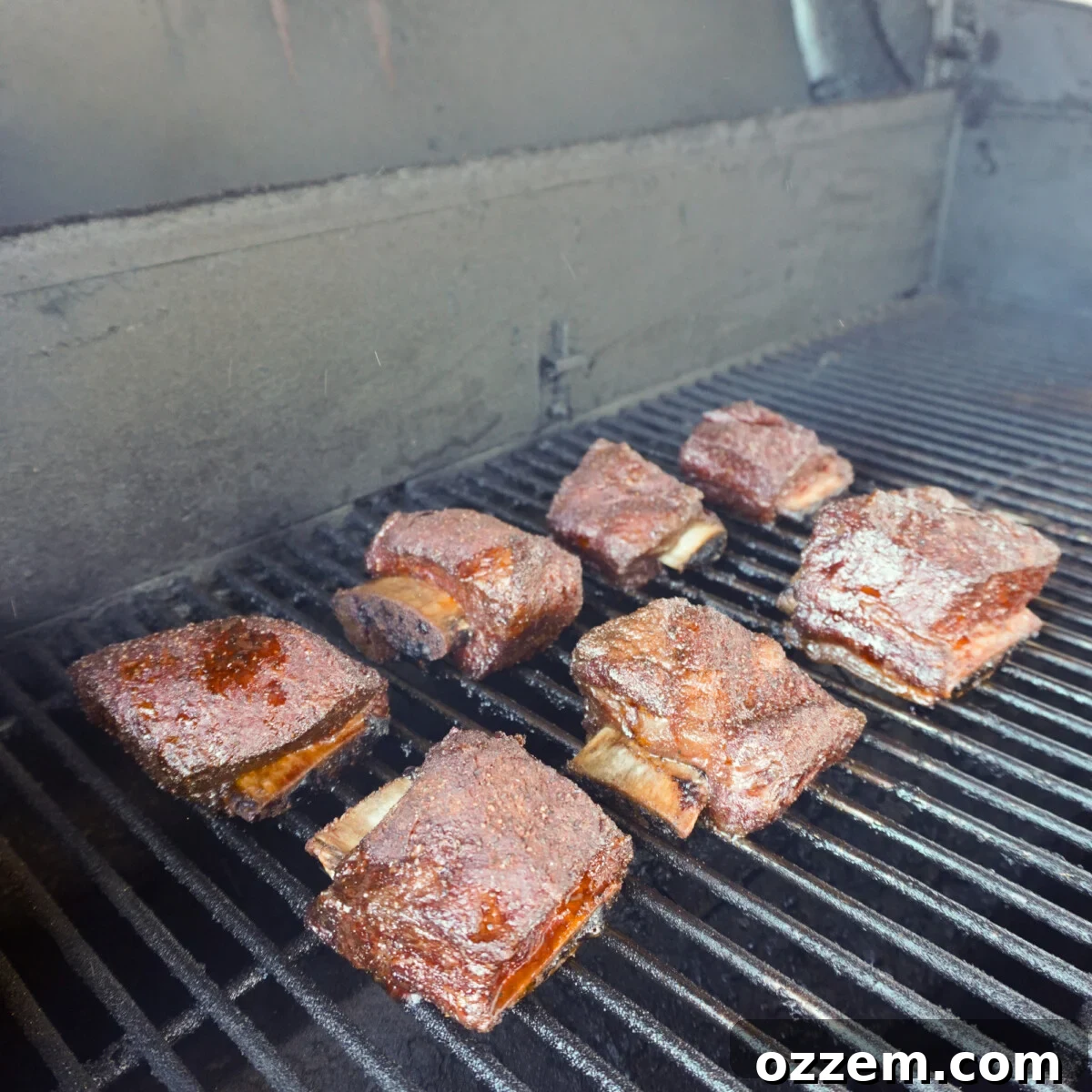
Once the short ribs have achieved their target internal temperature and the bark is well-set and robust, it’s time to transition to the second, equally important stage: braising. Prepare a sturdy foil pan, preferably a half or full-size steam pan. Into this pan, add your diced onion, the smoked short ribs, rich beef broth, flavorful red wine, umami-packed Worcestershire sauce, and fragrant minced garlic. This liquid mixture will become your luxurious braising liquid, which will later reduce to form an incredibly delicious sauce.
Tightly wrap the foil pan with heavy-duty aluminum foil, creating a sealed environment that will trap steam and tenderize the meat. Place the foil-covered pan back onto your smoker. Alternatively, if your smoker is running low on fuel or you prefer to finish them indoors, you can transfer the pan to a preheated oven at this point, as the ribs will be cooked covered. To expedite the braising process without sacrificing tenderness, you can now increase the temperature of your smoker or oven to 300 degrees Fahrenheit (approximately 149 degrees Celsius).
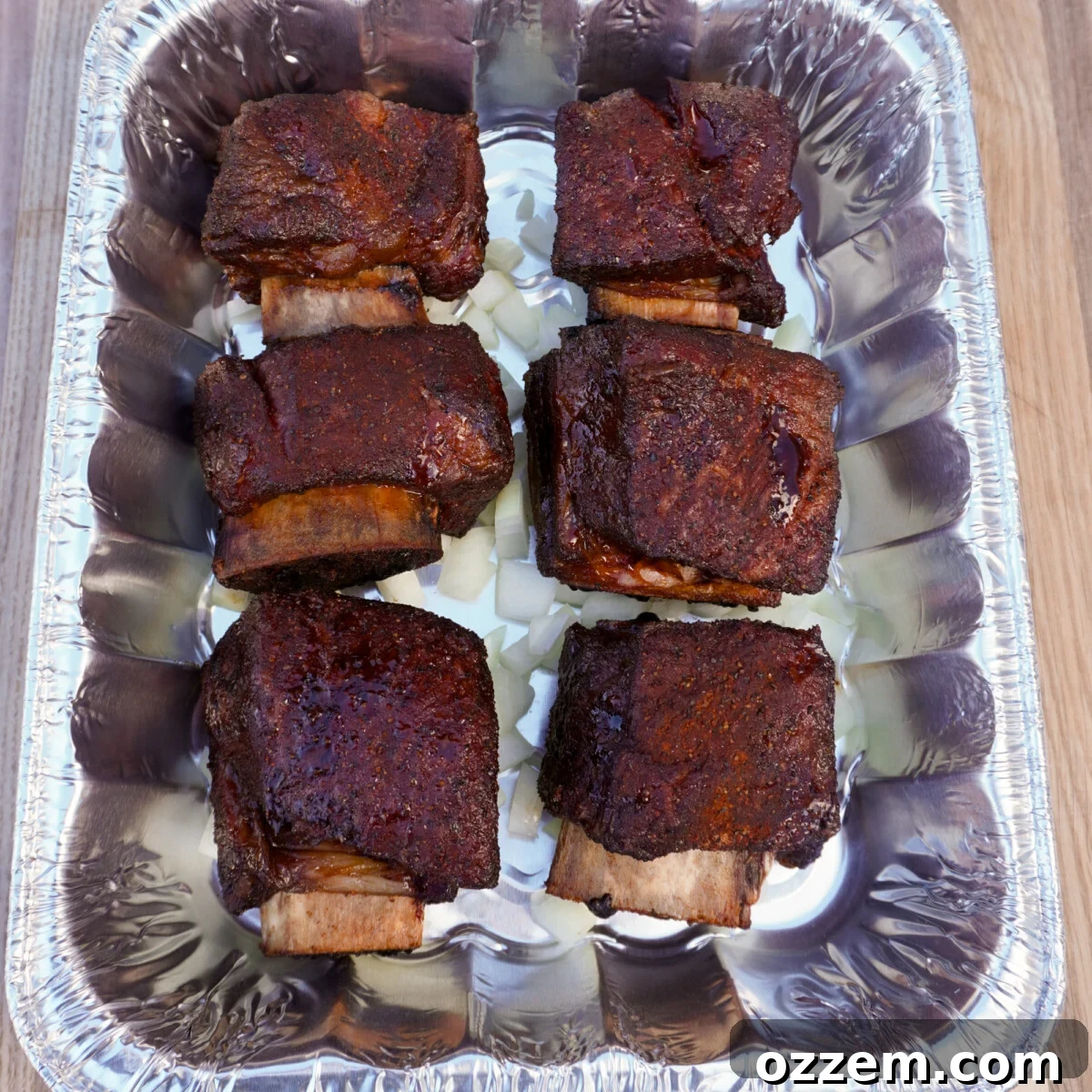
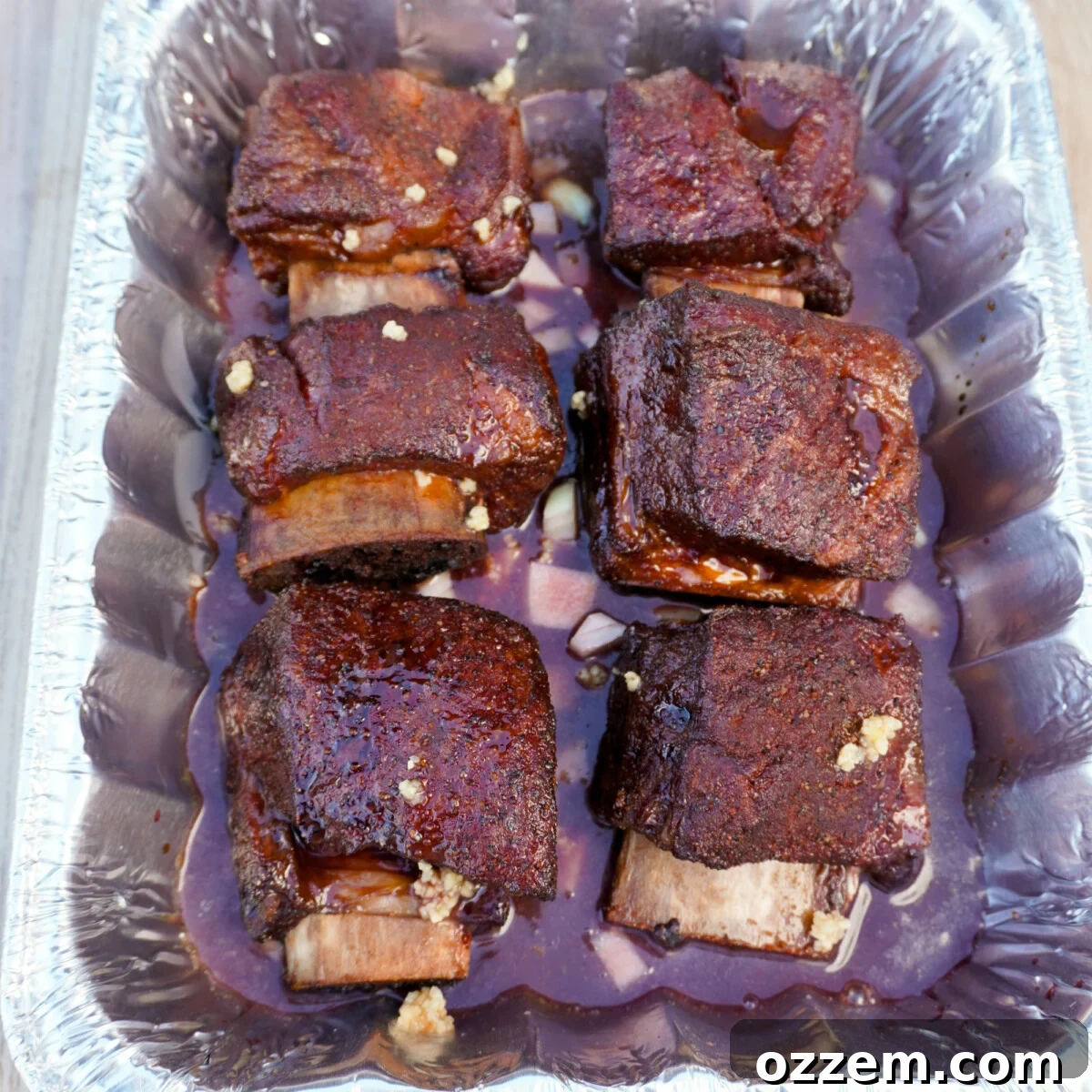
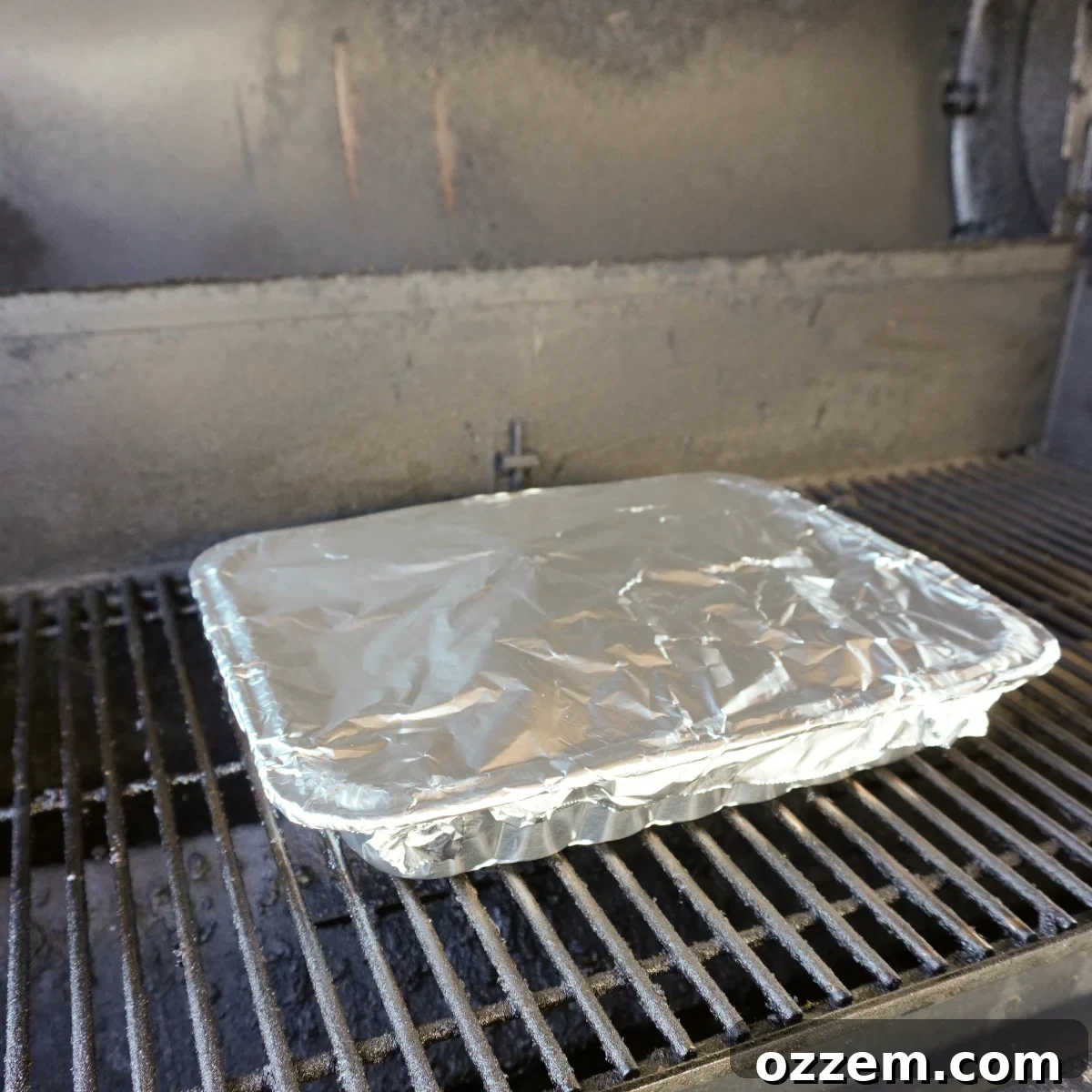
Continue cooking the short ribs in the foil pan until they reach that coveted “fork tender” stage. This means you should be able to effortlessly insert a fork or a meat thermometer into the ribs with virtually no resistance, much like pushing a hot knife through butter. I typically start checking for tenderness when the internal temperature hovers around the 200-degree Fahrenheit (93 degrees Celsius) mark. If they haven’t reached desired tenderness, simply cover them back up tightly and continue cooking for another 30 minutes before checking again. Repeat this process until they are perfectly fork tender.
Once the short ribs are gloriously tender, carefully remove the foil pan from the grill, smoker, or oven. It’s crucial to let them rest, still covered in the foil, at room temperature for at least 30 minutes. This resting period allows the muscle fibers to relax, redistributing the juices throughout the meat, stopping the cooking process gently, and resulting in a significantly more tender and flavorful final product. Patience is truly rewarded here!
Expert Short Rib Smoking Tips
- Trim Meticulously: Always remove the tough silver skin and any excess fat cap from the short ribs. This step is critical as it not only allows your seasoning to adhere better but also prevents a chewy texture, ensuring every bite is succulent.
- Temperature is Key, Tenderness is King: While monitoring internal temperature is important, the true indicator of perfectly cooked short ribs is their tenderness. Cook them until they are “probe tender” – a thermometer or fork should slide in with minimal resistance, feeling like butter. This often occurs between 200-210°F (93-99°C).
- Wood Selection Matters: For beef, robust woods like oak, hickory, or mesquite impart a fantastic, deep smoky flavor that complements the richness of the short ribs beautifully. Experiment to find your personal preference.
- Choosing Your Wine: For the braising liquid, there’s no need for an expensive bottle of red wine. A medium-bodied, dry red wine like a Cabernet Sauvignon or Merlot works perfectly. Its main purpose is to add a savory richness and complex fruit notes to the broth while the alcohol content burns off during cooking. If you prefer to omit the wine, simply substitute it with an equal amount of additional high-quality beef broth.
- Don’t Rush the Rest: The post-cook rest is as vital as the cooking itself. Allowing the ribs to rest, covered, for 30 minutes or more helps the juices redistribute, ensuring maximum moisture and tenderness in every bite.
For a fun and equally delicious twist on beef ribs, be sure to check out my Smoked Beef Rib Lollipop recipe!
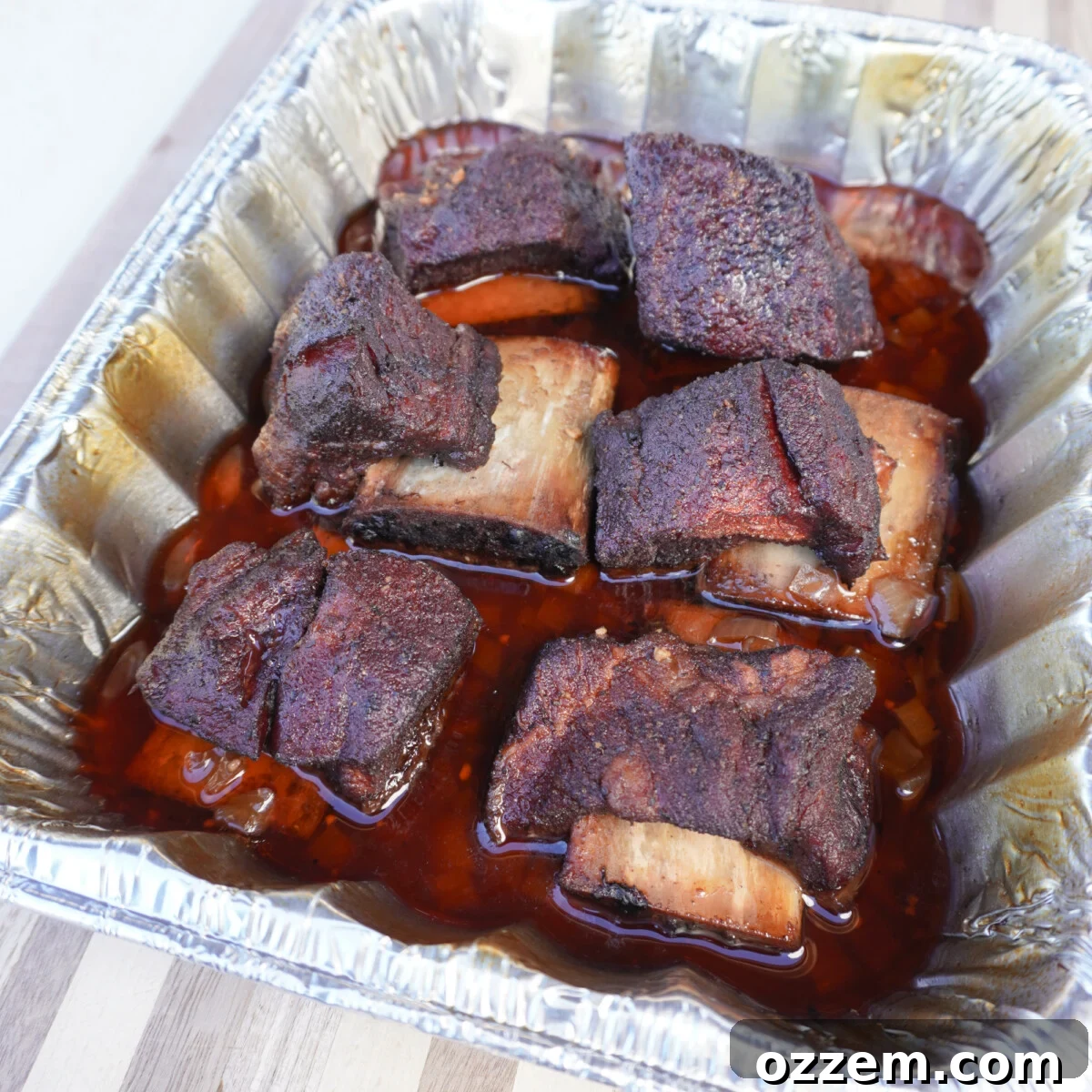
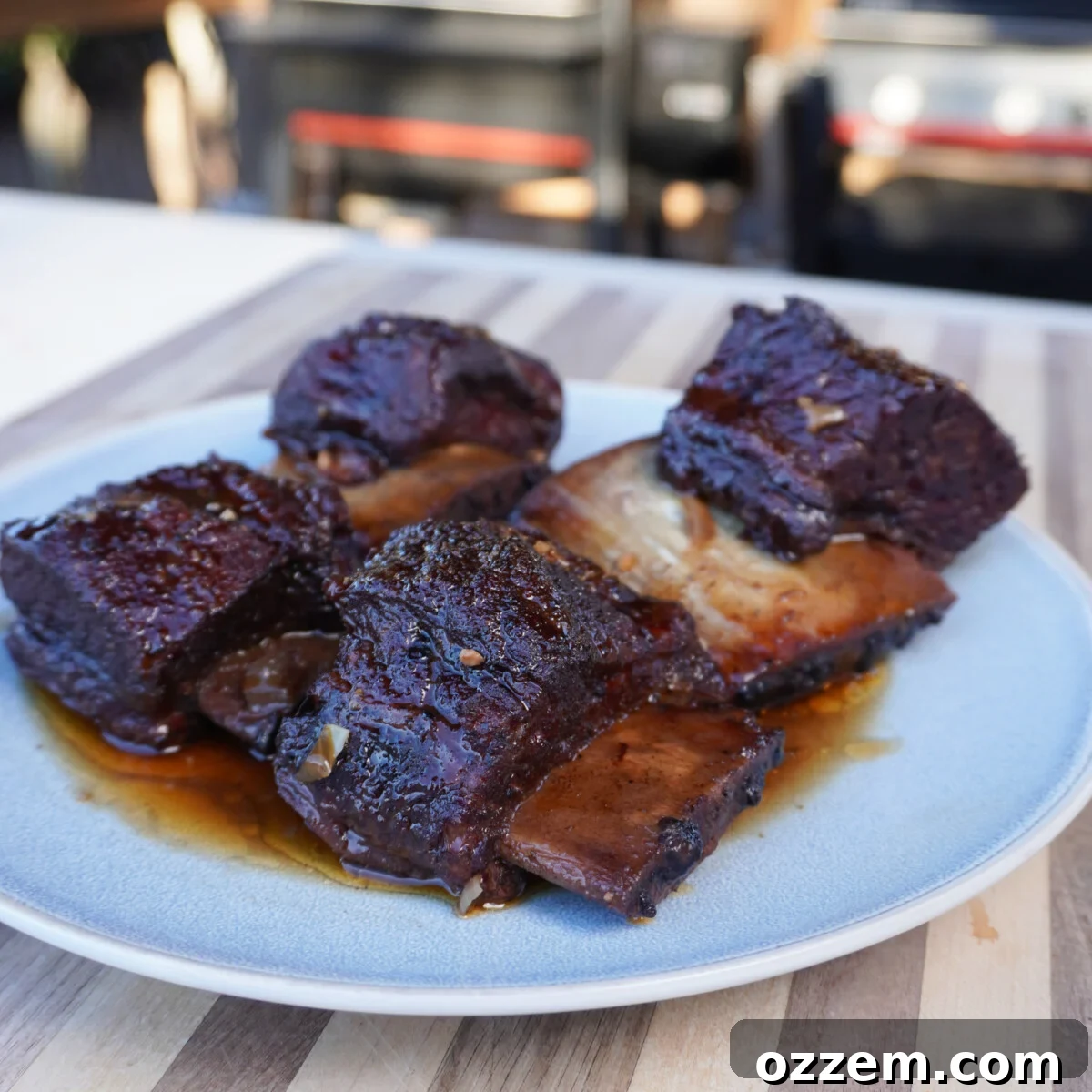
Once rested, carefully remove the tender short ribs from the foil pan and transfer them to a serving platter. The rich, aromatic liquid at the bottom of the pan is a treasure trove of flavor! You can serve this braising liquid as is, spooning it generously over the plated ribs, or for a slightly thicker, more refined sauce, transfer it to a small saucepan. Bring it to a gentle boil, then reduce the heat and simmer for about 5 minutes, allowing it to naturally thicken and concentrate further.
I find these magnificent short ribs are best enjoyed served over a bed of creamy mashed potatoes, which perfectly soak up all the savory pan sauce. A sprinkle of fresh herbs, like chopped parsley, can add a pop of color and freshness. Enjoy this truly gourmet meal!
Frequently Asked Questions:
Absolutely! While the smoker imparts a unique depth of flavor, you can still achieve delicious results. Instead of smoking, sear the seasoned short ribs in a hot skillet or Dutch oven on all sides until nicely browned. This develops a good crust and flavor. Then, transfer them to a foil pan or Dutch oven, add the braising ingredients, cover tightly, and continue the cooking process in your oven as listed in the recipe instructions.
If you prefer to skip the red wine, you can easily substitute it with an equal amount of additional beef broth. The short ribs will still be incredibly flavorful and tender. For an extra layer of complexity, you could also add a tablespoon of balsamic vinegar, which offers a similar tangy depth to the dish.
Fork tenderness is the key to perfect short ribs. It means that when you insert a fork or a meat thermometer probe into the thickest part of the meat, it should slide in with very little to no resistance, feeling like it’s going through softened butter. This usually happens when the internal temperature reaches between 200-210°F (93-99°C). Don’t be afraid to check frequently once you pass 195°F (90°C).
Yes, these smoked and braised short ribs are excellent for making ahead! In fact, many chefs believe they taste even better the next day as the flavors have more time to meld. Cook the ribs as directed, let them cool, then store them in the braising liquid in an airtight container in the refrigerator for up to 3-4 days. Reheat gently on the stovetop or in the oven until warmed through. The fat will solidify on top, which you can skim off easily before reheating if desired.
Similar Smoked Beef Recipes:
Beef
Smoked Short Ribs
Beef
Smoked Beef Ribs
Beef
Grilled Rack of Venison
Beef
Beef Rib Lollipops
If you tried these Smoked Short Ribs or any other recipe on my blog, please leave a 🌟 star rating and let me know how it went in the📝 comments. I love hearing from you!
Enjoyed this recipe? Give it a star rating and leave a comment!
Average Rating: 5 stars from 3 votes
Smoked Short Ribs
Maciek Zurawski
15 minutes
4 hours
4 People
Ingredients
- 4 Beef short ribs
- 4 tbsp Dad’s All Purpose rub
- 1 Yellow onion, diced
- 1 cup Beef broth
- 1 cup Red wine
- 1 tbsp Minced garlic
- 1/4 cup Worcestershire sauce
Instructions
-
Remove the fat cap and silver skin from the meat side of the short ribs to fully expose the meat.
-
Season all side of the beef short ribs with Dad’s All Purpose Rub and let them sit for 20-30 minutes at room temperature.
-
Pre-heat the grill to 250 degrees and set for indirect heat. Place the seasoned short ribs directly on the grates and smoke for 3-4 hours or until the internal temperature reaches 160-170 degrees.
-
In a foil pan, add the diced onion, the smoked beef ribs, beef broth, red wine, Worcestershire sauce, and minced garlic. Tightly wrap in foil and place back on the smoker or inside the oven.
-
Increase the temperature to 300 degree and cook until the short ribs are probe tender. This will take anywhere from 2-4 hours, depending on the size of the short ribs.
-
When the short ribs are tender, remove the foil pan from the grill/smoker/oven and let it rest at room temperature, still covered for 30 minutes.
-
Plate them up, serve and enjoy!
Notes
- Cook the short ribs in the foil pan until they are fork tender. Meaning you can insert your fork or meat thermometer in the ribs without any resistance, like a hot knife in butter. I like to start checking tenderness around the 200 degree internal temperature mark. If they are still not tender, cover them back up and continue cooking for 30 minutes. And then repeat the process. Continue this until they become fork tender.
- Use the sauce from the bottom of the foil pan as is or transfer it to a small sauce pan, bring it up a boil and simmer it for 5 minutes to let it thicken up.
Nutrition (Per Serving)
- Calories: 201kcal
- Carbohydrates: 4g
- Protein: 2g
- Fat: 17g
- Saturated Fat: 11g
- Polyunsaturated Fat: 1g
- Monounsaturated Fat: 5g
- Trans Fat: 1g
- Cholesterol: 46mg
- Sodium: 516mg
- Potassium: 202mg
- Fiber: 1g
- Sugar: 2g
- Vitamin A: 529IU
- Vitamin C: 4mg
- Calcium: 34mg
- Iron: 1mg
Check out the Recipes Pagefor other tasty ideas!