
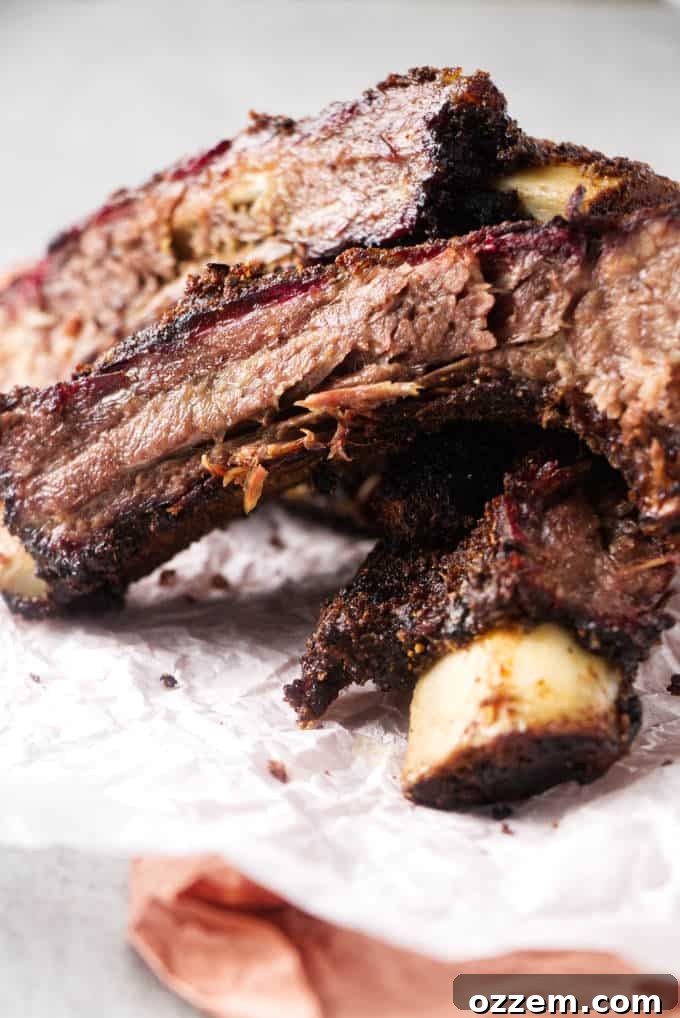
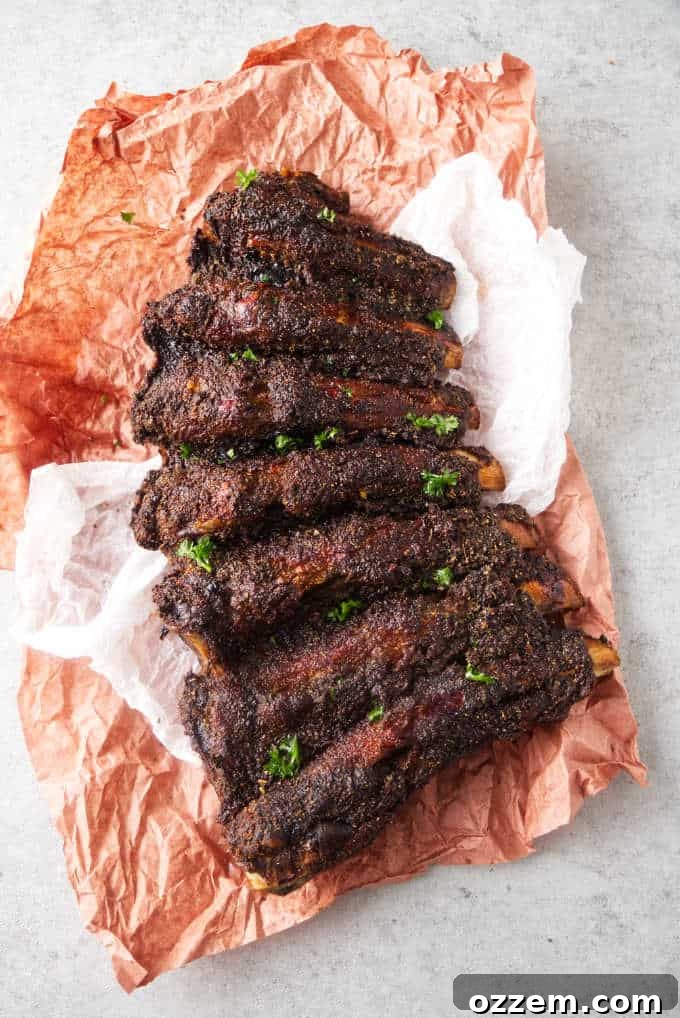
Prepare your taste buds for an unforgettable culinary journey with these Traeger smoked beef back ribs. Boasting an incredible tenderness that makes them practically fall off the bone, these ribs are a testament to the magic of low and slow smoking. Your Traeger pellet grill handles the heavy lifting, allowing you to relax while it transforms a simple rack of ribs into a masterpiece of flavor. The meticulously crafted dry rub forms a beautiful, crusty bark on the outside, so rich and savory that you’ll find yourself reaching for another rib without even a thought of BBQ sauce. They are truly that good! For the ultimate experience, we recommend selecting meaty chuck ribs or plate ribs, as they offer a more substantial bite compared to traditional back ribs. The secret to achieving this unparalleled tenderness and depth of flavor lies in the low and slow smoking process, which breaks down tough connective tissues, leaving you with juicy, melt-in-your-mouth perfection.
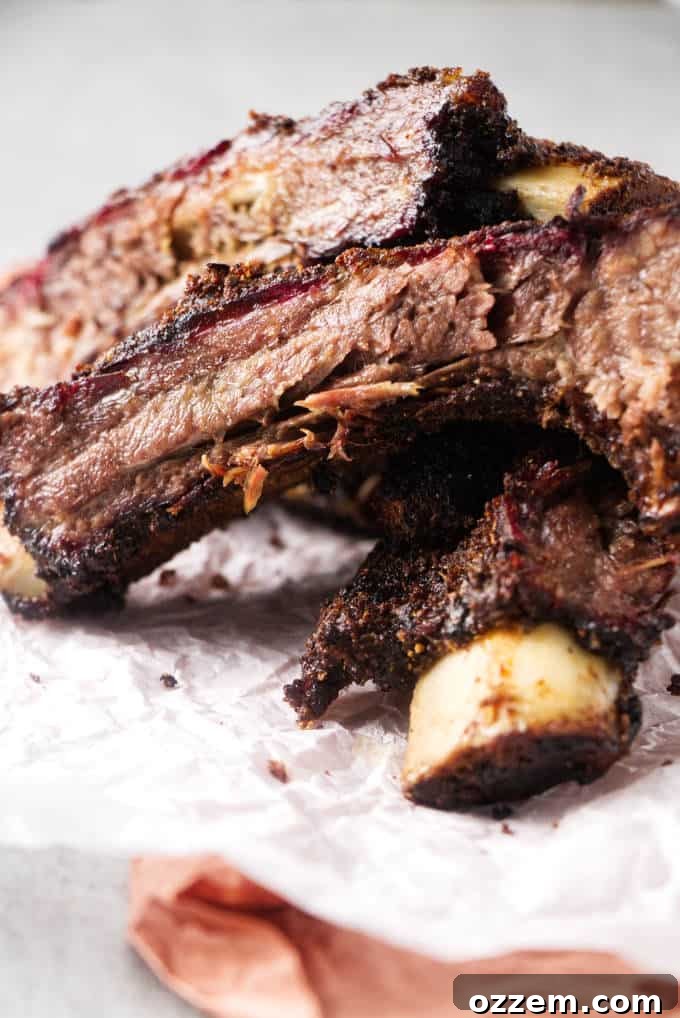
Unveiling the Mystery: What Exactly Are Beef Back Ribs?
Beef back ribs originate from a prized section of the steer known as the rib primal cut, located in the forequarter. This particular primal is renowned for its generous marbling – a network of intramuscular fat that melts during cooking, infusing the meat with incredible flavor and moisture. It’s the same region from which highly coveted cuts like the prime rib roast and various ribeye steaks are meticulously carved. Considering the exceptional reputation of prime rib and ribeye, it’s no surprise that beef back ribs, when properly prepared, stand out as some of the most mouthwatering ribs you can ever sink your teeth into. While butchers often trim the majority of the meat from between the bones to maximize profit from these more expensive cuts, the residual meat clinging to the back ribs, along with the bone marrow and connective tissue, still delivers an intensely rich, beefy flavor that is distinct and deeply satisfying. This unique flavor profile, coupled with their inherent tenderness when smoked low and slow, makes them a true hidden gem for barbecue enthusiasts.
This post may contain affiliate links. Please read our disclosure policy.
Mastering the Hunt: How to Secure the Best Beef Back Ribs for Smoking
The pursuit of the perfect beef back rib often begins at the butcher’s counter. As previously mentioned, the rib primal is a source of high-value cuts like prime rib and ribeye. Butchers, understandably, will trim these expensive cuts with precision, often leaving the beef back ribs with less meat directly on the bones, as the intercostal meat (between the bones) is often removed to add to the bulk of the larger, more profitable roasts and steaks. This standard practice means that a rack of beef back ribs from a conventional grocery store might sometimes appear a bit sparse. However, don’t let this deter you; the flavor potential remains immense!
To truly elevate your smoked beef back ribs, I highly recommend bypassing the pre-packaged options and forging a relationship with your local butcher. A knowledgeable butcher is your greatest ally in finding exceptional cuts. When you visit, don’t hesitate to specifically ask for “meaty beef back ribs” or inquire if they have any racks that were trimmed with a bit more consideration for the ribs themselves. Local butchers are often more flexible and willing to cater to specific requests, sometimes even holding back more substantial racks for their discerning customers. Look for ribs with a decent amount of meat between and on top of the bones, as well as good marbling throughout. A little extra fat will render down beautifully during the long smoking process, keeping the meat moist and contributing significantly to that rich, beefy flavor profile we’re aiming for. Investing a little extra time in sourcing quality ribs will undoubtedly pay dividends in the final smoked product.
A Rib Showdown: Differentiating Beef Back Ribs from Short Ribs
When it comes to beef ribs, two main categories dominate the barbecue scene: beef back ribs and beef short ribs. While both offer a phenomenal barbecue experience when subjected to the transformative “low and slow” smoking method, they possess distinct characteristics in terms of origin, meat distribution, and overall presentation. Understanding these differences will empower you to choose the perfect rib for your next cookout.
Beef Back Ribs, as we’ve explored, are harvested from the top dorsal area of the steer, specifically from the rib primal. Due to the butcher’s priority in extracting prime rib and ribeye cuts, the majority of the meat on back ribs is found nestled between the bones. This doesn’t diminish their appeal; in fact, the proximity to the bone and the higher concentration of connective tissue contribute to a deeply savory, concentrated beef flavor that is truly remarkable. When cooked correctly – meaning slowly and patiently – these ribs become incredibly tender, offering a delightful chew and a robust taste that is hard to beat.
Beef Short Ribs, on the other hand, encompass a broader category and derive from a couple of different sections of the steer, known for their typically thicker meat layers:
- Plate Short Ribs: Often hailed as the “dinosaur beef ribs” or “loaded beef ribs,” these colossal cuts come from the lower section of the steer, located just behind the brisket. What sets plate short ribs apart is the substantial layer of meat found *on top* of the bones, sometimes reaching an impressive 2 to 3 inches thick. This meat is gloriously marbled with fat, rendering down into an incredibly rich, succulent, and tender product after hours of slow smoking. Their sheer size and abundant meat make them a visually stunning and deeply satisfying option for serious barbecue aficionados.
- Chuck Short Ribs: These ribs originate from the upper section of the steer, positioned directly in front of the beef back ribs. Specifically, they encompass the first through fifth rib bones. While generally shorter in bone length compared to plate short ribs, chuck short ribs still boast a generous amount of meat on top of the bones. They offer a fantastic balance of meat and bone, providing a rich, beefy flavor and a satisfying texture when cooked until fall-apart tender.
Both back ribs and short ribs benefit immensely from the Traeger’s consistent heat and smoky environment, but the choice often comes down to personal preference regarding meat-to-bone ratio and desired presentation.
Essential Ingredients for Irresistible Traeger Smoked Beef Back Ribs
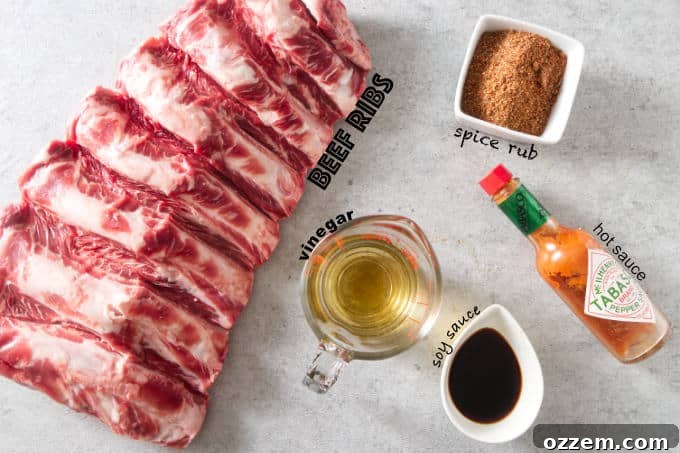
Crafting truly delicious smoked beef back ribs requires a thoughtful selection of ingredients, each playing a crucial role in developing layers of flavor, moisture, and that coveted crusty bark. Beyond the ribs themselves, a masterful dry rub and an invigorating spray are key to unlocking their full potential.
- Beef Ribs: The foundation of our dish. While the recipe focuses on beef back ribs, the principles can be adapted for chuck or plate ribs. Aim for a rack with good meat coverage and marbling.
- Barbecue Spice Rub: This is where much of the magic happens. A robust dry rub not only infuses the ribs with a complex blend of sweet, savory, and spicy notes but also plays a critical role in forming the desirable “bark” – that intensely flavorful, darkened crust on the exterior of the smoked meat. It acts as the first line of flavor defense and a texture enhancer.
- Apple Cider Vinegar: More than just a tenderizer, the acidity in apple cider vinegar serves multiple purposes. When used in the spray, it helps to keep the surface of the ribs moist during the long smoking process, which is essential for smoke penetration and bark development. It also adds a subtle tang that beautifully cuts through the richness of the beef, creating a balanced flavor profile.
- Tabasco Hot Sauce: A few dashes of Tabasco introduce a mild, zesty heat and an underlying complexity to the spray. It complements the beefy flavor without overwhelming it, providing a subtle kick that keeps things interesting.
- Soy Sauce: The addition of soy sauce might seem unconventional for ribs, but its umami-rich profile is a secret weapon. It deepens the savory notes of the beef, promotes a beautiful mahogany color in the bark, and enhances the overall flavor complexity, making the ribs truly addictive.
- Wood Pellets: While not a direct ingredient mixed into the food, the choice of wood pellets is paramount for a Traeger smoker. Fruit woods like apple or cherry are excellent for beef, imparting a mild, sweet smoke. Alternatively, a competition blend often offers a balanced smoke flavor that complements beef without being too overpowering.
The Art of Smoking: How to Cook Beef Back Ribs on Your Traeger
Smoking beef back ribs on a Traeger pellet grill is a process of patience and precision, resulting in incredibly tender and flavorful meat. Follow these steps for a barbecue experience that will impress even the most seasoned pitmasters.
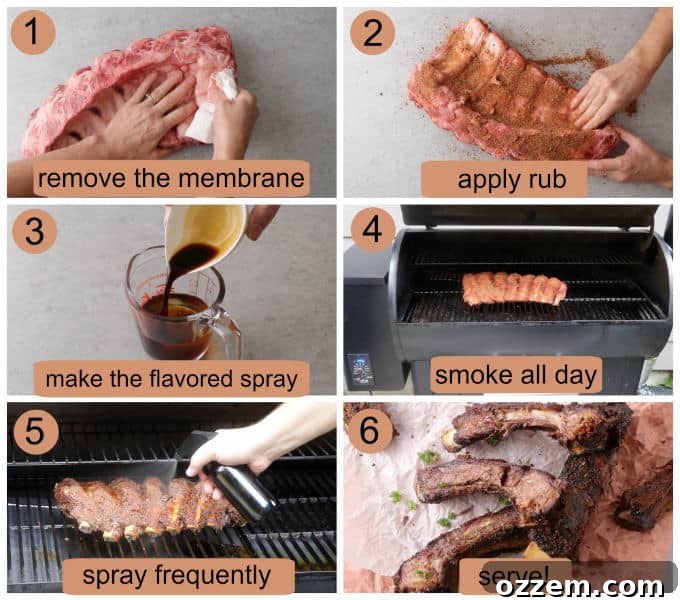
Step 1: The Crucial Membrane Removal
Begin by flipping your rack of beef back ribs bone-side up. You’ll notice a thin, papery membrane running along the entire surface of the bones. Unlike other connective tissues in meat, this membrane will not break down and soften during cooking; instead, it becomes tough and chewy, creating an unpleasant texture and acting as a barrier that prevents your delicious rub from penetrating the meat. To remove it, take a small, sharp knife or a butter knife and carefully work it under the membrane on one end of the rack, gently lifting it until you can get a grip. Once you have a small section lifted, use a paper towel to firmly grasp the membrane – this provides much-needed traction. Slowly and steadily pull the membrane away from the bones. It should peel off in one long strip, but don’t worry if it tears; simply repeat the process, lifting and peeling sections until the entire membrane is completely removed. This simple but vital step ensures maximum flavor absorption and a superior eating experience.
Step 2: The Flavor Foundation – Rubbing the Ribs
Once the membrane is off, it’s time to apply the flavor powerhouse: your barbecue dry rub. In a bowl, combine all the ingredients for your chosen barbecue dry rub. Be generous with the application! Liberally coat both sides of the ribs, paying special attention to all the edges and crevices. You want a thick, even layer of rub covering every inch of meat. After applying, allow the ribs to rest for at least 10 to 20 minutes at room temperature. This brief resting period gives the rub time to “sweat” and adhere to the meat, creating that crucial initial layer of flavor. For even deeper flavor penetration and enhanced tenderness, you can apply the rub and then place the ribs in the refrigerator overnight. This extended resting period acts as a dry brine, drawing out moisture, then reabsorbing the seasoned liquid, leading to a more tender and uniformly seasoned final product.
Step 3: Crafting the Mopping Spray
While the ribs are resting, prepare your secret weapon for moisture and bark development: the vinegar-based spray. In a medium bowl or directly into a clean spray bottle, combine the apple cider vinegar, soy sauce, and Tabasco hot sauce. Give it a good shake or stir to ensure all ingredients are well mixed. This dynamic spray serves multiple functions during the smoking process: the apple cider vinegar adds a tangy brightness and helps keep the surface moist, promoting better smoke adhesion and bark formation; the soy sauce contributes a rich umami depth and a beautiful color; and the Tabasco provides a subtle, balancing heat. Reserve this mixture in your spray bottle for frequent application later in the cook.
Step 4: The Low and Slow Smoke
Preheat your Traeger pellet grill to a consistent 250°F (121°C). Once the smoker reaches temperature, carefully place the seasoned beef back ribs directly on the grill grates, meat side up. Close the lid and let the Traeger work its magic. The smoking process for beef back ribs typically takes between 5 to 8 hours, though cooking times can vary based on the thickness of the ribs, ambient temperature, and how consistently your smoker maintains its heat. The goal is not just to cook the ribs to a safe temperature, but to allow enough time for the tough collagen in the connective tissues to break down into gelatin, resulting in that desired fall-off-the-bone tenderness. Monitor the internal temperature using a reliable meat thermometer, aiming for a range of 200°F to 205°F (93°C to 96°C) for optimal tenderness.
Pro Tip: The choice of wood pellets significantly impacts the final flavor. For beef, fruit woods such as apple or cherry impart a sweet, mellow smoke that beautifully complements the richness of the meat without being overpowering. I highly recommend using Pit Boss Apple pellets for a subtle fruitiness. While hickory or oak can be quite robust for beef, a blend of these stronger woods with fruit woods, like the Pit Boss Competition Blend, offers a fantastic balance of strong and mild smoke profiles. Experiment to find your favorite!
Step 5: Frequent Spritzing and Optional Wrapping
About halfway through the smoking process, or once the ribs reach an internal temperature of around 160°F (71°C), it’s time to begin frequently spraying the ribs with your reserved vinegar solution. This is particularly crucial during the “stall” period, when evaporation cools the meat and slows down the cooking process. Spritzing every 30-45 minutes helps maintain moisture on the surface, which is vital for developing a robust bark and promoting further smoke penetration. At this stage, you also have the option to wrap the ribs. Wrapping, often referred to as the “Texas Crutch,” involves encasing the ribs tightly in either heavy-duty aluminum foil or butcher paper. This technique helps the ribs push through the stall more quickly, retains moisture, and further tenderizes the meat by steaming it in its own juices. If wrapping, place the wrapped ribs back on the smoker and continue cooking until they reach the desired internal temperature.
Step 6: Resting, Slicing, and Serving
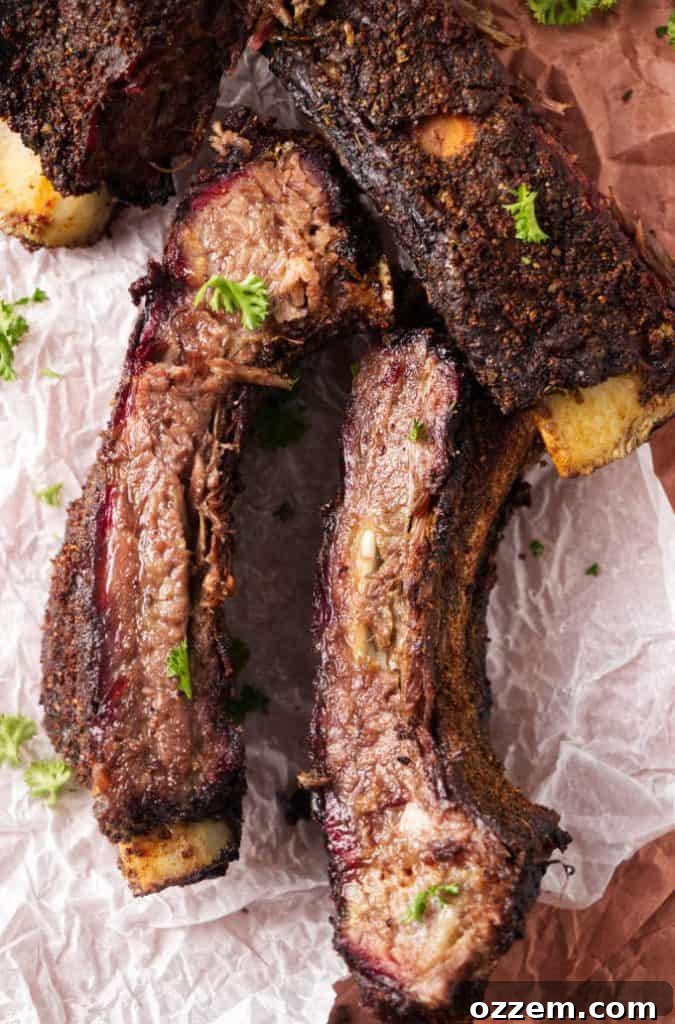
Once your smoked beef back ribs achieve that perfect internal temperature of 200°F to 205°F (93°C to 96°C) and feel incredibly tender (a probe should slide in with very little resistance), it’s time to remove them from the Traeger. This next step is just as critical as the smoking itself: resting. Loosely wrap the ribs in aluminum foil or butcher paper and let them rest on a cutting board for at least 20 minutes, or even up to an hour. Resting allows the muscle fibers to relax and reabsorb the juices that have migrated to the surface during cooking, ensuring every bite is moist and flavorful. Skipping this step can result in dry, less tender ribs. After resting, unwrap the ribs, place them on a clean cutting surface, and slice them between each bone. Serve immediately and watch them disappear!
Expand Your Grilling Horizon: More Delicious Recipes to Try!
After mastering these incredible Traeger smoked beef back ribs, you might be looking for your next culinary adventure on the grill. Here are a few more mouth-watering recipes from our kitchen that you absolutely have to try:
For those times when you crave beef ribs but are short on time or only need a smaller portion, these air fryer beef back ribs are a game-changer. You’ll need to trim them down to fit, but they offer a surprisingly tender and flavorful result without firing up the big smoker.
While these smoked beef back ribs are fantastic on their own, sometimes you just need that perfect condiment. If you’re in the mood for an amazing BBQ sauce to complement any grilled creation, this Kansas City-style BBQ sauce is my absolute FAVORITE! It’s rich, sweet, and tangy – the ideal partner for any smoked meat.
And if poultry is on your mind, you simply must try this Traeger smoked turkey breast wrapped in bacon! What’s not to love about tender, juicy turkey enhanced by crispy bacon and smoky flavor? It’s incredibly tender and juicy, making it a perfect, crowd-pleasing addition to any holiday feast or backyard cookout.
CONNECT WITH A LICENSE TO GRILL!
We love to share our passion for grilling and smoking. Be sure to follow us on our social media accounts for more recipes, tips, and behind-the-scenes action!
Did you make this recipe? We’d love to hear from you! Tell us about your experience in the comments below!
💬 Tell Me What You Think!
We absolutely love hearing from our community! Did you try out this incredible Traeger Smoked Beef Ribs recipe? Please take a moment to leave a comment below and let us know how much you enjoyed it. Your feedback means the world to us! Also, don’t forget to snap a picture of your delicious creation and post it to your favorite social media platform. Be sure to tag us at @alicensetogrill and let us know how you liked it! We can’t wait to see your masterpieces!
Traeger Smoked Beef Ribs
3 to 4
15 minutes
6 hours
20 minutes
6 hours 35 minutes
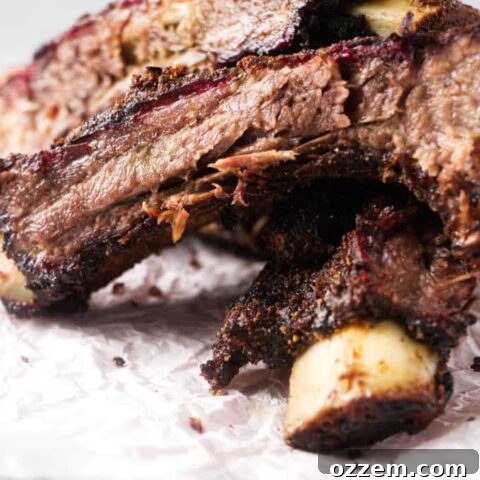
Experience the ultimate in smoky tenderness with these Traeger smoked beef ribs. Our easy-to-follow guide ensures ribs so tender they practically fall off the bone. The perfectly seasoned dry rub creates a phenomenal crusty bark, delivering such rich flavor that no BBQ sauce is needed. For the best results, choose meaty chuck or plate ribs to maximize your barbecue enjoyment. Get ready for a truly exceptional smoked rib experience!
Ingredients
- 1 rack of beef ribs (about 3 pounds, preferably chuck or plate ribs for more meat)
- 1/3 to 1/2 cup Barbecue dry rub
- 1/2 cup apple cider vinegar (for moisture and tang)
- 1 tablespoon soy sauce (for umami and color)
- 2 to 8 shakes of tabasco sauce (to taste, for a subtle kick)
Instructions
- Preheat your Traeger pellet grill to a stable 250°F (121°C). Ensure your hopper has enough pellets for the entire cook.
- Turn the beef ribs over so the bony side is facing up. Locate the silver-skin membrane that covers the back of the ribs. Using a butter knife or the blunt end of a spoon, carefully work your way under the membrane at one corner until you can lift it slightly. Grab the loosened membrane with a paper towel for better grip and slowly peel it away from the bones. It may come off in sections; just repeat until fully removed. This step is crucial for rub penetration and a tender bite.
- Generously coat both sides and all edges of the beef ribs with your chosen barbecue dry rub. Don’t be shy; aim for a thick, even layer. Let the ribs sit for 10 to 20 minutes at room temperature to allow the rub to adhere. For maximum flavor and tenderness, you can apply the rub and then refrigerate the ribs overnight (up to 12 hours); this acts as a dry brine, enhancing the meat’s moisture and flavor.
- While the ribs are resting, prepare your spray: In a spray bottle, combine the apple cider vinegar, soy sauce, and Tabasco hot sauce. Shake well. Place the seasoned ribs directly on the pre-heated smoker grates, meat side up, and cook for 5 to 8 hours. During the final 2-3 hours of smoking (or once the ribs hit 160°F internal), begin spritzing the ribs with the vinegar solution every 30-45 minutes to keep them moist and aid bark formation.
- To check for doneness, gently probe the meat between the bones with a fork or skewer. It should slide in with very little resistance, indicating the collagen has broken down. Alternatively, use a meat thermometer; the ribs should register between 200°F (93°C) and 205°F (96°C) for optimal tenderness.
- Once cooked, remove the ribs from the smoker. For enhanced juiciness, wrap them tightly in butcher paper or aluminum foil and allow them to rest on a cutting board for at least 20 minutes (up to 45-60 minutes). This resting period is crucial for the juices to redistribute throughout the meat, resulting in incredibly tender and moist ribs. After resting, unwrap, slice between the bones, and serve immediately!
Notes
- Rub Generously for the Perfect Bark: Ensure a truly generous coating of your chosen dry rub all over the beef ribs. This dense layer of seasoning is key to forming that irresistible, flavorful crusty bark during the smoking process. With a good bark, the ribs become so delicious and self-sufficient that you genuinely won’t need any additional sauce.
- The Importance of Membrane Removal: Never skip removing the membrane from the bone side of the ribs. If left intact, this tough silver-skin will remain chewy and inedible, detracting from the rib-eating experience. More critically, it acts as a barrier, preventing the delicious flavors of your rub and the smoky goodness from penetrating and seasoning the meat properly.
- Low and Slow for Supreme Tenderness: The long, slow smoking process on your Traeger is the secret weapon for these beef ribs. This extended exposure to low heat allows the tough connective tissues and collagen within the meat to slowly break down and convert into rich, succulent gelatin. This transformation is what creates those incredibly tender, melt-in-your-mouth beef ribs that fall right off the bone.
- Choosing Your Wood Pellets: For beef, fruit woods like apple, cherry, or pecan offer a mild, sweet smoke that beautifully complements the beefy flavor. If you prefer a stronger smoke, consider a competition blend that balances robust woods with lighter fruit woods. Avoid overly strong single woods like pure hickory or mesquite if you desire a more nuanced flavor.
- Monitoring Temperature and the Stall: Use a good quality leave-in meat thermometer to track the internal temperature. Don’t be alarmed if the temperature plateaus for a period (the “stall”); this is normal. Continue to maintain your smoker temperature and spritz the ribs. Wrapping can also help push through the stall more quickly.
Recommended Products
As an Amazon Associate and member of other affiliate programs, I earn from qualifying purchases.
- Traeger Pro 780 WiFi Pellet Grill
- Thermoworks Signals – Wireless BBQ Thermometer
- Pink Butcher Paper
- Traeger Signature Blend Wood Pellets
- Pit Boss Competition Blend – 2 Bags
- BBQ Basting Mop
Nutrition Information:
Yield: 4
Serving Size: 1
Amount Per Serving:
Calories: 1344Total Fat: 45gSaturated Fat: 23gTrans Fat: 0gUnsaturated Fat: 17gCholesterol: 161mgSodium: 1307mgCarbohydrates: 193gFiber: 3gSugar: 190gProtein: 45g
Nutrition information is a guideline only, is calculated automatically by third party software, and absolute accuracy is not guaranteed.
Did you make this recipe?
Please leave a comment on the blog or share a photo on Instagram